

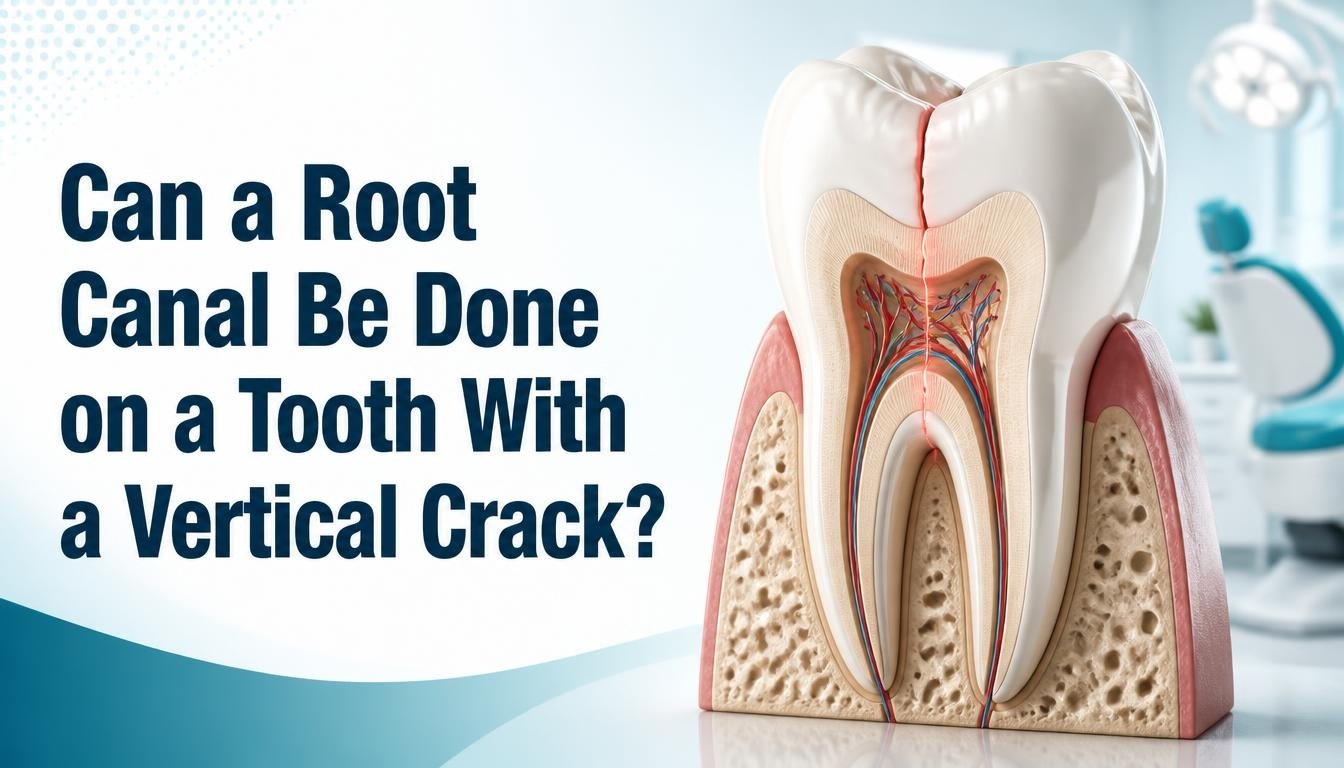
A cracked tooth can cause discomfort, sensitivity, and difficulty chewing. One of the most concerning dental problems is a vertical crack, especially when it extends from the chewing surface toward the root. Many patients wonder: Can a root canal be done on a tooth with a vertical crack, or does the tooth need to be extracted?
The answer depends on the depth, direction, and severity of the crack. In some cases, root canal treatment can help save a cracked tooth. However, if the fracture extends deep below the gum line or involves the entire root, saving the tooth may not be possible.
At The Dental Crowns, understanding the condition and getting an early dental evaluation can help you explore suitable treatment options before the damage becomes more extensive.
What Is a Vertical Crack in a Tooth?
A vertical tooth crack is a fracture that runs lengthwise through the tooth, usually beginning at the chewing surface and extending toward the root. It may affect the enamel, dentin, and sometimes the pulp, which contains the nerves and blood vessels.
Not all cracks are equally serious. Some remain limited to the crown of the tooth, while others gradually extend deeper into the root.
Dentists commonly identify different types of tooth cracks:
- Craze lines: Tiny, superficial lines in the enamel that usually do not require extensive treatment.
- Cracked tooth: A crack extending from the chewing surface into the dentin, with the possibility of reaching the pulp.
- Split tooth: A crack that has progressed enough to separate the tooth into distinct segments.
- Vertical root fracture: A fracture originating in or extending through the root structure of the tooth.
Identifying the type of crack is essential because each condition requires a different treatment approach.
Can a Root Canal Be Done on a Tooth With a Vertical Crack?
Yes, a root canal may be possible if the crack has affected the pulp but has not extended too far into the root or below the gum line.
When a crack allows bacteria to reach the pulp, it can cause inflammation or infection. Root canal treatment removes the infected or damaged pulp, cleans and disinfects the root canals, and seals them to prevent further infection.
However, a root canal does not repair the physical crack itself. The remaining tooth structure must be strong enough to withstand chewing forces and be protected with an appropriate restoration, often a dental crown.
When Can a Root Canal Save a Cracked Tooth?
Root canal treatment may be considered when:
- The crack is limited mainly to the crown of the tooth.
- The pulp has become inflamed or infected.
- The tooth has not completely split into separate parts.
- The crack has not extended beyond a manageable level beneath the gum.
- Sufficient healthy tooth structure remains to support a restoration.
- The tooth can be stabilised and protected with a suitable dental crown.
In carefully selected cases, a cracked tooth can continue to function for years after treatment. The outcome depends on the individual diagnosis, the extent of the fracture, and the quality of the final restoration.
When Is a Root Canal Not Enough?
Root canal treatment may not be successful when:
- The crack extends deep below the gum line.
- The tooth has split into two or more separate segments.
- A vertical root fracture compromises the entire root.
- The fracture causes significant damage to the surrounding bone and periodontal tissues.
- There is insufficient healthy tooth structure to restore the tooth securely.
In these situations, extraction may be recommended to prevent persistent infection, pain, and further damage to the surrounding tissues.
Important: A vertical crack does not automatically mean extraction is necessary. A proper clinical examination is required to determine whether the tooth is restorable.
What Are the Symptoms of a Vertically Cracked Tooth?
Vertical cracks can sometimes be difficult to detect because they may not be clearly visible during a routine examination.
Common symptoms include:
- Sharp pain while biting or chewing.
- Discomfort when releasing pressure after biting.
- Sensitivity to hot and cold foods or drinks.
- Pain that comes and goes without an obvious reason.
- Swelling or tenderness around the affected tooth.
- Discomfort while eating hard or crunchy foods.
- Gum swelling or a recurring pimple-like spot near the tooth.
Some vertical root fractures may cause very few symptoms in their early stages. Therefore, the absence of severe pain does not necessarily mean that the tooth is healthy.
If you notice these symptoms, consult a dentist promptly rather than waiting for the pain to become severe.
How Does a Dentist Diagnose a Vertical Tooth Crack?
Accurate diagnosis is essential before deciding whether root canal treatment can save the tooth.
1. Clinical Examination
The dentist examines the affected tooth, surrounding gums, and existing restorations to identify visible cracks, swelling, or other abnormalities.
2. Bite Test
A specialised bite test may help identify pain associated with biting or releasing pressure on a particular tooth.
3. Dental X-Rays
Dental X-rays help evaluate the roots, surrounding bone, and signs of infection. However, very fine cracks may not appear clearly on conventional X-rays.
4. Pulp Testing
Tests may assess whether the pulp is healthy, inflamed, or no longer responding normally.
5. Advanced Imaging
The dentist may also use magnification, transillumination, and periodontal probing to investigate the location and extent of the crack.
Root Canal Treatment vs. Tooth Extraction: Which Is Better?
The most suitable treatment depends on whether the tooth can be predictably restored.
| Root Canal Treatment | Tooth Extraction |
|---|---|
| Considered when the tooth is restorable | Considered when the fracture is non-restorable |
| Removes infected or damaged pulp | Removes the severely fractured tooth |
| Preserves the natural tooth structure | May be necessary to prevent ongoing infection |
| Often followed by a dental crown | May require replacement options such as an implant or bridge |
Whenever possible, preserving a natural tooth is desirable. However, attempting to save a severely fractured tooth may lead to repeated treatment, discomfort, and additional expenses.
Your dentist will evaluate the benefits, limitations, and expected prognosis of each option before recommending treatment.
Why Is a Dental Crown Important After a Root Canal?
A root canal-treated tooth may become more vulnerable to fracture because of the loss of tooth structure caused by decay, existing cracks, or previous dental procedures.
A dental crown covers and protects the remaining tooth, helping distribute chewing forces and reducing the risk of further damage.
For a cracked posterior tooth, such as a premolar or molar, cuspal coverage may be particularly important.
Learn more about dental crown treatment at The Dental Crowns to understand how crowns help restore damaged teeth.
It is important to remember that a crown cannot guarantee that an existing crack will never progress. The long-term prognosis depends on the crack’s location and severity.
What Happens if a Vertical Tooth Crack Is Left Untreated?
Ignoring a cracked tooth can allow the fracture to progress over time.
Possible complications include:
- Increasing pain while chewing.
- Bacterial infection of the dental pulp.
- Development of an abscess.
- Damage to the surrounding gum and bone.
- Further separation of the tooth structure.
- Loss of the tooth and the need for extraction.
How Can You Prevent a Vertical Tooth Crack?
Although not every tooth crack can be prevented, certain habits may reduce the risk.
- Avoid chewing ice, hard candies, and other extremely hard foods.
- Do not use your teeth to open bottles or packages.
- Seek treatment for cavities before they weaken the tooth.
- Consider a custom night guard if you grind or clench your teeth.
- Wear a mouthguard during contact sports.
- Schedule regular dental examinations.
- Get damaged fillings and restorations checked promptly.
If you already have a cracked tooth, avoid chewing hard foods on the affected side until a dentist evaluates it.
Frequently Asked Questions (FAQs)
1. Can a cracked tooth heal on its own?
No. Unlike a broken bone, a cracked tooth cannot naturally heal and reconnect. Professional evaluation and treatment are necessary to prevent the crack from progressing.
2. Is root canal treatment painful for a cracked tooth?
Root canal treatment is generally performed using local anaesthesia to minimise discomfort. The procedure is intended to treat the inflamed or infected pulp and relieve associated pain. Some tenderness may occur during recovery.
3. Can a vertical root fracture be repaired with a dental crown?
A dental crown can protect certain cracked teeth, but it cannot repair a severe vertical root fracture extending through the root. The dentist must first determine whether the tooth is restorable.
4. Can a tooth with a vertical crack be saved without extraction?
Yes, in selected cases. If the crack is limited and enough healthy tooth structure remains, root canal treatment and a protective restoration may help preserve the tooth. A complete split tooth or severe vertical root fracture may require extraction.
5. How long can a cracked tooth last after a root canal?
There is no fixed lifespan. Some appropriately treated cracked teeth can function for many years, while others may develop complications. The crack’s depth, tooth location, restoration, and biting forces influence the outcome.
6. Is a vertical tooth crack visible on an X-ray?
Not always. Many cracks are too fine to appear on conventional dental X-rays. The dentist may need additional clinical tests or advanced imaging to assess the condition.
7. Should I visit a dentist if my cracked tooth does not hurt?
Yes. Some cracks produce minimal symptoms initially but can gradually progress. Early diagnosis may improve the available treatment options.
Conclusion
Can a root canal be done on a tooth with a vertical crack? In many cases, yes, provided the crack has not compromised the tooth beyond repair.
Root canal treatment can address pulp infection, while a dental crown may help protect and restore the remaining tooth structure. However, a severe vertical root fracture or a split tooth may require extraction.
The most important step is to seek professional dental evaluation as early as possible. Timely diagnosis can help you understand the condition of your tooth and make an informed decision about preserving your natural smile.
If you are experiencing tooth pain, sensitivity, or discomfort while chewing, schedule a dental consultation with The Dental Crowns to explore your treatment options.
Book a consultation today to get your cracked tooth evaluated and receive personalised dental care.




