If you have recently had a tooth removed, one of the most common questions is: how long after tooth extraction can you get a dental implant?
The answer is not the same for everyone. In some cases, a dental implant can be placed on the same day as tooth extraction. In other cases, your dentist may recommend waiting several weeks or months to allow the gums and jawbone to heal.
The ideal timing depends on factors such as the condition of the extraction socket, the amount of available jawbone, gum health, whether there was an infection, and whether a bone graft is required.
According to the International Team for Implantology (ITI), implant placement can broadly be classified as immediate placement on the day of extraction, early placement after soft-tissue or partial bone healing, and late placement after complete bone healing.
If you are considering an implant after tooth removal, a dental examination and appropriate imaging are essential before deciding the timing.
Quick Answer: How Long After Tooth Extraction Can You Get a Dental Implant?
Depending on your individual situation, an implant may be placed:
- Immediately: On the same day as tooth extraction.
- Early: After approximately 4–8 weeks, once soft tissues have healed sufficiently.
- After partial bone healing: Around 12–16 weeks in selected cases.
- Delayed/late: After complete bone healing, which may be more than 6 months in some situations.
These are general treatment categories, not a fixed schedule for every patient. Your dentist may recommend a different timeline based on bone availability, infection, gum condition, extraction complexity and whether bone grafting is necessary.
For patients looking for dental implants in Noida, The Dental Crowns provides implant treatment and personalized treatment planning in Sector 79, Noida.
What Happens After a Tooth Is Extracted?
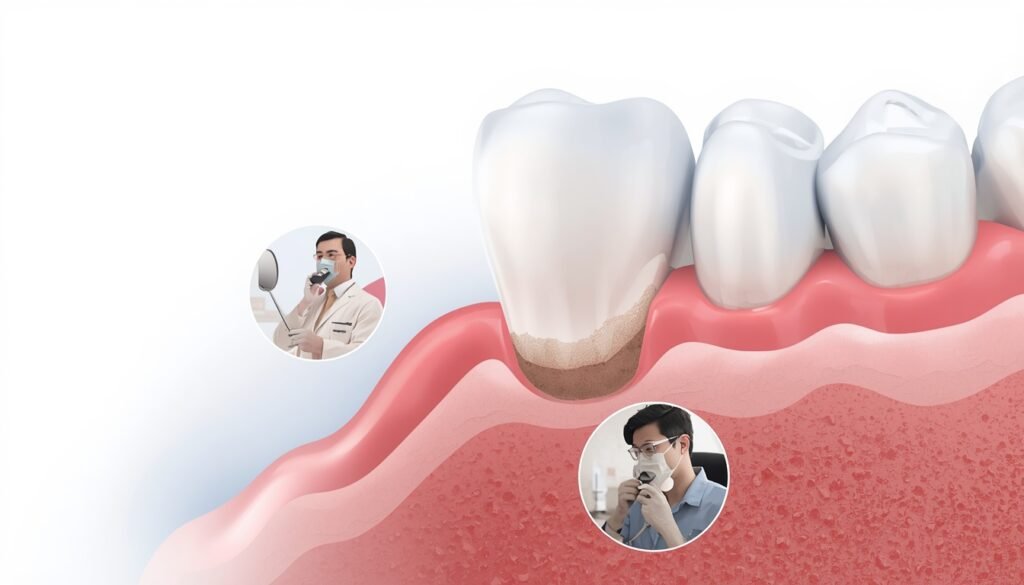
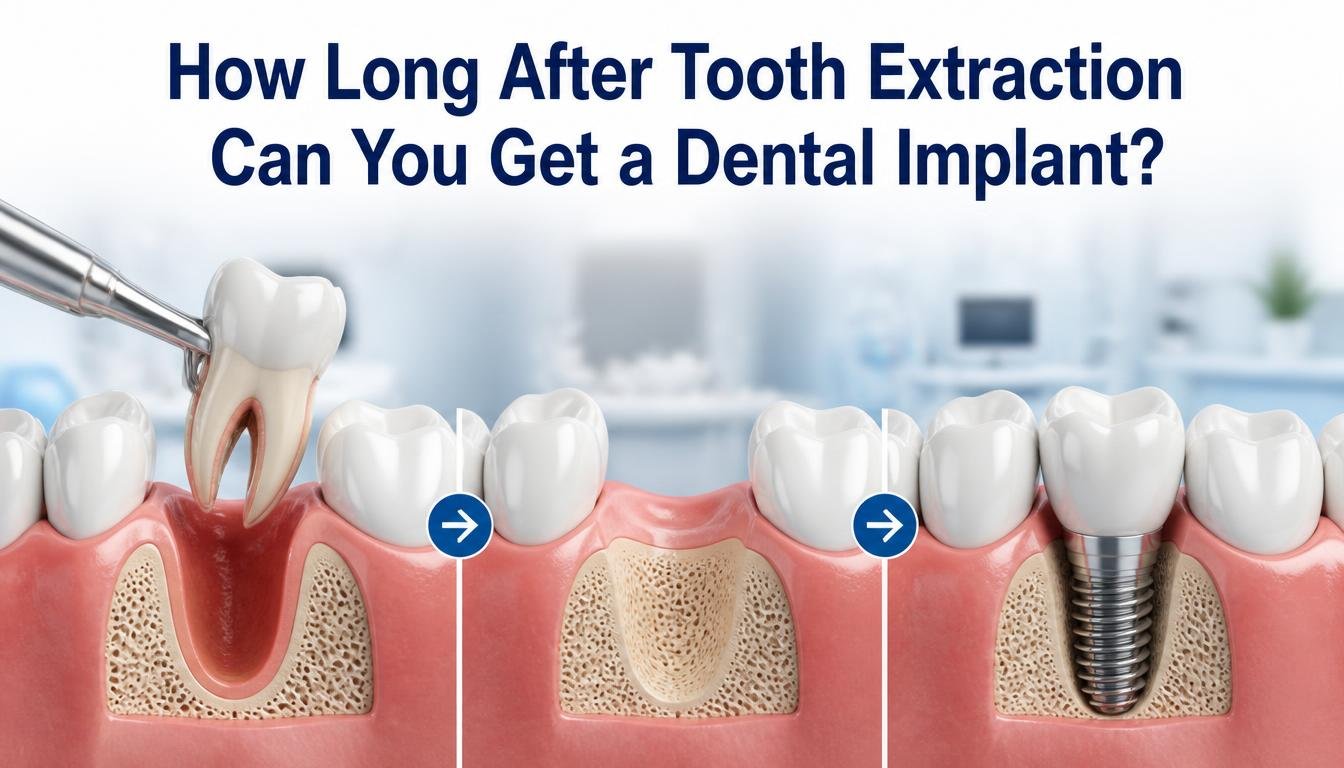
After tooth extraction, the empty socket begins a natural healing process.
A blood clot initially forms in the socket. The surrounding tissues then gradually heal, and new tissue and bone develop within the extraction area.
Although the gums may appear healed relatively quickly, the jawbone continues changing and remodeling for much longer.
This distinction is important when planning a dental implant.
A dental implant needs adequate, healthy bone around it for stability. If the socket has lost significant bone or there is not enough bone width or height, your dentist may recommend bone grafting before or during implant treatment.
The Cleveland Clinic notes that tooth extraction sites can take several weeks to heal and that patients planning an implant may need to wait while the socket heals.
Can You Get a Dental Implant Immediately After Tooth Extraction?
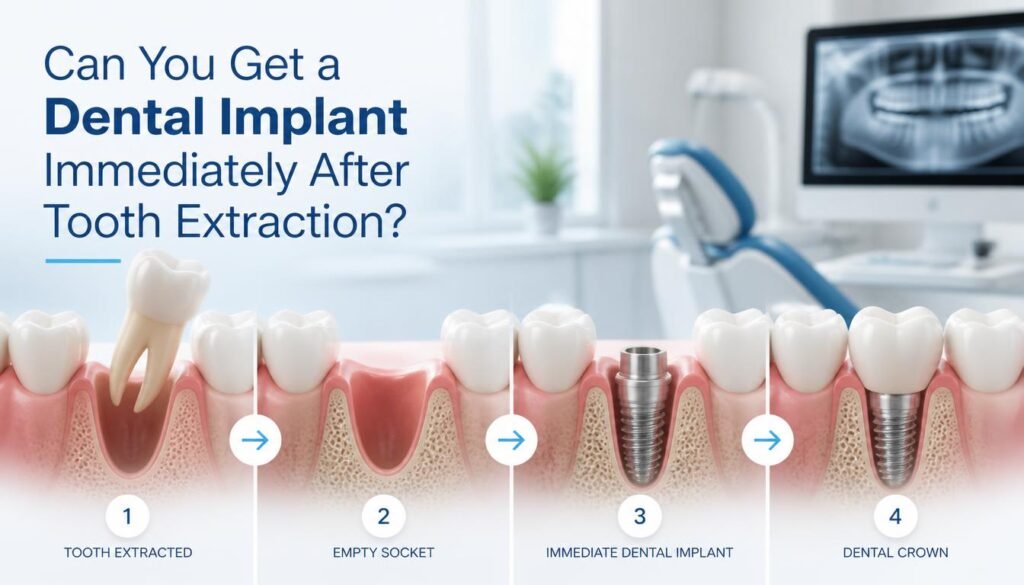
Yes, in selected cases, an immediate dental implant can be placed on the same day as tooth extraction.
This is called immediate implant placement.
Instead of extracting the tooth, allowing the socket to heal and returning later for implant surgery, the dentist removes the tooth and places the implant into the extraction socket during the same treatment appointment.
However, immediate placement is not suitable for every extraction.
Your dentist may consider factors such as:
- The condition of the tooth socket
- Amount and quality of available bone
- Presence or absence of active infection
- Gum health
- Location of the tooth
- Ability to achieve sufficient initial implant stability
- Overall oral health
- Whether additional grafting is required
The ITI defines immediate implant placement as placement of the implant in the extraction socket on the same day as tooth extraction.
Therefore, you should not assume that an implant can automatically be placed immediately after extraction.
How Soon Can You Get an Implant After Tooth Extraction?
There are several possible treatment timelines.
1. Same-Day Dental Implant
When conditions are suitable, an implant may be placed immediately after the tooth is removed.
Timeline: Same day as extraction.
Potential advantages can include fewer surgical appointments and preservation of the extraction site’s architecture in appropriately selected cases.
However, the dentist must first determine whether immediate placement is clinically appropriate.
2. Early Dental Implant Placement
Some patients need time for the soft tissues to heal before implant placement.
Typical timing: Around 4–8 weeks after extraction.
This approach allows the extraction site to undergo initial soft-tissue healing before the implant is placed.
The ITI categorizes implant placement after soft-tissue healing of approximately 4–8 weeks as early implant placement.
3. Implant Placement After Partial Bone Healing
Another approach is to wait longer for partial bone healing.
Typical timing: Approximately 12–16 weeks after extraction.
The exact timing depends on the patient’s healing and the condition of the bone.
4. Delayed or Late Implant Placement
In some cases, the dentist may wait until the extraction area has undergone substantial or complete bone healing.
Timeline: This may be more than 6 months after extraction.
This does not mean that everyone should wait six months. Rather, delayed placement can be appropriate when the clinical situation requires more healing time.
The ITI uses more than six months after extraction as its definition of late implant placement after complete bone healing.
Why Can’t Everyone Get a Dental Implant Immediately?
An implant needs a suitable foundation.
After an extraction, there may be insufficient bone to provide the stability required for implant placement. There may also be infection, damaged bone, gum problems or other factors that make immediate placement less appropriate.
For example, if a tooth was removed because of extensive infection, your dentist may want to manage the infection and assess healing before proceeding.
Similarly, if significant bone has been lost, bone augmentation may be needed.
The Cleveland Clinic explains that bone grafting can be used after tooth extraction to rebuild or preserve jawbone and provide a stronger foundation for future dental implants.
Do You Need a Bone Graft Before a Dental Implant?
Not everyone needs a bone graft.
A bone graft may be recommended when there is not enough bone volume or density to support the planned implant.
Bone loss can occur after tooth extraction, particularly when the tooth has already experienced infection, periodontal problems or other damage.
A graft can help rebuild the area and create a more suitable foundation for implant placement.
Depending on the size and location of the graft, healing can take several weeks or months. Cleveland Clinic notes that a dental bone graft generally needs at least around three months to heal, while larger grafts may require considerably longer.
Because healing varies, the dentist may use follow-up examinations and imaging to decide when the site is ready.
How Long Does It Take for the Jawbone to Heal After Tooth Extraction?
The soft tissue and bone do not heal at exactly the same speed.
You may feel much better within a few days after extraction, but this does not mean that the underlying bone has completely healed.
The extraction socket gradually fills with new tissue and bone as healing progresses.
Cleveland Clinic explains that the jawbone can take several weeks to heal after extraction, while more complex oral surgical sites may continue healing for several months.
This is why your dentist should evaluate the extraction site instead of deciding implant timing based only on how the gum looks or feels.
What Factors Affect Dental Implant Timing After Extraction?
Your dental implant timeline may depend on several factors.
1. Bone Volume
The implant needs adequate bone for stability. If the jawbone is too thin or has insufficient height, additional treatment may be required.
2. Infection
If the extracted tooth had an infection, your dentist will evaluate the site carefully before implant placement.
3. Gum Health
Healthy gums are important for successful implant treatment. Existing gum disease may need to be controlled before proceeding.
4. Location of the Missing Tooth
The location of the tooth can influence treatment planning, particularly because the available bone and aesthetic requirements vary between different areas of the mouth.
5. Extraction Complexity
A simple extraction and a complicated surgical extraction may have different healing requirements.
6. Bone Grafting
If bone grafting is necessary, the overall treatment timeline may become longer because the graft needs time to integrate.
7. Overall Oral Health
Your dentist will consider your oral health, hygiene, remaining teeth and other factors before finalizing the implant plan.
8. Smoking and Other Risk Factors
Smoking can negatively affect oral healing and implant treatment outcomes. Your dentist may discuss smoking cessation or reduction as part of your treatment planning.
What Happens During a Dental Implant Consultation?
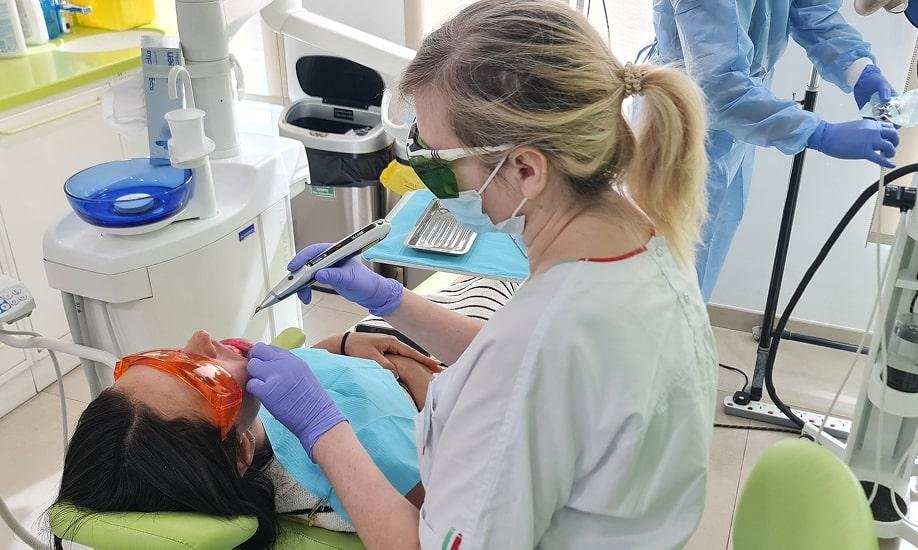
Before deciding when to place an implant, your dentist will generally evaluate the extraction area and surrounding teeth.
The assessment may include:
- Examination of the gums
- Evaluation of the extraction socket
- Assessment of jawbone volume
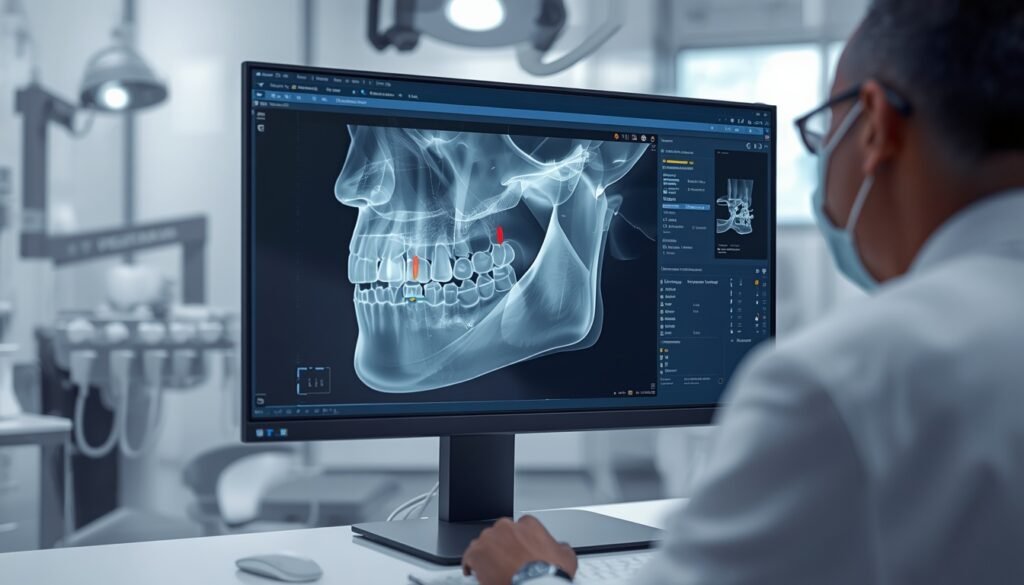
- Dental X-rays
- 3D imaging such as CBCT when indicated
- Evaluation of neighbouring teeth
- Assessment of bite and oral function
- Review of your dental and medical history
- Discussion of bone grafting if required
Cleveland Clinic notes that X-rays and cone-beam CT imaging can help dentists assess the jawbone and determine whether there is enough bone to support an implant.
What Is the Difference Between an Implant and a Dental Crown?
A dental implant and a dental crown are not the same thing.
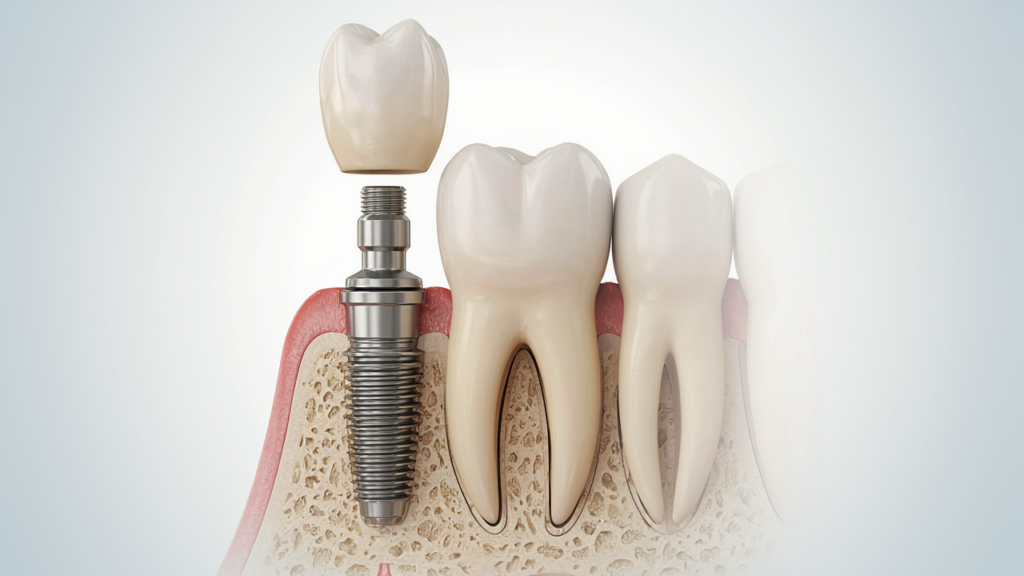
The implant is the artificial tooth root placed into the jawbone.
The abutment connects the implant to the restoration.
The crown is the visible artificial tooth placed over the implant.
A typical single-tooth implant therefore involves these components working together.
If you want to understand the complete implant treatment available at The Dental Crowns, you can visit the clinic’s Dental Implants service page.
How Long Does a Dental Implant Take to Heal?
The implant itself also requires healing after placement.
During this period, a process called osseointegration occurs. This means the implant integrates with the surrounding jawbone.
The healing period varies between patients and treatment situations.
Cleveland Clinic states that osseointegration can take approximately three to nine months, depending on how quickly the individual heals.
Once the dentist determines that healing and implant stability are appropriate, the final restoration can be attached.
Can You Get a Temporary Tooth While Waiting for an Implant?
In some situations, your dentist may recommend a temporary tooth while the extraction site or implant heals.
Whether you need one depends on factors such as:
- Location of the missing tooth
- Visibility of the gap
- Number of missing teeth
- Your bite
- Type of restoration planned
- Stage of treatment
For example, a temporary replacement may be more important aesthetically when a front tooth is missing.
Your dentist can explain whether a temporary replacement is suitable for your particular case.
What If You Wait Too Long After Tooth Extraction?
Waiting longer does not automatically mean that you can no longer receive an implant.
However, changes to the jawbone can occur after tooth loss.
When a tooth is removed, the bone that previously supported its root is no longer stimulated in the same way. Over time, the ridge may change in shape and volume.
If significant bone loss occurs, additional bone-grafting treatment may be required before implant placement.
This is one reason why it is useful to discuss tooth replacement options with your dentist relatively early after extraction.
Can You Get a Dental Implant Months or Years After Tooth Extraction?
Yes, dental implants may still be possible months or even years after tooth extraction.
However, the condition of the jawbone and gums needs to be evaluated.
If the area has experienced significant bone loss, a bone graft or other preparatory treatment may be necessary.
Therefore, the amount of time since extraction alone does not determine whether an implant is possible.
The important question is whether the site currently has suitable conditions for implant treatment.
What Should You Do After Tooth Extraction If You Want an Implant?
If you already know that you want to replace the extracted tooth with an implant, tell your dentist before or around the time of extraction whenever possible.
This allows the dental team to consider preservation of the extraction site and future implant requirements.
Depending on your situation, your dentist may discuss:
- Immediate implant placement
- Socket preservation
- Bone grafting
- Early implant placement
- Delayed implant placement
- Temporary tooth replacement
The appropriate option depends on your individual clinical condition.
Frequently Asked Questions
How long after tooth extraction can I get a dental implant?
The timing varies. Some implants can be placed immediately after extraction, while others are placed after 4–8 weeks, 12–16 weeks or several months of healing, depending on the condition of the socket and bone.
Can I get a dental implant immediately after extraction?
Yes. Immediate implant placement is possible in selected cases when the extraction site and surrounding bone provide suitable conditions for implant stability.
Is it better to wait before getting an implant?
There is no single waiting period that is best for every patient. Immediate, early and delayed placement are all established treatment approaches. Your dentist should determine the timing after examining the extraction site.
How long should I wait after extraction before a dental implant?
Depending on the case, implant placement may occur immediately, after approximately 4–8 weeks, after 12–16 weeks, or after a longer period of bone healing.
Do I always need a bone graft after tooth extraction?
No. A bone graft is recommended when additional bone volume or preservation is needed for the planned treatment.
How long does a bone graft take to heal before an implant?
Healing varies according to the size and location of the graft. Some grafts require several months before implant placement. Cleveland Clinic notes that dental bone grafts generally need at least around three months to heal, with larger grafts potentially requiring longer.
Can I get an implant years after tooth extraction?
In many cases, yes. However, your dentist will need to evaluate the current bone and gum condition. Bone grafting may be necessary if there is insufficient bone.
How long does an implant take to fuse with bone?
Osseointegration can take approximately three to nine months, although the timeline varies by patient and treatment.
Can a missing front tooth be replaced with an implant?
A dental implant can be used to replace a missing front tooth in suitable patients. The dentist will assess bone, gums, aesthetics and bite before planning treatment.
Is dental implant treatment painful?
The procedure is performed using anesthesia, so you should discuss pain control and sedation options with your dentist. Some soreness or discomfort can occur during recovery.
Final Takeaway
How long after tooth extraction can you get a dental implant?
There is no single answer for every patient.
An implant may sometimes be placed on the same day as extraction, while other cases require several weeks or months of healing. If bone grafting is necessary, treatment may take longer.
The most important factors are the condition of your extraction socket, available jawbone, gum health, infection status and overall treatment requirements.
If you have recently had a tooth removed or are planning an extraction and want to replace the tooth with an implant, an implant consultation can help determine the appropriate timeline.
For patients in Noida, The Dental Crowns offers dental implant treatment from Civitech Stadia, Sector 79, Noida. You can explore the dental implant treatment page or learn more about tooth extraction treatment.
Do not rely on a fixed number of days after extraction. Your dentist should examine the healing site and determine when the jawbone and gums are ready for implant treatment.
Medical Disclaimer
This article is intended for general educational purposes and does not replace an examination, diagnosis or treatment plan from a qualified dental professional. Dental implant timing varies between patients. Always consult your dentist or implant specialist before deciding when to proceed with treatment.