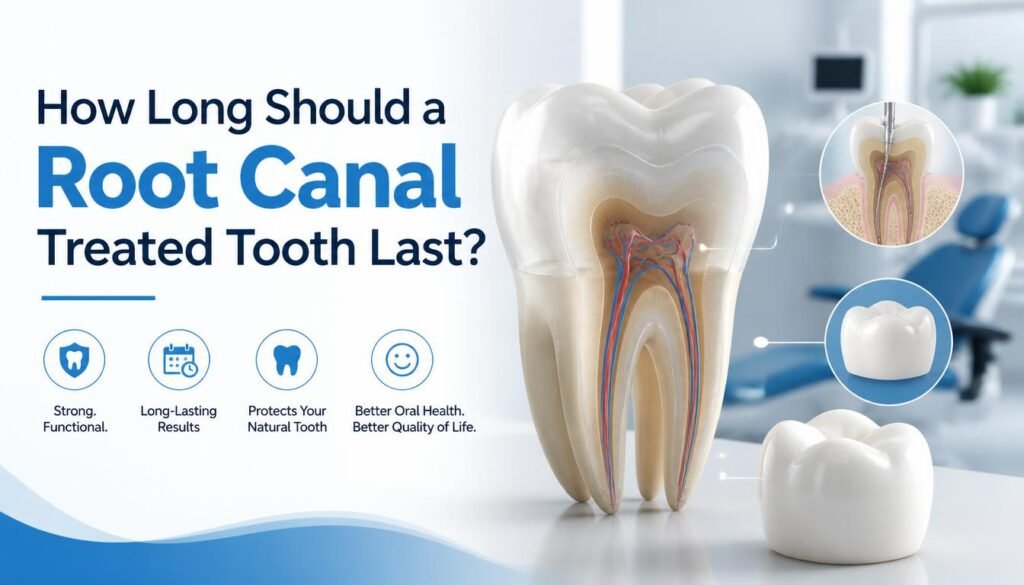
Root canal treatment is designed to remove infection or inflammation from inside a tooth, clean and seal the root canals, and help preserve the natural tooth. Most people recover well after treatment, with temporary soreness or sensitivity that gradually improves.
But what if you experience discomfort months after root canal treatment?
Pain, pressure, tenderness while chewing, gum swelling, or a recurring dull ache months after a root canal should not simply be ignored. While occasional sensitivity can have several explanations, discomfort that returns after a period of improvement may indicate that the treated tooth or surrounding tissues need to be examined.
The American Association of Endodontists notes that a previously treated tooth can sometimes heal improperly and become painful or diseased months or even years after treatment.
This article explains the common reasons for pain months after root canal treatment, symptoms to watch for, when retreatment may be necessary, and when you should contact a dentist.
Is It Normal to Have Discomfort Months After a Root Canal?
Mild soreness immediately after root canal treatment can be normal. The tissues around the tooth may remain irritated while they recover.
However, new or persistent discomfort several months later is different from normal short-term recovery.
Mayo Clinic explains that a treated tooth may be sensitive for the first few days, but pain or pressure that continues beyond the expected recovery period should be discussed with a dentist or endodontist.
If your tooth was comfortable for several months and then starts hurting again, your dentist may need to determine whether the cause is related to the treated tooth, the restoration, the bite, the surrounding gum and bone, or another nearby tooth.
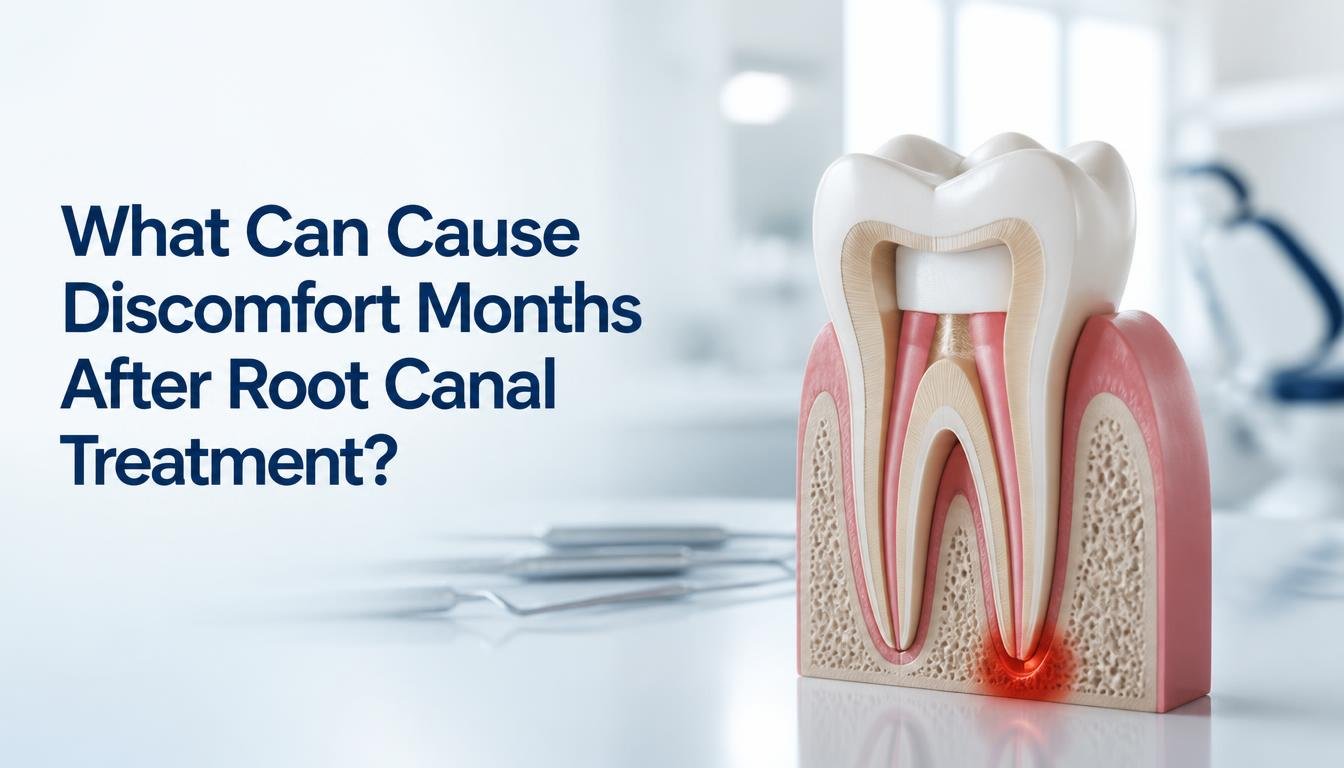
What Can Cause Discomfort Months After Root Canal Treatment?
There are several possible reasons for discomfort after root canal treatment. Some are related directly to the root canal, while others may have a different dental cause.
1. Persistent or Recurrent Infection
One possible cause is infection that remains in or around the treated tooth.
Root canal treatment involves cleaning and disinfecting the root canal system before it is filled and sealed. If bacteria remain in an untreated area or later enter the tooth, inflammation and infection can potentially develop again.
The American Association of Endodontists explains that a tooth may fail to heal as expected when complicated canal anatomy goes undetected, narrow or curved canals are not treated, or the restoration does not adequately prevent contamination.
Possible symptoms include:
- Pain while biting or chewing
- Swelling near the tooth
- Gum tenderness
- A recurring bad taste
- A pimple or drainage point on the gum
- Dull or throbbing discomfort
A dental examination and appropriate imaging can help identify whether infection is still present.
2. An Untreated or Missed Root Canal
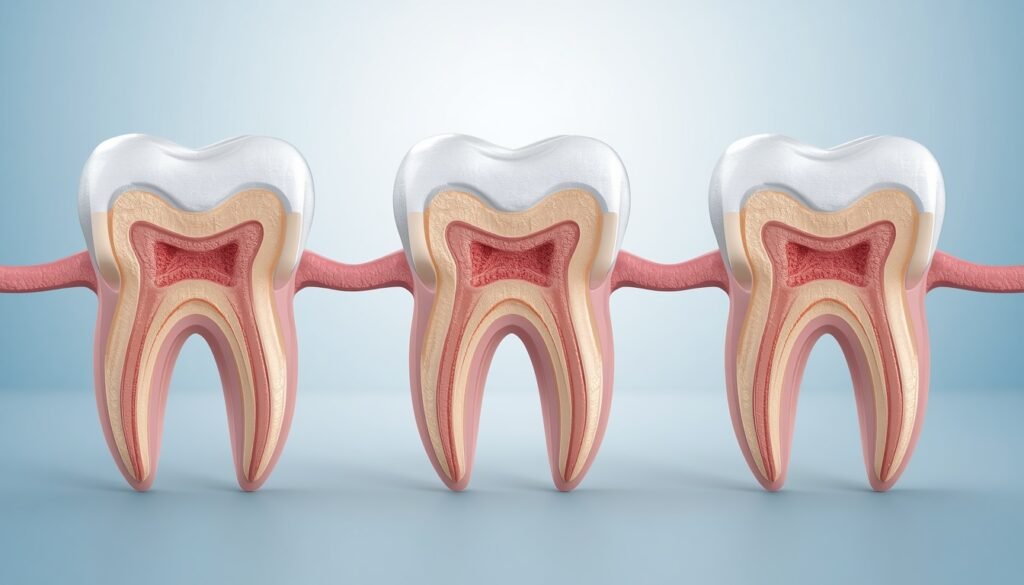
Teeth can have complex internal anatomy.
Sometimes a tooth may contain narrow, curved, or additional canals that are difficult to identify. If one area of the root canal system was not cleaned and treated, bacteria may remain inside it.
The AAE specifically identifies untreated narrow or curved canals and complicated canal anatomy as possible reasons a previously treated tooth may not heal properly.
This is one reason persistent or recurring symptoms should be assessed rather than automatically assumed to be ordinary post-treatment sensitivity.
3. Leakage Around a Filling or Crown
After root canal treatment, the tooth needs a good-quality restoration to protect it.
If the filling, crown, or other restoration becomes damaged, loose, cracked, or fails to seal properly, bacteria from the mouth may gain access to the treated tooth.
This can potentially lead to recurrent infection or inflammation.
The AAE notes that delayed restoration and inadequate sealing of the restoration can contribute to problems with a previously treated tooth.
If your tooth has a crown and you notice:
- The crown feels loose
- Food repeatedly gets trapped around it
- The tooth hurts when chewing
- The crown has chipped or cracked
- The gum around the crown is swollen
you should arrange a dental examination.
4. A Cracked or Fractured Tooth
A tooth that has undergone extensive dental treatment may still be vulnerable to structural problems.
A crack in the tooth or root can cause discomfort, particularly when chewing or releasing a bite.
Cracked teeth can sometimes produce symptoms that are difficult to localize. You may feel that the pain is coming from the root-canaled tooth even when the underlying problem is a fracture.
A dentist may perform clinical tests and imaging to determine whether a crack or fracture could be responsible.
5. Bite or Occlusion Problems
Sometimes discomfort is related to how your teeth come together.
If the treated tooth is contacting the opposing tooth too heavily, you may notice tenderness when biting or chewing. The tissues supporting the tooth can become irritated by excessive pressure.
This can feel like:
- Tenderness when biting
- A feeling that the tooth is “higher” than the others
- Discomfort when chewing harder foods
- Pressure around the treated tooth
A dentist can check your bite and determine whether the tooth is receiving excessive contact.
6. Inflammation Around the Root
A root-canaled tooth no longer contains the original pulp tissue, but the tissues surrounding the root are still living and contain nerves.
Inflammation around the root can therefore cause pain or tenderness even though the pulp inside the tooth has been removed.
The AAE explains that inflammation in the periodontal tissues surrounding a previously treated tooth can produce pain when bacteria or infection affect those tissues.
This is why saying “there is no nerve in the tooth, so it cannot hurt” is an oversimplification.
7. Gum Disease or Another Dental Problem
Not every pain felt around a root-canaled tooth originates from the root canal.
Gum disease, decay in a neighboring tooth, a cracked filling, tooth sensitivity, or another dental condition can sometimes produce discomfort in the same area.
Mayo Clinic notes that tooth pain can have multiple causes, including cavities, cracked or chipped teeth, worn fillings and gum disease.
A proper dental examination is therefore important before deciding that a root canal has failed.
8. Problems With the Dental Crown
Many root-canaled teeth require a crown or another permanent restoration to protect the remaining tooth structure.
A damaged, poorly fitting, loose, or fractured crown can cause discomfort and may expose the underlying tooth to additional stress or bacterial contamination.
Mayo Clinic explains that the final stage of root canal treatment commonly involves restoring the tooth with a crown because the treated tooth may have significant structural damage or a large restoration.
If you have a root canal and crown, regular dental check-ups can help identify restoration problems before they become more serious.
9. Pain From a Nearby Tooth
Sometimes the painful tooth is not actually the root-canaled tooth.
Pain can be difficult to localize, particularly when several teeth are close together. A neighboring tooth with decay, a crack, gum inflammation, or pulp disease may produce pain that feels as though it is coming from the previously treated tooth.
For this reason, dentists may examine multiple teeth during a diagnostic appointment rather than treating the root-canaled tooth immediately.
What Does Root Canal Pain Months Later Feel Like?
The symptoms can vary depending on the underlying cause.
You may notice:
- Dull aching pain
- Pain when biting down
- Tenderness when touching the tooth
- Throbbing discomfort
- Pressure around the tooth
- Gum swelling
- A small pimple or bump on the gum
- Bad taste or drainage
- Discomfort that comes and goes
- Sensitivity around neighboring teeth
Cleveland Clinic lists symptoms such as pain when chewing or touching the tooth, swollen or tender gums, gum boils, and jaw swelling among signs that can occur with dental infection.
The exact symptoms do not establish the cause by themselves, which is why professional evaluation matters.
When Should You See a Dentist?
You should arrange a dental appointment if discomfort continues, returns after a period of improvement, or is accompanied by other symptoms.
Seek prompt dental assessment if you have:
- Increasing tooth pain
- Pain when biting
- Swelling around the tooth
- A gum boil or pus
- Persistent bad taste
- Fever
- Facial swelling
- A loose crown
- A cracked tooth
- Difficulty opening your mouth
Mayo Clinic advises contacting a dentist when tooth pain continues and seeking urgent medical care if symptoms such as facial swelling are accompanied by difficulty breathing or swallowing.
How Is the Cause of Discomfort Diagnosed?
Your dentist will first ask about the symptoms and when they started.
Depending on your situation, the examination may include:
Dental examination
The dentist may check the tooth, surrounding gums and neighboring teeth for swelling, tenderness, cracks or other abnormalities.
Bite testing
If pain occurs primarily during chewing, the dentist may assess how the treated tooth contacts the opposing teeth.
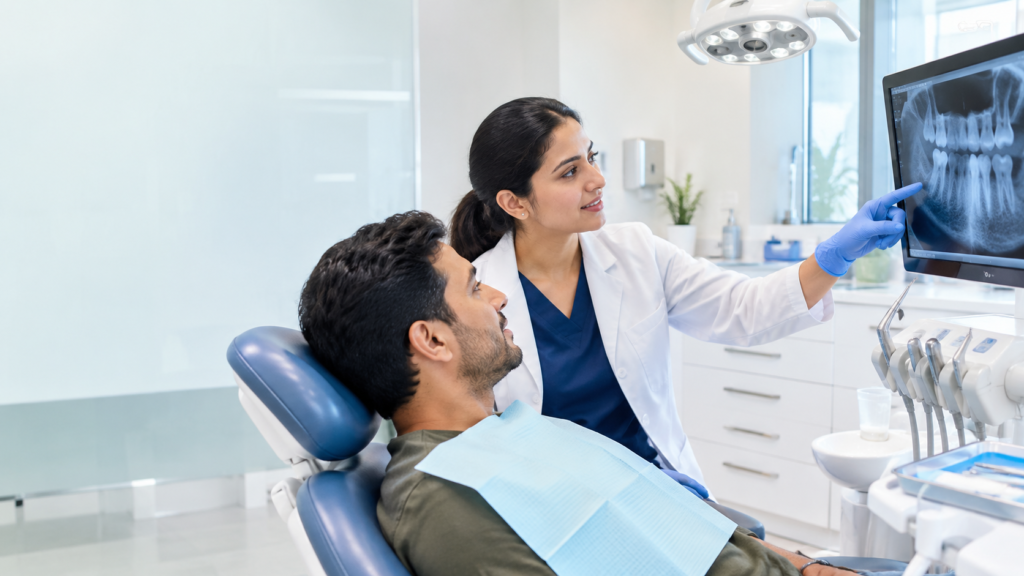
Dental X-rays
X-rays can help the dentist evaluate the roots and surrounding bone.
Additional imaging
In complex cases, your dentist may recommend additional imaging to understand the root canal anatomy and surrounding tissues more clearly.
Review of the previous root canal
The dentist may also assess the quality of the previous treatment and restoration.
The goal is to identify the actual source of discomfort before deciding whether treatment is necessary.
Does Discomfort Mean You Need Root Canal Retreatment?
Not necessarily.
A previously treated tooth that becomes painful does not automatically mean that retreatment is required.
The appropriate treatment depends on the cause.
If the examination indicates that the root canal has not healed properly or that infection has returned, an endodontic specialist or dentist may discuss options such as:
- Root canal retreatment
- Repair of the restoration
- Treatment of a crack, if possible
- Endodontic surgery in selected cases
- Extraction when the tooth cannot be predictably saved
The AAE states that a previously treated tooth that has not healed properly may sometimes be treated again, giving the tooth another opportunity to heal.
Can a Root Canal Be Retreated?
Yes, in selected cases.
During retreatment, the dentist or endodontist evaluates the previous treatment, gains access to the root canal system, removes existing filling material when appropriate, identifies and cleans areas that require further treatment, and reseals the canals.
However, not every tooth is suitable for retreatment. Factors such as cracks, remaining tooth structure, blocked canals and previous procedural complications can affect treatment options.
A detailed examination is therefore necessary before deciding what should be done.
How Can You Protect a Root-Canaled Tooth?
Good oral hygiene and regular dental care can help protect a treated tooth.
Consider the following:
Brush twice a day
Use fluoride toothpaste and brush carefully around the treated tooth and gumline.
Clean between your teeth
Floss or use an appropriate interdental cleaning method to remove plaque and food debris.
Avoid unnecessary pressure
If a temporary restoration is present, follow your dentist’s instructions about chewing.
Protect your permanent restoration
Avoid habits such as chewing hard objects or using your teeth to open packages.
Attend follow-up appointments
Regular dental examinations can help identify problems with the tooth, crown or surrounding gums.
Treat problems early
If a crown becomes loose or you develop pain, swelling or a recurring gum bump, contact your dentist instead of waiting for the symptoms to disappear.
Can You Prevent Root Canal Problems From Returning?
No treatment can guarantee that a tooth will never develop another problem. However, maintaining good oral hygiene, protecting the restoration and attending regular dental examinations can reduce the risk of preventable complications.
A properly restored and maintained root-canaled tooth can continue functioning for many years. The AAE notes that, with proper care, many teeth that receive root canal treatment can last a lifetime.
Discomfort Months After Root Canal Treatment in Noida
If you live in Noida and have developed discomfort months after root canal treatment, getting the tooth examined can help determine whether the issue is related to infection, the restoration, bite pressure, a crack, gum problems, or another dental condition.
The Dental Crowns provides dental services including painless root canal treatment, dental crowns, implants and laser dentistry at its clinic in Civitech Stadia, Sector 79, Noida.
Patients from nearby areas, including Noida Sectors 74, 75, 76, 77, 78 and 79, can consult a dental professional for an appropriate evaluation.
If you are experiencing persistent or recurring pain after a root canal, do not assume that the discomfort will resolve on its own. A dental examination can help identify the cause and determine whether monitoring, restoration, retreatment or another option is appropriate.
Frequently Asked Questions
Why does my root canal tooth hurt months later?
Possible causes include persistent infection, an untreated canal, leakage around a restoration, a cracked tooth, bite-related pressure, inflammation around the root, gum disease or pain originating from a nearby tooth.
Can a root canal tooth get infected again?
Yes. A previously treated tooth can sometimes develop recurrent disease if bacteria remain in the canal system or gain access through a compromised restoration.
Is pain months after a root canal normal?
New or persistent pain months after treatment should be evaluated rather than automatically considered normal. Short-term soreness is different from discomfort that returns months later.
Can a failed root canal be treated again?
In selected cases, root canal retreatment may be possible. The dentist or endodontist must first determine why the tooth did not heal and whether retreatment is appropriate.
Does a root-canaled tooth still have nerves?
The pulp inside the tooth has been removed, but the tissues surrounding the tooth remain living and contain nerves. Inflammation in these surrounding tissues can therefore cause discomfort.
When is root canal pain an emergency?
Severe pain accompanied by facial swelling, significant swelling, fever, or difficulty breathing or swallowing requires urgent professional attention. Difficulty breathing or swallowing warrants emergency medical care.
Final Takeaway
Discomfort months after root canal treatment can have several possible causes, and it does not automatically mean that the root canal has failed. Persistent infection, untreated canals, restoration leakage, cracks, bite problems, gum disease and neighboring teeth can all be considered during diagnosis.
If pain has returned after your root canal, the safest approach is to have the tooth examined by a qualified dental professional rather than relying on painkillers or waiting indefinitely.
For patients in Noida, The Dental Crowns in Sector 79 provides root canal treatment and other restorative and dental care services.
Book a dental consultation if your root-canaled tooth is causing recurring pain, swelling, tenderness or discomfort.
Medical disclaimer: This article is intended for general educational purposes and does not replace an examination, diagnosis or treatment plan from a qualified dentist. Individual treatment depends on the condition of the tooth and surrounding tissues.