Have you noticed difficulty moving your tongue, a gap between your front teeth, discomfort while speaking, or restricted movement of your lips? These issues may sometimes be associated with a tight or unusually positioned frenum. In such cases, a dentist may recommend a procedure called frenectomy.
If you are searching for Laser Frenectomy Treatment Near Sector 76 Noida, understanding the procedure, its benefits, and when it may be required can help you make an informed decision about your oral health.
Laser frenectomy is a dental procedure that uses focused laser energy to release or modify a restrictive frenum, a small band of tissue connecting the lips, cheeks, or tongue to the surrounding oral structures. It may be recommended for children or adults when the attachment interferes with oral function or contributes to specific dental concerns.
At The Dental Crowns, patients from Sector 76, Sector 75, Sector 77, Sector 78, Sector 79, and nearby areas of Noida can consult a dental professional for an assessment of their oral health and appropriate treatment options.
What Is a Frenectomy?
A frenectomy is a minor oral surgical procedure involving the removal or modification of a frenum.
A frenum is a thin fold of tissue that connects or stabilises certain structures inside the mouth. Most people have normal frenal attachments that do not require treatment. However, when the tissue is unusually tight, thick, or restrictive, it may interfere with normal oral movement or contribute to particular dental problems.
Depending on its location, a frenectomy may involve the upper lip, lower lip, or tongue.
There are two commonly discussed types of frenectomy:
1. Labial Frenectomy
A labial frenectomy involves modifying the tissue connecting the upper or lower lip to the gums.
An unusually prominent upper labial frenum may sometimes contribute to a gap between the upper front teeth or place tension on the gum tissue.
However, not every gap between the front teeth requires a frenectomy. The dentist must first determine the underlying cause and whether treatment is appropriate.
2. Lingual Frenectomy
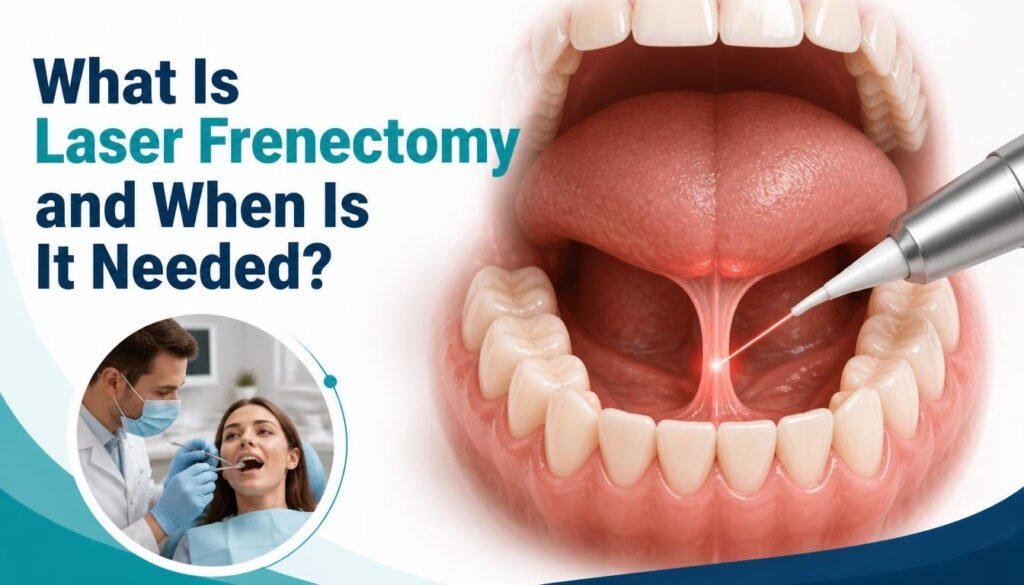
A lingual frenectomy involves releasing or modifying the tissue beneath the tongue.
When the lingual frenum restricts tongue movement, the condition is commonly called tongue-tie or ankyloglossia.
In selected cases, tongue-tie may interfere with tongue mobility, feeding, speech-related functions, or oral hygiene. The impact varies from person to person, and a clinical assessment is necessary to determine whether treatment is needed.
What Is Laser Frenectomy Treatment?
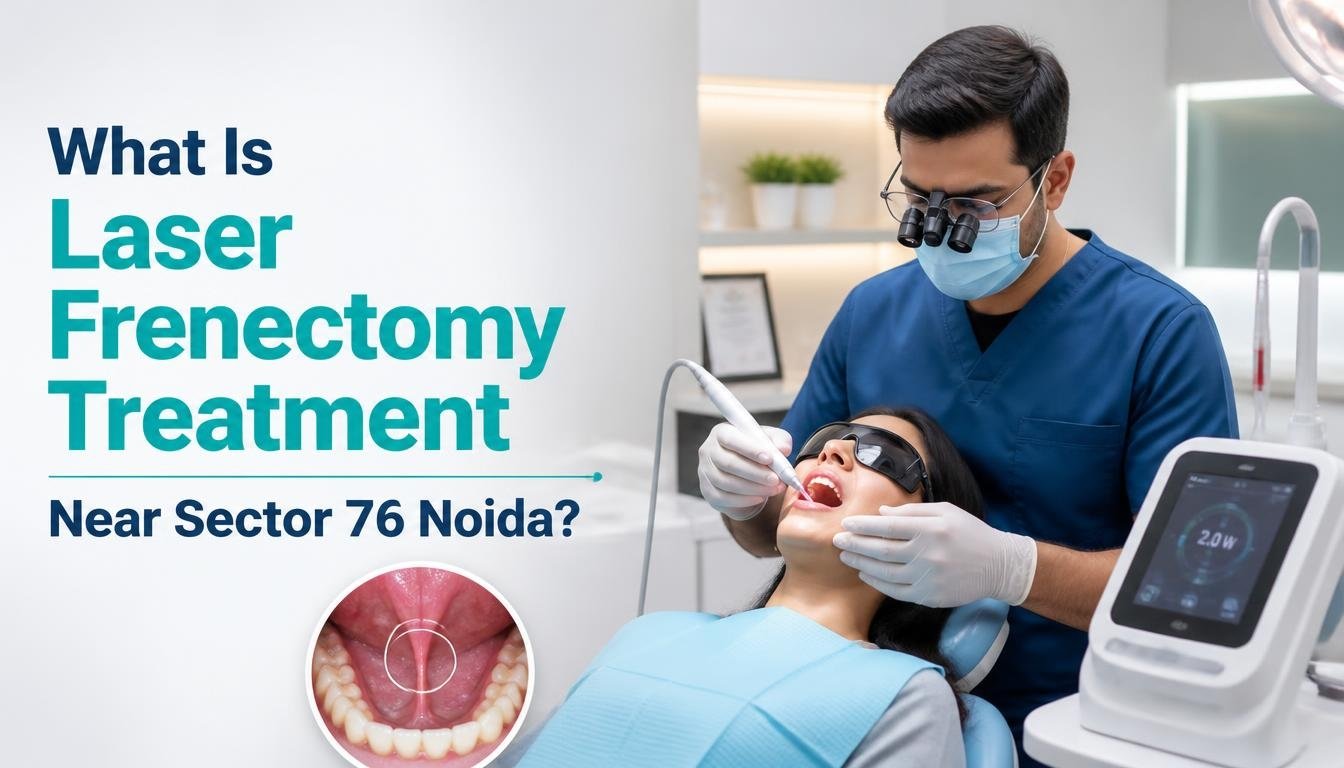
Laser frenectomy is a technique in which a dental laser is used to release or reshape restrictive frenal tissue.
Instead of relying exclusively on a conventional scalpel, the dentist uses focused laser energy to perform the soft-tissue procedure.
Depending on the laser system and the patient’s condition, laser-assisted frenectomy may offer certain advantages, including:
- Precise treatment of the targeted tissue
- Reduced bleeding during the procedure
- Less disturbance to surrounding tissues in appropriate cases
- Potentially reduced postoperative discomfort
- Less need for sutures in selected cases
- A relatively convenient recovery for some patients
It is important to understand that laser treatment is not automatically painless or suitable for every patient. The procedure, anaesthesia requirements, and expected recovery depend on the clinical situation and the dentist’s assessment.
Why Is Frenectomy Treatment Recommended?
A frenectomy may be recommended when a restrictive frenum affects oral function, gum health, or a specific dental treatment plan.
Some possible reasons include:
Restricted Tongue Movement
A tight lingual frenum may limit the tongue’s ability to move freely. In certain patients, this restriction can affect activities such as lifting or extending the tongue.
Breastfeeding or Feeding Difficulties
In infants, tongue-tie may sometimes contribute to breastfeeding difficulties. However, feeding problems can have several causes, so a proper assessment involving appropriately trained healthcare professionals is important before considering surgery.
Speech-Related Concerns
Some children with restricted tongue movement may experience difficulties with particular speech sounds. However, tongue-tie does not automatically cause speech problems, and a frenectomy should not be recommended solely on the basis of assumptions.
A speech-language professional and dentist may need to assess the child before treatment.
Gap Between Front Teeth
A prominent upper lip frenum may sometimes contribute to a gap between the upper front teeth, known as a midline diastema.
The dentist must evaluate whether the frenum is contributing to the gap and whether frenectomy should be considered as part of a broader orthodontic treatment plan.
Gum Recession or Tissue Tension
In selected cases, an abnormal frenal attachment may pull on the gum tissue and contribute to tension around certain teeth.
The dentist can assess whether modifying the frenum may help address the problem.
Benefits of Laser Frenectomy Near Sector 76 Noida
Patients searching for laser frenectomy in Noida often want to understand how laser treatment compares with conventional surgical methods.
Here are some potential benefits of laser-assisted frenectomy when clinically appropriate.
1. Greater Precision
Dental lasers allow controlled treatment of selected soft tissues. This can help the dentist focus on the targeted area while minimising unnecessary disturbance to surrounding tissues.
2. Reduced Bleeding
Laser energy may help control bleeding during certain soft-tissue procedures by sealing small blood vessels as the tissue is treated.
This can make the treatment experience more manageable for some patients.
3. Minimally Invasive Approach
In selected cases, laser frenectomy may involve less tissue trauma than conventional surgical techniques.
The extent of invasiveness depends on the severity of the tissue restriction and the procedure required.
4. Potentially Reduced Discomfort
Some patients experience less postoperative discomfort following laser-assisted soft-tissue procedures.
However, the experience varies, and local anaesthesia may still be required.
5. Fewer Sutures in Certain Cases
Depending on the procedure and the amount of tissue modification, laser frenectomy may not require sutures.
Whether stitches are necessary is determined by the dentist.
6. Convenient Recovery
Many uncomplicated soft-tissue procedures allow patients to resume routine activities relatively soon.
However, healing time varies with age, the extent of treatment, individual healing responses, and compliance with postoperative instructions.
How Is Laser Frenectomy Performed?
If you visit a dental clinic near Sector 76 Noida for frenectomy treatment, the procedure typically involves the following stages.
Step 1: Initial Dental Examination
The dentist examines the tongue, lips, gums, and frenal attachment.
The evaluation may include checking the range of tongue movement, the position of the tissue attachment, and any associated symptoms.
Step 2: Diagnosis and Treatment Planning
Your dentist determines whether the frenum is actually responsible for the problem.
Treatment options, expected benefits, potential risks, and the need for laser or conventional surgery are discussed.
Step 3: Preparing the Treatment Area
The treatment area is prepared, and appropriate protective measures are taken.
Depending on the procedure and the patient’s age, local anaesthesia may be administered.
Step 4: Laser Tissue Release
The dentist carefully uses the laser to release or modify the restrictive tissue.
The exact technique depends on whether the patient requires a labial frenectomy or lingual frenectomy.
Step 5: Postoperative Assessment
After the procedure, the dentist checks the treated area and provides instructions for oral hygiene, eating, medication if required, and follow-up.
In certain cases, specific tongue-mobility exercises or rehabilitation may be recommended by the treating professional.
Is Laser Frenectomy Painful?
One of the most frequently asked questions is whether laser frenectomy is painful.
Laser-assisted frenectomy is often considered a relatively comfortable soft-tissue procedure. However, discomfort depends on the extent of tissue restriction, the treatment technique, and the patient’s individual sensitivity.
Local anaesthesia may be used to minimise discomfort during the procedure.
After treatment, some patients may experience:
- Mild soreness
- Temporary swelling
- Tenderness around the treated area
- Minor discomfort while eating or speaking
- Temporary sensitivity during movement
These symptoms usually improve as healing progresses. If pain becomes severe, bleeding persists, or swelling worsens, contact your dentist promptly.
Laser Frenectomy Recovery and Aftercare
Recovery following laser frenectomy varies from patient to patient.
Following the dentist’s instructions is essential for proper healing.
What Should You Do After Frenectomy?
- Eat soft foods as recommended by your dentist.
- Avoid very hot, spicy, or irritating foods during the initial recovery period.
- Maintain oral hygiene carefully without irritating the surgical area.
- Take prescribed medication according to instructions.
- Avoid repeatedly touching or pulling at the treated tissue.
- Attend scheduled follow-up appointments.
- Perform prescribed oral exercises only as directed.
How Long Does Frenectomy Take to Heal?
The initial recovery from an uncomplicated frenectomy may take several days, while complete tissue healing can take longer.
The healing timeline depends on the extent of treatment, the patient’s age, oral hygiene, and individual healing response.
For children undergoing tongue-tie treatment, appropriate follow-up is important to assess whether tongue mobility and the original functional concern have improved.
Laser Frenectomy Cost Near Sector 76 Noida
The cost of laser frenectomy near Sector 76 Noida varies depending on several factors.
There is no single fixed price applicable to every patient.
The overall treatment cost may depend on:
- Whether a labial or lingual frenectomy is required
- The complexity of the frenal attachment
- The patient’s age and clinical requirements
- The type of laser equipment used
- Whether local anaesthesia is needed
- Whether additional dental or orthodontic treatment is required
- Follow-up consultations and rehabilitation
For an accurate estimate, a dental examination is recommended. Your dentist can explain the treatment plan and provide a cost estimate based on your specific needs.
Who Is a Suitable Candidate for Laser Frenectomy?
Laser frenectomy may be considered for children or adults who have a restrictive frenum associated with a specific functional or dental concern.
Potential candidates include:
- Children with clinically significant tongue-tie
- Adults with restricted tongue mobility
- Patients with a restrictive lip frenum contributing to specific dental concerns
- Patients experiencing frenum-related tension on the gum tissue
- Individuals whose frenal attachment interferes with an appropriate dental treatment plan
Not everyone with a visible or tight frenum requires surgery.
A thorough dental evaluation is essential before deciding whether frenectomy is beneficial.
Laser Frenectomy vs Traditional Frenectomy
Both laser-assisted and conventional frenectomy techniques can be used to address restrictive frenal tissue.
The choice depends on the patient’s clinical condition, the dentist’s training, the available equipment, and the treatment objectives.
Conventional frenectomy may also be appropriate and effective when performed according to the clinical requirements.
The most important consideration is not simply choosing a laser procedure, but ensuring that the treatment is necessary and performed by a qualified dental professional.
Why Choose The Dental Crowns for Dental Consultation Near Sector 76 Noida?
When considering frenectomy treatment, choosing a dental clinic that prioritises diagnosis, patient communication, and personalised treatment planning is essential.
At The Dental Crowns, patients from Sector 76 and surrounding areas of Noida can explore dental treatment options based on their oral health requirements.
The clinic offers a range of dental services, including:
- Laser dentistry
- Root canal treatment
- Dental implants
- Dental crowns and bridges
- General and restorative dentistry
- Cosmetic dental treatments
Whether you are exploring laser frenectomy for yourself or your child, a professional consultation can help you understand the available options and determine the next appropriate step.
Book a Dental Consultation Near Sector 76 Noida
If you are experiencing restricted tongue movement, concerns about a lip frenum, or other symptoms that may require frenectomy, do not rely on self-diagnosis.
Consult a qualified dental professional for an examination and personalised treatment recommendations.
Contact the clinic to discuss your concerns and schedule a dental consultation.
Frequently Asked Questions (FAQs)
1. What is laser frenectomy treatment?
Laser frenectomy is a dental procedure that uses focused laser energy to release or modify a restrictive frenum connecting the tongue, lips, or cheeks to surrounding oral tissues.
2. Where can I get laser frenectomy treatment near Sector 76 Noida?
You can consult The Dental Crowns in Noida for a dental examination and discussion of appropriate treatment options. Contact the clinic to confirm availability and appointment details.
3. Is laser frenectomy safe?
When performed by a qualified dental professional using appropriate techniques, laser frenectomy can be a suitable treatment for selected cases. Every surgical procedure has potential risks, so a clinical assessment is necessary.
4. Is laser frenectomy painful?
Local anaesthesia is often used to minimise discomfort. Some patients may experience mild soreness or tenderness during recovery.
5. What is the difference between labial and lingual frenectomy?
Labial frenectomy modifies the tissue connecting the lip to the gums, while lingual frenectomy modifies the tissue beneath the tongue.
6. Can laser frenectomy treat tongue-tie?
Yes, laser-assisted frenectomy may be used to treat selected cases of tongue-tie when the restriction is clinically significant and treatment is appropriate.
7. Is frenectomy necessary for every tongue-tie?
No. Some people have a restricted lingual frenum without functional problems. Treatment should be based on symptoms, clinical findings, and professional evaluation.
8. Can adults undergo laser frenectomy?
Yes. Frenectomy may be considered for adults when a restrictive frenum is associated with a specific functional or dental concern.
9. Can children undergo laser frenectomy?
Children may undergo frenectomy when clinically indicated. The decision should be based on an appropriate assessment of the child’s age, symptoms, and functional needs.
10. Does laser frenectomy require stitches?
Some laser-assisted procedures may not require sutures. However, the need for stitches depends on the procedure and the extent of tissue modification.
11. How long does laser frenectomy take?
The procedure is often relatively short, but the duration varies according to the complexity of the case and the type of frenectomy required.
12. What is the recovery time after laser frenectomy?
Initial recovery may take several days, while complete healing can take longer. Your dentist will provide a recovery timeline based on the treatment performed.
13. Can frenectomy improve speech?
In selected cases, releasing a restrictive frenum may improve tongue mobility. However, speech difficulties have multiple causes, and frenectomy does not guarantee speech improvement.
14. Can frenectomy help with breastfeeding?
Frenectomy may be considered in certain infants with clinically significant tongue-tie and breastfeeding difficulties. A coordinated assessment by qualified healthcare professionals is recommended.
15. Can laser frenectomy close the gap between front teeth?
Frenectomy may be considered when a prominent frenum contributes to a midline gap. However, it does not automatically close the gap, and orthodontic treatment may also be necessary.
16. What is the cost of laser frenectomy near Sector 76 Noida?
The cost varies according to the complexity of the procedure, type of frenectomy, equipment, and additional treatment requirements. A consultation is necessary for an accurate estimate.
17. Is laser frenectomy better than traditional frenectomy?
Laser technology may offer certain advantages in selected cases, but both techniques can be appropriate. The best option depends on the clinical condition and the dentist’s recommendation.
18. Do I need a consultation before frenectomy?
Yes. A dental examination is important to determine whether the frenum is causing a problem and whether treatment is appropriate.
19. Can a frenectomy be performed on the upper lip?
Yes. A labial frenectomy may be performed to modify the tissue connecting the upper lip to the gums when clinically indicated.
20. Can tongue-tie return after laser frenectomy?
Healing can sometimes result in tissue reattachment or restricted movement. Follow-up and prescribed postoperative care help the dentist monitor healing and function.
Final takeaway: Laser frenectomy can be a useful option for selected patients with restrictive frenal attachments. A proper diagnosis, personalised treatment planning, and appropriate postoperative care are essential for achieving the best possible outcome.