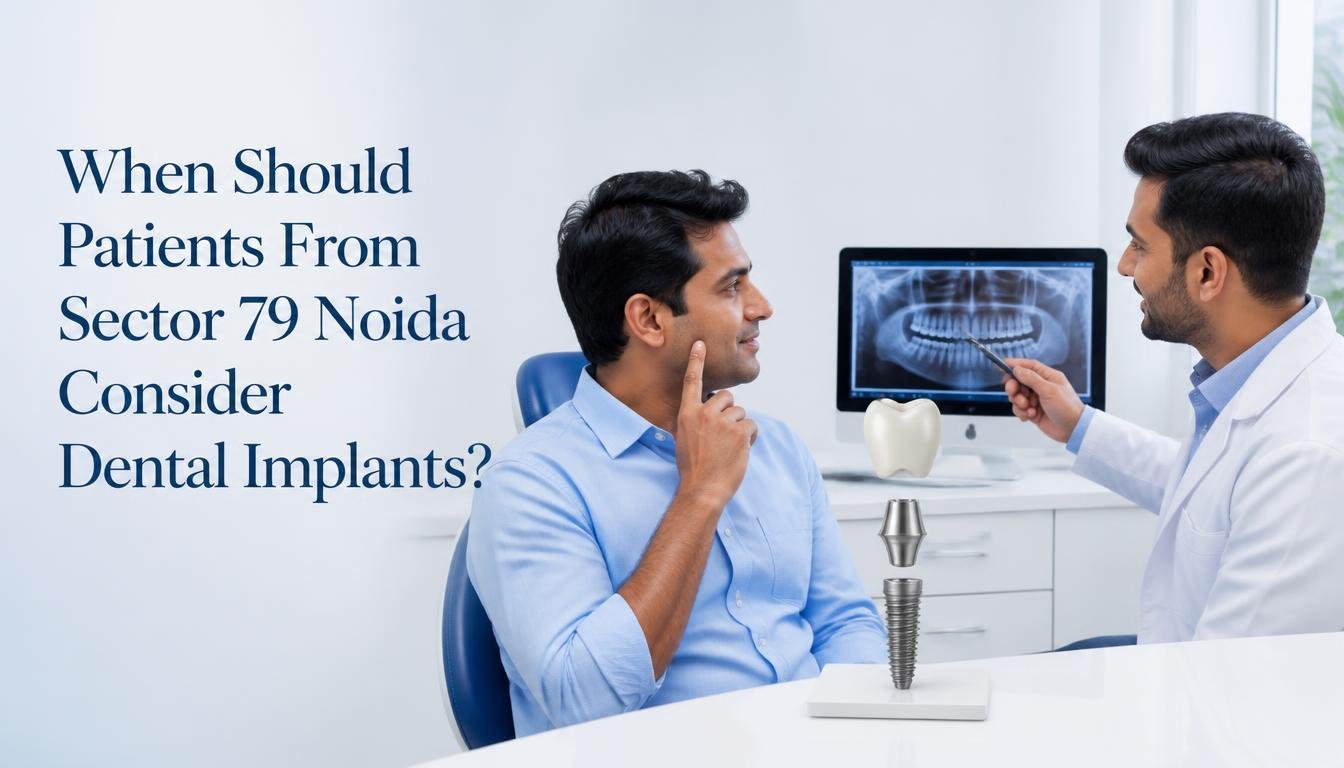
Losing a tooth can affect more than the appearance of your smile. A missing tooth may make chewing less comfortable, affect speech, create an unwanted gap between neighbouring teeth and make some people feel less confident when smiling.
For patients living in Sector 79 Noida, dental implants can be one of the options to discuss when one or more teeth are missing. Unlike a traditional removable denture, a dental implant is designed to replace the root portion of a missing tooth and support a replacement tooth, such as a dental crown.
But when should patients from Sector 79 Noida actually consider dental implants?
The answer depends on several factors, including the number of missing teeth, jawbone condition, gum health, overall oral health, treatment expectations and whether alternative treatments such as bridges or dentures may be appropriate.
If you are looking for dental implants in Sector 79 Noida, a professional examination is the right starting point rather than choosing an implant simply because it is a popular treatment.
What Are Dental Implants?
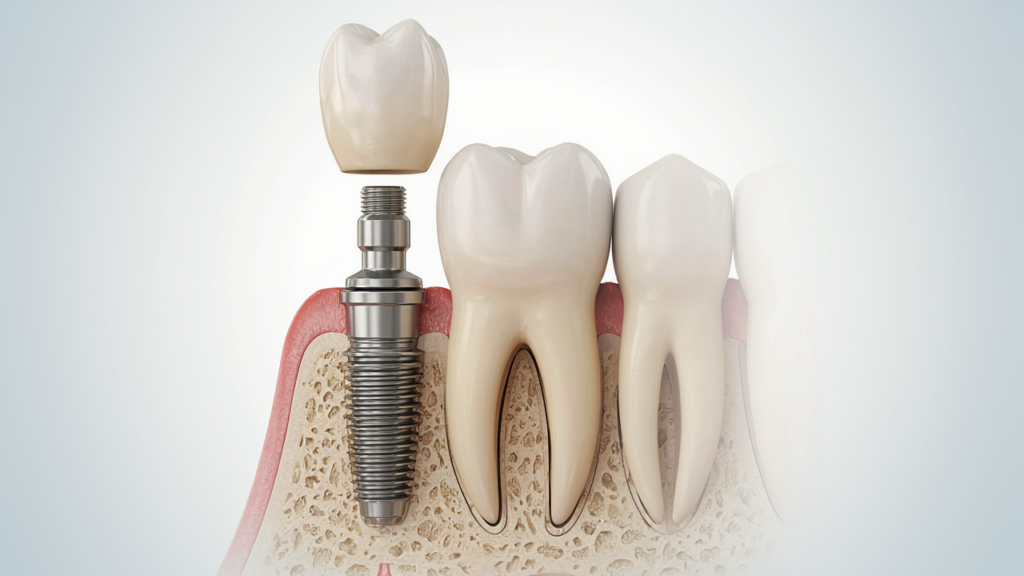
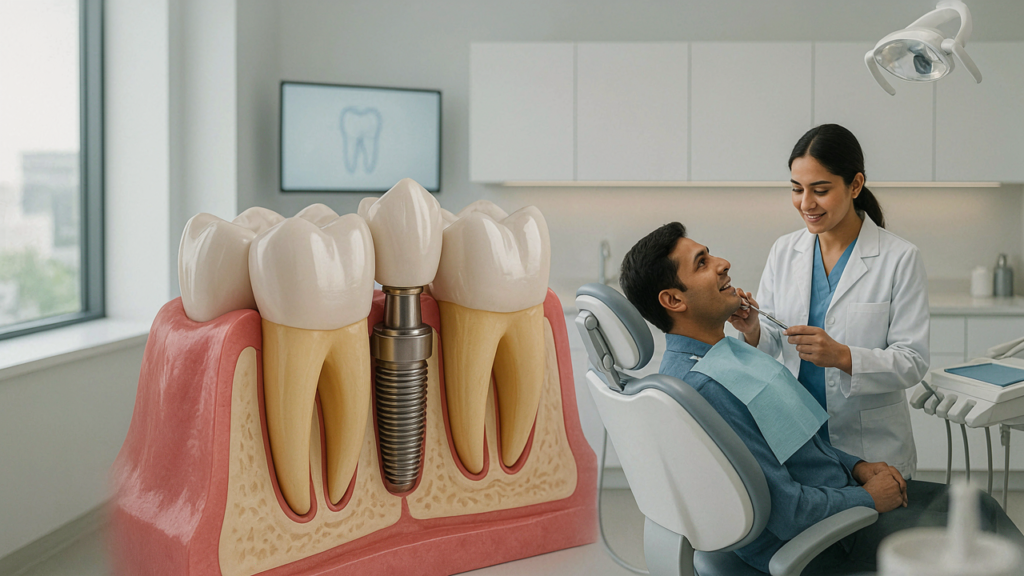
A dental implant is a small post placed into the jawbone to replace the root of a missing tooth. Once the implant has integrated with the surrounding bone, it can support an abutment and replacement tooth, commonly a dental crown.
This means an implant restoration generally consists of three main components:
- Dental implant – the post placed in the jawbone.
- Abutment – the connector between the implant and replacement tooth.
- Dental crown – the visible tooth-shaped restoration.
Mayo Clinic explains that dental implants can replace tooth roots and provide a foundation for artificial teeth. The jawbone needs time to heal around the implant, so treatment can take several months depending on the individual case.
For patients considering treatment locally, Dental Implants at The Dental Crowns in Noida can provide more information about the clinic’s implant service.
When Should Patients From Sector 79 Noida Consider Dental Implants?
There is no single age or exact time when everyone should receive an implant. Instead, patients should consider discussing implants with a dentist when tooth loss is affecting their oral function, appearance or quality of life.
1. You Have One or More Missing Teeth
A missing tooth is one of the most common reasons to explore dental implant treatment.
Whether you have lost a tooth because of decay, trauma, gum disease or another dental problem, an implant may be considered as a tooth-replacement option.
The American Dental Association notes that implants are among several options available for restoring oral function, alongside treatments such as crowns, bridges and dentures. The appropriate choice depends on the patient’s diagnosis, oral health and individual needs.
If you live in Sector 79 or nearby Noida sectors and have been living with a missing tooth, a dental examination can help determine which replacement options are appropriate for you.
2. You Find It Difficult to Chew Because of a Missing Tooth
Have you started chewing mostly on one side of your mouth because of a missing tooth?
A gap can make certain foods more difficult or uncomfortable to eat. Depending on the location and number of missing teeth, replacing the tooth may help restore chewing function.
Dental implants are designed to provide a stable foundation for a replacement tooth because the implant is anchored in the jawbone.
However, your dentist should first evaluate your individual condition before recommending an implant.
3. You Want a Fixed Alternative to a Removable Denture
Some patients prefer not to use a removable denture.
If you want to discuss a fixed tooth-replacement option, dental implants may be worth considering. Unlike a removable denture, the implant itself is surgically anchored into the jawbone and can support a replacement crown.
Mayo Clinic notes that implants may be an option for people who are unable or unwilling to wear dentures, provided other clinical requirements are met.
That does not mean an implant is automatically better for every patient. A dentist should explain the available alternatives and their respective advantages, limitations and costs.
4. You Want to Replace a Missing Tooth Without Using the Adjacent Teeth for a Conventional Bridge
A conventional dental bridge may use neighbouring teeth to support a replacement tooth.
An implant-supported restoration follows a different approach because the implant is placed into the jawbone and supports the replacement tooth.
For patients with a single missing tooth, this distinction may be important when discussing treatment options.
The American Dental Association recommends that patients receive a comprehensive dental examination and discuss the range of available treatment options before proceeding with implants.
5. You Have Enough Healthy Jawbone — or May Be Able to Have Bone Grafting
Adequate bone is an important consideration when planning dental implant treatment.
The implant needs sufficient bone for stability. If there has been significant bone loss after tooth loss, your dentist may determine that additional treatment is required before implant placement.
Mayo Clinic notes that patients may sometimes require a bone graft when there is insufficient bone to secure an implant.
This is one reason why patients should not decide whether they are suitable for implants based solely on an online checklist.
A dentist may need to assess:
- Jawbone volume
- Bone quality
- Gum health
- Existing infection
- Adjacent teeth
- Bite
- Overall oral health
- Relevant medical factors
6. Your Gums and Remaining Teeth Are Healthy Enough for Implant Planning
Healthy oral tissues are an important part of implant treatment planning.
If you have untreated gum disease, significant decay or an active dental infection, your dentist may recommend addressing those problems before considering implant placement.
Cleveland Clinic identifies untreated gum disease, extensive tooth decay, poor oral hygiene and severe bone loss among factors that can make implant treatment unsuitable or require additional management.
Therefore, if you are searching for dental implants near Sector 79 Noida, do not focus only on the implant itself. Your overall oral health should be evaluated first.
7. You Want a Long-Term Tooth Replacement Option
Dental implants are designed as a long-term tooth-replacement solution when appropriately planned and maintained.
Because the implant is placed into the jawbone, it can provide a stable foundation for a replacement tooth.
However, “long-term” does not mean that an implant requires no maintenance.
Patients still need:
- Regular dental examinations
- Good brushing and interdental cleaning
- Healthy gums
- Professional dental care when recommended
- Attention to problems such as looseness, discomfort or inflammation
Mayo Clinic recommends maintaining good oral hygiene and attending regular dental checkups to monitor implants and the surrounding tissues.
Who May Not Be Ready for Dental Implants Yet?
Dental implants are not automatically suitable for everyone.
A dentist may recommend treating another dental problem before implant placement.
Examples may include:
- Active gum disease
- Untreated dental infection
- Significant tooth decay
- Insufficient jawbone
- Poor oral hygiene
- Certain conditions that can affect bone healing
- Smoking or tobacco use
This does not necessarily mean an implant can never be considered. In some cases, preliminary treatment or bone grafting may change the treatment possibilities.
Mayo Clinic explains that adequate bone, healthy oral tissues and the ability to heal properly are important considerations for implant treatment.
Dental Implants vs Bridges vs Dentures
Patients from Sector 79 Noida often compare dental implants with bridges and dentures.
The right option depends on the individual situation.
| Treatment | General approach | May be considered when |
|---|---|---|
| Dental Implant | Implant placed in jawbone and restored with a crown | One or more teeth are missing and the patient is suitable for implant treatment |
| Dental Bridge | Replacement tooth supported by neighbouring teeth or implants | A fixed tooth replacement is required and bridge treatment is appropriate |
| Denture | Removable replacement for one or multiple missing teeth | Multiple teeth are missing or a removable option is suitable |
There is no universally appropriate treatment for every patient. The American Dental Association recommends discussing available options with a dentist after a comprehensive examination.
What Happens During a Dental Implant Consultation?
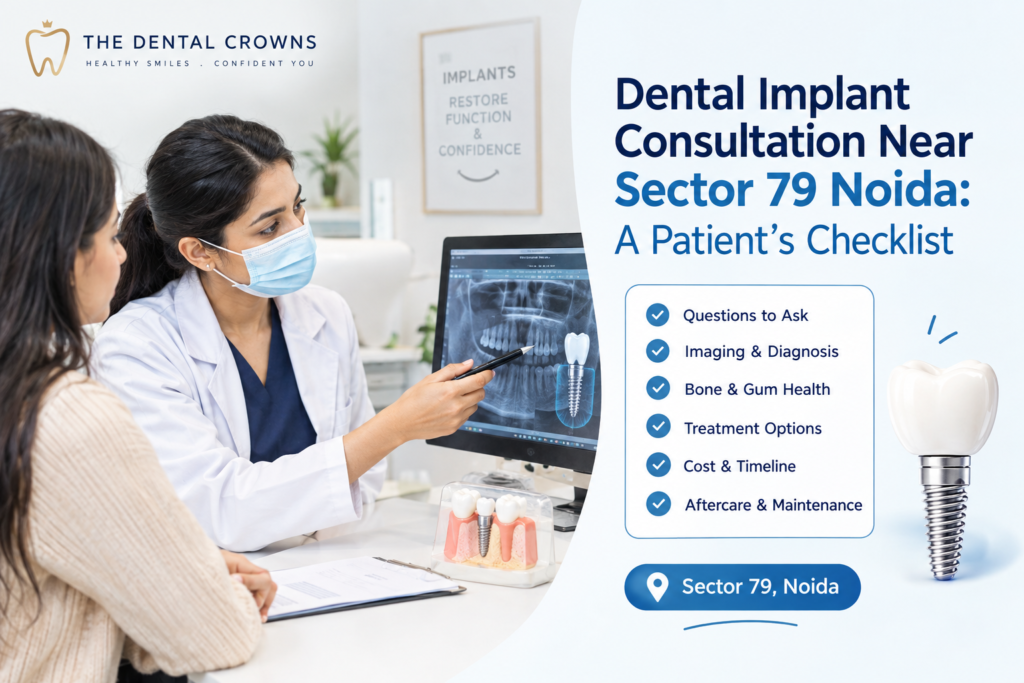
If you are considering dental implants in Noida Sector 79, the consultation is an important part of the treatment process.
Your dentist may assess:
Step 1: Dental Examination
The dentist examines your teeth, gums and the area where the tooth is missing.
Step 2: Review of Your Dental History
Your dentist may ask about previous dental treatments, tooth loss, existing dental problems and relevant health factors.
Step 3: Assessment of the Jawbone
The available bone needs to be assessed to determine whether it can provide suitable support for the implant.
Step 4: Discussing Treatment Alternatives
Depending on your situation, your dentist may discuss implants, bridges, dentures or other restorative options.
Step 5: Treatment Planning
If an implant is appropriate, your dentist can develop a treatment plan based on the missing tooth, bone condition, gum health and desired restoration.
How Long Does Dental Implant Treatment Take?
Dental implant treatment is generally not an instant procedure.
After implant placement, the jawbone needs time to integrate with the implant. The exact timeline varies from patient to patient.
Mayo Clinic explains that the process can take several months because bone healing around the implant requires time.
Additional procedures, such as bone grafting, may increase the overall treatment timeline.
Therefore, patients should ask their dentist for an individualized treatment schedule rather than relying on a fixed number of days advertised online.
Is Dental Implant Treatment Painful?
Dental implant placement is performed using local anaesthesia or another appropriate form of anaesthesia, so patients should not expect to feel the surgical procedure in the same way as they would without anaesthesia.
Some soreness, swelling or discomfort can occur during recovery.
The amount of discomfort can vary depending on the complexity of treatment and whether additional procedures are performed.
If you are concerned about dental treatment because of anxiety or previous experiences with dental pain, discuss these concerns with your dentist before treatment.
How Should You Care for Dental Implants?
Dental implants still require daily care.
Good implant maintenance includes:
- Brush twice daily with fluoride toothpaste.
- Clean between your teeth as recommended by your dentist.
- Keep the gum tissue around the implant clean.
- Attend regular dental checkups.
- Avoid using your teeth to bite very hard objects.
- Tell your dentist if the implant or crown feels loose.
- Seek professional care if you develop swelling, persistent discomfort or bleeding around the implant.
Good oral hygiene is important because the implant, crown and surrounding gum tissues still need professional monitoring.
Why Sector 79 Noida Patients May Find Local Implant Treatment Convenient
Dental implant treatment can require multiple appointments, examinations and follow-up visits.
For patients living in or around Sector 79 Noida, choosing a dental clinic close to home can make these appointments more convenient.
The Dental Crowns is located at Civitech Stadia, Sector 79, Noida, Uttar Pradesh 201301, and provides dental implants along with other general, cosmetic and surgical dental services.
Patients can explore the clinic’s complete Dental Services in Noida to understand the range of treatments available.
If your tooth loss is related to severe decay or an infection, you may also need an assessment for Root Canal Treatment in Noida.
Dental Implants After Tooth Extraction
Some patients begin considering an implant after a tooth has been extracted.
However, the timing of implant placement depends on factors such as:
- Why the tooth was removed
- Presence of infection
- Gum condition
- Available bone
- Healing
- Location of the tooth
- Overall treatment plan
Your dentist can determine whether an implant should be placed immediately or after the extraction site has healed.
If you have recently had a tooth removed and are considering replacement options, it is worth discussing your options early rather than waiting until the gap becomes a long-term concern.
What If You Have Had a Missing Tooth for Years?
Having a missing tooth for several years does not automatically mean dental implants are impossible.
However, the jawbone can change after tooth loss, and the amount of available bone may become an important factor in treatment planning.
If insufficient bone is present, additional procedures such as bone grafting may sometimes be considered.
Therefore, patients from Sector 79 Noida who have had a missing tooth for a long time should arrange a professional evaluation rather than assuming that they are or are not suitable for implants.
Questions to Ask Your Dentist Before Choosing Dental Implants
Before beginning treatment, consider asking:
- Am I a suitable candidate for a dental implant?
- Do I have enough jawbone?
- Do I need a bone graft?
- Are my gums healthy enough for implant treatment?
- What alternatives are available?
- How many appointments will I need?
- What type of crown will be placed on the implant?
- What will the complete treatment cost include?
- How should I care for the implant afterward?
- What follow-up appointments will I need?
Getting clear answers can help you understand your treatment rather than choosing an implant based only on price or online advertisements.
Frequently Asked Questions
1. When should I consider dental implants in Sector 79 Noida?
You can discuss dental implants with a dentist if you have one or more missing teeth and want to explore a stable tooth-replacement option. Your suitability depends on factors such as bone availability, gum health, oral hygiene and overall dental condition.
2. Are dental implants suitable for everyone?
No. Implant treatment requires individual assessment. Insufficient bone, active gum disease, untreated infection, poor oral hygiene and certain health factors can affect suitability or require treatment before implant placement.
3. Can I get a dental implant if I have bone loss?
Possibly. If there is insufficient bone, your dentist may discuss procedures such as bone grafting. The decision depends on the amount and location of bone available.
4. How many teeth can dental implants replace?
Dental implants can be used in different treatment configurations to replace one or multiple missing teeth. Your dentist can determine whether individual implants, an implant-supported bridge or another restoration is appropriate.
5. Is a dental implant better than a bridge?
There is no single treatment that is best for every patient. Implants, bridges and dentures have different indications, benefits, limitations and costs. A dentist should assess your oral condition before recommending one.
6. Can a dental implant replace a front tooth?
Yes, dental implants can be used to replace missing front teeth when the patient is clinically suitable. Aesthetic considerations and the condition of the gum and bone are particularly important for front-tooth replacement.
7. Can I get an implant after having a tooth removed?
In some cases, yes. The timing depends on the extraction site, infection, bone condition and individual treatment plan.
8. How long does dental implant treatment take?
The timeline varies. Implant treatment may take several months because the jawbone needs time to heal and integrate with the implant.
9. Do dental implants look like natural teeth?
The replacement crown is designed to resemble a natural tooth. The final appearance depends on factors including the crown design, colour, position, surrounding teeth and gum condition.
10. Where can I get dental implants near Sector 79 Noida?
The Dental Crowns provides dental implant treatment from its clinic at Civitech Stadia, Sector 79, Noida. Patients can schedule an examination to discuss whether implants or another tooth-replacement option is appropriate.
Final Thoughts
For patients from Sector 79 Noida, dental implants may be worth discussing when one or more missing teeth are affecting chewing, speech, appearance or confidence.
However, the decision should be based on a professional assessment rather than simply the presence of a missing tooth.
Your dentist may evaluate your jawbone, gums, remaining teeth, oral hygiene and overall dental condition before explaining whether an implant, bridge, denture or another restoration is appropriate.
If you have a missing tooth and are considering dental implants in Sector 79 Noida, an implant consultation can help you understand your available options and create a treatment plan based on your individual needs.
The Dental Crowns is located at Civitech Stadia, Sector 79, Noida, and offers dental implants alongside crowns, bridges, root canal treatment, dentures and other dental services.
Book a dental consultation to discuss your missing tooth and find out whether dental implant treatment is suitable for you.
Medical Disclaimer
This article is intended for general educational purposes and does not replace a professional dental examination, diagnosis or treatment plan. Dental implant suitability varies between patients. Consult a qualified dental professional before beginning treatment.