
Laser dentistry has become an increasingly popular option for selected dental procedures because it can provide precise treatment with controlled tissue removal and, in some situations, less bleeding or discomfort. However, laser dental treatment is not automatically suitable for every patient or every dental problem.
If you are searching for “Who Should Not Get Laser Dental Treatment?”, the most important thing to understand is that there is no single list that applies to every dental laser. Different lasers, wavelengths, power settings and procedures have different indications and safety considerations.
Your dentist should first examine your teeth, gums, oral tissues, medical history and medications before deciding whether laser dentistry is appropriate.
At The Dental Crowns in Noida, laser dentistry is offered for selected dental procedures, with treatment planned according to the patient’s individual clinical requirements.
What Is Laser Dental Treatment?
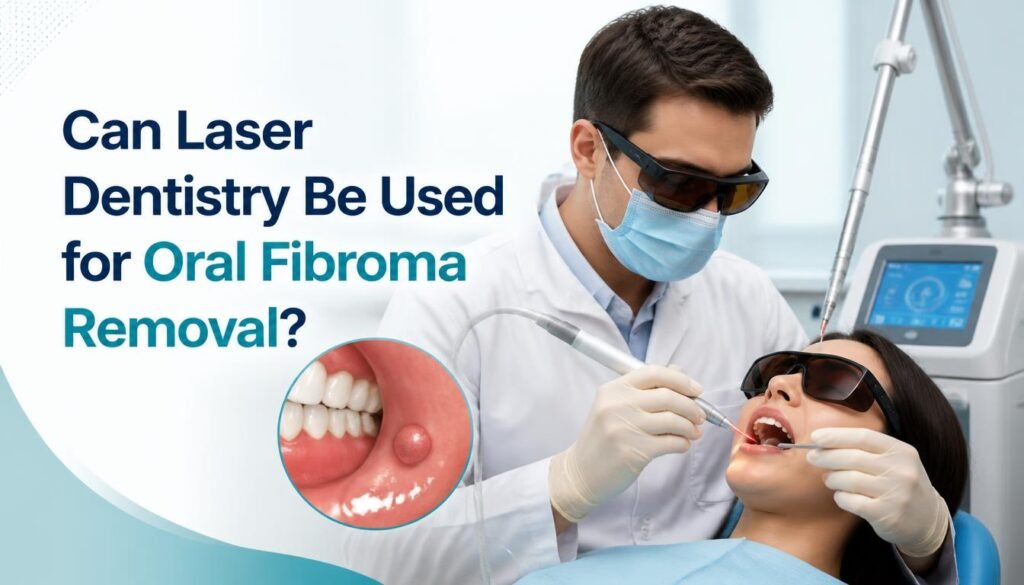
Laser dentistry uses concentrated light energy during selected dental procedures. Depending on the type of laser and the treatment being performed, lasers may be used for certain gum procedures, soft-tissue treatments, selected cavity procedures, root canal-related applications and other dental treatments.
Laser treatment is not a universal replacement for conventional dental instruments. In many cases, it is an additional technology that a dentist may use when it is clinically appropriate.
According to the American Dental Association, dental treatment decisions should be based on evidence, the patient’s oral and medical condition, clinical expertise and individual treatment needs.
Therefore, the question should not simply be “Is laser dentistry safe?” but rather:
“Is this particular laser procedure appropriate and safe for me?”
Who Should Not Get Laser Dental Treatment?
There are situations where laser treatment may need to be avoided, postponed or modified. Importantly, many of these are relative precautions rather than permanent bans.
Your dentist may recommend postponing or avoiding laser treatment if you have certain medical conditions, oral problems or circumstances that could increase treatment risks.
1. People With Certain Untreated Oral Conditions
If you have an active dental problem that has not yet been properly diagnosed, laser treatment should not be started simply because it is considered a modern or minimally invasive option.
For example, unexplained:
- Persistent mouth sores
- Unusual oral growths
- Severe swelling
- Unexplained bleeding
- Suspicious lesions
- Severe tooth or jaw pain
may require a proper examination and diagnosis first.
Laser technology should not be used as a substitute for appropriate diagnosis.
The American Dental Association specifically cautions against relying on light-based technologies to determine whether suspicious oral abnormalities require biopsy or referral.
Bottom line: Diagnosis comes before treatment.
2. Patients With Suspicious or Known Tumors Need Special Evaluation
Patients with an existing or suspected tumor should not assume that laser treatment is appropriate.
Some laser applications may interact with abnormal tissue differently from healthy tissue. The treatment decision therefore needs to be made by the appropriate dental or medical professional after evaluating the lesion.
Research on therapeutic laser applications has identified malignant disease as an important situation requiring caution, although contraindications can vary considerably depending on the type of laser and treatment.
If you have a suspicious oral lesion, your priority should be diagnosis and appropriate specialist evaluation, not cosmetic or elective laser treatment.
3. People With Certain Bleeding Disorders or Bleeding Risks
Patients with bleeding disorders or those taking medications that affect blood clotting may require additional assessment before dental procedures.
This does not necessarily mean that every person taking a blood-thinning medication cannot receive laser dental treatment.
Instead, your dentist needs to know:
- Which medication you take
- Why you take it
- Your medical history
- Your bleeding history
- What dental procedure is planned
- Whether any modification or medical consultation is required
A recent review of laser technology in periodontal treatment notes that postoperative bleeding remains a potential concern, particularly in patients with bleeding disorders or those taking anticoagulant medication.
Never stop an anticoagulant or other prescribed medicine on your own before dental treatment.
4. Pregnant Patients May Need Treatment Modifications
Pregnancy does not automatically mean that a woman cannot receive dental care.
However, the type of laser treatment, treatment location, urgency and overall clinical situation matter.
Elective procedures may sometimes be postponed depending on the patient’s circumstances, while necessary dental care may still be provided with appropriate precautions.
Certain laser-therapy literature recommends avoiding direct treatment of the uterus during pregnancy, but this relates to specific therapeutic laser applications rather than meaning that all dental laser procedures are forbidden during pregnancy.
Therefore, pregnant patients should always tell their dentist that they are pregnant before treatment.
5. Patients With Photosensitivity or Certain Light-Sensitive Conditions
Some medications and medical conditions can increase sensitivity to light.
Because dental lasers work using specific wavelengths of light, your dentist should know about any:
- Photosensitivity disorder
- Light-sensitive medication
- Previous unusual reaction to light-based treatment
- Relevant autoimmune condition
- Medication that increases photosensitivity
Some older literature has identified photosensitive patients or patients taking photosensitizing substances as requiring particular caution with certain laser applications.
This is one reason why a complete medical history is important before treatment.
6. Patients With Certain Neurological or Seizure Conditions May Need Individual Assessment
Some laser therapy literature has discussed precautions involving patients with epilepsy or seizure disorders, particularly with certain therapeutic laser applications and pulsed frequencies.
However, this should not be interpreted as a universal rule that every patient with epilepsy can never receive any dental laser treatment.
The exact laser, wavelength, settings and procedure matter.
If you have epilepsy or a history of seizures, tell your dentist before treatment so an appropriate risk assessment can be made.
7. People With Poorly Controlled Medical Conditions May Need Treatment Delayed
Certain systemic conditions can influence oral health, healing and the way dental treatment is planned.
For example, medical conditions such as diabetes and other systemic diseases can have implications for oral healthcare and treatment planning. The ADA notes that systemic conditions can affect oral health and create additional considerations for dental care.
If a medical condition is poorly controlled, your dentist may recommend:
- Stabilizing the medical condition first.
- Consulting your physician if necessary.
- Modifying the dental treatment plan.
- Scheduling treatment when it is safer.
This is particularly important for surgical or tissue-related procedures.
8. Patients With Active Oral Infections May Need the Infection Evaluated First
Having a dental infection does not automatically mean that laser treatment is impossible.
In fact, lasers may have applications in selected dental and periodontal procedures.
However, a dentist must first determine:
- Where the infection is located
- How severe it is
- Whether drainage is required
- Whether conventional treatment is necessary
- Whether antibiotics are indicated
- Whether laser treatment is actually appropriate
Laser dentistry should not be promoted as a universal replacement for established treatment.
If you have severe facial swelling, fever, difficulty swallowing or difficulty breathing, seek urgent dental or medical care rather than delaying treatment to pursue elective laser dentistry.
9. Children May Require Special Consideration
Children are not automatically unsuitable for laser dentistry.
However, pediatric dental treatment requires consideration of:
- Age
- Cooperation level
- Type of dental problem
- Treatment location
- Laser type
- Protective equipment
- Ability to follow safety instructions
The ADA emphasizes that pediatric patients and other patients with special needs may require treatment approaches and accommodations appropriate to their individual circumstances.
Therefore, parents should not choose laser treatment simply because it sounds less invasive. The child’s dentist should determine whether it is appropriate.
10. Patients Who Cannot Follow Laser Safety Instructions
Laser safety is extremely important.
The eyes are particularly sensitive to laser exposure, which is why appropriate protective eyewear is an essential part of laser safety protocols.
A review of low-level laser applications in dentistry highlights the risk of eye injury and emphasizes the importance of wavelength-specific protective eyewear for both the patient and dental professional.
Patients who cannot reliably cooperate with safety instructions may require alternative treatment arrangements.
This can be especially relevant when treating:
- Very young children
- Patients with certain disabilities
- Extremely anxious or uncooperative patients
- Patients unable to remain still during treatment
The dentist should determine the safest approach.
Is Laser Dentistry Safe for Everyone?
No dental treatment is universally appropriate for every patient.
Laser dentistry can be a useful technology when the correct laser is used for the correct indication by a properly trained dental professional.
The American Dental Association’s technical information on light-based therapy emphasizes the importance of appropriate clinical safety measures, including engineering controls, procedural safeguards and protective equipment.
The safety of laser treatment depends on several factors:
- Type of laser
- Laser wavelength
- Power and exposure settings
- Treatment area
- Dental diagnosis
- Patient’s medical history
- Medications
- Dentist’s training
- Protective equipment
- Correct treatment technique
This is why a dental consultation should always come before treatment.
What Should You Tell Your Dentist Before Laser Dental Treatment?
Before undergoing laser dentistry, tell your dentist if you:
- Are pregnant or planning pregnancy
- Have diabetes or another systemic condition
- Have a bleeding disorder
- Take anticoagulants or other regular medication
- Have epilepsy or a history of seizures
- Have a known tumor or suspicious oral lesion
- Have an autoimmune condition
- Have a photosensitivity disorder
- Have allergies or medication sensitivities
- Recently underwent another dental procedure
- Have unusual bleeding or delayed healing
- Have an active infection
- Have previously experienced a reaction to laser or light-based treatment
Your dentist can then decide whether laser treatment is appropriate, whether modifications are needed or whether another treatment option would be better.
What Are the Alternatives to Laser Dental Treatment?
Laser dentistry is only one treatment option.
Depending on your dental problem, your dentist may recommend conventional treatment such as:
Root Canal Treatment
If the tooth’s pulp is infected or severely damaged, conventional or laser-assisted root canal treatment may be considered depending on the clinical situation.
Dental Implants
For missing teeth, dental implants may provide a long-term tooth replacement option when you are an appropriate candidate.
Conventional Dental Treatment
Traditional dental instruments remain highly useful and may be the most appropriate option for many procedures.
The goal is not to choose the newest technology. The goal is to choose the right treatment for your specific dental condition.
Laser Dentistry in Noida: Who Is a Good Candidate?
The Dental Crowns provides laser dentistry in Noida at its clinic in Civitech Stadia, Sector 79. The clinic describes laser applications for selected gum, cavity, cosmetic and other dental procedures.
However, living near a laser dental clinic does not automatically make someone a candidate.
A dentist should first assess your:
Dental problem + medical history + medications + treatment objective + laser suitability.
For patients researching laser treatment in nearby sectors, you can also read our related guides:
- Laser Dentistry Near Noida Sector 75: Benefits, Cost & Procedure
- Laser Dentistry Near Noida Sector 76: Is It Better Than Traditional Dentistry?
- Laser Dentistry Near Noida Sector 77: Benefits and Treatment Options
- Laser Dentistry Near Sector 78 Noida: Who Can Benefit From It?
- Laser Dentistry Near Noida Sector 79: Benefits, Procedure and Cost
Questions to Ask Your Dentist Before Choosing Laser Dentistry
Before agreeing to laser dental treatment, ask:
1. Why do I need laser treatment?
The dentist should be able to explain the diagnosis and reason for choosing laser technology.
2. Which laser will you use?
Different lasers have different characteristics and applications.
3. Is laser treatment necessary in my case?
Laser treatment may be beneficial in some situations but unnecessary in others.
4. What are my alternatives?
Ask whether conventional treatment or another procedure could achieve the same clinical objective.
5. What are the possible risks?
Your dentist should explain the potential benefits, limitations and risks.
6. Will my medical conditions or medications affect treatment?
Always provide a complete and accurate medical history.
7. What should I expect after treatment?
Ask about pain, swelling, eating, oral hygiene and recovery.
For a more detailed checklist, read What Should You Ask Your Dentist Before Choosing Laser Dentistry?.
Frequently Asked Questions
Who should not get laser dental treatment?
There is no universal list of people who can never receive dental laser treatment. Patients with certain medical conditions, suspicious oral lesions, bleeding risks, photosensitivity, pregnancy-related considerations or other clinical concerns may require additional evaluation or treatment modification.
Is laser dentistry safe for people with diabetes?
Diabetes does not automatically rule out laser dentistry. However, your dentist should consider your overall health, blood sugar control, healing ability and the specific procedure before treatment.
Can pregnant women get laser dental treatment?
Pregnancy does not automatically prohibit all dental treatment. However, the dentist should know about the pregnancy and determine whether the particular laser procedure is appropriate, necessary and safe.
Can people with epilepsy have laser dental treatment?
Some therapeutic laser literature describes precautions for certain laser applications in patients with seizure disorders. Because different lasers and treatment protocols vary, patients with epilepsy should discuss their condition with their dentist before treatment.
Can laser dentistry be used for every dental problem?
No. Laser dentistry has specific clinical applications and does not replace every conventional dental procedure.
Is laser dentistry completely painless?
Not necessarily. Some laser procedures may reduce discomfort, bleeding or the need for anesthesia, but the experience depends on the procedure, laser, treatment area and individual patient.
Is laser dentistry better than traditional dentistry?
Not automatically. Laser and conventional techniques each have appropriate applications. The best option depends on the diagnosis and treatment objective.
What happens if laser treatment is not suitable for me?
Your dentist can discuss alternative treatment options. Conventional dental techniques remain effective and appropriate for many dental conditions.
Final Takeaway
Who should not get laser dental treatment? The answer depends on the specific laser procedure and the patient’s individual health.
People with suspicious oral lesions, certain bleeding risks, photosensitivity, specific medical conditions, pregnancy-related considerations or an inability to follow laser safety instructions may need additional evaluation before treatment. Some patients may need treatment postponed, modified or replaced with another approach.
Most importantly, do not choose laser dentistry simply because it is marketed as painless, modern or minimally invasive.
The right question is whether laser treatment is clinically appropriate for your particular dental problem.
If you are considering laser dentistry in Noida, a dental examination is the best first step. The Dental Crowns offers laser dentistry and other dental treatment options at its clinic in Sector 79, Noida, allowing the treatment plan to be selected according to individual dental needs.
Book a dental consultation before deciding whether laser treatment is right for you.