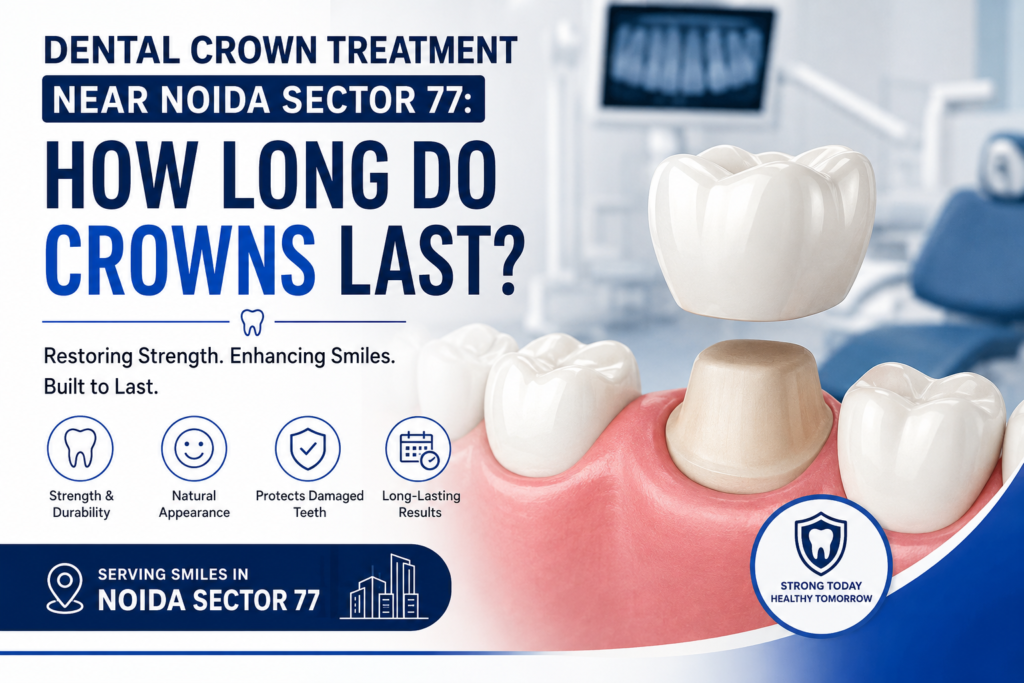


A damaged, cracked, weakened, severely decayed, or heavily restored tooth may need more than a simple filling. In such situations, dental crown treatment near Noida Sector 77 can help restore the tooth’s strength, function, shape, and appearance.
One of the most common questions patients ask before getting a crown is: “How long do dental crowns last?”
The answer depends on several factors, including the type of crown, oral hygiene, bite forces, the health of the tooth underneath, dental habits, and regular professional care.
According to Cleveland Clinic, dental crowns generally last around 5 to 15 years with proper care, although some crowns can remain functional for longer.
The American Dental Association (ADA) also explains that crowns can be used to strengthen weak teeth, restore broken teeth, protect teeth from further damage, and cover dental implants.
Quick Answer: How Long Do Dental Crowns Last?
Most dental crowns can last approximately 5 to 15 years when properly maintained.
However, this is not a fixed expiration date.
A well-maintained crown may last longer, while a crown exposed to heavy grinding, poor oral hygiene, trauma, or problems with the underlying tooth may need attention sooner.
The lifespan of your dental crown can depend on:
- Crown material
- Quality and accuracy of the crown fit
- Oral hygiene
- Condition of the natural tooth
- Bite pressure
- Teeth grinding or clenching
- Eating habits
- Regular dental check-ups
- General oral health
Therefore, a 10-year-old crown does not automatically need replacement. Your dentist should examine the crown and the tooth underneath it to determine whether it is still healthy and functional.
What Is a Dental Crown?
A dental crown, commonly called a dental cap, is a custom-made restoration that covers the visible portion of a tooth.
Crowns are generally used when a tooth has become too weak, damaged, broken, worn, or extensively restored to function properly with a simple filling.
The ADA states that crowns may be recommended for teeth with large fillings, weak or broken teeth, severely discolored teeth, and for covering dental implants.
The NHS similarly describes a crown as a cap that completely covers a natural tooth and explains that crowns can be used when a tooth has broken, decayed, or become damaged.
For patients interested in restorative options, you can explore the Dental Services – The Dental Crowns.
Who May Need Dental Crown Treatment Near Noida Sector 77?
A dental crown may be considered when a tooth has significant structural damage.
Common situations include:
1. A Cracked or Broken Tooth
A severely cracked or broken tooth may not have enough remaining structure to support a conventional filling. A crown can cover and protect the remaining tooth structure when clinically appropriate.
2. A Severely Decayed Tooth
If decay has destroyed a significant portion of a tooth, a crown may help restore its shape and function after the decay has been treated.
3. A Tooth With a Large Filling
When a tooth has a large filling and limited natural structure remaining, the tooth may become more susceptible to fracture. A crown may provide additional protection.
4. After Root Canal Treatment
Some root-canal-treated teeth may require a crown, particularly when substantial tooth structure has been lost.
If you are considering this treatment, you can also read our guide to Root Canal Treatment Near Noida Sector 77.
5. A Severely Worn Tooth
Teeth that have experienced significant wear may sometimes benefit from restorative treatment.
6. Cosmetic Concerns
Depending on the clinical situation, crowns may also be considered for certain discolored, misshapen, or damaged teeth.
However, crowns are not automatically the best solution for every cosmetic concern. Your dentist should evaluate the tooth before recommending treatment.
How Long Do Different Dental Crowns Last?
There is no universal lifespan for every crown because different materials have different properties.
Zirconia Dental Crowns
Zirconia is a strong ceramic material that is frequently considered for crowns where durability and tooth-colored aesthetics are important.
Cleveland Clinic notes that zirconia crowns are highly durable and can tolerate heavier forces than some other ceramic options.
However, choosing zirconia does not guarantee a specific lifespan. Crown longevity still depends on:
- Proper fit
- Bite
- Oral hygiene
- Tooth condition
- Grinding or clenching
- Daily habits
Porcelain Dental Crowns
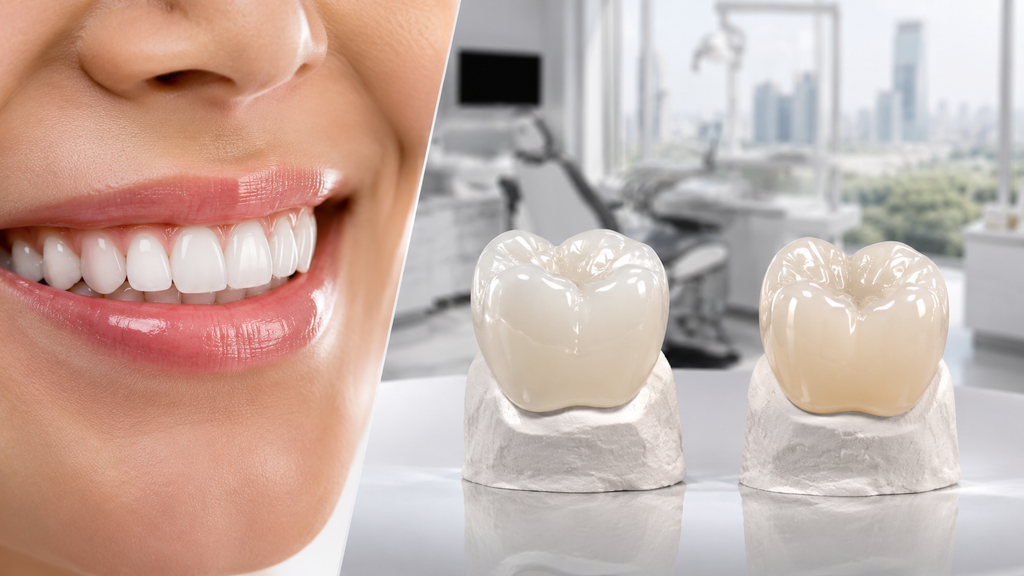
Porcelain crowns are popular when a natural-looking appearance is important.
They can closely resemble natural teeth and may be considered for visible teeth depending on the patient’s needs.
You can learn more about Porcelain Dental Crowns Treatment.
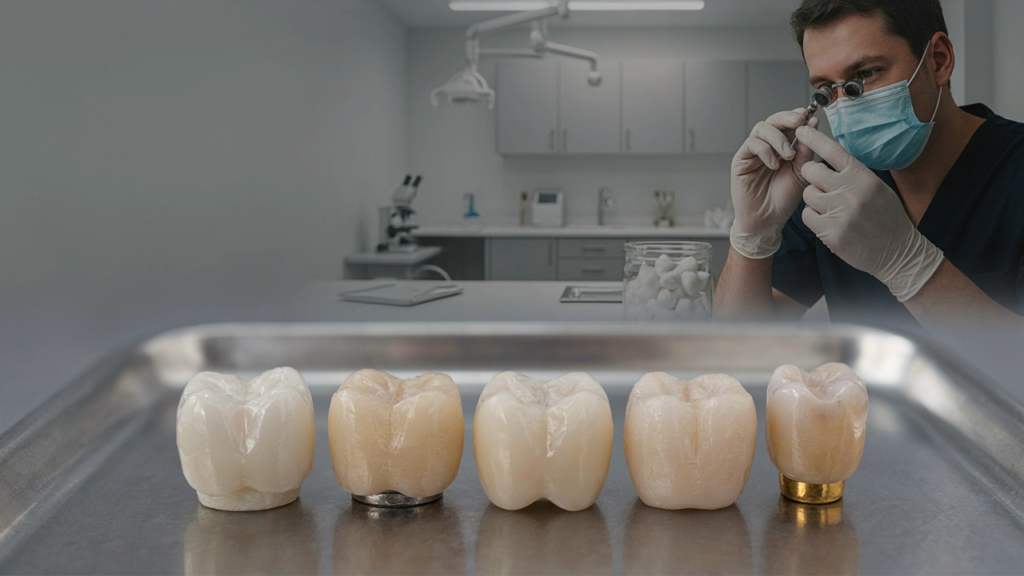
Porcelain-Fused-to-Metal Crowns
Porcelain-fused-to-metal, commonly called PFM crowns, combine a metal foundation with a porcelain outer layer.
They have been widely used for both functional and aesthetic dental restorations.
Metal Crowns
Metal crowns are known for their durability and ability to withstand chewing forces. Their metallic appearance, however, may make them less desirable for highly visible front teeth.
The appropriate crown material depends on the tooth location, remaining tooth structure, bite, aesthetic expectations, and your dentist’s clinical recommendation.
7 Factors That Affect Dental Crown Lifespan
Simply choosing a high-quality crown is not enough to guarantee long-term results.
Several factors influence how long your dental crown lasts.
1. Oral Hygiene
Good oral hygiene is essential.
Although the crown itself cannot develop a cavity in the same way natural enamel does, the natural tooth underneath and the surrounding tissues can still develop problems.
Brush twice a day with fluoride toothpaste and clean between your teeth every day.
Regular professional dental examinations are also important.
2. Crown Fit
A properly fitted crown is important for comfort, function, and oral health.
An improperly fitting restoration may create areas where plaque and food can accumulate.
If you notice discomfort, food trapping, sensitivity, or other changes around an existing crown, schedule a dental examination.
3. Condition of the Tooth Underneath
A crown protects the tooth, but it does not make the underlying tooth invincible.
The natural tooth can still develop decay or other problems.
That is why maintaining the tooth underneath the crown is just as important as maintaining the crown itself.
4. Teeth Grinding and Clenching
Bruxism, or grinding and clenching your teeth, can place significant pressure on dental restorations.
If you frequently wake up with jaw discomfort, notice worn teeth, or suspect that you grind your teeth, discuss it with your dentist.
A professionally recommended night guard may help protect your teeth and restorations when appropriate.
5. Eating Habits
Regularly chewing extremely hard foods or objects can increase the risk of damaging a crown.
Cleveland Clinic recommends avoiding extremely hard or sticky foods that could damage or dislodge a crown.
Avoid habits such as:
- Biting ice
- Chewing very hard objects
- Opening packets with your teeth
- Biting pens or pencils
- Frequently chewing extremely hard foods
6. Regular Dental Check-Ups
Even when your crown feels completely normal, routine dental examinations can help identify problems early.
Your dentist can check:
- Crown margins
- Gum health
- Bite
- Tooth condition
- Signs of wear
- Cracks or chips
7. Overall Oral Health
Healthy gums and neighboring teeth also contribute to maintaining a successful restoration.
If gum disease, decay, or other oral-health problems develop around a crowned tooth, the restoration may eventually require additional treatment.
How Can You Make Your Dental Crown Last Longer?
If you’ve invested in dental crown treatment near Noida Sector 77, proper aftercare can help you get the most from your restoration.
Brush Twice a Day
Use a soft-bristled toothbrush and fluoride toothpaste.
Floss Daily
Clean carefully between your crowned tooth and neighboring teeth.
Don’t Use Your Teeth as Tools
Never use a crown or natural tooth to open packages, bottles, or other objects.
Avoid Extremely Hard Foods
Hard foods and objects can place excessive force on dental restorations.
Manage Teeth Grinding
If you grind or clench your teeth, speak with your dentist about appropriate protection.
Visit Your Dentist Regularly
Routine examinations allow your dentist to monitor the crown and the tooth underneath it.
Follow Your Dentist’s Instructions
Your dentist can provide personalized recommendations based on your crown material, tooth condition, bite, and oral-health needs.
6 Signs Your Dental Crown May Need Replacement
A crown does not necessarily need replacement simply because it is old.
However, certain symptoms should not be ignored.
1. Your Crown Feels Loose
A loose crown should be examined by a dentist.
Do not attempt to permanently fix it yourself.
2. The Crown Is Cracked or Chipped
A visible crack, chip, sharp edge, or damaged section may indicate that the crown needs repair or replacement.
3. You Experience Pain When Biting
Pain while chewing can have several possible causes, including problems with the crown, bite, or underlying tooth.
A professional examination can help identify the cause.
4. Persistent Sensitivity
Some temporary sensitivity can occur after crown placement.
However, persistent or worsening sensitivity should be evaluated by your dentist.
5. Bad Taste or Bad Breath
A persistent bad taste or unpleasant odor around a crowned tooth can be a reason to schedule a dental examination.
6. Food Frequently Gets Trapped
Repeated food trapping around a crown can indicate that the restoration or surrounding tooth and gum area should be evaluated.
Cleveland Clinic recommends contacting a dentist if you notice issues such as a loose crown, bad taste or breath, cracks, or chips.
Can a Dental Crown Last 20 Years?
Yes, some crowns can last 20 years or longer, but there is no guarantee.
The commonly cited average lifespan is around 5 to 15 years, while some crowns can remain functional for considerably longer with appropriate care.
Instead of replacing a crown simply because it has reached a particular age, your dentist should evaluate:
- Crown condition
- Crown fit
- Tooth underneath
- Gum health
- Bite
- Wear and tear
- Presence of cracks or damage
A 12-year-old crown that is healthy, comfortable, properly fitted, and supporting a healthy tooth may not necessarily require immediate replacement.
Dental Crown vs Dental Implant: What’s the Difference?
Dental crowns and dental implants are not the same treatment.
A dental crown usually restores or covers a damaged natural tooth. It can also be attached to a dental implant.
A dental implant replaces the root portion of a missing tooth and can support a crown.
If you have a missing tooth rather than a damaged tooth that can potentially be restored, your dentist may discuss implant treatment as one of the possible options.
For more information, explore Dental Implant Services – The Dental Crowns.
Dental Crown Treatment Near Noida Sector 77: What Should You Expect?
If your dentist determines that a crown is appropriate, treatment typically involves several stages.
Step 1: Dental Examination
Your dentist examines the tooth and may recommend X-rays or other diagnostic procedures.
Step 2: Treatment Planning
The dentist determines whether a crown is appropriate and whether additional treatment, such as root canal therapy, is required.
Step 3: Tooth Preparation
The tooth is prepared to create sufficient space for the crown.
The NHS explains that the tooth needs to be shaped so that the crown can be fitted over it.
Step 4: Crown Fabrication
Depending on the treatment approach and crown type, impressions or digital scans may be used to create the restoration.
Step 5: Crown Fitting
The dentist checks the crown’s shape, fit, appearance, and bite before permanently securing it.
Step 6: Follow-Up and Maintenance
Once the crown has been placed, maintaining excellent oral hygiene and attending regular check-ups can help support long-term results.
Why Choose The Dental Crowns for Patients Near Sector 77?
If you’re searching for dental crown treatment near Noida Sector 77, choosing a clinic with a comprehensive range of dental services can make treatment planning more convenient.
The Dental Crowns is located at Civitech Stadia, Sector 79, Noida, and provides general, cosmetic, and surgical dental services, including crowns, root canal treatment, dental implants, bridges, veneers, teeth whitening, and laser dentistry.
Patients from Sector 77 and nearby areas can explore the clinic’s The Dental Crowns – Services to understand the available treatment options.
The goal of crown treatment should not simply be to place a “cap” on a tooth. A successful restoration should be designed according to the condition of the tooth, bite, function, appearance, and long-term oral-health needs.
Frequently Asked Questions About Dental Crown Treatment Near Noida Sector 77
How long do dental crowns last?
Dental crowns commonly last approximately 5 to 15 years with proper care, although some can last longer.
Can a dental crown last 20 years?
Yes. Some crowns can remain functional for 20 years or longer, but longevity varies significantly between individuals.
What makes a dental crown wear out faster?
Teeth grinding, poor oral hygiene, hard foods, trauma, an improper fit, and problems with the natural tooth underneath can contribute to premature crown problems.
How do I know if my dental crown needs replacement?
A loose, cracked, chipped, painful, worn, or uncomfortable crown should be evaluated by a dentist. Persistent bad taste or bad breath can also warrant an examination.
Is zirconia better than porcelain?
Neither material is automatically better for every patient. Zirconia may be preferred in situations requiring high strength, while porcelain can offer excellent aesthetics. The best option depends on the tooth, bite, clinical condition, and aesthetic requirements.
Does a crown protect a tooth from cavities?
A crown covers the visible portion of a tooth, but the natural tooth underneath can still develop decay. Good brushing, flossing, and professional dental care remain important.
Can I eat normally after dental crown treatment?
Once your permanent crown has been properly fitted and you have adjusted to it, normal eating is generally possible. However, extremely hard and sticky foods can increase the risk of crown damage.
How often should dental crowns be replaced?
There is no universal replacement schedule. A dentist should assess the crown and the condition of the underlying tooth before recommending replacement.
Are dental crowns permanent?
Dental crowns are considered long-term restorations, but they are not guaranteed to last forever. Cleveland Clinic reports an average lifespan of approximately 5–15 years, with some crowns lasting much longer.
Can I get a dental crown after root canal treatment?
A crown may be recommended after root canal treatment when significant tooth structure has been lost and additional protection is needed. Your dentist should determine the appropriate restoration based on the individual tooth.
Final Takeaway: How Long Do Dental Crowns Last?
So, how long do dental crowns last?
For many patients, a dental crown can provide approximately 5 to 15 years of service with proper care, and some crowns may last substantially longer.
The key is not just the crown material.
Your long-term results depend on:
Good oral hygiene + proper crown fit + healthy tooth underneath + regular dental visits + controlled bite forces + good dental habits
If you are looking for dental crown treatment near Noida Sector 77, don’t wait until a damaged tooth becomes painful or breaks further.
A professional dental examination can determine whether you need a crown, another restoration, or a different treatment altogether.
For patients in Sector 77 and nearby Noida sectors, you can explore The Dental Crowns Services and discuss your individual treatment needs with a dental professional.
Medical & Dental References
For reliable patient information about dental crowns, you can refer to:
Disclaimer: This article is intended for general educational purposes and does not replace a professional dental examination or individualized medical advice.