

Is laser dentistry available in Noida Sector 75? Yes, laser dentistry is available for patients in and around Noida Sector 75, with dental clinics offering laser-assisted procedures for selected gum, tooth, and soft-tissue treatments.
If you live in Noida Sector 75 and are searching for a comfortable, precise and minimally invasive dental treatment, laser dentistry may be an option worth discussing with your dentist. Modern dental lasers can be used for selected procedures involving the gums, teeth, sensitivity, root canal treatment and certain oral soft-tissue conditions.
However, laser dentistry is not a replacement for every traditional dental procedure. The right treatment depends on your dental condition, diagnosis and the type of procedure required.
In this guide, we explain laser dentistry in Noida Sector 75, its benefits, procedures, safety, cost factors, recovery and how to choose the right dental clinic.
Quick Answer: Is Laser Dentistry Available in Noida Sector 75?
Yes. Patients living in Sector 75, Noida, can find dental clinics offering laser dentistry and laser-assisted dental procedures.
For patients who want a clinic close to Sector 75, The Dental Crowns in Sector 79, Noida, is also an option to consider. The clinic provides laser dentistry along with other dental treatments including root canal treatment, dental implants, dental crowns, bridges, dentures and cosmetic dentistry.
You can explore the clinic’s complete treatment options through the Dental Services at The Dental Crowns.
What Is Laser Dentistry?
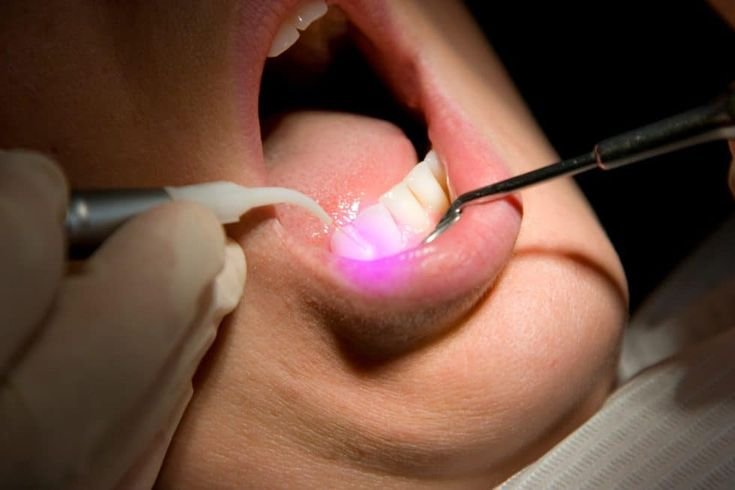
Laser dentistry uses concentrated light energy to treat or modify oral tissues.
Depending on the type of laser and the treatment being performed, dental lasers may be used on soft tissues such as gums, hard tissues such as teeth, or as an adjunct to conventional dental treatment.
According to Cleveland Clinic, lasers can be used in dentistry for several applications, including gum treatment, cavity treatment, root canal disinfection, sensitivity management, preparation for restorations and selected soft-tissue procedures.
Learn more about laser dentistry from Cleveland Clinic.
Laser dentistry is therefore not simply about replacing a dental drill with a laser. It is a technology that a trained dentist can use when it is clinically appropriate.
Why Are Patients in Sector 75 Looking for Laser Dentistry?
Dental anxiety is one of the common reasons people postpone dental treatment.
Some patients associate dental treatment with:
- Drilling
- Bleeding
- Needles
- Gum surgery
- Pain
- Longer recovery
- Fear of dental instruments
Laser dentistry can provide a more comfortable treatment experience for selected procedures.
The Indian Dental Association also recognizes applications of lasers in dentistry, including certain soft-tissue procedures and treatment of dentin hypersensitivity.
However, it is important to understand that laser dentistry does not mean every dental procedure becomes completely painless or requires no anesthesia.
The treatment experience depends on the procedure, the patient’s condition and the dentist’s technique.
What Dental Problems Can Be Treated With Lasers?
Laser dentistry can be useful for several selected dental procedures.
1. Gum Treatment
Dental lasers may be used for certain gum-related procedures.
Laser technology can allow dentists to target specific areas of diseased or excess gum tissue while minimizing damage to surrounding tissues.
For patients experiencing gum swelling, bleeding or periodontal problems, the dentist may determine whether laser-assisted treatment is appropriate.
Cleveland Clinic notes that laser periodontal therapy may be used to remove diseased tissue and target bacteria beneath the gums in selected cases.
2. Laser Gum Reshaping
Some people have excessive gum tissue that makes their teeth appear shorter.
A laser may be used for selected gum-contouring or gingivectomy procedures.
This can be useful for certain cases of:
- Excess gum tissue
- Uneven gum lines
- Gummy smile
- Periodontal pockets
- Gum tissue overgrowth
The appropriate treatment should always be determined following a dental examination.
3. Root Canal Treatment
Lasers may also be used as an adjunct during certain root canal procedures.
One potential application is helping disinfect areas inside the tooth.
If you are experiencing persistent tooth pain, sensitivity or swelling, you may need a dental examination to determine whether you require Painless Root Canal Treatment.
Laser technology may complement conventional root canal treatment, but it does not automatically eliminate the need for conventional endodontic procedures.
4. Treatment of Tooth Sensitivity
Laser therapy may be used for selected cases of dentin hypersensitivity.
The Indian Dental Association notes that laser interaction with dental tissue may help reduce sensitivity by affecting dentinal tubules.
If your teeth hurt when you consume:
- Cold water
- Ice cream
- Hot beverages
- Sweet foods
- Acidic foods
you should first determine the underlying cause.
Sensitivity can occur because of enamel wear, gum recession, exposed dentin, cavities or other dental conditions.
5. Cavity Treatment
Certain dental lasers can be used for selected cavity-related procedures.
However, not every cavity requires laser treatment.
Your dentist may recommend traditional treatment, laser-assisted treatment or a combination depending on the location and severity of tooth decay.
6. Soft-Tissue Dental Procedures
Lasers can be particularly useful for selected soft-tissue procedures.
Depending on the laser and clinical situation, applications may include:
- Gum reshaping
- Removal of excess soft tissue
- Frenectomy
- Certain oral lesions
- Selected periodontal procedures
The exact application depends on the dentist’s diagnosis and the laser system being used.
7 Benefits of Laser Dentistry
Laser dentistry can provide several potential advantages when appropriately used.
1. Greater Precision
A dental laser can deliver focused energy to a specific treatment area.
This can be particularly useful when working around delicate gum tissue.
2. Reduced Bleeding in Selected Procedures
Laser energy can help control bleeding during certain soft-tissue procedures.
The Indian Dental Association describes reduced bleeding as one of the potential advantages associated with dental laser procedures.
3. Potentially Less Discomfort
Some laser procedures may cause less discomfort than certain conventional surgical approaches.
However, the level of discomfort depends on the procedure and the individual patient.
4. Reduced Swelling in Some Procedures
Minimally invasive laser techniques may result in less tissue trauma in selected cases.
5. Faster Recovery in Selected Cases
Some laser procedures may allow quicker healing compared with certain traditional surgical techniques.
However, recovery time varies depending on the treatment.
6. Reduced Need for Sutures in Some Procedures
Certain soft-tissue laser procedures may not require stitches.
This depends on the procedure and treatment area.
7. Better Treatment Experience for Nervous Patients
Patients who are nervous about traditional dental instruments may find selected laser treatments more comfortable.
Still, laser dentistry should be viewed as a clinical technology rather than a guarantee of completely painless treatment.
Is Laser Dentistry Really Painless?
This is one of the most common questions patients ask when searching for laser dentistry in Noida Sector 75.
The honest answer is: not every laser dental procedure is completely painless.
Some procedures may require little or no anesthesia, while others may still require local anesthesia.
Cleveland Clinic explains that dentists may use numbing medicine during laser dental procedures, depending on the treatment.
Therefore, rather than choosing a clinic simply because it advertises “100% painless laser dentistry,” ask the dentist:
“Will laser treatment be appropriate for my specific dental problem, and what level of anesthesia will I need?”
Laser Dentistry vs Traditional Dentistry
Laser dentistry and conventional dentistry should not always be viewed as competing treatments.
In many situations, they can work together.
| Laser Dentistry | Traditional Dentistry |
|---|---|
| Uses concentrated light energy | Uses conventional dental instruments |
| Useful for selected soft-tissue procedures | Suitable for a wide range of dental treatments |
| Can provide precise tissue treatment | Well-established treatment approach |
| May reduce bleeding in selected procedures | May be required for many procedures |
| Can support minimally invasive treatment | Remains essential for numerous dental procedures |
| May reduce discomfort in selected cases | Effectiveness depends on the procedure |
Cleveland Clinic explains that dental lasers do not replace traditional dental instruments and are instead used as a complement to standard treatment methods in appropriate cases.
This is important because patients should choose treatment based on diagnosis rather than simply choosing the newest technology.
Is Laser Dentistry Safe?
When used appropriately by a trained dental professional, laser dentistry can be a safe treatment option for selected dental procedures.
Like any dental technology, lasers need to be used correctly.
Laser dentistry involves different wavelengths and settings depending on whether the dentist is treating hard or soft tissue.
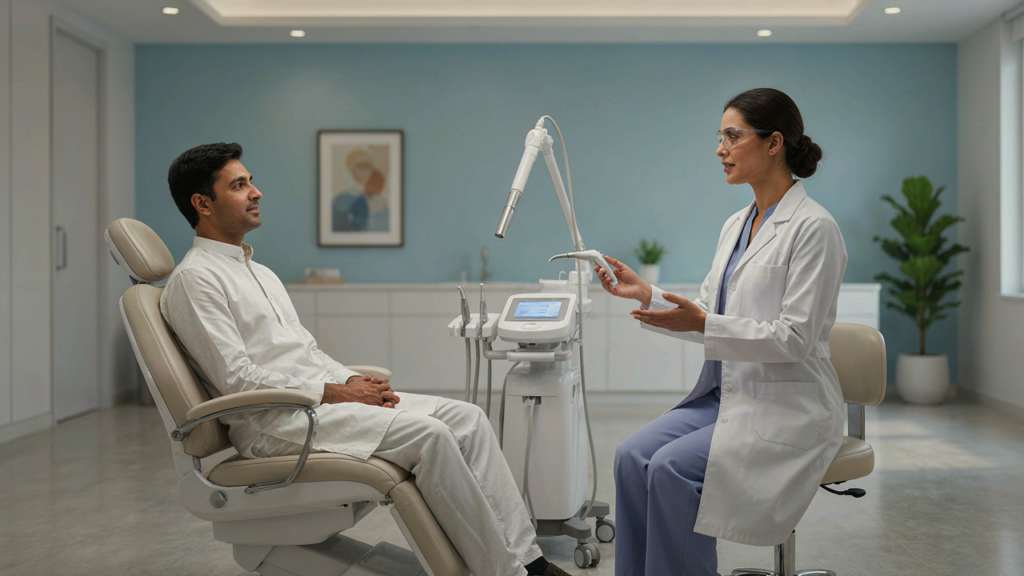
Patients should therefore choose a dental clinic where the dentist can explain:
- Why the laser is required
- Which laser will be used
- What tissue will be treated
- Whether anesthesia is required
- What alternatives are available
- What recovery will be like
Proper eye protection and appropriate clinical precautions are also important during laser treatment.
How Does Laser Dental Treatment Work?
The exact process depends on the treatment.
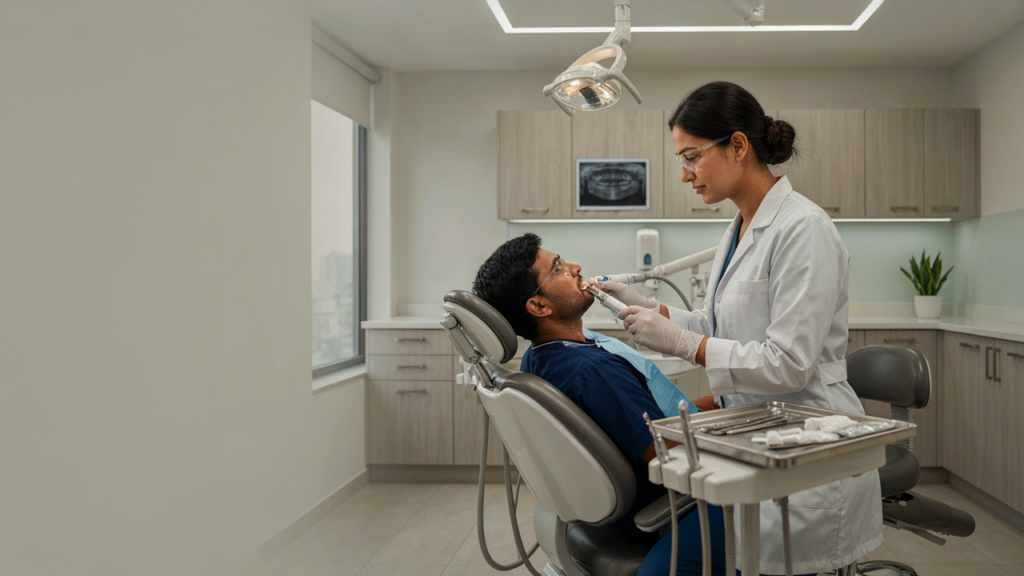
Generally, a laser dental procedure may involve the following steps:
Step 1: Dental Examination
The dentist examines your teeth and gums and identifies the underlying problem.
Step 2: Diagnosis
Depending on the condition, the dentist may recommend X-rays or other diagnostic procedures.
Step 3: Treatment Planning
The dentist determines whether laser dentistry, conventional treatment or a combination of both is appropriate.
Step 4: Preparation
The treatment area is prepared and protective measures are taken.
Step 5: Laser Treatment
The dentist directs the laser toward the targeted area.
Step 6: Additional Treatment
Some procedures may require conventional dental instruments along with the laser.
Step 7: Aftercare
The dentist provides instructions regarding food, oral hygiene, medication and follow-up.
How Much Does Laser Dentistry Cost in Noida Sector 75?
The cost of laser dentistry in Noida Sector 75 varies because laser dentistry is not one single treatment.
The final price can depend on:
- Type of dental procedure
- Number of teeth involved
- Severity of the dental condition
- Type of laser used
- Treatment duration
- Diagnostic tests
- Anesthesia requirements
- Additional conventional treatment
- Dentist’s expertise
- Follow-up appointments
For this reason, it is difficult to provide one fixed price for “laser dentistry.”
A dental examination is the best way to receive a personalized treatment plan and estimate.
Do not choose a dental clinic only because it offers the cheapest laser dentistry price.
The suitability of the treatment and the dentist’s clinical expertise should be more important considerations.
How Long Does Laser Dentistry Take?
Treatment time varies according to the procedure.
A simple soft-tissue procedure may be completed relatively quickly, while periodontal treatment or laser-assisted root canal therapy may require more time.
Factors affecting treatment duration include:
- Number of teeth
- Severity of infection
- Treatment type
- Laser technology
- Need for anesthesia
- Additional dental procedures
Your dentist can provide a more accurate estimate after examining your teeth and gums.
What Is Recovery Like After Laser Dentistry?
Recovery depends on the type of laser procedure performed.
Some minimally invasive soft-tissue procedures may involve relatively short recovery periods.
Other treatments may require several days of healing.
After treatment, follow your dentist’s instructions carefully.
You may be advised to:
- Maintain gentle oral hygiene
- Avoid very hard foods temporarily
- Follow prescribed medication instructions
- Avoid irritating the treated area
- Attend follow-up appointments
If you experience severe pain, excessive bleeding, increasing swelling or fever after treatment, contact your dentist promptly.
Is Laser Dentistry Available Near Sector 75 Noida?
Yes, patients in Sector 75 have multiple dental-care options in and around the area.
For example, Dr. Jain’s Dental and Implant Clinic lists laser dentistry among its services and is located in Sector 75, Noida.
Dr. Jain’s Dental and Implant Clinic
Patients can also consider clinics in nearby sectors based on the treatment they require.
For people looking for a dental clinic close to Sector 75, The Dental Crowns in Sector 79 is another nearby option.
The clinic’s service list includes laser dentistry, dental implants, root canal treatment, dental crowns, bridges, dentures, veneers, braces and teeth whitening.
Why Consider The Dental Crowns for Laser Dentistry Near Sector 75?
If you live in Sector 75, you don’t necessarily need to limit your search to a clinic located inside Sector 75.
A dental clinic in a nearby sector may also be convenient if it provides the treatment and expertise you require.
The Dental Crowns is located at:
Shop No. 16, 1st Floor, Civitech Stadia, Sector 79, Noida, Uttar Pradesh 201301
The clinic offers laser dentistry along with a range of general, cosmetic and surgical dental services.
You can explore the complete list of treatments on the The Dental Crowns Services page.
Patients looking for related treatment can also explore:
These internal links help visitors discover relevant treatments while strengthening the site’s topical relationship between laser dentistry and other dental services.
What Should You Ask a Laser Dentist Before Treatment?
Before choosing laser dentistry in Noida Sector 75, ask these questions:
1. Do I actually need laser treatment?
Laser technology should be recommended for a clinical reason.
2. Which laser will you use?
Different lasers have different applications.
3. Will I need anesthesia?
This depends on your specific treatment.
4. Can conventional treatment achieve the same result?
Your dentist should explain the available options.
5. How much will the complete treatment cost?
Ask about consultation, diagnostics, treatment and follow-ups.
6. How many appointments will I need?
Treatment complexity varies from patient to patient.
7. What should I expect after treatment?
Ask about pain, swelling, diet and oral hygiene.
8. Are there any risks?
Understanding both benefits and limitations helps you make an informed decision.
Who May Be a Candidate for Laser Dentistry?
Laser dentistry may be considered for patients requiring selected:
- Gum treatments
- Gum reshaping
- Periodontal procedures
- Soft-tissue procedures
- Sensitivity treatment
- Cavity-related procedures
- Root canal disinfection
- Frenectomy
- Selected cosmetic dental procedures
However, not everyone needs laser treatment.
The dentist should evaluate your oral health before recommending the technology.
When Should You Visit a Dentist?
You should not delay a dental consultation simply because you’re searching for laser dentistry.
Book a dental evaluation if you experience:
- Persistent toothache
- Bleeding gums
- Swollen gums
- Tooth sensitivity
- Bad breath that persists
- Broken or damaged teeth
- Loose teeth
- Facial or dental swelling
- Pain while chewing
- Repeated dental infections
Early diagnosis can make treatment easier and may help prevent the problem from becoming more complicated.
Frequently Asked Questions About Laser Dentistry in Noida Sector 75
Is laser dentistry available in Sector 75 Noida?
Yes. Dental clinics in and around Sector 75 offer laser dentistry and laser-assisted dental treatments. Patients can also consider nearby Sector 79 depending on the treatment required.
Is laser dentistry better than traditional dentistry?
Not necessarily. Laser dentistry is useful for selected procedures, while conventional dental instruments remain necessary for many treatments. The appropriate option depends on your diagnosis.
Is laser dental treatment painless?
Some procedures may involve less discomfort, but laser dentistry is not automatically completely painless. Some treatments may still require local anesthesia.
Can lasers be used for gum disease?
Yes, lasers can be used for selected periodontal treatments. However, severe gum disease may require other forms of periodontal treatment.
Can lasers be used during root canal treatment?
Laser technology can be used as an adjunct to root canal treatment, including for disinfection in selected cases.
How much does laser dentistry cost in Noida?
There is no universal price. The cost depends on the procedure, number of teeth, complexity, technology and other treatment requirements.
How long does laser dentistry take?
Treatment duration depends on the procedure. Simple soft-tissue procedures can be relatively quick, while complex treatments may require longer appointments.
Is laser dentistry safe?
When properly indicated and performed using appropriate clinical techniques, laser dentistry can be a safe option for selected procedures. Your dentist should explain the benefits, limitations and alternatives.
Can laser dentistry replace a dental drill?
No. Laser dentistry does not replace all conventional dental instruments. Modern dental treatment often combines laser technology with traditional techniques where appropriate.
Where can I get laser dentistry near Sector 75 Noida?
You can explore dental clinics in Sector 75 as well as nearby sectors such as Sector 79. The Dental Crowns in Sector 79 provides laser dentistry along with other dental treatments.
Final Verdict: Is Laser Dentistry Available in Noida Sector 75?
Yes, laser dentistry is available for patients in Noida Sector 75 and nearby areas.
Laser technology can provide useful advantages for selected dental procedures, including certain gum treatments, soft-tissue procedures, sensitivity treatment and laser-assisted root canal procedures.
However, laser dentistry should not be considered a universal replacement for traditional dental treatment.
The most important question is not:
“Is laser dentistry the latest technology?”
The better question is:
“Is laser dentistry appropriate for my particular dental problem?”
A professional dental examination can help determine whether laser treatment, conventional treatment or a combination of both is the right choice for you.
If you are searching for laser dentistry near Noida Sector 75, The Dental Crowns in nearby Sector 79 offers laser dentistry along with comprehensive dental care.
Explore Laser Dentistry and Other Dental Services at The Dental Crowns
References & Trusted Dental Resources
For additional information about laser dentistry and oral health, readers can refer to:
- Cleveland Clinic – Laser Dentistry
- Indian Dental Association – Lasers in Dentistry
- Cleveland Clinic – Gum Disease Treatment
- American Dental Association – MouthHealthy
These authoritative resources provide additional information about dental lasers, gum health and general oral care.