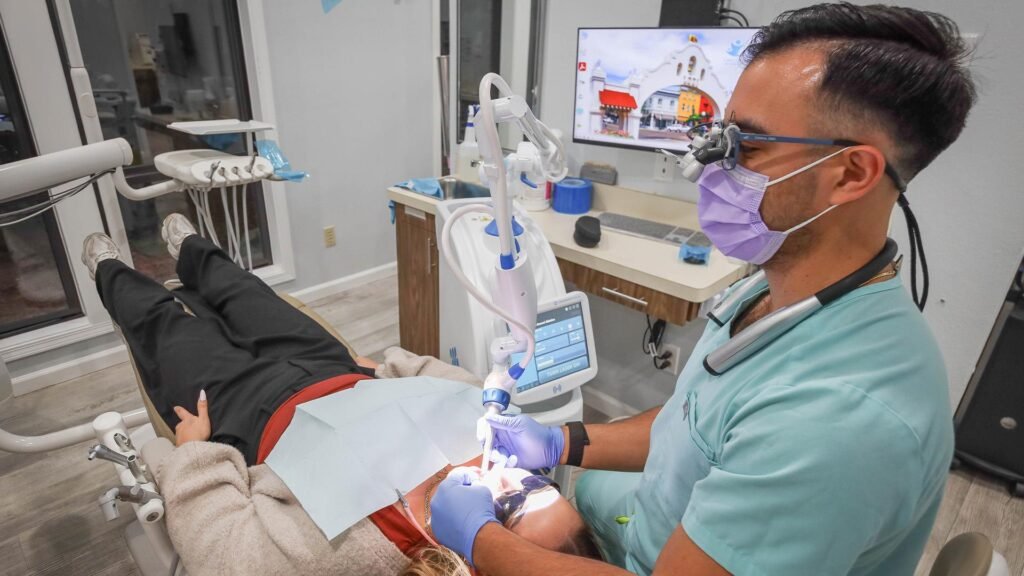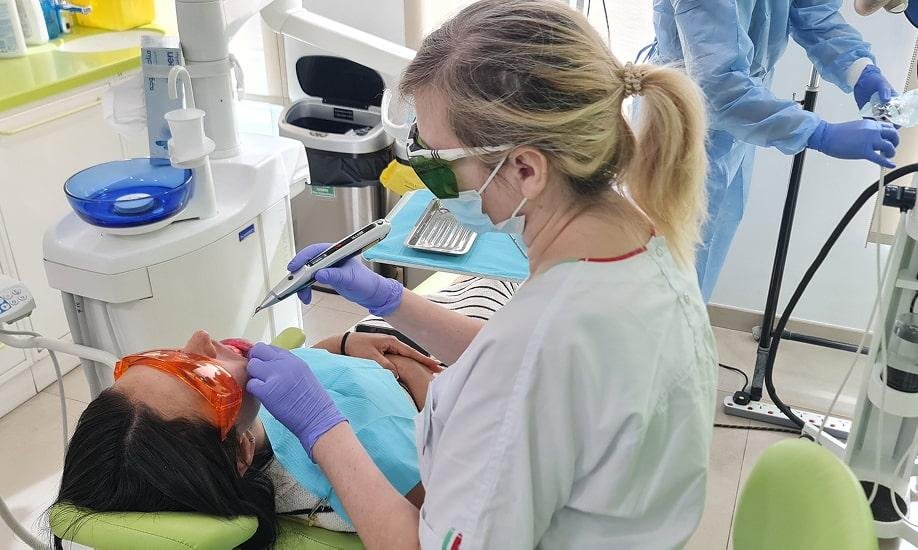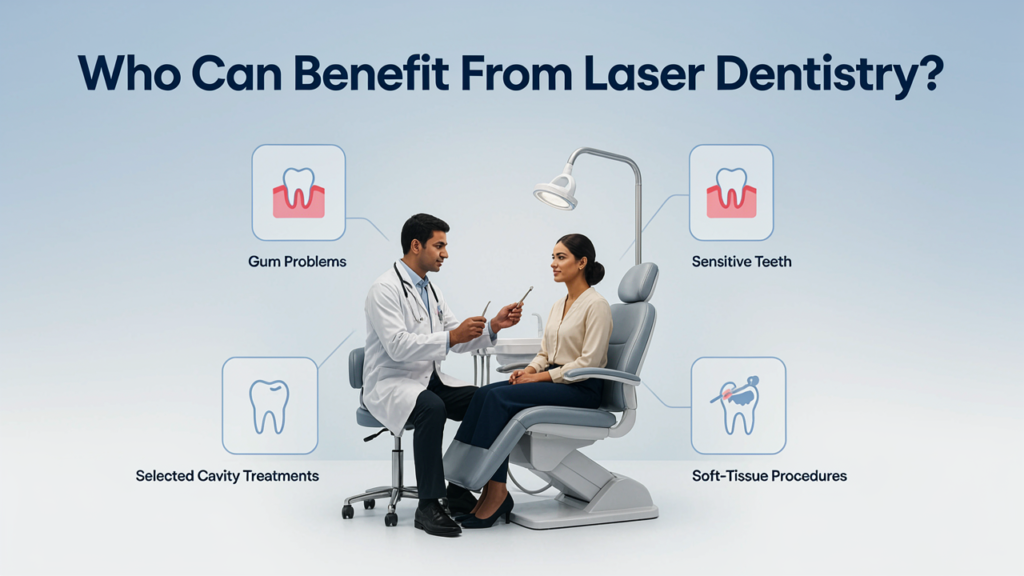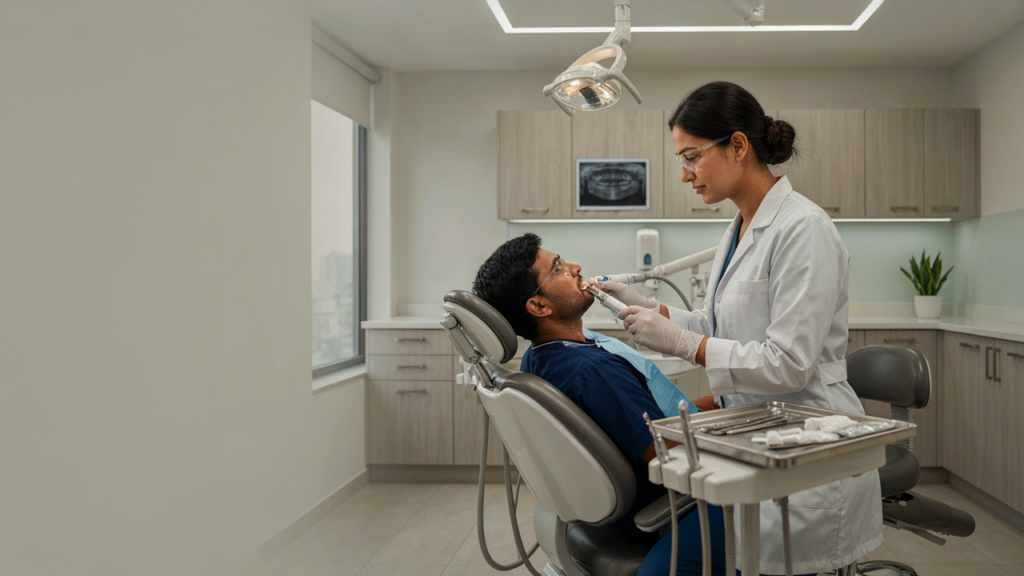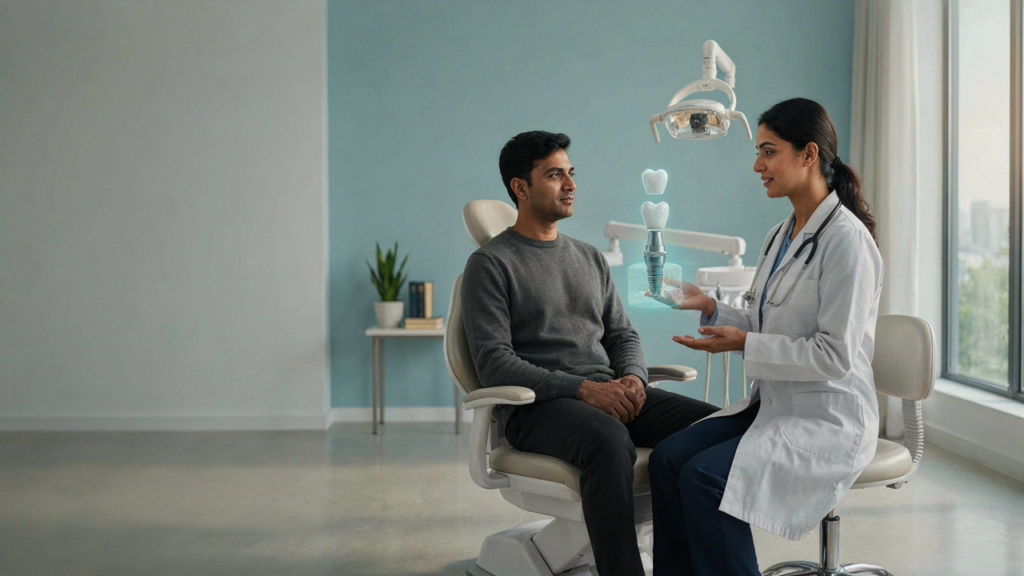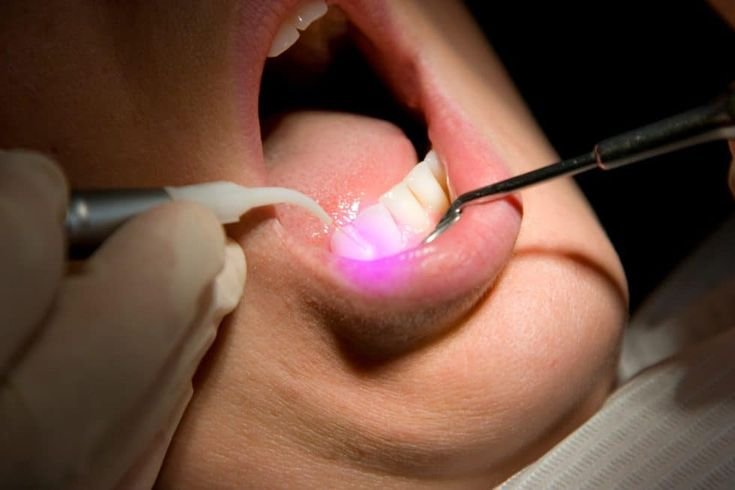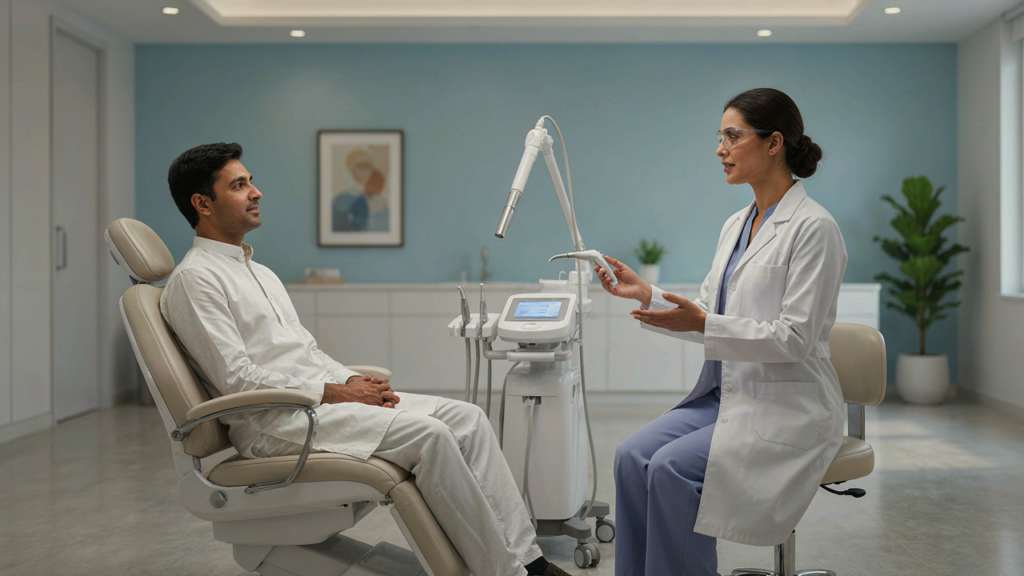


If you are searching for laser dentistry near Noida Sector 75, you may be looking for a more comfortable and precise alternative to conventional dental treatment. Dental lasers are increasingly being used for selected gum procedures, cavity treatment, root canal disinfection, soft-tissue procedures, sensitivity management and certain cosmetic treatments.
But is laser dentistry actually better than traditional dental treatment? How much does laser dental treatment cost in Noida? Is laser dentistry completely painless? And which dental problems can actually be treated using a laser?
This guide explains everything you need to know before choosing laser dentistry near Noida Sector 75, including the procedure, benefits, expected cost, recovery, safety and how to choose the right dental clinic.
At The Dental Crowns, patients from Sector 75 and nearby Noida sectors can access advanced dental treatments, including laser dentistry, root canal treatment, dental implants, crowns, bridges and other general, cosmetic and surgical dental services.
Quick Answer: What Is Laser Dentistry?
Laser dentistry is a dental treatment technique that uses concentrated light energy to treat or modify oral tissues. Depending on the laser and the dental problem, it may be used on soft tissues such as gums, hard tissues such as teeth, or as an adjunct to conventional treatment.
Modern dental lasers can be used for selected procedures including:
- Gum reshaping and soft-tissue treatment
- Gum disease treatment
- Cavity-related procedures
- Root canal disinfection
- Frenectomy or tongue-tie procedures
- Oral soft-tissue procedures
- Dental sensitivity treatment
- Certain cosmetic dental procedures
- Selected teeth-whitening applications
However, laser dentistry does not automatically replace conventional dental instruments. The appropriate treatment depends on the patient’s condition, the procedure required and the dentist’s clinical assessment.
What Is Laser Dentistry Near Noida Sector 75?
Laser dentistry involves the controlled use of laser energy during specific dental procedures.
Unlike the idea that a laser is simply a “drill without noise,” dental lasers work through specific wavelengths and energy settings. Different lasers have different applications.
For example, some lasers are primarily used for soft tissues such as gums, while other systems can interact with hard dental tissues.
The purpose is to provide the dentist with another tool that may allow precise tissue management, reduced bleeding and potentially more comfortable treatment in selected cases.
The Dental Crowns provides advanced clinical laser dentistry in Noida and lists applications including gum treatment, cavity-related treatment, root canal disinfection and other selected dental procedures.
7 Major Benefits of Laser Dentistry
1. Greater Treatment Precision
One of the major advantages of dental lasers is their ability to target specific areas of tissue.
This can be particularly useful when a dentist needs to reshape gum tissue or work around a small treatment area.
The goal is to treat the affected area while minimizing unnecessary trauma to surrounding tissues.
2. Potentially Less Bleeding
Laser energy can help control bleeding during certain soft-tissue procedures.
This may make the treatment field easier for the dentist to see and may contribute to a cleaner treatment experience.
However, the amount of bleeding depends on the type of procedure, the patient’s oral health and the laser system being used.
3. Reduced Discomfort in Selected Procedures
Many patients searching for laser dentistry near Sector 75 Noida are primarily concerned about pain.
Laser treatment can reduce discomfort in some procedures, although it would be inaccurate to say that every laser dental treatment is completely painless.
Local anesthesia may still be necessary depending on the procedure.
Cleveland Clinic notes that laser dentistry can potentially reduce pain and bleeding in selected minimally invasive procedures, while also emphasizing that lasers are generally used alongside traditional dental instruments rather than replacing them completely.
4. Faster Healing in Some Cases
Because laser treatment can be less invasive for certain soft-tissue procedures, healing may be more comfortable or efficient.
Laser energy can also assist with tissue coagulation and repair.
However, healing time varies according to:
- Treatment type
- Location of treatment
- Patient’s oral health
- Existing gum disease
- Smoking or tobacco use
- Diabetes and other systemic factors
- Post-treatment care
Therefore, your dentist should provide individualized recovery instructions.
5. Useful for Gum Treatment
Dental lasers can be used for selected gum procedures.
Depending on the diagnosis, laser therapy may help manage infected or inflamed gum tissues.
If you have symptoms such as:
- Bleeding gums
- Persistent bad breath
- Gum swelling
- Gum tenderness
- Receding gums
- Loose teeth
you should have a dental examination before deciding whether laser treatment is appropriate.
Laser treatment is not a universal replacement for conventional periodontal therapy. The dentist must first determine the severity and type of gum disease.
6. Can Assist With Root Canal Disinfection
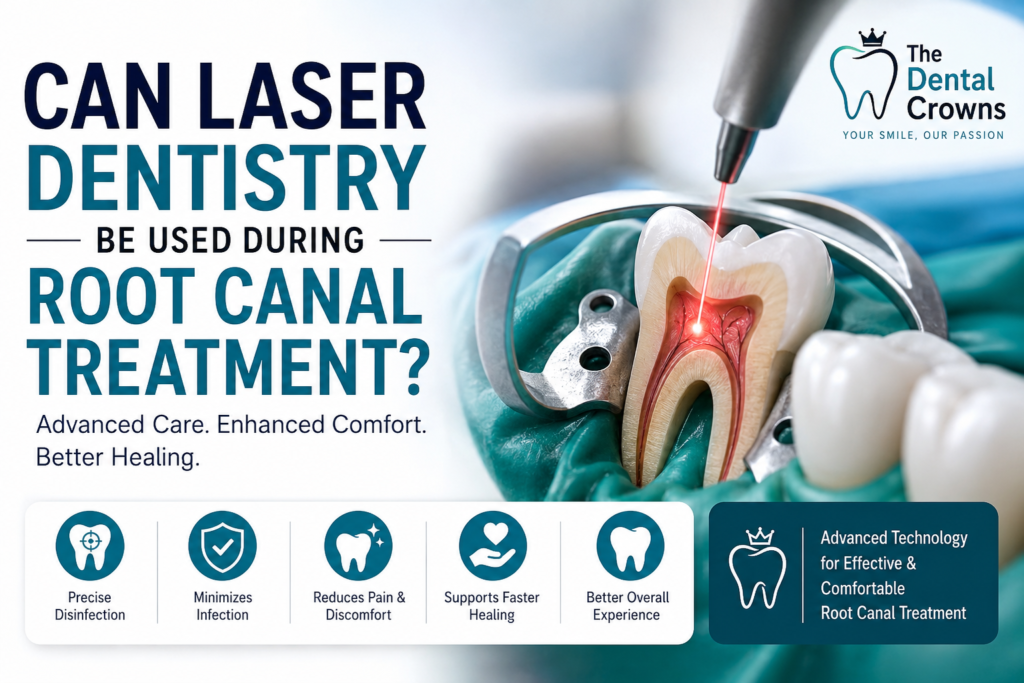
Laser technology can also be used as an adjunct during root canal treatment.
The objective is to improve microbial control inside the root canal system.
Research suggests that certain laser-assisted approaches can improve bacterial reduction, but evidence varies according to laser type, protocol and clinical situation. A systematic review found promising results but also highlighted limitations in the available evidence.
This means laser treatment should generally be viewed as a clinical tool or adjunct, rather than a guaranteed replacement for conventional root canal cleaning and irrigation.
If you are looking for comfortable root canal treatment, you can also explore our Painless Root Canal Treatment in Noida.
7. May Be Helpful for Patients With Dental Anxiety
The sound and vibration associated with traditional dental drills can make some patients anxious.
Laser dentistry may reduce the reliance on certain conventional instruments during selected procedures.
For patients who feel nervous about dental treatment, discussing laser-assisted options with the dentist may be worthwhile.
The key is to determine whether laser treatment is clinically suitable rather than choosing it simply because it sounds more advanced.
What Dental Problems Can Be Treated With Lasers?
Laser dentistry is not one single treatment. It is a technology that may be used in different dental procedures.
Depending on the equipment available and the dentist’s training, lasers may be used for:
Gum Treatment
Lasers may be used during selected periodontal and soft-tissue procedures.
Cavity Treatment
Certain dental lasers can be used for selected hard-tissue applications, including removal of decayed tooth material.
Root Canal Treatment
Lasers may be used as an adjunct for root canal disinfection.
Gum Reshaping
Laser technology can be used for certain gum-contouring procedures.
Frenectomy
A laser may be used to release or reshape the frenulum in selected cases.
Tooth Sensitivity
Certain laser approaches may help reduce sensitivity by affecting exposed dentinal tubules.
Soft-Tissue Lesions
Selected oral lesions may be treated or biopsied using laser-assisted techniques depending on the diagnosis.
Cosmetic Dentistry
Lasers may be used in selected cosmetic procedures, including some teeth-whitening protocols.
Cleveland Clinic similarly lists applications involving gums, cavities, root canal disinfection, sensitivity, soft-tissue lesions, frenulum treatment and whitening.
Laser Dentistry Procedure: What Happens During Treatment?
If you visit a laser dentist near Noida Sector 75, your treatment usually begins with a dental examination.
Step 1: Dental Examination
The dentist first examines your teeth, gums and oral tissues.
Depending on the problem, dental X-rays or other diagnostic imaging may be recommended.
The goal is to identify the underlying problem rather than simply decide whether to use a laser.
Step 2: Treatment Planning
Your dentist explains:
- What condition you have
- Whether laser treatment is suitable
- Which laser may be used
- Whether anesthesia is required
- Whether conventional instruments will also be used
- Estimated treatment duration
- Expected recovery
- Approximate treatment cost
This step is particularly important because not every dental problem requires laser treatment.
Step 3: Protective Measures
During laser treatment, appropriate eye protection is generally used.
The treatment area is prepared according to the specific dental procedure.
Step 4: Local Anesthesia, If Required
Some patients may require local anesthesia.
Laser dentistry should not be marketed as automatically “100% painless” because discomfort and anesthesia requirements depend on the procedure.
Step 5: Laser Treatment
The dentist directs the laser toward the selected treatment area using controlled settings.
Depending on the procedure, the laser may:
- Remove selected tissue
- Reshape gum tissue
- Reduce bacterial load
- Assist root canal disinfection
- Modify dental tissue
- Treat selected soft-tissue conditions
Step 6: Conventional Dental Treatment, If Needed
This is an important point.
Laser dentistry does not necessarily mean that traditional dental instruments will not be used.
In many cases, lasers complement conventional dental techniques.
For example, during root canal treatment, laser-assisted disinfection may be combined with conventional cleaning and irrigation protocols.
Current evidence supports viewing lasers as an adjunct in many endodontic applications rather than a universal replacement for established treatment methods.
Step 7: Aftercare Instructions
After treatment, your dentist provides instructions based on the procedure performed.
You may be advised to:
- Maintain good oral hygiene
- Avoid irritating foods temporarily
- Follow prescribed medications if required
- Avoid smoking or tobacco
- Attend follow-up appointments
- Follow specific gum-care instructions
Laser Dentistry Cost Near Noida Sector 75
One of the most common searches is:
“What is the cost of laser dentistry near Noida Sector 75?”
There is no single fixed price because laser dentistry includes many different procedures.
The total cost can depend on:
- Type of dental problem
- Laser technology used
- Treatment area
- Complexity of the procedure
- Number of teeth involved
- Whether anesthesia is required
- Whether conventional treatment is performed alongside the laser
- Diagnostic tests
- Dentist’s expertise
- Follow-up requirements
Indicative Cost Considerations
| Laser Dental Treatment | Cost Depends Mainly On |
|---|---|
| Laser gum treatment | Severity and number of areas treated |
| Laser-assisted root canal | Tooth, infection and treatment complexity |
| Laser cavity treatment | Size and location of decay |
| Gum reshaping | Amount of tissue modification |
| Frenectomy | Complexity and clinical requirement |
| Laser-assisted sensitivity treatment | Number of teeth and severity |
| Cosmetic laser procedures | Treatment objective and technique |
Important: Patients should not choose a dental clinic solely because it advertises the lowest laser dentistry price.
A proper dental examination is necessary to determine whether laser treatment is actually required.
For a personalized estimate, contact The Dental Crowns for an evaluation.
Is Laser Dentistry Better Than Traditional Dentistry?
This is one of the most important questions.
The answer is:
Not always.
Laser dentistry is an additional technology that can be highly useful for selected procedures, but conventional dental instruments remain essential for many treatments.
For example, Cleveland Clinic describes dental lasers as a promising complement to traditional dental instruments rather than a complete replacement.
The best treatment depends on:
- Your diagnosis
- The treatment required
- The location of the problem
- The dentist’s clinical expertise
- Available technology
- Your medical and dental history
- Your treatment preferences
A good dentist should explain both laser and conventional options instead of recommending a laser simply because it is newer technology.
Laser Dentistry vs Conventional Dental Treatment
| Factor | Laser Dentistry | Conventional Treatment |
| Precision | High for selected applications | High |
| Bleeding | May be reduced in soft-tissue procedures | Depends on procedure |
| Noise | Often less drill-like noise | Drill may create noise |
| Vibration | Can be lower in selected procedures | Conventional instruments may vibrate |
| Anesthesia | May be reduced for selected procedures | Often used depending on treatment |
| Healing | May be faster in selected cases | Depends on procedure |
| Suitability | Condition-specific | Broadly applicable |
| Cost | May be higher depending on technology | Varies |
| Replacement for conventional care | No | — |
The important takeaway is that laser dentistry and conventional dentistry are not necessarily competing treatments. In many cases, the dentist combines technologies to achieve the most appropriate clinical result.
Who Is a Good Candidate for Laser Dentistry?
You may be a candidate for laser dental treatment if you have a condition that can benefit from laser-assisted treatment.
Potential candidates may include patients requiring:
- Selected gum procedures
- Certain periodontal treatments
- Root canal disinfection
- Soft-tissue procedures
- Frenectomy
- Selected cavity treatment
- Sensitivity management
- Certain cosmetic dental procedures
However, a consultation is essential.
Patients with extensive dental decay, advanced infection, complicated tooth anatomy or other conditions may require conventional treatment or a combination of approaches.
Is Laser Dentistry Safe?
When used appropriately by a trained dental professional, dental lasers can be used safely for selected procedures.
However, laser dentistry is not risk-free.
Possible issues can include:
- Tissue damage if the laser is improperly used
- Temporary sensitivity
- Discomfort
- Swelling
- Incomplete treatment of the underlying problem
- Need for conventional treatment
The laser’s wavelength, power, duration and technique must be selected appropriately for the intended tissue.
Cleveland Clinic notes that because lasers use heat to affect tissue, incorrect use can potentially damage healthy tissue, which is why proper clinical technique and protective measures matter.
How Long Does Laser Dental Treatment Take?
Treatment duration depends on the procedure.
A simple soft-tissue laser procedure may be relatively quick, while a complex root canal or periodontal treatment may require substantially more time.
Factors include:
- Number of teeth
- Severity of infection
- Type of laser
- Treatment technique
- Need for anesthesia
- Need for conventional treatment
- Patient-specific anatomy
Your dentist can provide a more accurate estimate after examination.
Recovery After Laser Dentistry
Recovery is usually dependent on the type of procedure rather than simply the fact that a laser was used.
Some minimally invasive soft-tissue procedures may involve relatively little downtime.
However, more complex procedures may require several days of healing.
Follow your dentist’s instructions carefully.
If you experience severe pain, persistent bleeding, increasing swelling, fever or other concerning symptoms, contact your dentist promptly.
Why Choose The Dental Crowns for Laser Dentistry Near Noida Sector 75?
If you live in Sector 75, you may also consider dental clinics in nearby sectors based on the treatment you require.
The Dental Crowns is located at:
Shop No. 16, 1st Floor, Civitech Stadia, Sector 79, Noida, Uttar Pradesh 201301.
The clinic provides laser dentistry along with other dental services including:
- Root canal treatment
- Dental implants
- Dental crowns
- Dental bridges
- Tooth-coloured restorations
- Dentures
- Braces
- Veneers
- Teeth whitening
- Tooth extraction
- Wisdom tooth extraction
The clinic’s laser dentistry service emphasizes precision, patient comfort and minimally invasive treatment where appropriate.
You can explore the complete Dental Services at The Dental Crowns to compare available treatment options.
Laser Dentistry Near Sector 75 vs Sector 79: Is the Distance Worth It?
If you live in Noida Sector 75, you do not necessarily have to restrict your search to clinics located inside Sector 75.
Treatment quality, dentist expertise, diagnostic facilities and the suitability of the recommended procedure can be more important than a small difference in travel distance.
The Dental Crowns is located in Sector 79, which serves patients from Sector 75 and surrounding Noida sectors.
The clinic’s existing patient information specifically mentions services for people searching for dental treatment in nearby Noida sectors.
Questions to Ask Before Choosing a Laser Dentist
Before booking laser treatment, ask your dentist:
1. Do I actually need laser treatment?
Laser technology should have a clinical reason behind its use.
2. Which laser will be used?
Different lasers have different wavelengths and applications.
3. Will I need conventional dental treatment too?
In many cases, yes.
4. Will I need anesthesia?
This depends on the procedure.
5. What will the complete treatment cost?
Ask about diagnostics, anesthesia, additional procedures and follow-up visits.
6. How many appointments will I need?
Treatment complexity varies significantly.
7. What should I expect after treatment?
Ask about pain, sensitivity, diet and oral hygiene.
8. Are there alternatives?
A responsible dentist should explain appropriate alternatives when they exist.
5 Signs You Shouldn’t Delay a Dental Consultation
Laser dentistry should never be used as a reason to delay diagnosis.
See a dentist if you experience:
- Persistent toothache
- Bleeding or swollen gums
- Sensitivity that does not improve
- Facial or dental swelling
- Broken or severely damaged teeth
If you have rapidly increasing facial swelling, difficulty breathing or swallowing, or severe swelling with fever, seek urgent medical care.
Frequently Asked Questions About Laser Dentistry Near Noida Sector 75
Is laser dentistry completely painless?
Not necessarily.
Some laser procedures may involve less discomfort, but the level of pain depends on the treatment and individual patient. Local anesthesia may still be required.
What is the cost of laser dentistry in Noida?
There is no universal price because laser dentistry covers multiple procedures. The final cost depends on the condition being treated, complexity, number of teeth and whether additional conventional treatment is required.
A consultation provides the most accurate estimate.
Is laser dentistry better than a normal dentist treatment?
Not automatically.
Laser technology can provide advantages in selected procedures, but conventional dental instruments remain important and may be used together with lasers.
Can laser dentistry treat cavities?
Certain dental lasers can be used for selected hard-tissue applications and cavity-related procedures.
Your dentist must determine whether your cavity is suitable for laser treatment.
Can laser dentistry be used during root canal treatment?
Yes, lasers can be used as an adjunct during root canal treatment, particularly for disinfection.
However, laser therapy does not automatically replace conventional root canal cleaning and irrigation. Evidence varies depending on the technique and laser system.
Is laser gum treatment safe?
Laser gum treatment can be safe when appropriately indicated and performed using suitable equipment and technique.
The dentist should first diagnose the gum condition and determine whether laser treatment is appropriate.
How long does laser dentistry take?
It depends on the procedure. Simple soft-tissue procedures can be relatively short, while root canal or periodontal treatment may require more time.
Can children receive laser dental treatment?
Children may receive certain laser dental procedures when clinically appropriate.
The decision depends on the child’s age, dental condition, cooperation and treatment requirements.
Does laser dentistry require anesthesia?
Sometimes.
Some minimally invasive procedures may require little or no anesthesia, while deeper or more extensive procedures may still require local anesthesia.
How do I find the best laser dentist near Noida Sector 75?
Look for a dental professional who:
- Diagnoses the condition before recommending treatment
- Has appropriate laser technology
- Explains treatment alternatives
- Provides transparent pricing
- Follows proper safety protocols
- Has relevant clinical experience
- Offers follow-up care
Final Verdict: Is Laser Dentistry Near Noida Sector 75 Worth It?
For the right patient and the right procedure, laser dentistry can offer useful advantages such as precision, reduced bleeding and potentially improved comfort and recovery in selected treatments.
But laser dentistry should not be treated as a universal replacement for conventional dental treatment.
The most important question isn’t:
“Is laser dentistry better?”
Instead, ask:
“Is laser dentistry appropriate for my particular dental problem?”
A professional dental examination can help determine whether laser-assisted treatment, conventional treatment or a combination of both is the best option.
If you are looking for laser dentistry near Noida Sector 75, The Dental Crowns in Sector 79, Noida, offers advanced laser dentistry along with comprehensive restorative, cosmetic and surgical dental services.
Book a dental consultation today and get a treatment plan based on your individual oral health needs.
Related Dental Treatments at The Dental Crowns
If you are researching dental treatment in Noida, these pages may also be useful:
- Dental Services in Noida
- Advanced Clinical Laser Dentistry
- Painless Root Canal Treatment
- Dental Implants
- Laser Dentistry in Noida
- Dental Implants in Noida Sector 75
- Root Canal Treatment Near Noida Sector 75
Authoritative Sources
For readers who want evidence-based information, useful external resources include:
- Cleveland Clinic – Laser Dentistry: https://my.clevelandclinic.org/health/treatments/laser-dentistry
- PubMed – Laser-Assisted Root Canal Research: https://pubmed.ncbi.nlm.nih.gov/34936823/
- PubMed – Laser-Assisted Endodontic Pain Research: https://pubmed.ncbi.nlm.nih.gov/39472604/
- PubMed – Laser Root Canal Disinfection Review: https://pubmed.ncbi.nlm.nih.gov/37041778/
- FDI-related review of lasers in dentistry: https://pmc.ncbi.nlm.nih.gov/articles/PMC12808961/