
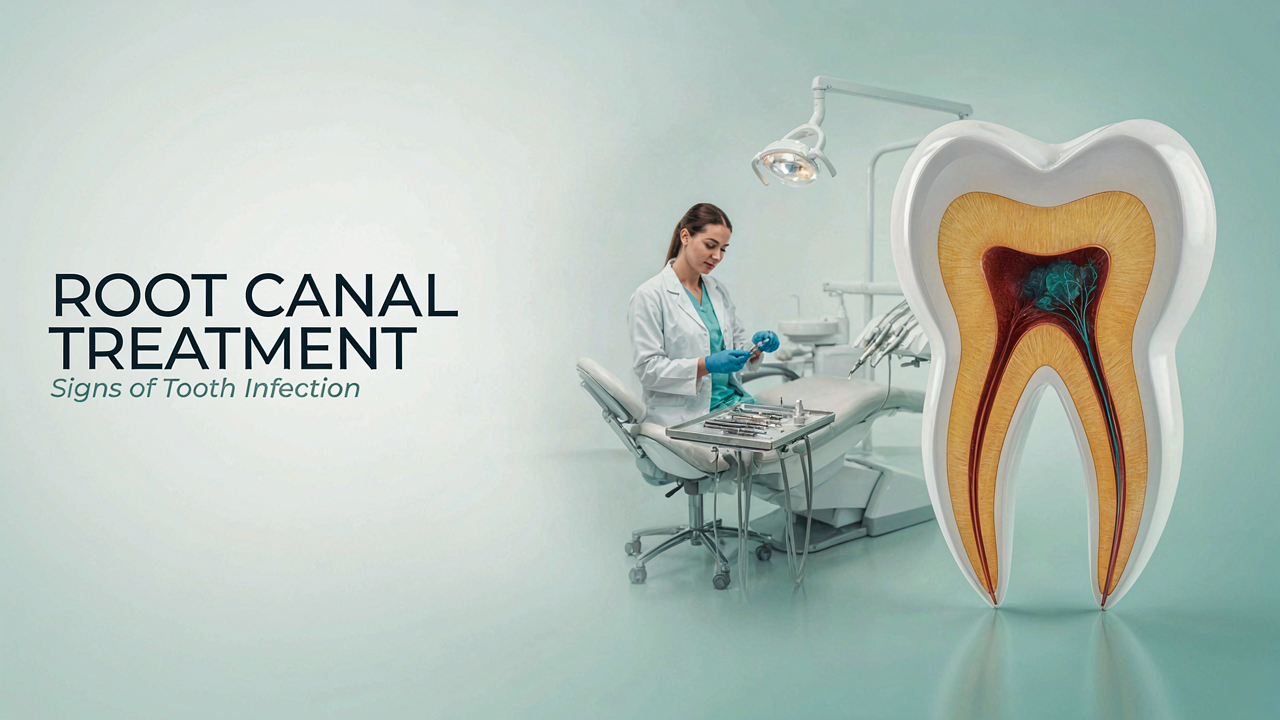
A persistent toothache is easy to ignore, especially when pain comes and goes. However, recurring dental pain can sometimes indicate an infection inside the tooth. If you are searching for root canal treatment near Noida Sector 75, understanding the early signs of tooth infection can help you seek dental care before the problem becomes more serious.
A root canal treatment, also called endodontic treatment, is designed to remove infection from inside a tooth, clean and disinfect the root canals, and seal the tooth to help prevent reinfection.
At The Dental Crowns, patients from Sector 75 and surrounding Noida sectors can consult the dental team for root canal treatment and other restorative dental services.
Explore Dental Services at The Dental Crowns
Quick Answer: What Are the Signs of a Tooth Infection?
Common signs that may indicate a tooth infection include:
- Persistent or severe toothache
- Pain while biting or chewing
- Prolonged sensitivity to hot or cold
- Swelling around the tooth or gums
- Tender or swollen gums
- A pimple or small bump on the gums
- Bad taste or drainage around the affected tooth
- Tooth discoloration
- Pain that spreads toward the jaw, ear or face
- Fever or facial swelling in more serious infections
Not every infected tooth causes severe pain. An infection can sometimes develop with relatively mild symptoms, which is why persistent dental changes should be evaluated by a dentist. The American Association of Endodontists notes that an abscessed tooth may cause aching, pain while chewing or swollen gums, while some infections may not be painful.
What Is Root Canal Treatment?
Root canal treatment is a tooth-saving dental procedure used when the soft tissue inside a tooth, known as the pulp, becomes inflamed or infected.
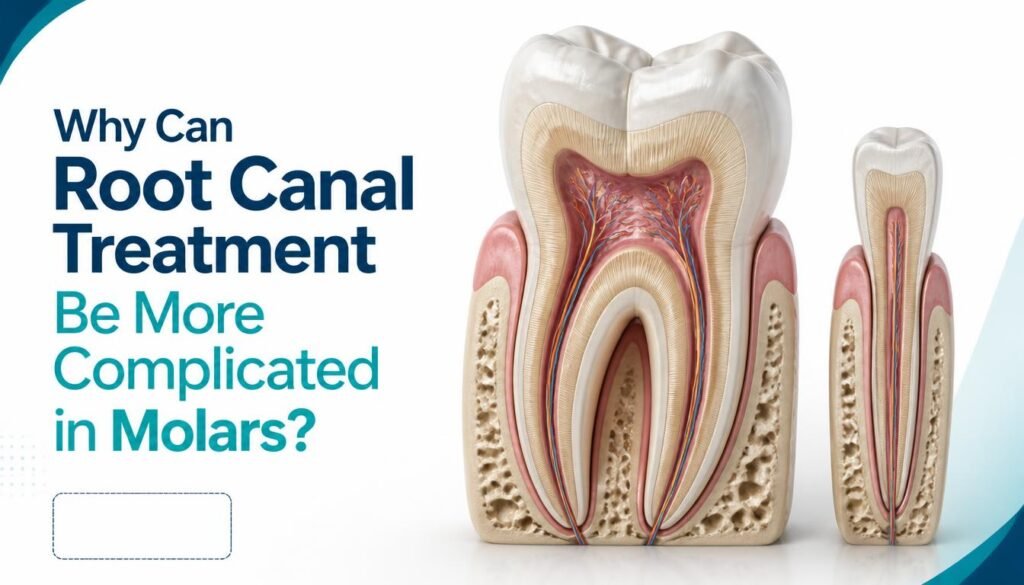
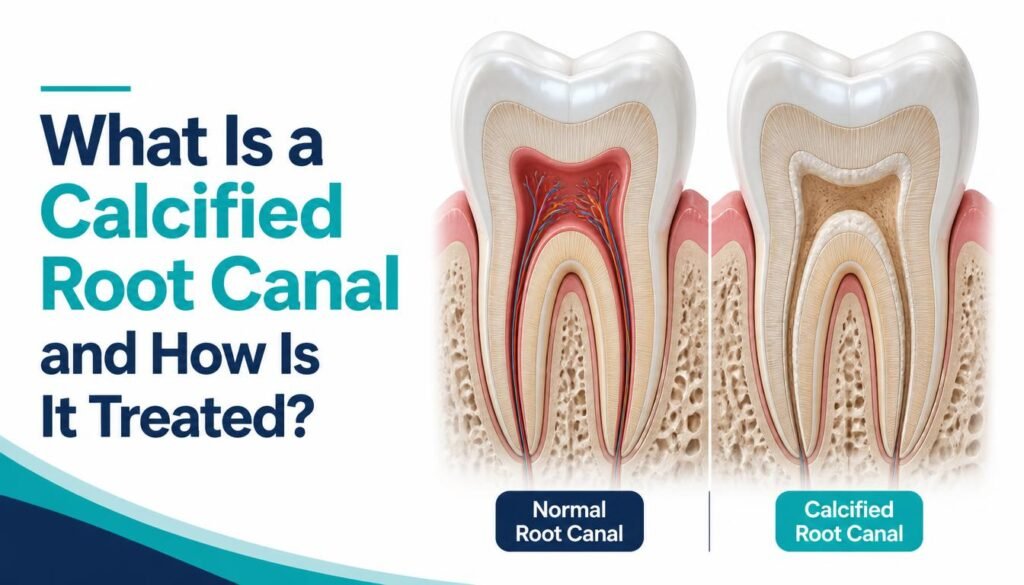
The pulp contains nerves, blood vessels and connective tissue. Deep decay, cracks, trauma, repeated dental procedures or problems with an existing restoration can damage the pulp and allow bacteria to enter.
During a root canal, the dentist removes the infected or inflamed pulp, cleans and disinfects the root canal system, fills the space and seals the tooth.
The goal is not simply to remove pain. The main goal is to eliminate infection while preserving the natural tooth whenever possible.
The NHS also explains that root canal treatment removes infection from inside the tooth before the tooth is cleaned, filled and sealed.
10 Signs You May Need Root Canal Treatment
1. Persistent Toothache
One of the most common warning signs is a toothache that continues for an extended period.
The pain may be:
- Constant
- Throbbing
- Sharp
- Worse at night
- Triggered by chewing
- Difficult to locate precisely
A toothache does not automatically mean you need a root canal. Cavities, gum problems, cracked teeth and other conditions can also cause pain.
However, persistent or worsening pain deserves a professional dental examination.
2. Pain When Biting or Chewing
Does one particular tooth hurt when you bite into food?
Pain while chewing can occur when inflammation or infection affects the tissues around the tooth. It may also occur because of a cracked tooth or other dental problems.
If the pain repeatedly occurs in the same tooth, avoid delaying an examination.
The American Association of Endodontists lists severe pain while chewing or biting among symptoms that can indicate the need for endodontic treatment.
3. Long-Lasting Sensitivity to Hot or Cold
Temporary sensitivity can happen for several reasons. But if your tooth continues to hurt after the hot or cold food or drink is removed, it may indicate deeper pulp irritation.
You may notice sensitivity after consuming:
- Hot tea
- Coffee
- Cold water
- Ice cream
- Cold beverages
- Very sweet foods
Lingering sensitivity is one of the symptoms that dentists consider when evaluating whether the pulp may be inflamed or infected.
4. Swollen Gums Around One Tooth
Swelling around a specific tooth can be a warning sign of infection.
The gum may appear:
- Red
- Puffy
- Tender
- Sensitive
- Raised around the affected tooth
An infection can sometimes spread beyond the tooth into the surrounding tissues. Therefore, swelling should not be ignored.
5. A Pimple or Bump on the Gums
Have you noticed a small pimple-like bump on your gum?
It may be associated with drainage from an infected tooth.
The bump may come and go, which can make people assume that the problem has disappeared. However, the underlying infection may still be present.
A dental examination is important because treating only the visible bump does not necessarily eliminate the source of infection.
6. Tooth Discoloration
A tooth that becomes noticeably darker or grayish can sometimes indicate damage to the pulp.
Discoloration can have different causes, including trauma and internal changes within the tooth. A dentist may need to examine the tooth and take an X-ray to determine the cause.
7. Facial or Jaw Swelling
Swelling around the jaw or face can indicate that a dental infection has progressed.
This symptom deserves prompt professional attention.
If swelling is significant or accompanied by fever, difficulty swallowing, difficulty breathing or rapidly worsening symptoms, seek urgent medical care.
8. Bad Taste or Drainage
An infected tooth may sometimes release fluid or pus.
You may notice:
- A bad taste in your mouth
- Fluid around the gum
- Unpleasant breath
- A recurring gum bump
These signs can occur with a dental abscess and should be assessed by a dental professional.
9. Cracked or Chipped Tooth
A cracked or chipped tooth can allow bacteria to reach deeper parts of the tooth.
Not every cracked tooth requires root canal treatment. The appropriate treatment depends on the location and severity of the crack and whether the pulp has been affected.
The American Association of Endodontists identifies cracked teeth and dental trauma among situations that can lead to pulp inflammation or infection.
10. Pain That Suddenly Disappears
This can be confusing.
You may experience severe tooth pain and then suddenly feel better.
That does not necessarily mean the tooth has healed.
In some situations, the pulp inside a severely affected tooth may lose its ability to respond normally. Infection can continue around the root even when the original pain changes.
Therefore, a sudden reduction in tooth pain should not automatically be treated as a sign that dental treatment is unnecessary.
What Causes a Tooth Infection?
Several dental problems can allow bacteria to reach the pulp.
Deep Tooth Decay
Untreated cavities can progress deeper into the tooth. When decay reaches the pulp, infection or inflammation may develop.
Cracked or Broken Teeth
A crack can provide bacteria with a pathway toward the inner part of the tooth.
Dental Trauma
An injury can damage the pulp even when the tooth does not appear severely broken.
Repeated Dental Procedures
A tooth that has undergone multiple procedures may sometimes develop pulp problems.
Gum Disease
Advanced gum problems can affect the supporting tissues around teeth and may contribute to dental infections.
The NHS identifies tooth decay, gum disease, chips or cracks and dental abscesses among causes associated with infected tooth pulp.
Root Canal Treatment vs Tooth Extraction
When a tooth has severe infection, patients sometimes assume that extraction is the only solution.
That is not always the case.
If the tooth can be predictably restored, root canal treatment may allow the dentist to remove the infection while preserving the natural tooth.
The American Association of Endodontists describes root canal treatment as a procedure designed to eliminate infection and save the natural tooth.
However, extraction may be recommended when a tooth cannot be adequately restored.
Your dentist should evaluate:
- Remaining tooth structure
- Extent of infection
- Root condition
- Presence of cracks
- Gum and bone health
- Overall restorability
- Your long-term dental needs
If extraction becomes necessary, replacement options may include a dental implant, bridge or denture depending on your situation.
You can learn more about tooth replacement through our guide: Dental Implants in Noida Sector 75
How Is Root Canal Treatment Performed?
The exact procedure varies depending on the tooth and complexity of the infection, but treatment commonly involves several stages.
Step 1: Dental Examination
The dentist examines the tooth and discusses your symptoms.
Dental X-rays may be recommended to evaluate the roots and surrounding bone.
Step 2: Local Anaesthesia
The dentist uses local anaesthesia to numb the treatment area.
This helps make the procedure more comfortable.
Step 3: Accessing the Tooth
A small opening is created in the tooth to access the infected or inflamed pulp.
Step 4: Removing the Infected Pulp
The damaged pulp is carefully removed from inside the tooth.
Step 5: Cleaning and Disinfecting
The root canals are cleaned, shaped and disinfected.
The American Association of Endodontists describes this process as removing infected pulp, cleaning, disinfecting and shaping the canals before sealing them.
Step 6: Filling and Sealing
The cleaned canal space is filled and sealed to reduce the risk of reinfection.
Step 7: Final Restoration
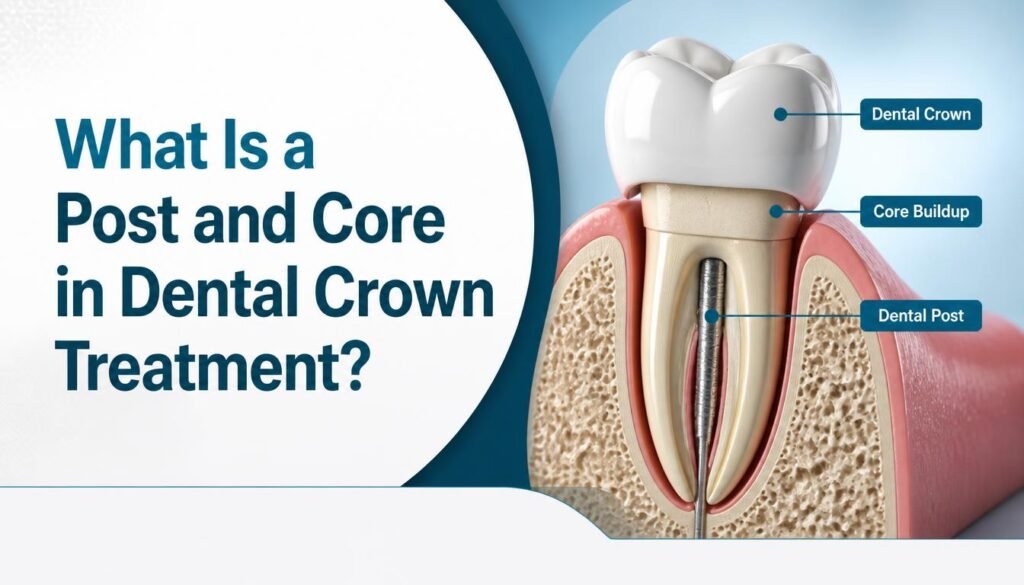
Depending on the amount of remaining tooth structure, your dentist may recommend a filling or dental crown.
A crown can provide additional protection when a tooth has been significantly weakened.
Does Root Canal Treatment Hurt?
This is one of the most common concerns among patients searching for root canal treatment near Noida Sector 75.
Modern dental techniques and local anaesthesia can make root canal treatment considerably more comfortable than many people expect.
The purpose of the procedure is also to remove the source of infection and relieve the pain associated with an affected tooth.
The American Association of Endodontists describes root canal treatment as a procedure that can relieve dental pain and save the natural tooth.
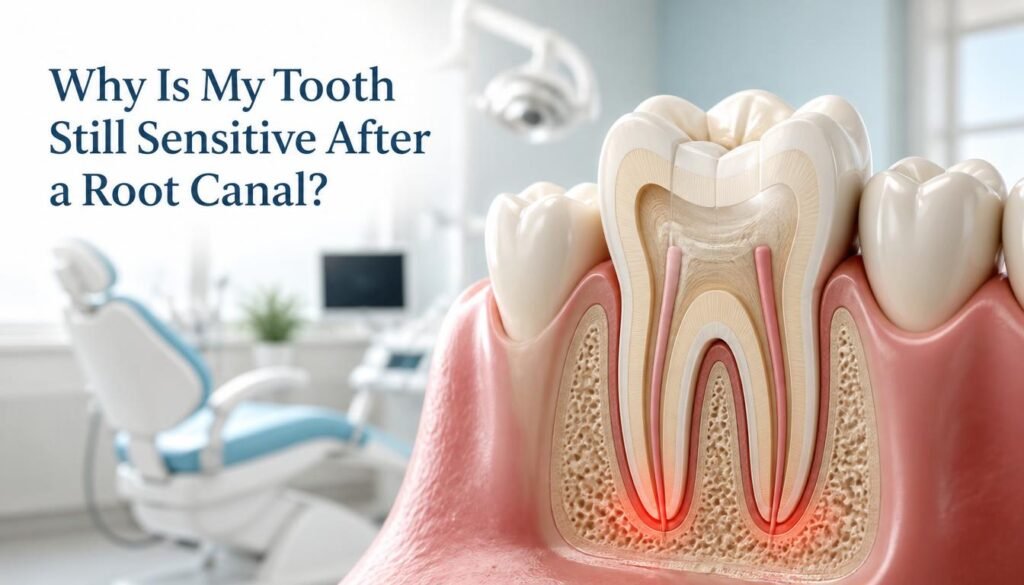
Some soreness or sensitivity can occur after treatment. Your dentist can provide appropriate aftercare instructions based on your individual situation.
You can also explore: Painless Root Canal Treatment at The Dental Crowns
Why Might a Dental Crown Be Needed After Root Canal Treatment?
A root canal removes infection from inside the tooth, but the tooth may still require structural protection.
A significantly weakened tooth can be more vulnerable to fracture, particularly when it has lost substantial tooth structure.
A dentist may therefore recommend a crown after root canal treatment depending on the tooth’s condition.
The NHS notes that a crown may be needed when a tooth has been badly infected.
If you are considering crown treatment, you can also read: Porcelain Crowns vs Zirconia Crowns in Noida Sector 75
How Long Does Root Canal Treatment Take?
Treatment time varies according to:
- The tooth being treated
- Number of root canals
- Severity of infection
- Tooth anatomy
- Presence of an abscess
- Previous dental treatment
- Need for additional procedures
- Final restoration requirements
Some root canals can be completed in a single appointment, while more complex cases may require additional visits.
The NHS notes that root canal treatment commonly requires two or more appointments, although treatment duration varies.
Your dentist can provide a more accurate treatment timeline after examining your tooth.
What Happens If You Ignore a Tooth Infection?
Ignoring an infected tooth can allow the infection to progress.
Possible complications may include:
- Increasing tooth pain
- Gum swelling
- Dental abscess
- Bone involvement around the tooth
- Spread of infection into surrounding tissues
- Eventual tooth loss
The NHS warns that an untreated infected tooth may eventually require extraction if root canal treatment is not performed when indicated.
This is why early diagnosis matters.
When Should You See a Dentist?
You should arrange a dental examination if you experience:
- Tooth pain that persists
- Pain while chewing
- Lingering hot or cold sensitivity
- Gum swelling
- A recurring gum pimple
- Tooth discoloration
- A cracked tooth
- Bad taste or drainage
- Unexplained facial or jaw swelling
Do not wait for severe pain before seeking treatment.
A dentist can determine whether your symptoms are caused by an infection, cavity, cracked tooth, gum disease or another dental condition.
Emergency Signs of Dental Infection
Some symptoms require urgent attention.
Seek urgent medical or dental care if you develop:
- Rapidly increasing facial swelling
- Difficulty breathing
- Difficulty swallowing
- Severe swelling around the mouth or neck
- High fever with dental swelling
- Severe pain accompanied by significant swelling
A serious dental infection can require prompt treatment.
Root Canal Treatment Near Noida Sector 75
If you live in Noida Sector 75, you have access to dental clinics and treatment options in Sector 75 and nearby areas.
The Dental Crowns is located at Civitech Stadia, Sector 79, Noida, and provides root canal treatment along with restorative, cosmetic and surgical dental services.
The clinic’s listed services include:
- Painless root canal treatment
- Dental crowns
- Dental implants
- Tooth-coloured restorations
- Dental bridges
- Dentures
- Braces
- Veneers
- Teeth whitening
- Laser dentistry
- Tooth extraction
- Wisdom tooth extraction
- Smile makeovers
- Children’s dentistry
You can explore the complete list of treatments here: Dental Services in Noida – The Dental Crowns
Why Choose The Dental Crowns for Root Canal Treatment Near Sector 75?
Choosing a dental clinic should involve more than simply searching for the nearest dentist.
Consider factors such as:
Experienced Dental Professionals
A proper diagnosis is important before starting root canal treatment.
Modern Dental Techniques
The Dental Crowns highlights modern techniques and technology as part of its root canal treatment approach.
Focus on Patient Comfort
Patients often worry about dental pain and anxiety. A comfortable treatment environment and appropriate pain-control methods can make the experience easier.
Comprehensive Dental Care
Having access to restorative treatments can be useful because an infected tooth may require a final restoration after root canal treatment.
Convenient Location for Nearby Noida Residents
The Dental Crowns is located in Sector 79, making it accessible for patients from Sector 75 and surrounding Noida sectors.
Frequently Asked Questions About Root Canal Treatment Near Noida Sector 75
1. What are the first signs of a tooth infection?
Persistent toothache, sensitivity to hot or cold, pain while chewing, gum swelling and a pimple-like bump on the gums can be warning signs. However, some infections may have limited symptoms.
2. Does every toothache require a root canal?
No. Toothache can have many causes, including cavities, gum disease, cracked teeth and sensitivity. A dentist must examine the tooth before recommending root canal treatment.
3. Can a tooth infection go away on its own?
An infection inside a tooth generally requires professional dental treatment. Pain may temporarily change or disappear while the underlying problem remains.
4. Is root canal treatment better than extraction?
When a tooth is restorable, root canal treatment can preserve the natural tooth. Extraction may be necessary when the tooth cannot be predictably restored.
5. Do I need a crown after a root canal?
Not every tooth automatically requires a crown. The decision depends on the tooth, remaining structure, location, function and risk of fracture.
6. How painful is root canal treatment?
Local anaesthesia is used to numb the treatment area. Some soreness may occur afterward, but modern root canal treatment is designed to treat the source of dental infection and relieve pain.
7. How long does root canal treatment take?
Treatment time varies. Some cases may require one visit, while complex cases may need multiple appointments.
8. Can a root canal save my natural tooth?
When the tooth is suitable for treatment and restoration, root canal therapy can help preserve the natural tooth.
9. What happens if I delay root canal treatment?
An untreated infection can progress and may eventually lead to an abscess, damage around the tooth or tooth loss.
10. Where can I get root canal treatment near Noida Sector 75?
The Dental Crowns provides root canal treatment in Noida from its clinic at Civitech Stadia, Sector 79. Patients from Sector 75 and nearby sectors can contact the clinic for an examination and personalised treatment plan.
Final Takeaway
A persistent toothache should never be ignored.
If you notice tooth pain, lingering sensitivity, swelling, pain while chewing, gum pimples, tooth discoloration or other signs of infection, schedule a dental examination rather than waiting for the symptoms to become severe.
Root canal treatment can often help remove infection while preserving a natural tooth when the tooth is suitable for treatment. Early evaluation can also help your dentist determine whether you need a root canal, filling, crown, gum treatment or another dental procedure.
If you are searching for root canal treatment near Noida Sector 75, The Dental Crowns provides root canal and comprehensive dental care from its Sector 79 clinic.
The Dental Crowns
Shop No. 16, 1st Floor, Civitech Stadia,
Sector 79, Noida, Uttar Pradesh 201301
Phone: +91 89202 71787
Book/Explore Dental Treatment at The Dental Crowns
Medical References:
- American Association of Endodontists – Root Canal Treatment: AAE Root Canal Treatment Guide
- American Association of Endodontists – What Is a Root Canal?: AAE Root Canal Explained
- NHS – Root Canal Treatment: NHS Root Canal Treatment Guide
- NHS – Dental Treatments: NHS Dental Treatments