If you have persistent tooth pain, sensitivity to hot or cold, pain while chewing, swelling or discomfort around a tooth, you may wonder whether you need root canal treatment near Sector 76 Noida.
However, symptoms alone cannot confirm that a root canal is necessary. A dentist needs to determine what is causing the pain and whether the dental pulp inside the tooth is inflamed, infected or no longer healthy.
So, how is root canal treatment diagnosed near Sector 76 Noida?
A dentist generally combines your symptoms and dental history with a clinical examination, pulp sensibility tests, bite or percussion tests and dental imaging when appropriate. The purpose is to identify the source of the problem, assess the condition of the tooth and surrounding tissues, and decide whether root canal treatment is actually required.
The American Association of Endodontists (AAE) also emphasizes the importance of a proper diagnosis before endodontic treatment is recommended.
What Is Root Canal Treatment?
Root canal treatment, commonly called RCT, is a tooth-saving dental procedure used when the pulp inside a tooth becomes inflamed or infected.
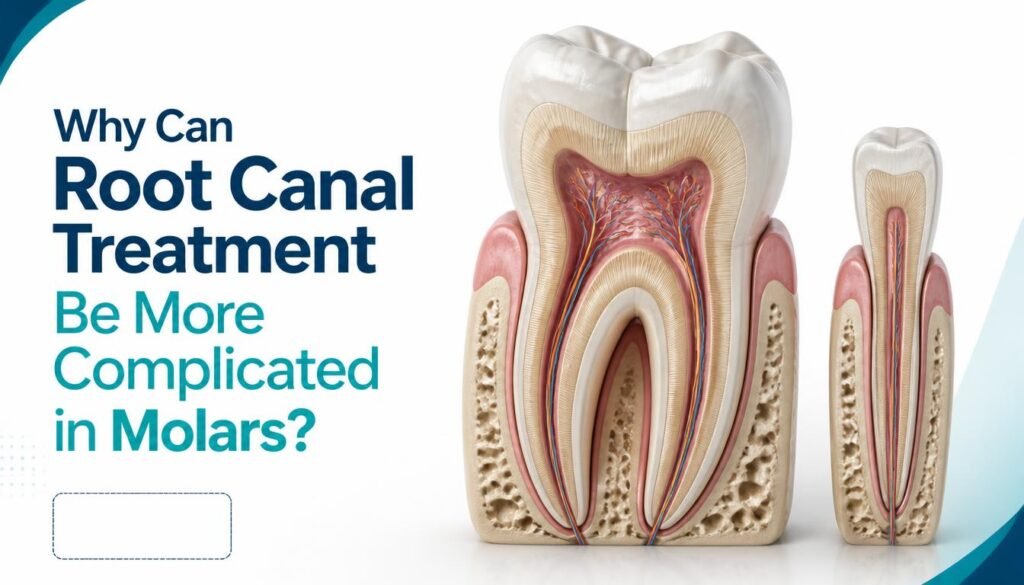
The pulp is the soft tissue located inside the tooth. It contains nerves and blood vessels. Deep decay, cracks, trauma, repeated dental procedures or other damage can allow bacteria to reach the pulp.
During root canal treatment, the affected pulp is removed, the root canals are cleaned and disinfected, and the canals are filled and sealed. The tooth is then restored with an appropriate filling or crown depending on its condition.
If you want to understand the treatment offered by The Dental Crowns, you can also explore our Painless Root Canal Treatment in Noida.
How Is Root Canal Treatment Diagnosed Near Sector 76 Noida?
Root canal diagnosis is not based on just one symptom or one X-ray. Your dentist considers multiple findings together.
1. Discussion of Your Symptoms and Dental History
The diagnostic process usually starts with questions about what you are experiencing.
Your dentist may ask:
- When did the tooth pain begin?
- Is the pain constant or occasional?
- Does hot or cold food trigger it?
- Does the pain continue after the food or drink is removed?
- Does biting or chewing make it worse?
- Have you noticed swelling?
- Have you had an injury to the tooth?
- Has the tooth been filled, crowned or treated previously?
- Have you taken pain medication for the problem?
The pattern of pain can provide useful information, but it does not establish the diagnosis by itself.
For example, prolonged sensitivity to hot or cold, severe pain while chewing, swelling or deep decay can be reasons to investigate whether the tooth has a pulp-related problem.
2. Clinical Examination of the Tooth
After discussing your symptoms, the dentist examines the affected tooth and the surrounding area.
The examination may include checking:
- Visible tooth decay
- Cracks or fractures
- Broken fillings or restorations
- Tooth discoloration
- Gum swelling
- Tenderness around the tooth
- Signs of infection
- Condition of the surrounding gums
- Tooth mobility
- The amount of remaining tooth structure
This helps the dentist determine whether the symptoms could be coming from the tooth itself or from another dental problem.
This is important because tooth pain does not automatically mean that root canal treatment is needed.
3. Pulp Sensibility Tests
One of the important parts of root canal diagnosis is assessing how the tooth responds to stimulation.
A dentist may use tests such as:
Cold Test
A controlled cold stimulus may be applied to the tooth.
The dentist observes whether the tooth responds and, importantly, how the response compares with nearby healthy teeth.
A response that is unusually strong or continues for an extended period can provide information about the condition of the pulp.
Electric Pulp Testing
In some situations, an electric pulp test may also be used to assess the tooth’s response to electrical stimulation.
This means that a pulp test should not be interpreted in isolation.
4. Percussion and Bite Testing
Your dentist may gently tap the tooth or ask you to bite on a specific object.
These tests can help identify inflammation involving the tissues around the root.
For example, if a particular tooth is painful when biting or tapping, it may indicate that the tissues surrounding the tooth are irritated or inflamed.
However, pain on biting can also have other causes, such as a cracked tooth or certain restoration-related problems. That is why your dentist combines this finding with the rest of the examination.
5. Dental X-Ray for Root Canal Diagnosis
Dental X-rays can provide important information that cannot be seen by simply looking at the tooth.
An X-ray may help the dentist evaluate:
- The depth of tooth decay
- The relationship between decay and the pulp
- Root shape and anatomy
- Bone changes around the root
- Previous root canal treatment
- Certain infections or lesions
- Other structural changes
In some complicated cases, additional three-dimensional imaging such as CBCT may be considered when clinically appropriate.
However, an X-ray is only one part of the diagnosis. A normal-looking X-ray does not necessarily mean that a tooth has no pulp problem.
6. Checking the Tooth for Cracks or Fractures
A cracked tooth can sometimes cause symptoms that resemble a root canal problem.
Your dentist may therefore check for:
- Visible cracks
- Fractured tooth structure
- Pain when biting
- Pain when releasing a bite
- Previous trauma
- Large or failing restorations
Identifying a crack is important because the appropriate treatment depends on its location, depth and effect on the tooth.
In some cases, a cracked tooth may require root canal treatment, while in others the treatment approach can be different.
7. Examining the Surrounding Gums and Tissues
The dentist may also examine the gums surrounding the affected tooth.
This can help identify:
- Localized swelling
- Tenderness
- Gum infection
- Abscess-related signs
- Abnormal probing depths
- Other periodontal problems
This part of the examination helps differentiate a pulp-related problem from certain gum or periodontal conditions.
8. Determining Whether the Tooth Can Be Restored
Even when a tooth has an infected or inflamed pulp, diagnosis does not end with the question, “Does this tooth need a root canal?”
The dentist may also need to determine whether enough healthy tooth structure remains to restore the tooth successfully.
Factors that can influence treatment planning include:
- Amount of remaining tooth structure
- Presence of cracks
- Root condition
- Bone support
- Existing restorations
- Tooth position
- Overall dental condition
If the tooth is suitable for treatment, root canal therapy may be recommended to preserve the natural tooth.
What Symptoms May Suggest You Need a Root Canal Evaluation?
If you live in or around Sector 76 Noida, consider arranging a dental examination if you experience:
- Persistent toothache
- Severe or throbbing dental pain
- Pain while biting or chewing
- Lingering hot or cold sensitivity
- Swelling around the tooth
- Tender or swollen gums
- A pimple or boil on the gums
- Deep tooth decay
- A cracked or damaged tooth
- Tooth discoloration
- Recurring pain after previous dental treatment
The American Association of Endodontists notes that symptoms such as prolonged temperature sensitivity, severe pain when chewing and swelling can be associated with teeth requiring endodontic evaluation.
However, having one of these symptoms does not automatically mean you need a root canal. A dentist must evaluate the tooth before recommending treatment.
Can a Root Canal Be Diagnosed Without an X-Ray?
Sometimes a dentist can gather important information through the clinical examination and pulp sensibility tests, but dental imaging is commonly an important part of evaluating suspected root canal problems.
An X-ray can provide information about the roots and surrounding bone that cannot be obtained from symptoms alone.
The type and number of images required depend on the individual case.
If additional imaging is necessary, your dentist can explain why it is being recommended.
Does Every Toothache Require Root Canal Treatment?
No.
Tooth pain can have many possible causes, including:
- Dental decay
- Tooth sensitivity
- Cracked teeth
- Loose or damaged fillings
- Gum disease
- Teeth grinding
- Sinus-related pain
- Trauma
- Pulp inflammation or infection
This is why self-diagnosing a root canal problem based only on online symptoms is not recommended.
A professional dental examination helps determine the actual source of the discomfort.
What Happens After the Diagnosis?
Once the dentist has evaluated the tooth, they can explain the treatment options.
Depending on the diagnosis, treatment may include:
- A filling or restorative treatment
- Treatment for tooth sensitivity
- Root canal treatment
- Root canal retreatment
- A dental crown or other restoration
- Treatment for gum-related problems
- Tooth extraction when the tooth cannot be predictably restored
The appropriate treatment depends on the condition of the individual tooth.
For patients interested in understanding the broader treatment process, you can also read our guide on Root Canal Treatment Planning for Patients From Sector 76 Noida.
Root Canal Diagnosis Near Sector 76 Noida
Patients living in Sector 76 Noida have access to dental clinics in and around the sector. When choosing a clinic for a root canal evaluation, distance is only one consideration.
You may want to ask the dental team:
- What is causing my tooth pain?
- Do I actually need root canal treatment?
- What tests will be performed?
- Do I need an X-ray?
- Is the tooth restorable?
- Will I need a crown after RCT?
- Are there alternative treatments?
- How many appointments may be required?
- What should I expect after treatment?
The Dental Crowns is located in Sector 79, Noida, and provides root canal treatment and other dental services for patients from nearby areas.
You can also visit the Dental Services page to explore the treatments available.
Why Early Diagnosis Matters
Ignoring persistent tooth pain may allow an underlying dental problem to progress.
Some dental infections can become more serious if they are not treated. Early evaluation allows the dentist to identify the source of the problem and discuss appropriate treatment options before the condition becomes more complicated.
If you have persistent pain, swelling, fever, difficulty swallowing or difficulty breathing, seek prompt professional dental care.
Frequently Asked Questions
1. How is root canal treatment diagnosed near Sector 76 Noida?
A dentist generally combines your symptoms and dental history with a clinical examination, pulp sensibility tests, percussion or bite tests and appropriate dental imaging to determine whether root canal treatment is necessary.
2. Can tooth pain alone confirm that I need a root canal?
No. Tooth pain can have many causes. A professional examination is required to determine whether the pulp is affected and whether RCT is appropriate.
3. Is an X-ray necessary for root canal diagnosis?
Dental X-rays are commonly used to evaluate suspected root canal problems, but the exact imaging required depends on the individual case and the dentist’s clinical assessment.
4. What tests are used before root canal treatment?
Depending on the case, a dentist may use cold testing, electric pulp testing, percussion, bite testing, clinical examination and dental X-rays.
5. Can a tooth need a root canal even if it does not hurt?
Yes. Some dental problems can have few or no noticeable symptoms. This is one reason why a professional examination is more reliable than using pain alone to determine whether RCT is needed.
6. Does swelling always mean I need a root canal?
Not necessarily. Swelling can have different dental causes. A dentist needs to examine the tooth and surrounding tissues to determine the source.
7. Will I need a crown after root canal treatment?
Some root-canal-treated teeth may require a crown or another permanent restoration, particularly when significant tooth structure has been lost. Your dentist can recommend the appropriate restoration after examining the tooth.
8. Where can I get a root canal consultation near Sector 76 Noida?
Patients from Sector 76 Noida can consult dental professionals in and around the area. The Dental Crowns is located at Civitech Stadia, Sector 79, Noida, and provides root canal treatment among its dental services.
Book a Root Canal Consultation Near Sector 76 Noida
If you have persistent tooth pain, sensitivity, swelling or pain while chewing, do not assume that you need a root canal based only on your symptoms.
A proper diagnosis can help determine what is actually causing the problem and whether root canal treatment is the appropriate solution.
For patients searching for root canal treatment near Sector 76 Noida, The Dental Crowns in nearby Sector 79, Noida, provides root canal treatment and other dental services.
Schedule a professional dental consultation to have your tooth examined and discuss the most appropriate treatment options.
Medical disclaimer: This article is intended for general educational purposes and does not replace an in-person examination, diagnosis or treatment recommendation from a qualified dental professional.