Mild pain, tenderness or sensitivity in a tooth after root canal treatment can be normal, particularly during the first few days while the tissues surrounding the tooth heal. However, severe, worsening or persistent pain after a root canal should not be ignored.
Pain after root canal treatment may occur because of inflammation around the root, irritation of the tissues during treatment, a high bite, an infection that has not completely resolved, an untreated canal, leakage around a restoration, a crack or fracture, or another dental problem affecting the tooth.
Most post-root-canal discomfort should gradually improve rather than become increasingly severe. If your pain is getting worse, lasts longer than expected, or is accompanied by swelling, fever, a bad taste, or difficulty opening your mouth, contact your dentist or endodontist for an examination.
Is It Normal to Have Pain After Root Canal Treatment?
Yes, some discomfort after root canal treatment can be normal.
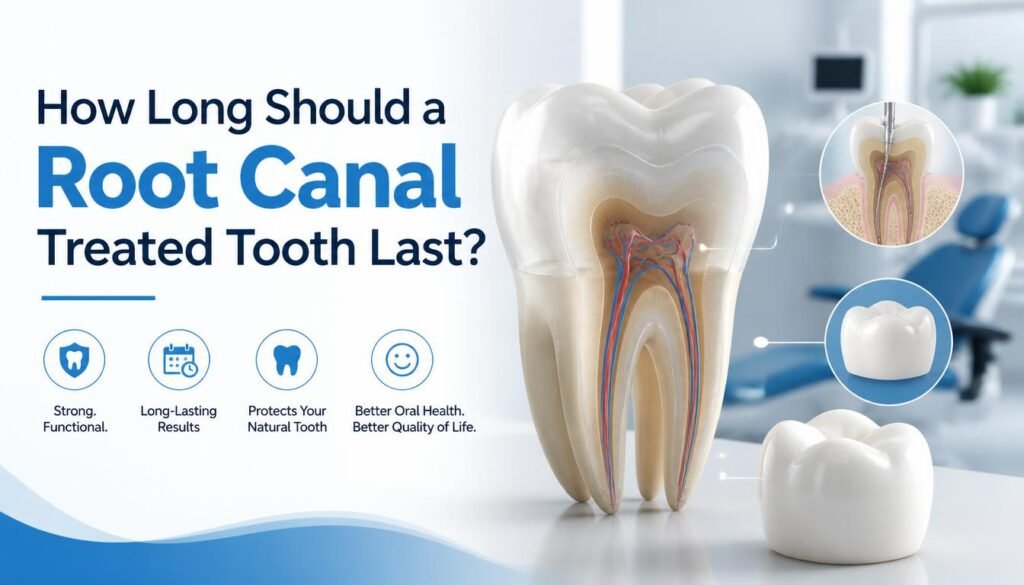
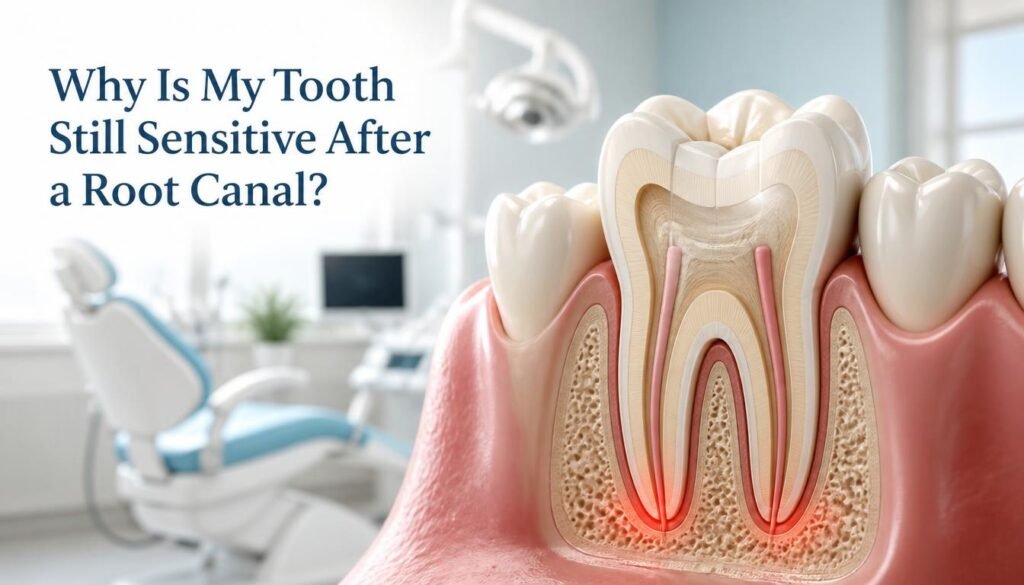
Root canal treatment removes inflamed or infected tissue from inside the tooth, cleans and disinfects the root canal system, and seals the canals. Even though the infected pulp has been removed, the tissues surrounding the root of the tooth can remain irritated while healing takes place.
The American Association of Endodontists notes that mild soreness or tenderness for a few days after root canal treatment is common, particularly when the tooth was already painful or infected before treatment.
The important factor is the direction of your symptoms.
Pain that gradually improves
Usually less concerning:
- Mild soreness
- Tenderness when biting
- Slight sensitivity around the treated tooth
- Mild gum tenderness
- Discomfort that becomes less noticeable each day
Pain that gets worse
Needs professional evaluation:
- Increasing or severe pain
- Strong throbbing pain
- Significant swelling
- Pain that returns after initially disappearing
- Severe pain when biting
- Fever or feeling unwell
- A pimple or drainage around the gum
- A tooth that feels significantly higher than the surrounding teeth
10 Common Causes of Pain After Root Canal Treatment
1. Normal Inflammation During Healing
One of the most common reasons for discomfort after a root canal is inflammation in the tissues around the tooth.
During treatment, the dentist works inside very small root canals. The tissues surrounding the root can become temporarily irritated.
This can cause:
- Tenderness
- Mild aching
- Discomfort while chewing
- Sensitivity when touching or pressing the tooth
This type of discomfort should generally improve as the surrounding tissues recover.
If your pain is gradually becoming less noticeable, it may simply be part of the normal healing process.
2. The Tooth Was Severely Infected Before Treatment
A tooth with a significant infection may take longer to settle after root canal treatment.
When bacteria have caused inflammation around the root, the surrounding tissues may already be irritated before treatment begins.
Removing the infected pulp addresses the source inside the tooth, but the tissues outside the root may require additional time to heal.
This is one reason why a tooth that was severely infected before treatment can remain tender for several days afterward.
3. Pain When Biting May Be Caused by a High Filling or Crown
If your tooth hurts particularly when you bite down, your dentist may need to check your bite.
Sometimes a temporary filling, permanent restoration or crown can interfere with the way your upper and lower teeth come together.
If the treated tooth is taking excessive pressure when you bite, it may remain sore.
You might notice:
- Pain when chewing
- A feeling that the tooth touches first
- Tenderness when biting
- Discomfort that is greater when pressure is applied
Your dentist can examine your bite and determine whether an adjustment is required.
Do not attempt to adjust a filling or crown yourself.
4. The Root Canal May Have Complex Anatomy
Teeth do not always have simple root canal systems.
Some canals can be:
- Very narrow
- Curved
- Difficult to locate
- Divided into multiple branches
- Positioned in complicated anatomical patterns
If part of the canal system was not identified or adequately treated, bacteria may remain and contribute to continuing inflammation.
The American Association of Endodontists explains that untreated narrow or curved canals and complicated canal anatomy can be reasons why a previously treated tooth does not heal as expected.
In these situations, a dentist or endodontist may recommend further examination and, when appropriate, root canal retreatment.
5. Infection May Persist or Return
A root canal is designed to remove infection from inside the tooth and seal the cleaned canal system.
However, in some cases, infection can persist or a new infection can develop.
Possible reasons include:
- Bacteria remaining in part of the canal system
- An untreated canal
- Leakage around a restoration
- New dental decay
- A damaged or loose filling
- A cracked crown
- Delayed permanent restoration
Persistent infection can cause pain, tenderness or swelling around the tooth.
If pain returns after the tooth initially felt normal, it is particularly important to have the tooth evaluated.
6. A New Cavity Can Develop Around the Treated Tooth
A root canal does not make a tooth immune to future dental problems.
The natural tooth structure surrounding the treated area can still develop decay.
For example, if a crown or filling becomes damaged or does not adequately seal the tooth, bacteria may gain access to vulnerable areas.
This can eventually result in:
- New decay
- Gum irritation
- Infection
- Sensitivity
- Pain
Maintaining good oral hygiene and attending regular dental examinations can help detect these problems early.
7. A Cracked or Fractured Tooth Can Cause Pain
A tooth that has undergone root canal treatment can still experience structural problems.
A crack or fracture may cause pain, particularly when chewing.
You may notice:
- Sharp pain while biting
- Pain when releasing your bite
- Intermittent discomfort
- Sensitivity around the tooth
- Repeated episodes of pain
A crack can sometimes be difficult to identify without a thorough dental examination.
If your tooth continues to hurt despite having undergone root canal treatment, your dentist may need to evaluate the tooth for structural damage.
8. The Permanent Crown or Restoration Has Not Been Placed Yet
A root canal treats the inside of the tooth, but the tooth may still need a final restoration.
Depending on the tooth and the amount of remaining structure, your dentist may recommend a dental crown to protect and restore it.
A tooth that has received root canal treatment can be vulnerable to fracture, particularly when a substantial amount of natural tooth structure has been lost.
For this reason, following your dentist’s instructions regarding the final restoration is important.
Do You Need a Dental Crown After Root Canal Treatment?
9. The Pain May Come From the Surrounding Gum or Bone
Not every type of pain around a root-canal-treated tooth necessarily comes from inside the tooth itself.
The periodontal ligament and surrounding tissues contain nerves and can become inflamed.
The American Association of Endodontists explains that a previously treated tooth can still produce pain because inflammation in the tissues surrounding the root can stimulate nerves in those tissues.
This is why a tooth can sometimes hurt even though the nerve inside the tooth has been removed.
10. The Pain May Actually Be Coming From Another Tooth
Sometimes the painful tooth is not the actual source of the problem.
Dental pain can be difficult to localize, particularly when several teeth are close together.
Pain may be related to:
- A neighboring tooth
- Tooth decay
- Gum disease
- A cracked tooth
- Teeth grinding or clenching
- Sinus-related pressure
- Another dental infection
This is why diagnosing the cause of persistent pain is important rather than assuming that the root canal itself has failed.
How Long Does Pain Last After a Root Canal?
The duration varies depending on the condition of the tooth, the extent of infection, the treatment performed and the individual’s healing response.
Many patients experience mild discomfort for several days after treatment.
The American Association of Endodontists states that most patients experience mild discomfort for a few days and that symptoms generally improve within approximately three to five days.
Some patients may experience soreness for longer, particularly when the tooth had a significant infection or inflammation before treatment.
A useful rule to remember:
Improving pain is generally more reassuring than worsening pain.
If your pain is becoming stronger instead of gradually improving, contact your dentist.
Why Does My Tooth Hurt When I Bite After a Root Canal?
Pain when biting after root canal treatment can occur because the tissues around the tooth are still inflamed.
However, if biting pain is severe, persistent or worsening, your dentist should evaluate the tooth.
Possible causes include:
- Normal healing
- Inflammation around the root
- A high temporary filling
- A high crown
- Persistent infection
- An untreated canal
- A crack or fracture
- Problems involving the surrounding tissues
A bite examination can help determine whether the tooth is receiving excessive pressure.
Why Is There Throbbing Pain After Root Canal Treatment?
Throbbing pain deserves attention, especially if it is severe or accompanied by swelling.
Mild discomfort can occur during normal healing, but significant throbbing pain may indicate continuing inflammation or infection.
The American Association of Endodontists recommends contacting a dental professional when tooth pain is persistent or associated with swelling.
Do not rely solely on painkillers to mask symptoms if the pain is getting worse.
When Should You Worry About Pain After a Root Canal?
You should contact your dentist or endodontist if you experience:
- Severe or increasing pain
- Significant swelling
- Fever
- Facial swelling
- Pus or drainage
- A bad taste coming from the tooth
- Difficulty opening your mouth
- Difficulty swallowing
- Pain that does not gradually improve
- Pain that returns after initially disappearing
- A loose or damaged crown
- Persistent pain while biting
Seek urgent dental care if swelling is significant or you have difficulty breathing or swallowing.
A dental infection can potentially spread beyond the tooth and surrounding tissues, so serious symptoms should not be ignored.
What Can You Do to Reduce Pain After Root Canal Treatment?
Your dentist should provide specific aftercare instructions based on your treatment.
Generally, you can help the healing process by:
1. Follow Your Dentist’s Medication Instructions
If your dentist recommends pain medication, take it exactly as directed.
Do not exceed the recommended dose.
2. Avoid Chewing Hard Foods on the Treated Tooth
Until the tooth has been permanently restored, follow your dentist’s instructions about chewing.
This is particularly important if you have a temporary filling.
3. Maintain Good Oral Hygiene
Continue brushing and flossing as recommended.
Good oral hygiene helps reduce plaque and supports the health of the surrounding gums and teeth.
4. Attend Your Follow-Up Appointment
Do not skip the appointment for your final restoration or follow-up examination.
A root canal is not always the end of the treatment process.
5. Contact Your Dentist if Symptoms Get Worse
Do not simply wait if pain is increasing or new swelling develops.
A professional examination can identify whether the symptoms are part of normal healing or require additional treatment.
Can a Tooth Hurt Months or Years After a Root Canal?
Yes.
Although many root-canal-treated teeth can function successfully for many years, a previously treated tooth can sometimes become painful or diseased later.
The American Association of Endodontists explains that a treated tooth may fail to heal properly because of factors such as missed canals, complicated anatomy or inadequate sealing.
A new problem can also develop later.
For example:
- New decay
- A cracked tooth
- A damaged crown
- A leaking restoration
- New bacterial contamination
In some cases, root canal retreatment may be considered.
Read our related guide: Root Canal Retreatment Near Sector 78 Noida: When Is It Needed?
Does Pain After Root Canal Mean the Treatment Failed?
Not necessarily.
Pain during the first few days does not automatically mean that root canal treatment has failed.
Mild tenderness can occur while the surrounding tissues heal.
However, persistent, severe or worsening symptoms should be investigated.
A dentist may use:
- Clinical examination
- Bite testing
- Dental X-rays
- Other dental imaging when appropriate
- Evaluation of the restoration
- Examination of the gums and surrounding tissues
The goal is to identify the actual cause of the pain before deciding whether additional treatment is necessary.
Root Canal Treatment and Dental Crowns: How Are They Connected?
Root canal treatment and dental crowns have different purposes.
Root canal treatment
A root canal treats the inside of a tooth when the pulp has become inflamed or infected.
Dental crown
A crown is a restoration that covers and protects the remaining tooth structure.
In some cases, a crown may be recommended after root canal treatment, particularly when substantial tooth structure has been lost.
However, not every tooth automatically requires the same restoration.
Your dentist should assess:
- The amount of remaining tooth structure
- Which tooth was treated
- The tooth’s location
- Your bite
- Existing restorations
- The risk of fracture
- Your overall oral health
For more information, read our existing article Do You Need a Dental Crown After Root Canal Treatment?
Root Canal Pain in Noida: When Should You Visit a Dentist?
If you live in Noida Sector 74, Sector 75, Sector 76, Sector 77, Sector 78 or Sector 79 and are experiencing pain after root canal treatment, professional evaluation can help identify the cause.
The Dental Crowns is located at Civitech Stadia, Sector 79, Noida, and provides dental treatments including root canal treatment, dental crowns, dental implants and laser dentistry.
Patients experiencing persistent pain should not assume that the tooth simply needs more time to heal.
A dental examination can help determine whether the discomfort is related to normal healing, bite pressure, infection, restoration problems or another dental condition.
Frequently Asked Questions
1. Is pain after root canal treatment normal?
Mild soreness or tenderness for a few days can be normal after root canal treatment. Pain that becomes severe or progressively worse should be evaluated by a dentist.
2. How long should a tooth hurt after a root canal?
Many patients experience mild discomfort for several days, with symptoms gradually improving. If pain persists or worsens, contact your dentist.
3. Why does my tooth hurt when I bite after a root canal?
The surrounding tissues may still be inflamed, or the tooth may be receiving excessive pressure from the bite. A dentist should evaluate persistent or severe biting pain.
4. Why is my root-canal-treated tooth throbbing?
Throbbing pain can occur with inflammation or infection. If the pain is significant or worsening, arrange a dental examination.
5. Can an infection return after a root canal?
Yes. Persistent or new infection can occur in some cases because of untreated canals, complex anatomy, leakage, new decay, cracks or other factors.
6. Can a root canal fail years later?
A previously treated tooth can sometimes develop problems months or years later. Retreatment may be an option depending on the cause and condition of the tooth.
7. Do I need a crown after a root canal?
Not every tooth automatically requires a crown. The decision depends on the tooth’s location, remaining structure, damage, bite and clinical condition.
8. Should I chew on a tooth after root canal treatment?
Follow your dentist’s instructions. If the tooth has a temporary restoration or has not yet received its final restoration, you may be advised to avoid chewing on it.
9. When should I contact my dentist after a root canal?
Contact your dentist if pain is severe, worsening, persistent, returns after disappearing, or occurs with swelling, fever, drainage or other concerning symptoms.
10. Can pain after a root canal mean I need retreatment?
Sometimes, but pain alone does not prove that retreatment is necessary. Your dentist or endodontist needs to identify the underlying cause before recommending additional treatment.
Final Takeaway
What causes pain in a tooth after root canal treatment?
The cause can range from normal inflammation during healing to a high bite, persistent infection, complex canal anatomy, a damaged restoration or a cracked tooth.
The key is to pay attention to how your symptoms change.
Mild pain that gradually improves is usually less concerning. Severe, persistent or worsening pain should be professionally evaluated.
If your root-canal-treated tooth continues to hurt, do not assume that the treatment has failed and do not rely only on pain medication. A dental examination can help identify the cause and determine whether the tooth simply needs more healing time or requires additional treatment.
Medical & Dental References
This article is intended for general educational purposes and does not replace an examination or diagnosis by a qualified dental professional.