A dental crown is designed to cover and protect a damaged tooth, restore its shape, and help you chew comfortably. However, if you experience pain under a dental crown, sensitivity while eating, or discomfort when biting down, you may wonder whether something has gone wrong.
Why does my tooth hurt under a dental crown? The answer depends on when the pain started, how severe it is, and whether you have other symptoms. Mild sensitivity can sometimes occur after a new crown is placed, but persistent pain may indicate an underlying dental problem that needs professional attention.
In this guide, we explain seven common causes of tooth pain under a dental crown, the treatments a dentist may recommend, and when you should seek dental care.
What Causes Tooth Pain Under a Dental Crown?
Pain beneath a dental crown can develop for several reasons, including a high bite, irritated tooth pulp, gum inflammation, a loose crown, or an infection. Identifying the cause is essential because the appropriate treatment depends on the condition of the tooth and surrounding tissues.
1. Tooth Sensitivity After Getting a New Crown
If your tooth hurts shortly after crown placement, temporary sensitivity may be the reason. Preparing a tooth for a crown involves reshaping its outer structure, which can irritate the tissues inside the tooth.
You may notice sensitivity when drinking cold water, eating hot food, or biting into something firm.
What can you do?
- Avoid extremely hot or cold foods if they trigger discomfort.
- Brush gently with a fluoride toothpaste designed for sensitive teeth.
- Follow the aftercare instructions provided by your dentist.
- Arrange a dental review if the sensitivity persists, worsens, or causes spontaneous pain.
Mild sensitivity may improve as the tooth settles, but severe or increasing pain should not be ignored.
2. Your Dental Crown May Be Too High
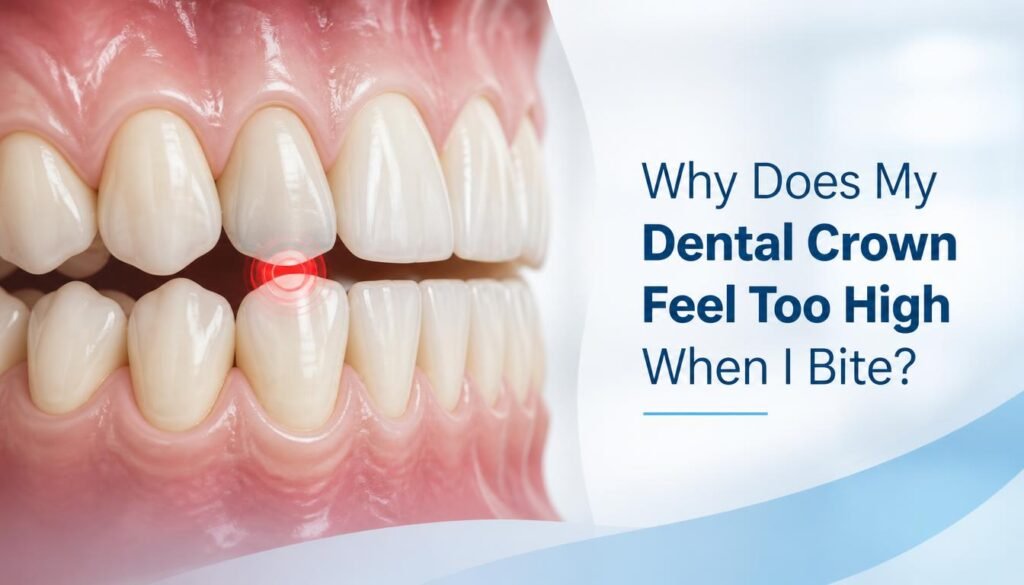
One common reason for pain when biting down after crown placement is an uneven bite. If the crown sits slightly higher than the surrounding teeth, it may receive excessive pressure during chewing.
This can cause discomfort when eating, tenderness around the tooth, or a feeling that the crowned tooth touches first when you close your mouth.
How is it treated?
A dentist can check how your upper and lower teeth meet. If the crown is too high, a small adjustment may help distribute biting forces more evenly.
Do not try to file or adjust the crown yourself. A professional examination is needed to determine whether the bite is responsible for the pain.
3. Tooth Nerve Inflammation or Infection
The soft tissue inside a natural tooth, called the dental pulp, contains nerves and blood vessels. If the pulp becomes inflamed or infected, you may experience pain beneath a crown.
Possible causes include deep decay before the crown was placed, damage to the pulp during treatment, a crack in the tooth, or bacteria entering the tooth.
Common warning signs include:
- Persistent or throbbing toothache
- Pain that occurs without eating or drinking
- Sensitivity to heat or cold that lingers
- Pain that interferes with sleep
- Tenderness when biting
In some cases, root canal treatment may be recommended to remove inflamed or infected pulp and preserve the natural tooth. The dentist will assess the tooth before deciding on treatment.
Learn more about painless root canal treatment at The Dental Crowns.
4. Tooth Decay Beneath the Crown
A dental crown does not make a tooth permanently immune to cavities. Plaque can accumulate around the crown margins, and decay may develop in the remaining natural tooth structure.
When decay progresses, it can cause sensitivity, pain, or infection. Early decay may not produce noticeable symptoms, which is why regular dental examinations are important even when a crown feels comfortable.
What treatment may be necessary?
Depending on the extent of decay, a dentist may recommend removing the crown, treating the affected tooth, and restoring it with a suitable filling or replacement crown. If the decay has reached the pulp, root canal treatment may also be necessary.
Maintaining good oral hygiene around the crown can help reduce the risk of further decay.
5. A Loose, Damaged, or Cracked Crown
A crown may loosen, chip, crack, or lose some of its cement over time. This can allow food and bacteria to collect around the affected area and may expose vulnerable tooth structure.
Signs of a damaged or loose crown include:
- Movement or a change in how the crown feels
- Pain while chewing
- Food repeatedly getting trapped around the tooth
- A visible chip or crack
- New sensitivity or discomfort
A dentist will examine the crown and underlying tooth to determine whether it can be repaired, recemented, or needs replacement.
If your crown feels loose, avoid chewing hard or sticky foods on that side and contact your dentist promptly. Do not use household glue to reattach it.
6. Gum Inflammation Around the Crown
Pain near a dental crown does not always originate inside the tooth. The surrounding gum tissue can become inflamed due to plaque buildup, trapped food, irritation, or problems with the crown’s fit.
You may notice redness, tenderness, bleeding while brushing, or swelling around the crowned tooth.
How can gum-related crown pain be managed?
A dentist can examine the gum tissue, check the crown margins, and recommend appropriate cleaning or further treatment. Brushing twice daily with fluoride toothpaste and cleaning between your teeth can help maintain gum health.
If the crown is irritating the gum because of its shape or fit, the dentist may need to correct the underlying problem.
7. A Cracked Tooth or Infection Around the Root
Sometimes the crown itself appears intact, but the natural tooth beneath it has developed a crack or an infection around its root.
A cracked tooth may cause sharp pain when biting or when releasing pressure. An infection near the root may produce persistent pain, gum swelling, tenderness, or a small pimple-like bump on the gum.
A dental abscess is a more serious possibility. It requires urgent professional treatment and will not reliably resolve on its own.
Your dentist may examine the tooth, assess the surrounding tissues, and take dental X-rays when indicated. Treatment depends on the findings and may involve root canal treatment, restoration, drainage of an abscess, or extraction if the tooth cannot be saved.
Read more about root canal treatment near Noida Sector 79.
Is Tooth Pain Under a Dental Crown Normal?
Some mild discomfort or sensitivity can occur after a new crown is fitted. However, persistent, severe, or worsening pain should not be considered normal.
The timing and nature of your symptoms can offer clues, but they cannot confirm the cause without an examination.
| Symptom | Possible explanation |
|---|---|
| Mild sensitivity soon after placement | Temporary irritation |
| Pain when biting down | High bite, crack, or inflammation |
| Throbbing or spontaneous pain | Possible pulp inflammation or infection |
| Red or swollen gums | Gum inflammation or infection |
| Crown movement or visible damage | Loose or damaged restoration |
| Facial swelling or fever | Possible spreading dental infection |
These are general possibilities, not a diagnosis. Different dental conditions can produce similar symptoms.
How Do Dentists Diagnose Pain Under a Crown?
A dentist will assess your symptoms, examine the crowned tooth, and determine which investigations are appropriate.
The evaluation may include:
- Reviewing your symptoms: When the pain began, what triggers it, and whether it is getting worse.
- Checking the crown: Assessing its fit, margins, condition, and stability.
- Evaluating your bite: Checking whether the crowned tooth receives excessive pressure.
- Examining the gums and surrounding teeth: Looking for inflammation, decay, cracks, or other sources of pain.
- Taking dental X-rays when indicated: Assessing the roots and surrounding bone for signs of certain underlying problems.
Not every problem is visible on an X-ray, so the dentist may combine several examination methods before recommending treatment.
How Is Tooth Pain Under a Dental Crown Treated?
Treatment depends on the cause rather than the presence of the crown alone.
- High bite: Adjusting the crown’s biting surface when appropriate.
- Temporary sensitivity: Monitoring symptoms and following recommended aftercare.
- Tooth decay: Removing the decay and restoring the affected area.
- Pulp inflammation or infection: Considering root canal treatment when indicated.
- Loose or damaged crown: Repairing, recementing, or replacing the crown as appropriate.
- Gum inflammation: Professional cleaning and improved oral hygiene, with further treatment if needed.
- Dental abscess: Urgent dental treatment to address the source of infection.
Antibiotics are not a substitute for treating the source of most dental infections. A dentist determines whether medication is appropriate based on the clinical situation.
For information about available procedures, visit The Dental Crowns’ dental services page.
What Can You Do at Home Until Your Dental Appointment?
If you have tooth pain under a crown, these measures may help you stay comfortable while arranging an examination:
- Avoid chewing hard, crunchy, or sticky foods on the affected side.
- Choose softer foods if chewing is uncomfortable.
- Brush gently with a soft-bristled toothbrush.
- Clean around the crown carefully and avoid forcing floss if it catches or causes pain.
- Consider an over-the-counter pain reliever only if it is safe for you and used according to the label or a healthcare professional’s advice.
- Do not place aspirin directly on your tooth or gums.
- Do not attempt to remove, file, or glue the crown yourself.
Home care may reduce discomfort, but it cannot repair a cracked tooth, correct a poorly fitting crown, or eliminate an underlying infection.
When Should You See a Dentist?
Arrange a dental appointment if your pain persists for more than a day or two, repeatedly returns, hurts when you bite, or does not improve. Seek an earlier appointment for severe or worsening pain.
Seek urgent dental care if you develop gum or facial swelling, fever, pus, or a bad taste associated with suspected infection.
If swelling makes it difficult to breathe or swallow, or spreads significantly into your mouth, neck, or around your eye, seek emergency medical care immediately.
Do not wait for the crown to become visibly damaged before seeking help.
How Can You Prevent Pain Under a Dental Crown?
Although not every complication can be prevented, consistent oral care and regular dental reviews can reduce the risk of certain problems.
- Brush twice daily using fluoride toothpaste.
- Clean between your teeth every day.
- Limit frequent sugary snacks and drinks.
- Attend dental check-ups as recommended.
- Follow instructions after crown placement.
- Ask your dentist to evaluate persistent sensitivity or changes in your bite.
- If you grind your teeth, discuss whether a protective night guard is appropriate.
A dental crown can provide long-term protection when it is properly fitted and maintained, but the underlying tooth and surrounding gums still require care.
Frequently Asked Questions
1. Why does my tooth hurt under a crown years later?
Pain years after crown placement may result from new decay, a crack, gum disease, crown damage, or an infection affecting the tooth or root. A dentist needs to examine the area to identify the cause.
2. Can a tooth under a crown get infected?
Yes. A crowned tooth can develop pulp inflammation or infection, and bacteria may enter through decay, cracks, or compromised tooth structure. A crown does not eliminate every risk of infection.
3. Does pain under a crown always mean I need a root canal?
No. A high bite, gum inflammation, temporary sensitivity, or a damaged crown may cause discomfort without requiring root canal treatment. The appropriate treatment depends on the diagnosis.
4. How long should tooth sensitivity last after a new crown?
Mild sensitivity may settle over days or longer, depending on the tooth and procedure. However, severe pain, worsening symptoms, or sensitivity that persists should be assessed rather than simply waiting for it to disappear.
5. Can a dentist fix a painful crown without replacing it?
Sometimes. If the problem is an uneven bite, the dentist may be able to adjust the crown. Other cases may require repair, recementing, replacement, or treatment of the underlying tooth.
6. Can I take painkillers for tooth pain under a crown?
An appropriate over-the-counter pain reliever may provide temporary relief if it is safe for you. Follow the product instructions and seek professional advice if you have medical conditions, take other medicines, or are unsure what is suitable. Pain relief does not treat the underlying cause.
7. Should I remove a loose dental crown myself?
No. Avoid pulling, filing, or gluing a loose crown yourself. Contact your dentist for advice and avoid chewing on that side until it has been assessed.
Conclusion: Do Not Ignore Tooth Pain Under a Dental Crown
Tooth pain beneath a dental crown can result from temporary sensitivity, a high bite, tooth decay, gum inflammation, a cracked tooth, or an underlying infection. The right treatment depends on identifying the actual cause.
If you are experiencing persistent discomfort, pain when chewing, or swelling around a crowned tooth, arrange a dental examination rather than relying on home remedies alone.
At The Dental Crowns in Sector 79, Noida, patients can explore dental care options and discuss their symptoms with a dental professional.
Contact The Dental Crowns to enquire about an appointment:
- Address: Shop No. 16, 1st Floor, Civitech Stadia, Sector 79, Noida, Uttar Pradesh 201301
- Phone: +91 89202 71787
- Website: https://thedentalcrowns.in/
Medical disclaimer: This article provides general dental information and is not a substitute for an individual examination, diagnosis, or treatment plan from a qualified dental professional.