Have you recently had a dental crown placed and noticed that your dental crown feels too high when you bite? Maybe the crowned tooth seems to touch the opposite tooth before the others, your bite feels uneven, or you feel pressure when chewing.
This can be uncomfortable, but it does not always mean that your dental crown has failed.
Sometimes, a new crown simply feels different while you get used to it. However, if the crown consistently feels like it is hitting first or causes pain when you bite, it is important to have your dentist check your bite.
A crown should be designed to fit your tooth and work comfortably with the teeth around it. If the bite is not comfortable after a few days, your dentist can evaluate the crown and determine whether a professional adjustment is needed.
Quick Answer: Why Does My Dental Crown Feel Too High When I Bite?
The most common reason a dental crown feels too high is that the crown may be making premature or excessive contact with the opposing tooth when you close your mouth.
In simple terms, the crowned tooth may be touching before your other teeth do.
This can make your bite feel uneven and may cause discomfort while chewing. Sometimes the feeling is temporary because your mouth is adjusting to the new restoration. In other cases, the dentist may need to make a small occlusal adjustment to improve the way the upper and lower teeth come together.
The American Dental Association describes occlusion as contact between opposing biting or chewing surfaces, while occlusal adjustment refers to reshaping biting surfaces to create more harmonious contact between teeth.
What Does a High Dental Crown Feel Like?
A crown that is interfering with your bite can produce several noticeable sensations.
You may feel:
- The crowned tooth touches first when you bite.
- Your bite suddenly feels different.
- One tooth feels taller than the others.
- There is pressure on the crowned tooth when chewing.
- The crown feels uncomfortable when you close your teeth together.
- You experience pain when biting down.
- Your jaw feels different after the crown is placed.
- You find yourself avoiding chewing on that side.
- The tooth feels sore or tender after chewing.
Not everyone experiences all of these symptoms.
A crown can also feel slightly different immediately after placement simply because your tongue and bite are adjusting to a new shape.
Is It Normal for a New Dental Crown to Feel High?
A new dental crown can feel different from your natural tooth for a short period.
The shape and surface of a crown may not feel exactly the same as the tooth it replaces. Some mild sensitivity or gum tenderness can also occur following crown treatment.
However, a crown should eventually feel comfortable and function normally.
If your bite still feels noticeably uneven after a few days, or you have pain when biting, contact your dentist rather than simply waiting indefinitely.
According to Colgate’s dental crown guidance, if your bite does not feel comfortable after a few days, you should contact your oral healthcare provider so the crown can be examined and adjusted if necessary.
Why Does a Crown Feel Too High?
There are several possible reasons.
1. The Crown May Have Excessive Bite Contact
The most straightforward explanation is that the crown is contacting the opposing tooth too strongly.
When you close your mouth, your upper and lower teeth normally meet in a coordinated way. If the crown contacts too early, you may feel that the tooth is “high.”
Your dentist can evaluate these contacts during an examination.
2. Your Mouth Is Adjusting to the New Crown
Sometimes the crown is clinically acceptable, but it feels unfamiliar.
Your tongue constantly detects changes inside your mouth. Even a properly fitted restoration can initially feel unusual because its shape, contours or texture differ from the original tooth.
This sensation should generally become less noticeable as you adapt.
3. The Tooth May Be Sensitive After Treatment
The tooth underneath a crown may have experienced dental preparation before the crown was placed.
Temporary sensitivity can occur following dental treatment, particularly if the tooth still contains its natural nerve.
Sensitivity alone does not necessarily mean the crown is too high.
However, pain specifically associated with biting or chewing should be discussed with your dentist, especially if it persists or worsens.
4. The Tooth May Have Underlying Problems
Not every case of pain after crown placement is caused by crown height.
Other dental problems can sometimes cause pain when biting, including:
- Tooth cracks
- Pulp inflammation
- Infection
- Gum inflammation
- Problems with the supporting tooth
- Excessive clenching or grinding
- Problems involving neighbouring teeth
A dentist needs to examine the tooth to determine the actual cause.
Can a High Dental Crown Cause Pain When Biting?
Yes, an uncomfortable bite can be associated with pain or pressure when biting.
If the crown is contacting the opposing tooth too early, the crowned tooth may experience excessive biting pressure.
Colgate specifically notes that pain or sensitivity when biting after crown placement can indicate that the crown is too high because the crowned tooth may be hitting first.
However, pain when biting can also have other causes. For example, a cracked tooth can produce sharp pain during biting, so persistent symptoms should not automatically be blamed on the crown.
What Should I Do If My Dental Crown Feels Too High?
The safest step is to contact the dentist who placed the crown.
Tell them exactly what you are experiencing.
For example:
“My crown feels higher than my other teeth and seems to touch first when I bite.”
Your dentist can then examine your bite and determine whether the crown requires an adjustment.
Do Not Try to File the Crown Yourself
Never attempt to grind, file, cut or modify your dental crown at home.
A crown is a carefully designed restoration, and changing its shape without professional evaluation could damage the restoration or alter your bite.
Your dentist has the appropriate instruments and clinical knowledge to assess the contacts and determine whether adjustment is appropriate.
How Does a Dentist Adjust a High Dental Crown?
If your dentist determines that the crown is interfering with your bite, they may perform a professional occlusal adjustment.
The dentist evaluates how your upper and lower teeth contact each other and identifies areas where excessive contact occurs.
If an adjustment is appropriate, the dentist may carefully modify a very small amount of the crown’s biting surface and then polish it.
The goal is not simply to make the crown shorter. The objective is to achieve a comfortable and functional relationship between the crowned tooth and the surrounding teeth.
The American Dental Association’s glossary defines occlusal adjustment, also known as equilibration, as reshaping occlusal surfaces to create harmonious contact relationships.
Does Adjusting a Dental Crown Hurt?
A professional crown adjustment is generally a quick procedure.
The exact experience depends on the tooth, crown material and amount of adjustment required.
Your dentist may check your bite several times during the appointment to make sure the contact is appropriate.
If you experience discomfort during or after the adjustment, tell your dentist.
How Long Does It Take for a Crown to Feel Normal?
There is no single adjustment period that applies to everyone.
Some people become comfortable with a new crown quickly, while others may notice a different sensation for several days.
A crown should not be persistently uncomfortable.
If you continue to feel that the crown is too high, particularly if the crowned tooth hits first every time you bite, contact your dentist for an evaluation rather than continuing to tolerate the problem.
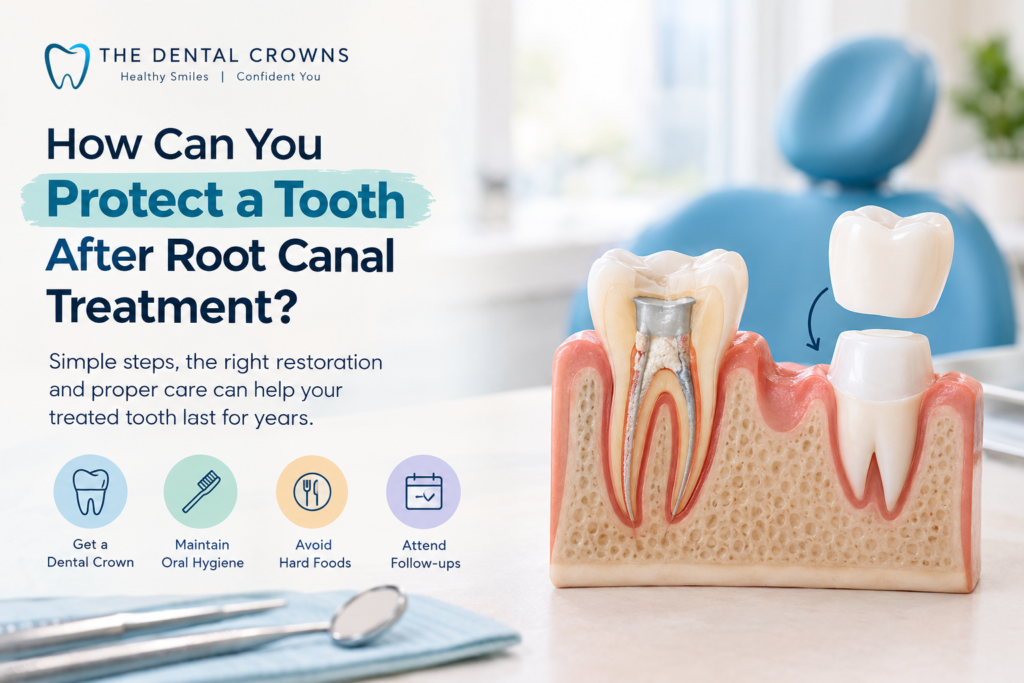
What If My Crown Feels High After a Root Canal?
A crown is sometimes placed after root canal treatment to restore and protect a tooth, depending on the tooth’s condition.
If the crown placed after root canal treatment feels too high, the same principle applies: your dentist should check your bite.
However, pain following root canal treatment can have multiple causes, so it is important not to assume that crown height is the only possible explanation.
If you have persistent pain, swelling, worsening symptoms or difficulty chewing, contact your dentist promptly.
Can a High Crown Damage Your Bite?
An improperly balanced bite can place unnecessary pressure on a tooth.
That is why persistent bite discomfort should not simply be ignored.
The goal of crown treatment is not only to restore the appearance of a tooth but also to restore comfortable function.
Your dentist may assess:
- Crown height
- Bite contacts
- Contact with neighbouring teeth
- Crown margins
- Tooth sensitivity
- Gum condition
- Signs of grinding or clenching
- The condition of the tooth underneath the crown
How Can I Tell If My Crown Is Actually Too High?
You cannot reliably determine crown height yourself.
However, certain symptoms are worth reporting to your dentist.
Your crown may need evaluation if:
- It clearly hits before your other teeth.
- Your bite feels uneven.
- You cannot comfortably chew on that side.
- The crowned tooth hurts every time you bite.
- The tooth feels sore after normal chewing.
- The problem continues instead of improving.
- Your jaw feels uncomfortable after the crown was placed.
Your dentist can perform a clinical bite assessment and determine whether the crown needs adjustment.
What Is the Difference Between Normal Crown Sensitivity and a High Crown?
This distinction is important.
Normal sensitivity may include:
- Temporary sensitivity to cold or hot foods.
- Mild gum tenderness.
- A slightly unfamiliar feeling.
- Minor discomfort that gradually improves.
A potentially problematic bite may include:
- The crown hitting first.
- Pain specifically when biting.
- A persistent feeling that the tooth is too tall.
- Difficulty chewing normally.
- A bite that feels significantly different from before treatment.
These symptoms can overlap, so professional examination is the best way to determine what is happening.
When Should I Contact a Dentist?
Contact your dentist if your crown feels consistently high or uncomfortable.
You should seek prompt dental evaluation if you have:
- Severe or worsening tooth pain
- Facial or gum swelling
- Fever
- A loose crown
- A cracked or chipped crown
- Persistent pain while biting
- Significant sensitivity that does not improve
- A bad taste or smell around the crown
- Difficulty chewing
- A crown that feels noticeably higher than your other teeth
A loose or damaged crown should also be examined because the restoration may require repair, recementation or replacement depending on the situation.
How Can You Care for Your Dental Crown?
Good oral hygiene is still important after receiving a dental crown.
A crown covers the visible part of a tooth, but the surrounding gums and underlying tooth structure still require care.
Follow your dentist’s instructions and:
- Brush your teeth twice daily with fluoride toothpaste.
- Clean between your teeth every day.
- Keep the gumline around the crown clean.
- Avoid chewing extremely hard objects.
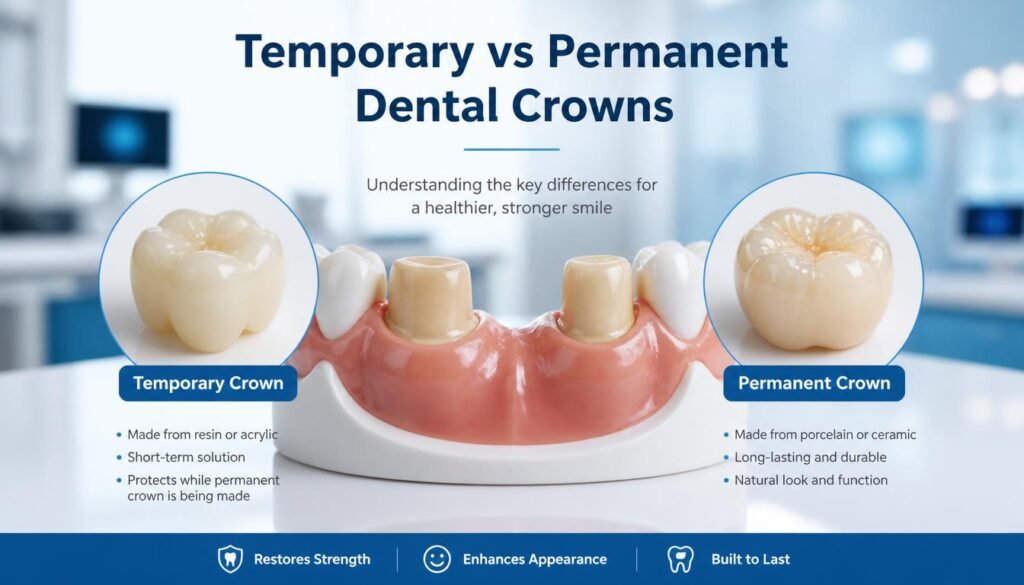
- Be careful with very sticky foods, particularly with a temporary crown.
- Attend regular dental examinations.
- Tell your dentist if you grind or clench your teeth.
Proper maintenance can help protect both your restoration and the natural tooth underneath it.
Dental Crown Treatment in Noida
If you are looking for professional dental crown treatment in Noida, it is important to choose treatment based on your individual dental condition rather than crown price alone.
The Dental Crowns provides dental services including dental crowns, porcelain crowns, root canal treatment, dental implants, laser dentistry and other general, cosmetic and surgical dental treatments.
You can explore the complete range of Dental Services at The Dental Crowns to learn more about available treatments.
Patients who are considering a crown can discuss their symptoms, bite, tooth condition, crown material and treatment options with a qualified dental professional.
Frequently Asked Questions
Why does my dental crown feel too high when I bite?
A crown may feel too high when it makes premature or excessive contact with the opposing tooth. Sometimes the sensation is temporary, but persistent bite discomfort should be evaluated by your dentist.
Will a high dental crown fix itself?
A new crown can initially feel different while you adjust to it. However, if the crown consistently feels high or causes pain when biting, do not assume it will correct itself. Contact your dentist for an examination.
Can a dentist lower a dental crown?
In some cases, yes. If the dentist determines that the crown has excessive bite contact, a small professional adjustment may improve the bite. The exact treatment depends on the crown and tooth.
How long should I wait if my crown feels high?
If the crown feels slightly unfamiliar, you may need a short adjustment period. But if it clearly hits first, causes pain when biting or remains uncomfortable, contact your dentist rather than waiting for an extended period.
Is pain when biting after a crown normal?
Some temporary discomfort can occur after dental treatment, but persistent or significant pain when biting should be assessed. A high bite is one possible cause, but other dental problems can also cause biting pain.
Can I adjust my dental crown at home?
No. Do not file, grind or modify your crown yourself. Crown adjustment should be performed by a dental professional after evaluating your bite.
Why does my crown hurt when I chew but not when I am resting?
Pain specifically associated with biting or chewing can sometimes be related to the way the crown contacts the opposing tooth. However, cracks, inflammation and other dental problems can also cause biting pain, so examination is important.
Can a crown feel high after a root canal?
Yes, a crown placed after root canal treatment can feel high if its bite contact is uncomfortable. Your dentist can check the crown and determine whether an adjustment or further evaluation is necessary.
What happens if I ignore a crown that feels too high?
Ignoring persistent bite discomfort is not recommended. Continued pressure or pain may affect your ability to chew comfortably and could indicate an issue requiring professional attention.
How do I know whether my crown needs adjustment?
If your crown touches first, your bite feels uneven, or you have persistent pain when biting, contact your dentist. They can check your bite and determine whether an adjustment is appropriate.
Final Takeaway
If your dental crown feels too high when you bite, don’t panic. A new crown can initially feel different, but a persistent feeling that the crown is hitting first should be checked by your dentist.
A high crown is often evaluated by checking the way the upper and lower teeth contact each other. If excessive contact is identified, your dentist may be able to make a small professional adjustment.
Most importantly, do not try to adjust the crown yourself.
If you have persistent pain, swelling, a loose crown, severe sensitivity or difficulty chewing, arrange a dental examination promptly.
For patients considering dental crown treatment in Noida, a professional examination can help determine whether a crown is appropriate and whether any bite adjustment is required.
Disclaimer: This article is for general educational purposes only and does not replace an examination, diagnosis or treatment plan from a qualified dental professional. Individual symptoms and treatment requirements can vary.