If your dentist has recommended a dental crown, you may be surprised to learn that your treatment can involve two different crowns: a temporary dental crown and a permanent dental crown.
Although both crowns are placed over a prepared tooth, they have different purposes. A temporary crown protects your tooth while your final crown is being prepared, whereas a permanent crown is designed to provide long-term restoration, function and protection.
Understanding the difference between a temporary crown vs permanent crown can help you know what to expect during your treatment and how to care for your tooth between appointments.
At The Dental Crowns in Noida, dental crowns are part of a comprehensive range of restorative and cosmetic dental services. If you are considering crown treatment, understanding each stage can make the process much easier.
What Is a Temporary Dental Crown?
A temporary dental crown is a short-term restoration placed over a prepared tooth while your permanent crown is being fabricated.
According to the American Dental Association, a temporary restoration is intended for a shorter period while a definitive restoration is being prepared.
When a tooth is prepared for a crown, some of its natural structure is reshaped to create space for the final restoration. Leaving the prepared tooth uncovered can expose it to sensitivity and other problems. A temporary crown helps protect the tooth during this waiting period.
Temporary crowns are commonly made from materials such as acrylic or resin. They are generally attached with temporary cement so that the dentist can remove them when the permanent crown is ready.
Why Is a Temporary Crown Needed?
A temporary crown can serve several important purposes:
- Protects the prepared tooth
- Reduces sensitivity
- Helps maintain the tooth’s position
- Helps maintain your bite
- Provides a temporary appearance similar to a natural tooth
- Allows the dentist to assess the shape and function before the final crown is fitted
In conventional crown treatment, the permanent crown may be fabricated at a dental laboratory between appointments. During this period, the temporary crown acts as a protective covering.
What Is a Permanent Dental Crown?
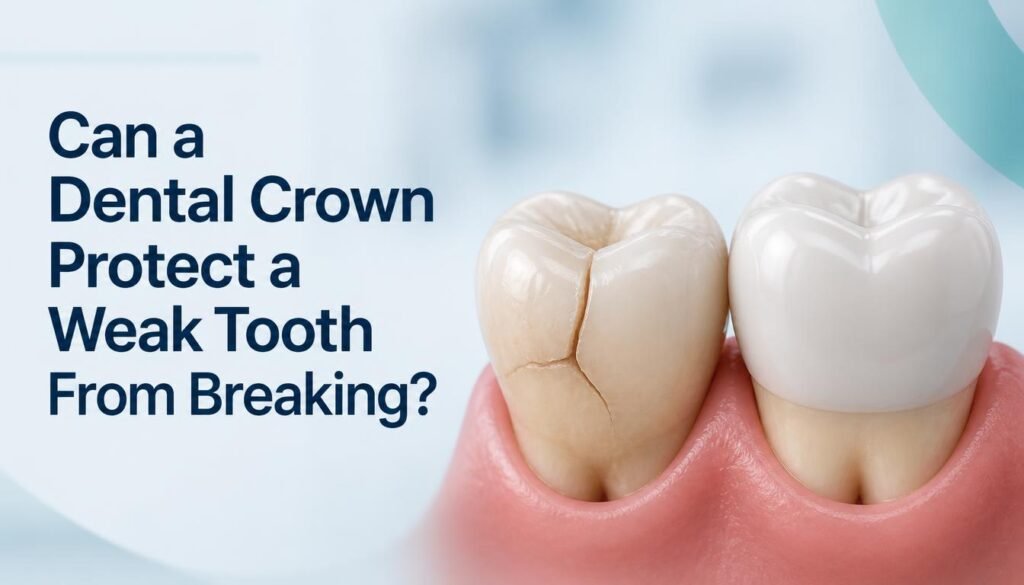
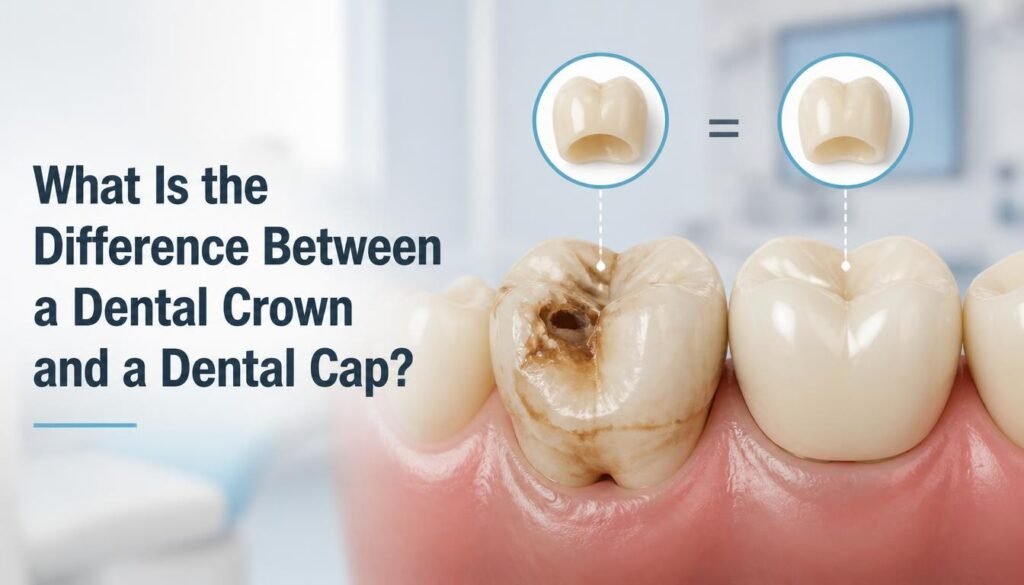
A permanent dental crown is the final custom-made restoration that is designed to cover and protect a damaged, weakened or extensively restored tooth.
Dental crowns may be recommended for teeth affected by significant decay, fractures, large restorations or wear. Crowns can also be used following root canal treatment and as restorations attached to dental implants.
Permanent crowns can be made from different materials, including ceramic, porcelain, zirconia and metal alloys. The choice depends on factors such as the tooth’s location, biting forces, appearance requirements and overall oral health. The American Dental Association notes that indirect restorative materials differ in their physical and mechanical properties and clinical indications.
For patients interested in a natural-looking restoration, porcelain dental crowns may be an option. You can learn more about this treatment through The Dental Crowns’ porcelain dental crowns service.
Temporary Crown vs Permanent Crown: What Is the Difference?
The easiest way to understand the difference between temporary and permanent dental crowns is to look at their purpose, material, strength and expected duration.
| Feature | Temporary Dental Crown | Permanent Dental Crown |
|---|---|---|
| Main purpose | Protects the prepared tooth temporarily | Provides long-term restoration |
| Duration | Usually worn until the final crown is ready | Designed for long-term use |
| Common materials | Acrylic, resin or composite materials | Ceramic, porcelain, zirconia, metal or combinations |
| Cement | Temporary cement | Permanent/definitive cement or bonding system |
| Strength | Designed for short-term function | Designed for long-term chewing forces |
| Appearance | Can provide acceptable temporary aesthetics | Customised for final appearance |
| Fabrication | Often made quickly in the clinic | Often custom fabricated in a laboratory or digitally |
| Removal | Designed to be removed by the dentist | Intended to remain in place unless replacement is required |
The exact materials and treatment process can vary from patient to patient.
How Long Does a Temporary Dental Crown Last?
A temporary crown is not designed to be a permanent restoration.
In conventional treatment, patients may wear a temporary crown for around a few weeks while the permanent crown is being prepared. Cleveland Clinic notes that laboratory fabrication can take two to three weeks or longer in some cases, during which a temporary crown may be placed.
However, the exact time depends on your treatment plan, the dental laboratory, the tooth being treated and whether additional procedures are required.
If your temporary crown becomes loose, cracked or falls out, contact your dentist rather than attempting to permanently reattach it yourself.
How Long Does a Permanent Dental Crown Last?
A permanent dental crown is designed for long-term use, but it is not necessarily a lifetime restoration.
Cleveland Clinic reports that dental crowns commonly last around 5 to 15 years with proper care, although individual crowns can last longer depending on factors such as oral hygiene, biting forces, material, tooth condition and dental care.
Regular dental examinations and good oral hygiene can help identify problems early and protect the tooth supporting the crown.
Can You Eat With a Temporary Crown?
Yes, you can generally eat while wearing a temporary crown, but you should take extra care.
Because temporary crowns are designed for short-term use, they may be more vulnerable to displacement or damage than a definitive crown.
Consider:
- Avoiding very hard foods
- Avoiding extremely sticky foods
- Chewing on the opposite side when appropriate
- Cutting harder foods into smaller pieces
- Following your dentist’s specific instructions
Cleveland Clinic specifically recommends avoiding foods such as ice, extremely hard nuts, popcorn kernels and sticky foods because they can damage or dislodge a crown.
How Should You Care for a Temporary Dental Crown?
Good oral hygiene remains important while you are wearing a temporary crown.
1. Brush regularly
Continue brushing your teeth with a soft-bristled toothbrush and fluoride toothpaste.
2. Clean between your teeth
Flossing helps remove plaque around the crown and neighbouring teeth. If your dentist has given you specific instructions for flossing around the temporary crown, follow those instructions.
3. Avoid very sticky foods
Sticky foods can potentially pull on a temporary crown and contribute to displacement.
4. Be careful with hard foods
Hard foods can place excessive force on a temporary restoration.
5. Contact your dentist if the crown comes loose
Do not ignore a loose or missing temporary crown. Contact your dental clinic so the tooth can be assessed and the temporary restoration can be replaced or adjusted if necessary.
What Happens When the Permanent Crown Is Ready?
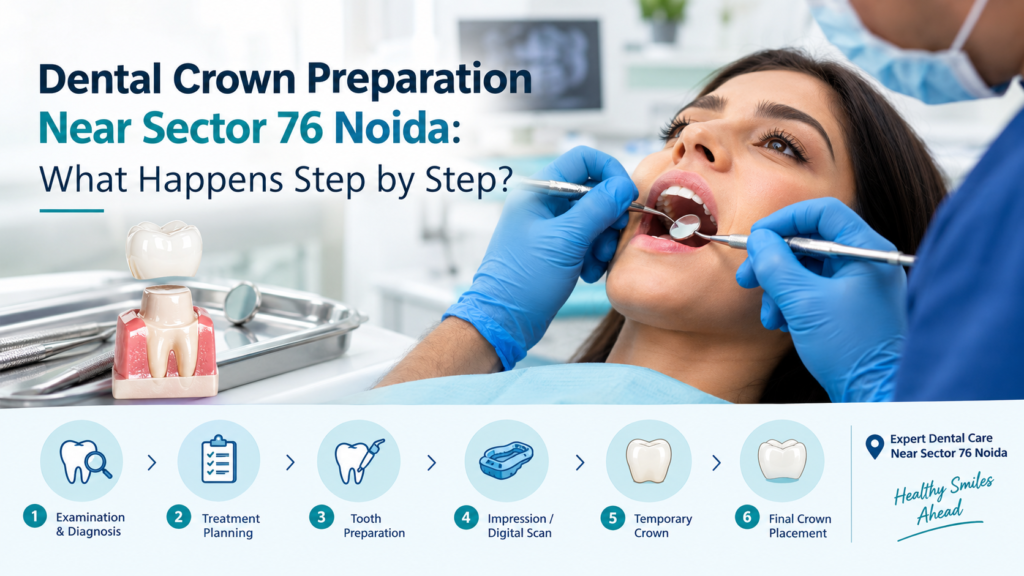
Traditional crown treatment commonly involves more than one appointment.
During the first appointment, the dentist may:
- Examine the tooth.
- Remove decay or an existing restoration when necessary.
- Prepare the tooth for the crown.
- Take a physical or digital impression.
- Select the appropriate crown shade and design.
- Place a temporary crown.
Once the final crown is ready, the dentist generally:
- Removes the temporary crown.
- Checks the permanent crown’s fit.
- Checks its shape and appearance.
- Evaluates the bite.
- Makes any necessary adjustments.
- Permanently cements or bonds the final crown.
MedlinePlus describes this general two-visit process, including temporary crown placement at the first visit and fitting the permanent crown at the second visit.
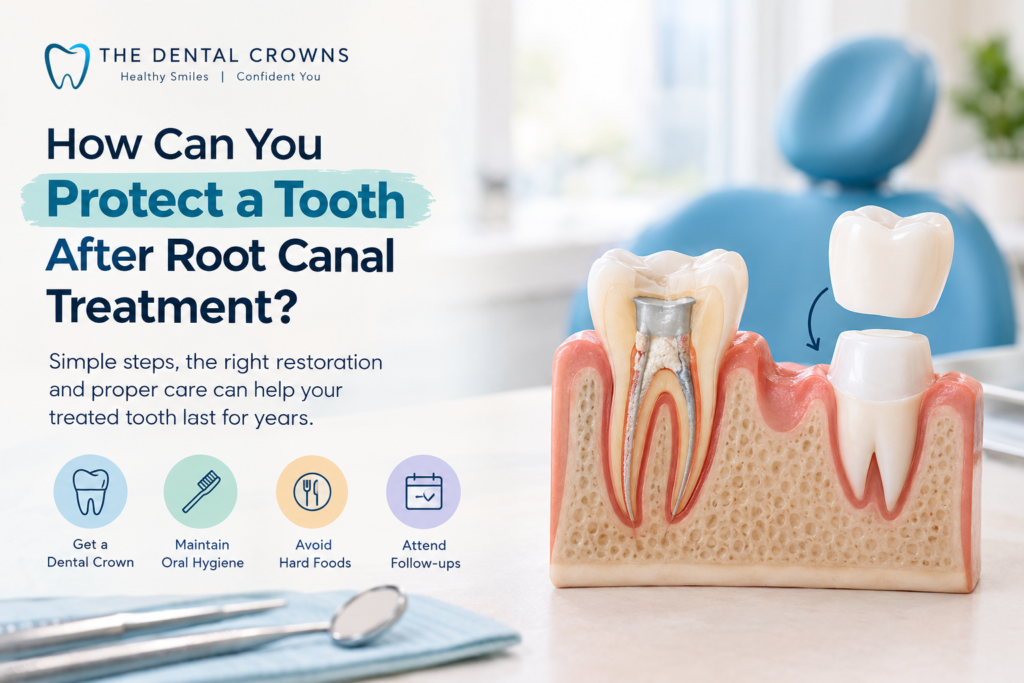
Why Does a Tooth Need a Crown After Root Canal Treatment?
A tooth that has undergone root canal treatment may require additional restoration to protect the remaining tooth structure, depending on the individual case.
If you have recently been advised to get a crown after root canal treatment, you can learn more about the treatment through The Dental Crowns’ painless root canal treatment service.
A dentist should evaluate the tooth and determine whether a crown is appropriate based on the amount of remaining tooth structure and other clinical factors.
Are Permanent Crowns Always Made From Porcelain?
No.
Permanent crowns can be manufactured using different materials. Options can include:
- Porcelain
- Ceramic
- Zirconia
- Metal alloys
- Porcelain-fused-to-metal restorations
- Other dental materials selected according to the patient’s needs
The appropriate material depends on factors such as the position of the tooth, aesthetic expectations, functional demands and the dentist’s clinical assessment.
For front teeth, aesthetics may be particularly important, while back teeth can experience significant chewing forces. Your dentist can explain which material is appropriate for your specific tooth.
Temporary Crown vs Permanent Crown: Which One Is Stronger?
A permanent crown is generally designed and fabricated for long-term function, while a temporary crown is intended to protect the tooth for a limited period.
This does not mean that every permanent crown is stronger than every temporary restoration in every situation. Crown strength depends on the material, design, thickness, tooth position and other clinical factors.
The important distinction is that a temporary crown is a provisional restoration, while the permanent crown is the definitive restoration intended for longer-term use.
Can a Temporary Crown Become a Permanent Crown?
Generally, no.
A temporary crown and a permanent crown serve different roles in the treatment process. A temporary crown is normally designed to remain in place until the definitive crown is fabricated and fitted.
If your temporary crown feels comfortable, that does not necessarily mean it should be used indefinitely. Temporary materials and temporary cement are selected for their provisional role.
Your dentist will determine when the temporary crown should be removed and replaced with the final restoration.
What If My Temporary Crown Falls Out?
If your temporary crown falls out, try to keep it safe and contact your dentist as soon as possible.
Avoid chewing hard or sticky foods on that side until you receive professional advice. The prepared tooth may be more sensitive without its temporary covering.
Do not use household glue or other non-dental adhesives to put the crown back permanently.
Your dentist may be able to re-cement the temporary crown, make a replacement or advise you on the next step depending on its condition.
Do Permanent Crowns Need Special Care?
Permanent crowns still require normal oral hygiene and regular dental care.
A crown does not make the surrounding teeth or gums immune to plaque and decay. You should continue:
- Brushing twice a day
- Cleaning between your teeth daily
- Maintaining regular dental check-ups
- Following your dentist’s recommendations
- Avoiding habits that can damage teeth or restorations
If you grind or clench your teeth, speak with your dentist because excessive forces can affect dental restorations over time.
Temporary vs Permanent Dental Crown: Frequently Asked Questions
Is a temporary crown necessary?
In many conventional crown procedures, a temporary crown is used to protect the prepared tooth while the final restoration is being fabricated. However, the exact treatment process depends on the patient’s case and the technology available at the dental clinic.
How long do I wear a temporary crown?
Many patients wear a temporary crown for a few weeks, but the exact duration depends on how quickly the permanent restoration is prepared and your individual treatment plan.
Can I brush a temporary crown?
Yes. Maintaining oral hygiene is important, but you should follow your dentist’s instructions and be gentle around the restoration.
Can I floss with a temporary crown?
In most cases, cleaning between your teeth remains important. Ask your dentist or dental hygienist to demonstrate the safest technique around your particular temporary crown.
Is a permanent crown painful?
Some sensitivity or gum tenderness can occur after crown placement. Persistent, severe or worsening pain should be discussed with your dentist.
How long does a permanent dental crown last?
Many crowns last approximately 5 to 15 years with appropriate care, although some can last longer. Longevity varies according to the material, oral hygiene, tooth location, bite and other factors.
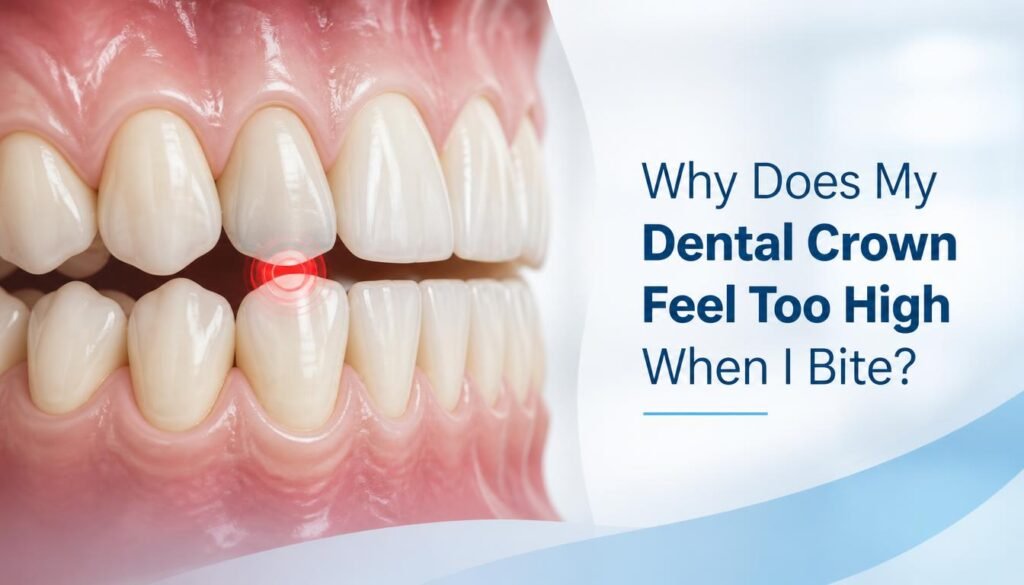
What should I do if my crown feels too high?
If your bite feels uneven after crown placement, contact your dentist. A professional bite adjustment may be needed.
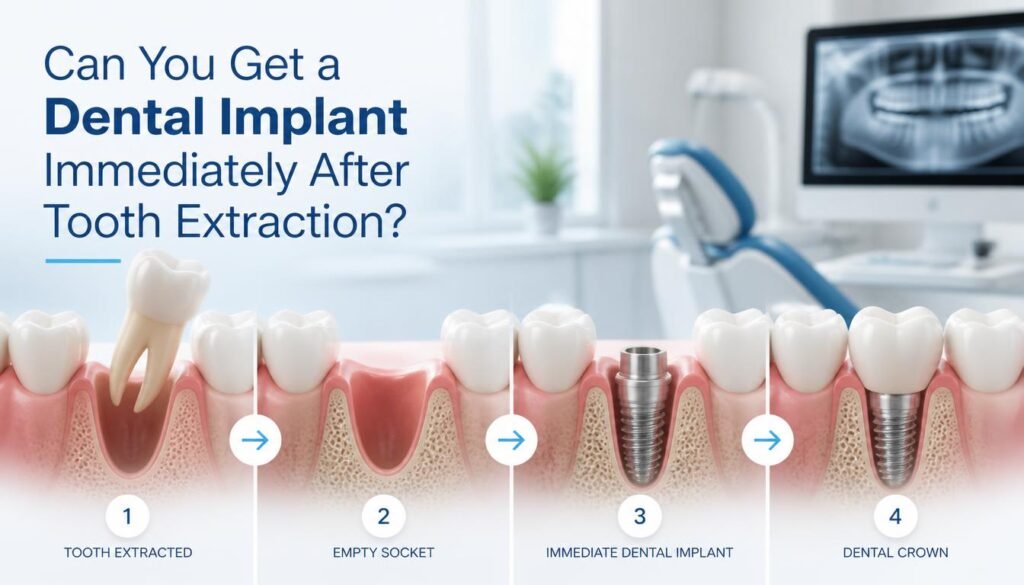
Can crowns be used with dental implants?
Yes. Dental crowns can be used as the visible restoration attached to a dental implant.
If you are researching tooth replacement, you can also explore dental implant treatment at The Dental Crowns in Noida.
How to Choose the Right Dental Crown Treatment in Noida
Choosing a crown is not simply about selecting the most expensive or most attractive material. Your dentist needs to consider your tooth’s condition, location, bite, remaining tooth structure, aesthetic requirements and overall oral health.
If you are looking for dental crown treatment in Noida, discussing these factors with a qualified dental professional can help you understand your treatment options.
The Dental Crowns is located at Shop No. 16, 1st Floor, Civitech Stadia, Sector 79, Noida, Uttar Pradesh 201301. The clinic currently lists services including porcelain crowns, root canal treatment and dental implants.
You can contact The Dental Crowns to discuss your dental concerns or schedule a dental appointment with the clinic.
Final Takeaway: Temporary vs Permanent Dental Crowns
The difference between a temporary and permanent dental crown mainly comes down to purpose, materials, durability and how long the restoration is intended to remain in place.
A temporary dental crown protects the prepared tooth while your final crown is being made. A permanent dental crown is the definitive restoration designed for longer-term function and protection.
Both stages are important in conventional crown treatment. Taking care of your temporary crown, attending your follow-up appointment and maintaining good oral hygiene can help support the success and longevity of your final restoration.
If you have been advised to get a dental crown, speak with your dentist about the available materials, expected treatment timeline, care instructions and the restoration most appropriate for your individual needs.
Quick Comparison
Temporary Dental Crown
- Short-term restoration
- Usually made from acrylic/resin-type materials
- Protects the prepared tooth
- Usually attached with temporary cement
- Intended to remain until the permanent crown is ready
Permanent Dental Crown
- Definitive restoration
- Available in ceramic, porcelain, zirconia, metal and other materials
- Designed for long-term function
- Custom fabricated for the patient’s tooth
- Requires ongoing oral hygiene and professional dental care
References
- American Dental Association — Crowns
- American Dental Association — Glossary of Dental Terms
- American Dental Association — Materials for Indirect Restorations
- Cleveland Clinic — Dental Crowns
- MedlinePlus — Dental Crowns