If you have been told that you need a dental crown or a dental cap, you may wonder whether these are two different dental treatments. The good news is that, in most cases, a dental crown and a dental cap are the same type of dental restoration.
The word “crown” is the professional dental term, while “cap” is a common term used because the restoration fits over and covers the damaged portion of a tooth. Cleveland Clinic describes a dental crown as a tooth-shaped cap used to restore weak, broken, decayed or worn teeth.
At The Dental Crowns, patients can explore restorative and cosmetic dental treatments, including porcelain dental crowns, depending on their individual dental needs.
Dental Crown vs Dental Cap: Are They Different?
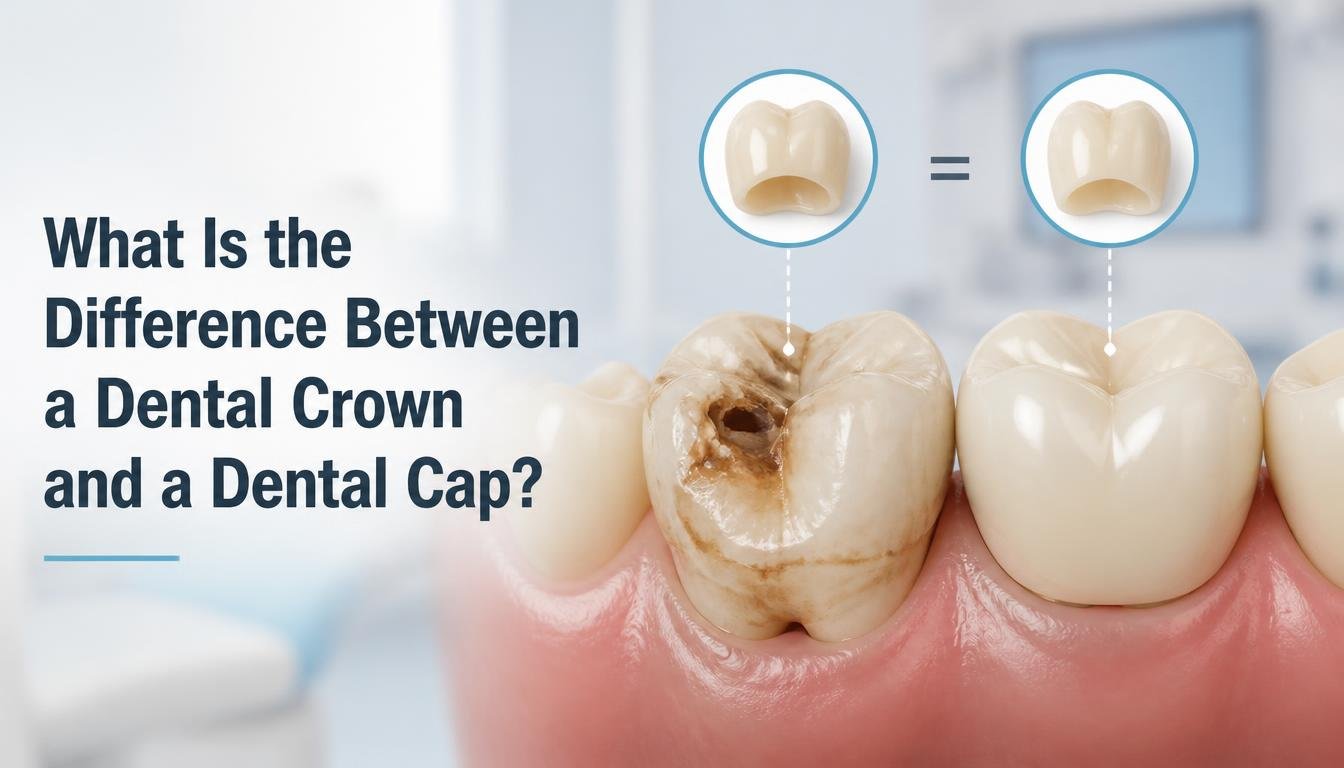
No. A dental crown and dental cap generally mean the same thing.
A dental crown is a custom-made restoration designed to fit over a prepared tooth. It can restore the tooth’s shape, strength, function and appearance.
The term “dental cap” is simply a less technical way of describing the same restoration.
| Feature | Dental Crown | Dental Cap |
|---|---|---|
| Meaning | Dental restoration | Common name for a crown |
| Covers the tooth | Yes | Yes |
| Purpose | Restore/protect tooth | Restore/protect tooth |
| Custom-made | Usually | Usually |
| Materials | Ceramic, porcelain, metal, zirconia and others | Same as crowns |
| Fixed restoration | Yes | Yes |
| Dentist removes it | Yes | Yes |
The American Dental Association defines an artificial crown as a restoration that covers or replaces most or all of the clinical crown of a tooth or may be placed on a dental implant.
So, when a patient asks “Should I get a crown or a cap?”, the answer is usually not about choosing between two different treatments. Instead, the important question is which type and material of crown is appropriate for your tooth.
What Is a Dental Crown?
A dental crown is a tooth-shaped restoration that fits over a damaged or weakened tooth.
Your dentist may recommend a crown when a tooth has lost substantial structure because of:
- Extensive tooth decay
- A large filling
- A cracked or broken tooth
- Significant tooth wear
- Previous dental treatment
- A tooth that has undergone root canal treatment
- Certain cosmetic or structural concerns
The purpose of a crown is not simply to make a tooth look better. It can also help restore the tooth’s function and protect remaining tooth structure.
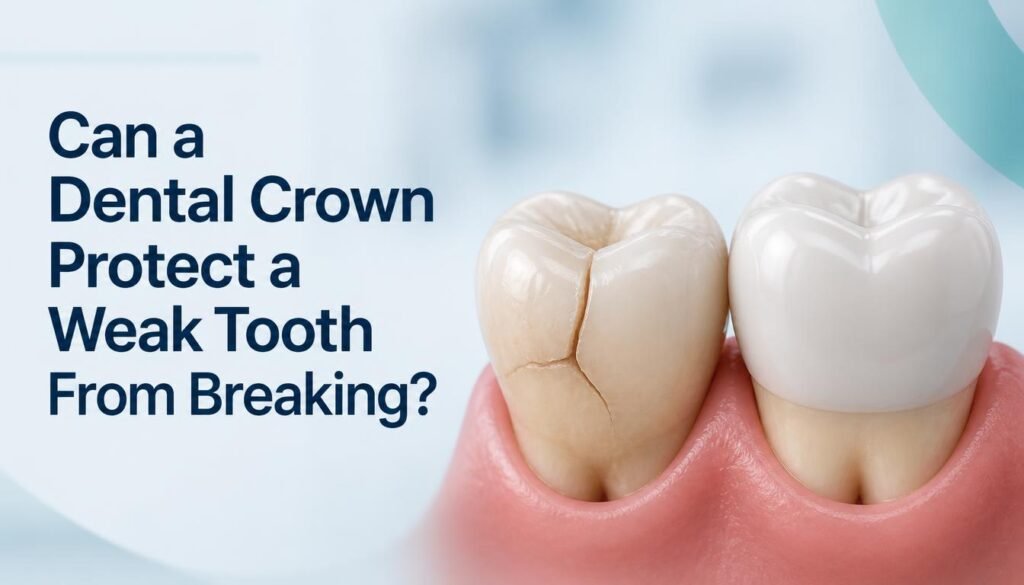
For example, a severely weakened tooth may be vulnerable to further fracture. A properly planned crown can cover the remaining tooth structure and restore its shape.
The NHS Leeds Dental Institute notes that crowns can be used when teeth have been badly broken or weakened by decay or large fillings, and they may also be used for some root-filled teeth.
What Is a Dental Cap?
A dental cap is another name for a dental crown.
People commonly use the word “cap” because the restoration essentially sits over the prepared tooth like a covering.
For example, someone might say:
“My dentist recommended a tooth cap.”
Another person might say:
“I need a dental crown.”
They may both be referring to essentially the same treatment.
Colgate also describes a dental crown as a restoration “also known as a cap” that covers a damaged tooth.
Therefore, there is generally no separate “cap treatment” that you need to choose instead of a crown.
Why Do Dentists Recommend Dental Crowns?
A crown may be recommended when a tooth needs more protection or restoration than a conventional filling can provide.
1. Severely Damaged Teeth
A tooth that has lost a significant amount of structure may need a crown to restore its shape and function.
2. Large Fillings
If a tooth has a large filling and relatively little healthy tooth structure remains, your dentist may consider a crown depending on the tooth’s condition.
3. Cracked or Broken Teeth
Some damaged teeth can be restored with a crown, although the treatment depends on where and how severely the tooth has fractured.
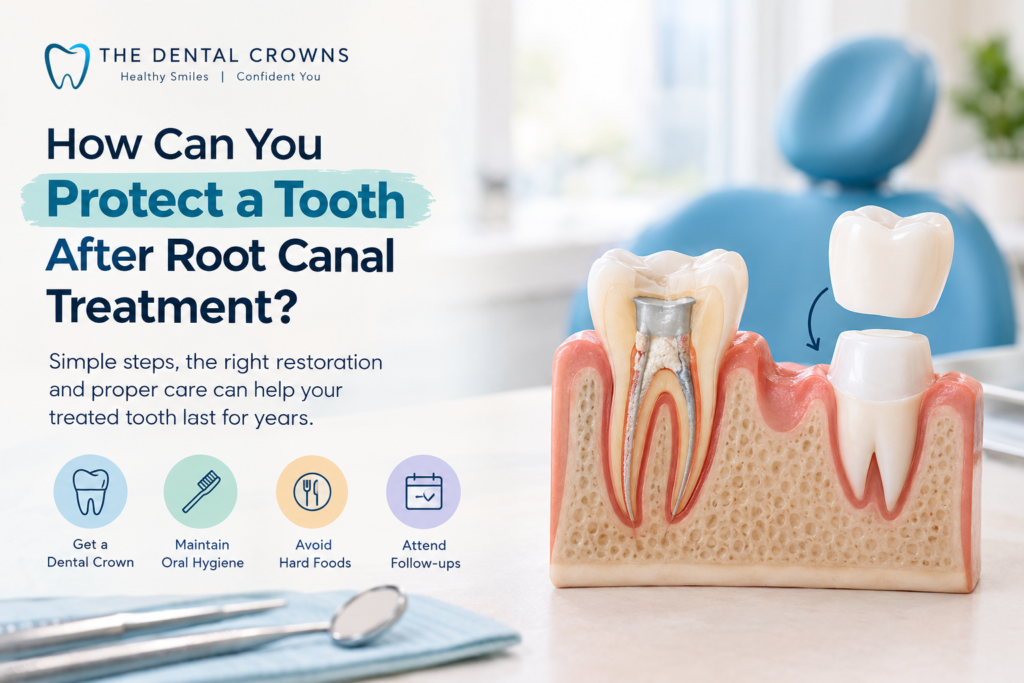
4. After Root Canal Treatment
Some root canal-treated teeth may require additional protection because they have significant structural loss.
If you are looking for information about this treatment, you can also read about painless root canal treatment at The Dental Crowns.
A root canal itself treats the inside of the tooth; a crown, when clinically indicated, can subsequently restore and protect the remaining tooth structure.
5. Dental Implants
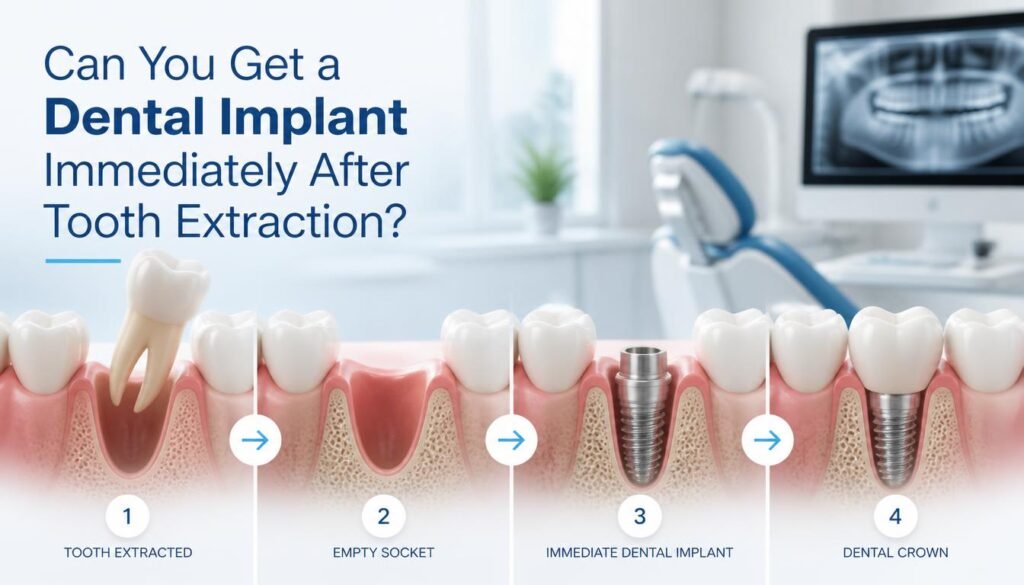
A crown can also be attached to a dental implant to provide the visible tooth portion of an implant-supported restoration. The ADA includes implant crowns within its definition of artificial crowns.
You can explore the dental implant treatment option available through The Dental Crowns.
What Happens During Dental Crown Treatment?
The exact procedure varies depending on the tooth, the amount of remaining structure, the crown material and your overall oral health.
A conventional crown treatment commonly involves several stages.
Step 1: Dental Examination
Your dentist first examines the tooth and evaluates its condition.
Depending on the situation, dental X-rays or other diagnostic procedures may be needed.
The dentist determines whether a crown is appropriate or whether another restoration would be more conservative.
Step 2: Tooth Preparation
The tooth is carefully reshaped to create sufficient space for the crown.
This is important because the final crown needs to fit properly within your bite and around the surrounding teeth.
Step 3: Impression or Digital Scan
An impression or digital scan can be used to create the restoration.
The crown is designed according to the tooth’s shape, size, bite and aesthetic requirements.
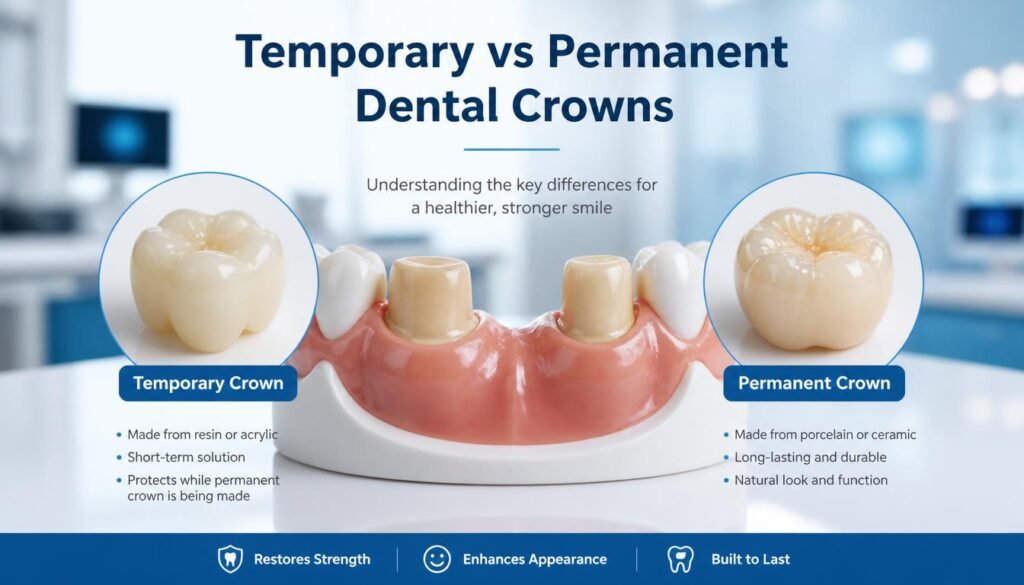
Step 4: Temporary Crown
In conventional treatment, a temporary crown may be placed while the permanent restoration is being prepared.
The Leeds Dental Institute notes that crown treatment commonly involves reshaping the tooth, taking an impression, placing a temporary crown and subsequently fitting the permanent crown.
Step 5: Permanent Crown Placement
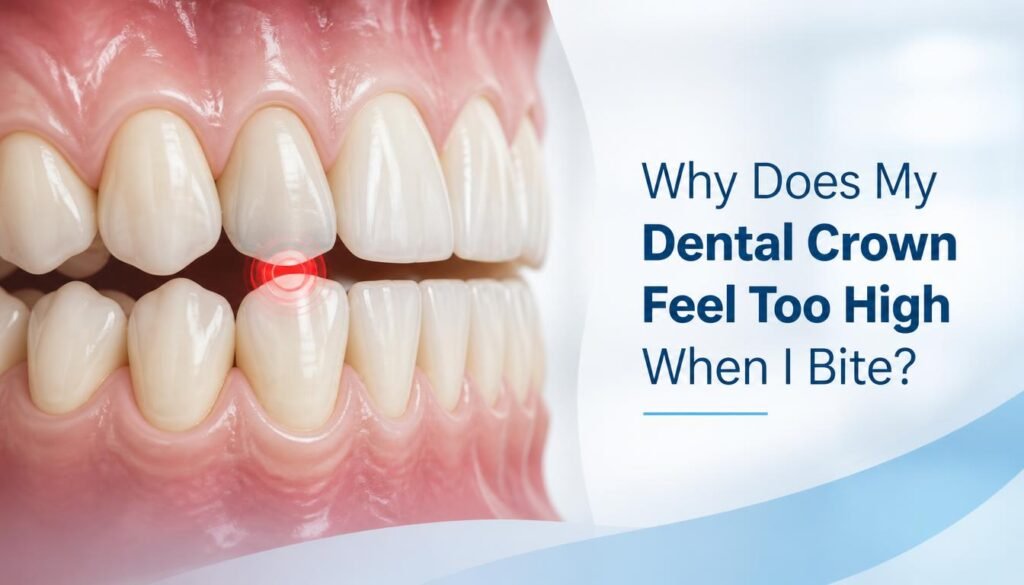
Once the permanent crown is ready, the dentist checks its fit, appearance and bite before permanently cementing or bonding it according to the restoration and clinical situation.
What Materials Are Used for Dental Crowns?
Dental crowns can be manufactured from different materials.
The choice depends on factors such as:
- Location of the tooth
- Bite forces
- Amount of remaining tooth structure
- Appearance
- Gum condition
- Functional requirements
- Dentist’s recommendation
- Patient preferences
Common options include:
Porcelain or Ceramic Crowns
These are popular when a natural-looking appearance is important.
The Dental Crowns provides porcelain dental crown treatment in Noida.
Metal Crowns
Metal alloys can provide high strength and durability and may be considered for particular clinical situations.
Porcelain-Fused-to-Metal Crowns
These combine a metal structure with a tooth-coloured outer surface.
Zirconia Crowns
Zirconia is a ceramic material used for dental restorations. The appropriate material depends on the individual case rather than a single material being ideal for every patient.
The ADA notes that indirect restorative materials vary in composition, mechanical properties, processing methods and clinical indications.
Is a Dental Crown the Same as a Tooth Cap?
Yes, in everyday dental terminology, a tooth cap generally means a dental crown.
You may hear people use terms such as:
- Tooth cap
- Dental cap
- Dental crown
- Tooth crown
- Crown restoration
These terms commonly refer to a restoration that covers the tooth.
However, it is worth remembering that “crown” can have different meanings in dentistry.
For example, the clinical crown is the portion of the natural tooth that is visible above the gumline. An artificial crown is a dental restoration. Colgate explains these distinctions in its dental terminology guidance.
Dental Crown vs Filling: What Is the Difference?
This is a more important distinction than crown vs cap.
A filling replaces a smaller area of lost tooth structure, while a crown covers a much larger portion of the tooth.
A dentist may recommend a filling when sufficient healthy tooth structure remains.
A crown may be considered when the tooth has substantial structural damage and needs more extensive coverage.
Cleveland Clinic explains that crowns are used for damaged or decayed teeth, while inlays and onlays can sometimes be alternatives when a tooth is too damaged for a filling but not damaged enough to require a crown.
Therefore, more treatment is not automatically better treatment. The appropriate restoration depends on the condition of the tooth.
How Long Does a Dental Crown Last?
The lifespan of a crown varies considerably depending on factors such as:
- Oral hygiene
- Bite forces
- Teeth grinding or clenching
- Crown material
- Quality of fit
- Diet
- Regular dental check-ups
- Condition of the supporting tooth
Cleveland Clinic states that dental crowns can last approximately 5 to 15 years with proper care, while the Leeds Dental Institute notes that crowns may normally last around 8–10 years, depending on care and other factors.
These figures should be viewed as general estimates rather than a guarantee for an individual crown.
How Can You Take Care of a Dental Crown?
A crowned tooth still requires normal oral hygiene.
You should:
- Brush your teeth twice a day with fluoride toothpaste.
- Clean between your teeth regularly.
- Avoid repeatedly biting extremely hard objects.
- Follow your dentist’s instructions.
- Attend regular dental examinations.
- Address any persistent pain or sensitivity.
Importantly, a crown does not make the tooth completely immune to dental problems. The tooth and surrounding gum tissue still need proper care.
The Leeds Dental Institute recommends brushing twice daily with fluoride toothpaste, cleaning between teeth and attending regular dental check-ups to help maintain crowns and natural teeth.
Are Dental Crowns Painful?
The procedure itself is normally performed with appropriate local anaesthesia when required.
After treatment, some temporary sensitivity or discomfort may occur, particularly while the tooth and surrounding tissues adjust.
However, persistent, severe or worsening pain should not simply be assumed to be normal. Contact your dentist so the tooth and crown can be assessed.
Every patient’s experience is different, so your dentist is the right person to advise you based on the condition of your tooth.
Does Every Root Canal-Treated Tooth Need a Crown?
Not necessarily.
Whether a crown is appropriate after root canal treatment depends on factors including:
- Which tooth was treated
- How much tooth structure remains
- Whether the tooth is weakened
- Existing restorations
- Functional forces on the tooth
- Risk of fracture
Some root canal-treated teeth may benefit from a crown, particularly when significant structural loss is present. The Leeds Dental Institute notes that a post and crown may sometimes be used when a root-filled tooth has been substantially weakened.
Your dentist should evaluate the tooth rather than applying the same treatment to every root canal case.
Dental Crown vs Dental Cap: The Simple Answer
If you’re still wondering “What is the difference between a dental crown and a dental cap?”, the answer is simple:
There is generally no difference. A dental cap is another common name for a dental crown.
The more important questions are:
- Does your tooth actually need a crown?
- Which crown material is appropriate?
- How much healthy tooth structure remains?
- Is there an alternative restoration?
- How will the crown affect your bite and appearance?
A dentist can answer these questions after examining your tooth.
When Should You Visit a Dentist About a Possible Crown?
Consider scheduling a dental examination if you have:
- A badly broken tooth
- A large filling
- A cracked tooth
- A severely worn tooth
- A tooth that has undergone root canal treatment
- Difficulty chewing because of a damaged tooth
- A loose or damaged existing crown
- Persistent sensitivity or discomfort
Early evaluation can help determine whether the tooth can be restored and which treatment is appropriate.
If you’re located in Noida, The Dental Crowns is located at Civitech Stadia, Sector 79, Noida, and provides a range of general, cosmetic and surgical dental services.
Frequently Asked Questions
1. Is a dental crown and a cap the same thing?
Yes. In most dental contexts, “dental cap” is simply another name for a dental crown.
2. Is a tooth cap permanent?
A dental crown is a fixed restoration, but it is not necessarily permanent for life. Its lifespan depends on the material, oral hygiene, bite and other factors.
3. Is a crown better than a cap?
There is generally no “better” option because crown and cap usually refer to the same restoration.
4. How long does a dental crown last?
A crown may last several years, but its lifespan varies. Cleveland Clinic gives a general range of about 5–15 years with proper care.
5. Can a crown be placed after a root canal?
Yes, a crown may be recommended after root canal treatment when the remaining tooth structure requires additional protection.
6. Does getting a crown hurt?
The procedure is generally performed with appropriate anaesthesia. Some sensitivity or discomfort may occur afterward, but persistent symptoms should be evaluated by a dentist.
7. Can a crown look like a natural tooth?
Yes. Tooth-coloured ceramic and porcelain-based restorations can be designed to blend with surrounding teeth.
8. Can a crown protect a weak tooth?
One of the purposes of a crown is to restore and protect a tooth that has lost significant structure.
9. Can you brush a dental crown normally?
Yes. A crowned tooth still needs regular brushing and cleaning between the teeth.
10. Do dental crowns need special care?
They need good oral hygiene and regular dental check-ups. Your dentist may provide additional instructions depending on the crown and your oral health.
Final Takeaway
Dental crown and dental cap usually mean the same thing.
The term “crown” is more commonly used in professional dentistry, while “cap” is an everyday term describing how the restoration covers the tooth.
If your dentist has recommended a crown, the important decision isn’t whether to choose a “crown” or a “cap.” Instead, discuss whether a crown is appropriate, which material should be used, and what type of restoration best suits your tooth.
For patients considering dental crown treatment in Noida, The Dental Crowns offers porcelain crown treatment and a range of other dental services. You can explore the clinic’s dental services or schedule an appointment.