Have you been told that most of your tooth is damaged, broken, or destroyed by decay? You may be wondering whether a dental crown can still save it or whether extraction is your only option.
Yes, a dental crown can sometimes be placed on a tooth with very little structure left. However, the success of the treatment depends on how much healthy tooth remains, the condition of the tooth root, the health of the surrounding gums, and whether a stable foundation can be created to support the crown.
In some cases, a dentist can rebuild the damaged portion of the tooth with a suitable filling material before placing a crown. Other teeth may require a dental post and core, particularly when substantial structure has been lost. If the damage extends too far below the gum line or the tooth has a severe fracture, saving it may not be predictable.
At The Dental Crowns, patients seeking dental crown treatment in Noida can consult a dental professional to understand their treatment options based on an individual examination.
What Is a Dental Crown?
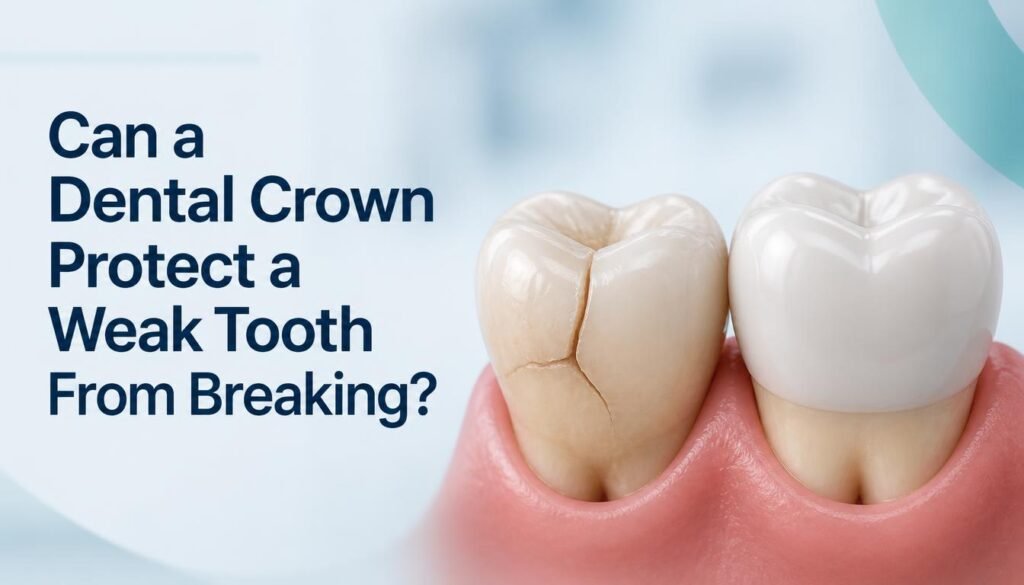
A dental crown is a custom-made cap that covers the visible portion of a damaged or weakened tooth. It restores the tooth’s shape, helps it withstand normal chewing forces, and can improve its appearance.
Dentists may recommend a dental crown for several reasons, including:
- A tooth weakened by extensive decay.
- A broken or severely worn tooth.
- A tooth with a large filling and insufficient remaining structure.
- Certain teeth following root canal treatment.
- A tooth that requires additional protection against fracture.
The important thing to understand is that a crown needs a suitable foundation. Although the crown covers the damaged tooth, it cannot compensate for every type of structural damage.
Can a Dental Crown Be Placed on a Tooth With Very Little Structure Left?
Yes, in selected cases. Even when a tooth has lost a significant amount of its natural structure, it may still be possible to restore it with a crown.
The dentist first needs to determine whether the remaining tooth and root can support the restoration.
Three important factors influence this decision:
1. The amount of healthy tooth remaining
The dentist checks how much sound tooth structure remains above the gum line and whether enough of it can support a stable restoration.
2. The condition of the root
A tooth with a healthy, adequately supported root may be a better candidate for restoration than one with a severe root fracture or extensive supporting bone loss.
3. The extent of the damage
Damage limited to the upper portion of the tooth may be manageable. However, a fracture extending deep beneath the gum line or into the root can make crown placement difficult or unsuitable.
Your dentist may also evaluate the tooth’s position, gum health, bite, existing infection, and the forces placed on it during chewing.
How Can a Dentist Restore a Tooth With Very Little Structure Left?
The treatment depends on the amount of remaining healthy tooth structure and whether a reliable foundation can be created.
1. Tooth Buildup Before Crown Placement
If a tooth has lost a large amount of its natural structure, the dentist may rebuild the missing portion using a suitable restorative material.
This procedure is commonly called a core buildup.
The buildup creates a more suitable foundation for the crown and helps restore the tooth’s shape before the final restoration is placed.
However, a buildup is not appropriate for every severely damaged tooth. It must be supported by enough sound tooth structure and should not be used to disguise an unstable or non-restorable tooth.
2. Dental Post and Core
In some teeth, particularly those that have undergone root canal treatment and have lost substantial coronal structure, a dentist may consider a post and core.
A dental post is placed inside the prepared root canal space to help retain the core material when sufficient natural tooth structure is not available to hold it securely.
The core rebuilds the portion of the tooth that will support the crown.
Does every badly damaged tooth need a dental post?
No. A post is not automatically necessary simply because a tooth has undergone root canal treatment or has lost a large portion of its visible structure. It is generally considered when additional retention for the core is needed.
The remaining tooth structure, root condition, and restorative design determine whether a post is appropriate.
3. Root Canal Treatment Before a Crown
If extensive decay or a crack has affected the dental pulp, root canal treatment may be necessary before the tooth can receive its final restoration.
During root canal treatment, the dentist removes infected or inflamed pulp tissue, cleans and disinfects the root canal system, and seals it.
The tooth is then restored with an appropriate filling or crown, depending on its condition.
However, a root canal does not automatically make a severely damaged tooth restorable. The dentist must still determine whether enough healthy structure remains to support the final restoration.
Learn more about painless root canal treatment at The Dental Crowns.
4. Crown Lengthening in Selected Cases
Sometimes, a tooth has enough healthy structure to be restored, but too little of it is accessible above the gum line.
In selected cases, a dentist may consider crown lengthening, a procedure that reshapes the surrounding gum tissue and, when necessary, supporting bone to expose more tooth structure.
This may improve access for restoration and help create a suitable foundation for a crown.
Crown lengthening is not appropriate for every tooth. The dentist must consider the root length, bone support, appearance, and long-term periodontal health before recommending it.
5. Extraction and Replacement When a Tooth Cannot Be Saved
Unfortunately, some teeth cannot be restored predictably.
Extraction may be considered when there is a severe vertical root fracture, extensive damage below the gum line, inadequate supporting bone, or insufficient healthy structure to support a reliable restoration.
If the tooth needs to be removed, replacement options may include a dental implant, bridge, or denture, depending on your oral health and individual circumstances.
The objective is not simply to place a crown at any cost. It is to select a treatment that offers a reasonable chance of long-term function and health.
How Much Tooth Structure Is Needed for a Dental Crown?
There is no single amount that applies to every tooth.
The amount of healthy tooth structure required depends on the tooth’s position, the type of restoration, the remaining walls of the tooth, the bite, and the treatment design.
One important consideration is the ferrule effect. A ferrule is a band of sound natural tooth structure that the crown can encircle. When adequate healthy tooth structure is available above the crown margin, it can help improve resistance to certain forces and reduce the risk of fracture.
A dentist may assess whether a suitable ferrule can be achieved naturally or through an additional procedure.
The decision also depends on whether the remaining root is strong enough, whether the surrounding bone and gums are healthy, and whether the final crown can be made to fit properly.
This is why a dental examination, and often dental X-rays when indicated, are more useful than judging the tooth by its visible appearance alone.
Can a Crown Save a Tooth That Is Almost Completely Broken?
Sometimes, yes. A tooth that appears almost completely broken may still have a restorable root and enough healthy structure to support a rebuilt foundation.
For example, a severely broken molar may be considered for a core buildup followed by a crown if the damage is manageable and the root and surrounding support are suitable.
However, if the fracture extends deeply into the root or the tooth cannot support a stable restoration, a crown may not be a reliable solution.
Do not assume that a tooth must be extracted simply because very little of its visible portion remains. Equally, do not assume that a crown can save every badly broken tooth. A clinical assessment is essential.
Is a Dental Crown Possible After Root Canal Treatment When Little Tooth Is Left?
Yes, some root-canal-treated teeth with very little visible structure can still be restored with a crown.
The dentist may need to rebuild the tooth and assess whether a post is required to retain the core. The root must also be suitable for restoration.
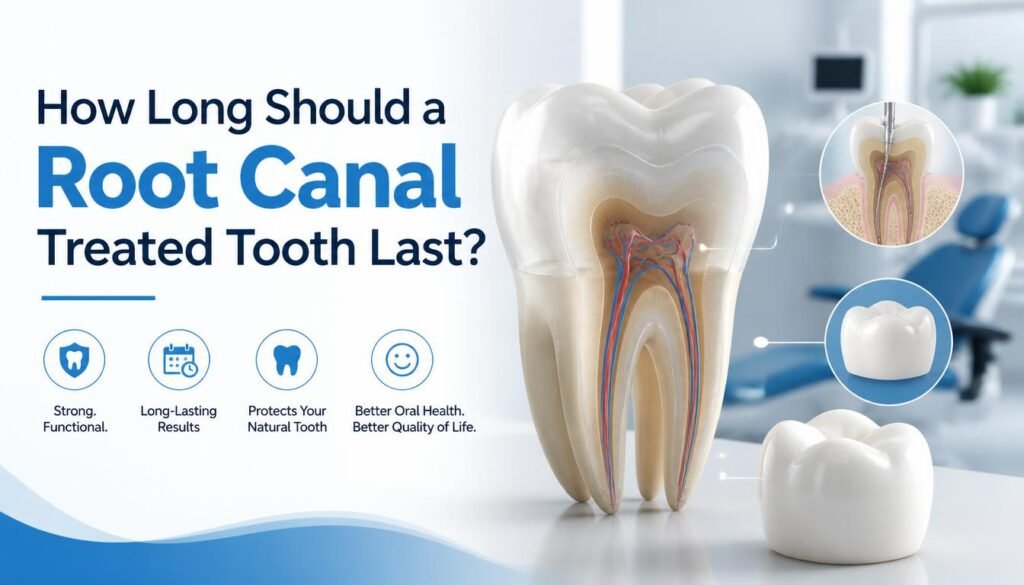
Teeth that have undergone root canal treatment can be more vulnerable to fracture when substantial tooth structure has been lost. This is one reason why an appropriate final restoration is important.
However, the choice between a filling, onlay, or full crown depends on the amount of remaining structure and the particular tooth. Not every root-canal-treated tooth automatically needs a crown.
Read our guide: Do You Need a Dental Crown After Root Canal Treatment?.
What Happens During Dental Crown Treatment?
If your dentist determines that the tooth can be saved, the treatment process may involve the following steps.
Step 1: Examination and Diagnosis
The dentist examines the damaged tooth, checks the gums and bite, and takes X-rays when necessary. The aim is to assess the extent of decay or fracture and determine whether the root can support a restoration.
Step 2: Treating Decay or Infection
Any decay must be removed. If the pulp is infected or irreversibly inflamed, root canal treatment may be required before the final restoration.
Step 3: Rebuilding the Tooth
If necessary, the dentist uses an appropriate restorative material to rebuild the missing portion. A post may be considered in selected cases where additional core retention is required.
Step 4: Preparing the Tooth for a Crown
The tooth is shaped to accommodate the selected crown material and design. The dentist takes a digital scan or impression to help create a custom restoration.
A temporary crown may be placed while the final crown is being made, depending on the treatment workflow.
Step 5: Fitting the Final Crown
The dentist checks the crown’s fit, contact with neighbouring teeth, appearance, and bite before securing it.
Step 6: Follow-Up and Maintenance
Regular dental visits and good oral hygiene help maintain the crown and the surrounding tooth and gum tissues.
The exact number of visits and procedures will depend on the tooth’s condition and the treatment required.
Which Dental Crown Material Is Best for a Weak Tooth?
The right crown material depends on the tooth’s location, remaining structure, chewing forces, aesthetic requirements, and budget.
Common options include:
- Zirconia crowns: Often considered for strength and durability, depending on the design and clinical situation.
- Porcelain or ceramic crowns: May be suitable when a natural-looking appearance is a priority.
- Porcelain-fused-to-metal crowns: Combine a metal substructure with a tooth-coloured outer layer.
- Metal crowns: Can be useful in selected cases where appearance is less important than function and material properties.
No crown material can compensate for an inadequate foundation. The dentist should first determine whether the tooth is restorable and then recommend an appropriate material.
What Are the Risks of Placing a Crown on a Severely Damaged Tooth?
A crown placed on a tooth with very little remaining structure can face a higher risk of complications if the foundation is inadequate.
Potential problems include:
- Fracture of the remaining tooth or root.
- Loosening or dislodgement of the crown.
- Decay developing around the crown margins.
- Gum inflammation or problems with the supporting tissues.
- Persistent infection if an underlying problem has not been treated.
- The need for further treatment or eventual extraction.
These risks vary from patient to patient. Proper diagnosis, a suitable restoration design, good oral hygiene, and follow-up care all contribute to treatment planning.
How Can You Protect a Tooth After Crown Placement?
Once the crown is placed, everyday care remains important.
- Brush twice daily with fluoride toothpaste.
- Clean between your teeth every day.
- Avoid chewing ice or biting extremely hard objects.
- Limit frequent sugary snacks and drinks.
- Visit your dentist for regular check-ups.
- Tell your dentist if you grind or clench your teeth.
- Seek an assessment if the crown becomes loose, cracks, or causes persistent discomfort.
A crown covers the visible tooth, but the underlying tooth and surrounding gums still need care. Decay can develop around the margins if plaque accumulates or the restoration is compromised.
When Should You See a Dentist?
Arrange a dental appointment if you have a severely broken tooth, extensive decay, pain when chewing, persistent sensitivity, or a crown that has become loose.
Seek prompt dental care if you notice swelling, pus, fever, or worsening pain. Facial or neck swelling accompanied by difficulty breathing or swallowing requires emergency medical attention.
Early assessment can help identify whether the tooth can be restored and whether treatment is needed to manage infection or prevent further damage.
Dental Crown Treatment in Noida
If you have a badly broken tooth or have been told that very little tooth structure remains, a professional examination can help you understand whether a dental crown is a suitable option.
At The Dental Crowns, patients can explore restorative treatment options based on the condition of the tooth, the amount of remaining healthy structure, and their individual dental needs.
You can explore our dental services to learn more about the treatments available.
Book a dental consultation to understand whether your tooth can be saved with a crown or whether another treatment would be more appropriate.
Frequently Asked Questions
1. Can a dental crown be placed if only a small part of the tooth remains?
Yes, in selected cases. A dentist may rebuild the remaining tooth with a core buildup and consider a post if additional retention is needed. The root and surrounding support must be suitable.
2. Can a crown be placed directly on a broken tooth?
Sometimes, but not always. The dentist may first need to remove decay, rebuild the missing structure, treat an infection, or perform another procedure to create a suitable foundation.
3. Can a tooth with very little structure left be saved without extraction?
It may be possible if the root is restorable and sufficient healthy structure can be retained or exposed. A severe root fracture or extensive damage beneath the gum line may make extraction the more predictable option.
4. Does a tooth with little structure left always need a post?
No. A post is generally considered when the remaining tooth structure cannot adequately retain the core. It does not automatically strengthen every tooth, and the decision depends on the individual case.
5. Is root canal treatment necessary before placing a crown?
No. Root canal treatment is needed when the condition of the pulp requires it, not simply because a crown is planned. A dentist must assess the tooth before deciding.
6. Can a crown fall off a tooth with very little structure?
Yes, it can happen if the crown does not have adequate retention, the supporting tooth fractures, or other complications occur. Proper treatment planning helps reduce these risks.
7. How long can a dental crown last on a badly damaged tooth?
There is no guaranteed lifespan. Longevity depends on the remaining tooth structure, crown material and fit, bite forces, oral hygiene, and regular dental care. A severely compromised foundation may affect the prognosis.
8. What if the tooth is broken below the gum line?
The dentist must determine how far the fracture extends and whether enough healthy structure can be exposed or retained. Depending on the findings, crown lengthening, another restorative approach, or extraction may be considered.
9. Is a dental crown better than a filling for a severely damaged tooth?
A crown may provide more coverage when a tooth has lost substantial structure, while a filling or another conservative restoration may be suitable for less extensive damage. The choice depends on the tooth’s condition and the amount of healthy structure remaining.
10. Where can I get a dental crown consultation in Noida?
You can contact The Dental Crowns to ask about an examination and suitable treatment options for a damaged or weakened tooth. The appropriate treatment can be determined after a clinical assessment.
Conclusion
A dental crown can sometimes save a tooth even when very little natural structure remains. A core buildup, a post and core, root canal treatment, or crown lengthening may be considered when clinically appropriate.
However, successful treatment depends on more than the crown itself. The remaining tooth structure, root condition, gum and bone support, and ability to create a stable restoration all matter.
If your tooth is badly broken or severely decayed, do not assume that extraction is your only option. Arrange a dental examination to find out whether a crown or another treatment offers the most suitable outcome for your tooth.