Wisdom tooth pain can make eating, chewing, and even opening your mouth uncomfortable. If your dentist tells you that your wisdom tooth has a cavity or infection, you may wonder whether it can be saved with root canal treatment or whether extraction is the only option.
Yes, a wisdom tooth can sometimes need root canal treatment (RCT). However, whether the tooth should be saved depends on its position, the extent of decay or infection, the condition of the surrounding gums, and whether the tooth can be restored successfully.
At The Dental Crowns in Sector 79, Noida, patients can consult a dentist to understand the cause of wisdom tooth pain and the most appropriate treatment options. In this guide, we explain when root canal treatment may be possible, when wisdom tooth extraction is preferable, and what you should do if you experience persistent pain.
What Is a Wisdom Tooth?
Wisdom teeth are the last molars to emerge at the back of the mouth. They generally appear during the late teenage years or early adulthood, although the timing varies between individuals.
Most people can develop up to four wisdom teeth, one in each corner of the mouth. Some wisdom teeth grow normally and function like other molars, while others may remain partially erupted, grow at an angle, or become trapped beneath the gums.
Because wisdom teeth are located far back in the mouth, cleaning them thoroughly can be difficult. Food particles and plaque may accumulate around them, increasing the risk of tooth decay and gum inflammation.
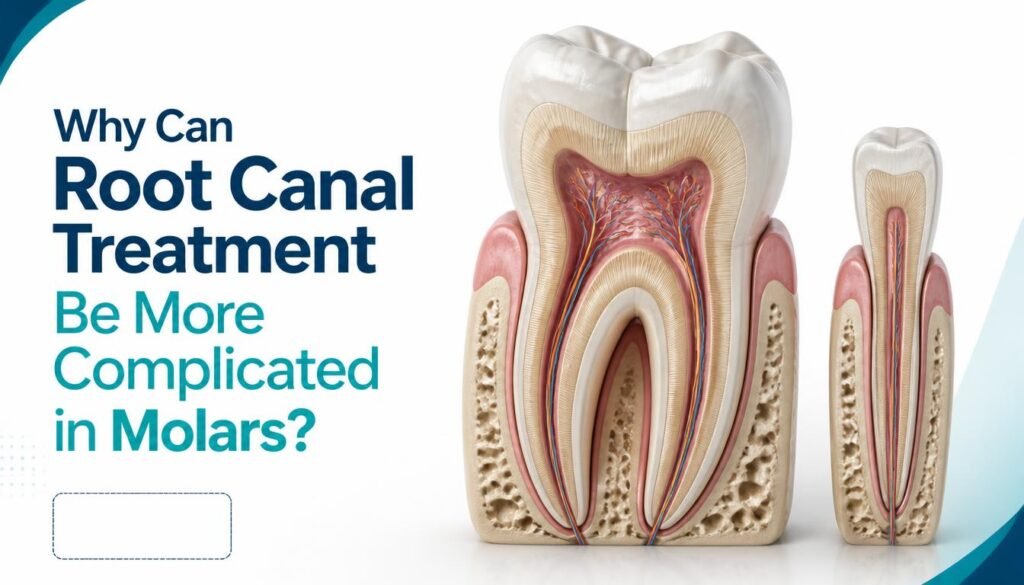
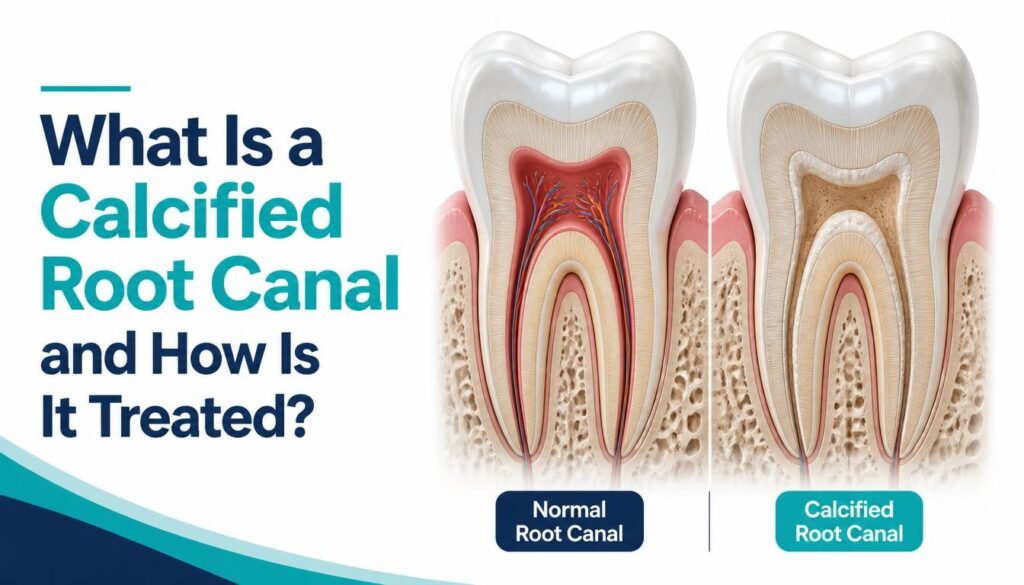
If decay reaches the pulp, which contains the nerves and blood vessels inside the tooth, root canal treatment may become one of the treatment options.
Can a Wisdom Tooth Need Root Canal Treatment?
Yes. A wisdom tooth can require root canal treatment if the pulp becomes inflamed or infected because of deep tooth decay, a crack, or damage to the tooth.
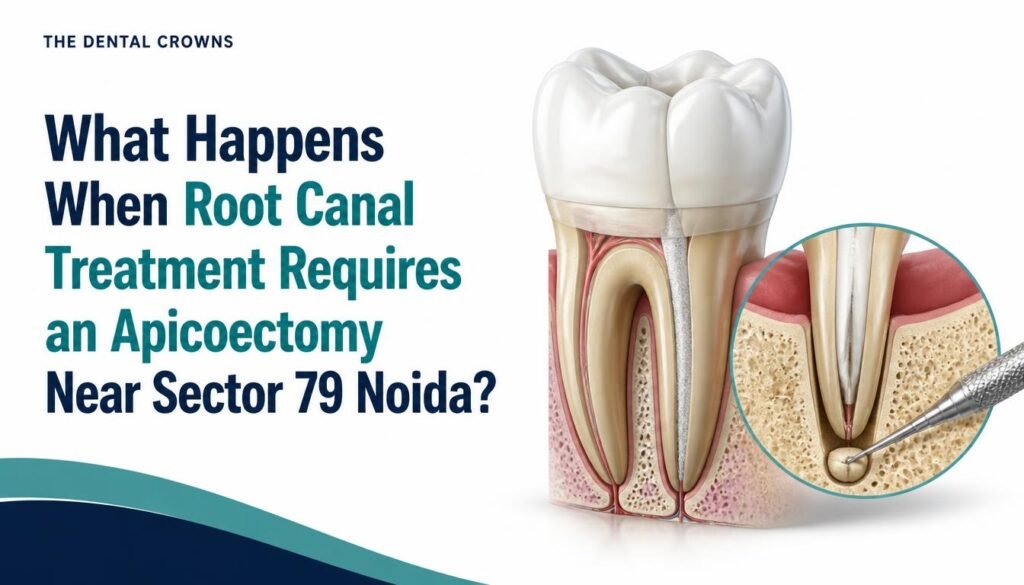
During root canal treatment, the dentist removes the affected pulp, cleans and disinfects the internal root canal system, and seals it to help prevent reinfection. The tooth may then need a suitable filling or dental crown to restore its strength and function.
However, not every infected wisdom tooth should undergo RCT. Wisdom teeth can have complex root anatomy, limited access, and positioning problems that make treatment challenging.
A dentist may recommend root canal treatment when:
- The wisdom tooth has erupted sufficiently and is accessible for treatment.
- The tooth is positioned well enough to clean and restore.
- The surrounding gums and supporting bone are reasonably healthy.
- The tooth has a useful role in chewing or maintaining dental function.
- The decay or pulp infection can be treated and the remaining tooth structure can support a restoration.
If these conditions are not met, removing the wisdom tooth may provide a more predictable long-term solution.
What Are the Signs That a Wisdom Tooth May Need Root Canal Treatment?
Wisdom tooth pain does not automatically mean that you need RCT. Different dental problems can cause similar symptoms, so a proper examination is essential.
Look out for these warning signs:
1. Persistent or Throbbing Toothache
Pain that continues, becomes severe, or occurs without an obvious trigger may indicate inflammation or infection inside the tooth. Deep decay is one possible cause, but impacted wisdom teeth and gum infections can also produce pain.
2. Lingering Sensitivity to Hot or Cold
Sensitivity that continues after consuming hot or cold foods may indicate damage to the tooth pulp. However, sensitivity alone cannot confirm that root canal treatment is necessary.
3. Pain While Chewing
Discomfort when biting or chewing may be associated with deep decay, a cracked tooth, inflammation around the root, or pressure from an impacted wisdom tooth.
4. Swelling Around the Tooth
Swelling, tenderness, or a bad taste in the mouth may indicate an infection around the wisdom tooth. An infection beneath the gum flap surrounding a partially erupted tooth may require a different treatment from a pulp infection.
5. A Visible Cavity or Damaged Tooth
A dark spot, hole, broken section, or food repeatedly getting trapped around the wisdom tooth can indicate decay or structural damage. Early assessment can help determine whether a filling, RCT, or extraction is appropriate.
If you experience facial swelling, fever, rapidly worsening pain, or difficulty opening your mouth, seek prompt dental care. Difficulty swallowing or breathing, or rapidly spreading swelling, requires emergency medical attention.
When Is Root Canal Treatment Better Than Wisdom Tooth Extraction?
The decision depends on whether the wisdom tooth can be saved and whether retaining it offers a meaningful benefit.
Root canal treatment may be worth considering when the tooth is fully erupted, functional, accessible, and restorable. Saving a useful natural tooth can help maintain chewing function and avoid unnecessary tooth removal.
Extraction may be preferable when the wisdom tooth:
- Is severely impacted or growing in an unfavourable position.
- Has extensive decay that cannot be restored predictably.
- Has repeated infections or significant damage to the surrounding tissues.
- Is difficult to clean and is contributing to recurring dental problems.
- Has little functional value and is unlikely to remain healthy after treatment.
A dentist may recommend dental X-rays to assess the tooth’s roots, position, surrounding bone, and relationship to nearby structures.
There is no single treatment that is best for every patient. The final recommendation should be based on the clinical examination, imaging, restorability, and your individual dental needs.
Root Canal Treatment vs Wisdom Tooth Extraction
Understanding the difference between these procedures can help you discuss your options with your dentist.
| Factor | Root Canal Treatment | Wisdom Tooth Extraction |
|---|---|---|
| Main purpose | Treats infection inside the tooth and aims to preserve it | Removes the problematic tooth |
| When considered | The tooth is suitable for restoration | The tooth is damaged, impacted, or unsuitable for restoration |
| Natural tooth | Retained if treatment succeeds | Removed |
| Restoration | A filling or crown may be needed | The extraction site heals over time |
| Main considerations | Root anatomy, access, restorability, and long-term maintenance | Tooth position, surgical difficulty, and healing |
Neither treatment is automatically better. The most suitable option is the one that safely addresses the underlying problem and offers a reasonable long-term outcome.
How Is Root Canal Treatment for a Wisdom Tooth Performed?
If your dentist determines that the wisdom tooth can be saved, the treatment generally follows these steps.
Step 1: Dental Examination and X-Rays
The dentist examines the tooth, gums, symptoms, and surrounding tissues. Dental X-rays help assess the root structure, depth of decay, and nearby anatomical structures.
Step 2: Local Anaesthesia
Local anaesthesia is used to numb the treatment area. This helps keep the procedure comfortable while the dentist works on the affected tooth.
Step 3: Removal of Infected Pulp
An opening is made in the tooth, allowing the dentist to access the pulp chamber and root canals. Inflamed or infected pulp is removed.
Step 4: Cleaning and Sealing
The root canals are cleaned, disinfected, shaped, and filled with an appropriate material. The tooth is then sealed to reduce the risk of reinfection.
Step 5: Final Filling or Dental Crown
Depending on how much tooth structure remains, the dentist may recommend a filling or a dental crown. A crown can help protect a weakened tooth, provided the wisdom tooth is suitable for long-term restoration.
The number of appointments depends on the tooth’s anatomy, infection, and treatment complexity. Wisdom tooth root canal treatment may be more challenging than treatment of other molars because of its location and variable root structure.
For more information about the procedure, read our guide to painless root canal treatment at The Dental Crowns.
Is Root Canal Treatment for a Wisdom Tooth Painful?
Many patients worry that root canal treatment will be painful. Modern dental techniques and local anaesthesia help manage discomfort during the procedure.
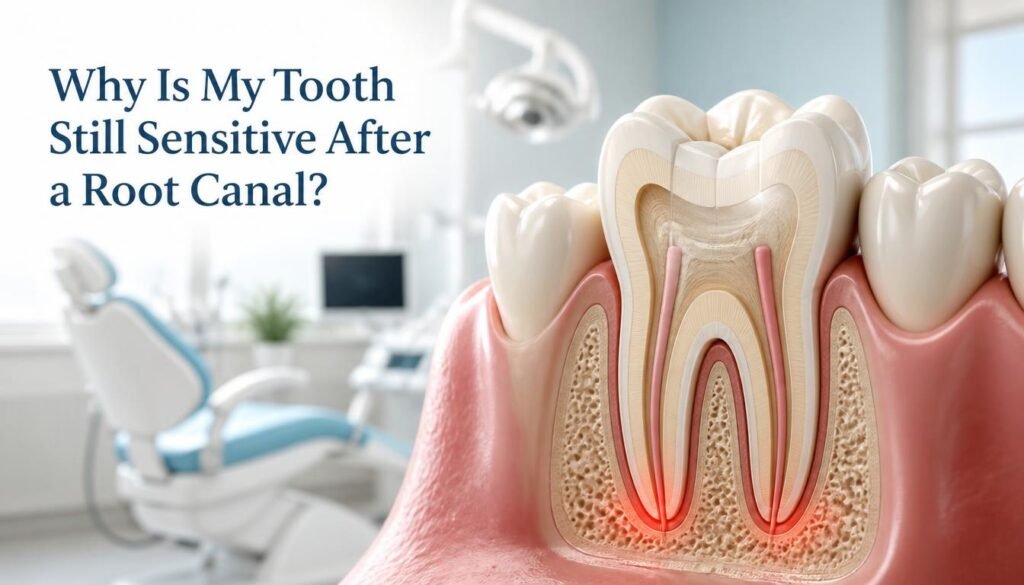
You may experience some soreness or tenderness after treatment, particularly if the surrounding tissues were inflamed. The level of discomfort and recovery time varies depending on the condition of the tooth and the complexity of the procedure.
A dentist can explain how to manage post-treatment discomfort and when to return for a review.
It is important to remember that persistent pain should not be ignored or managed only with painkillers. The underlying cause needs to be diagnosed and treated appropriately.
How Much Does Wisdom Tooth Root Canal Treatment Cost?
The cost of wisdom tooth root canal treatment varies depending on the complexity of the case and the restoration required.
Factors that may affect the total cost include:
- The position and accessibility of the wisdom tooth.
- The number and shape of its root canals.
- The severity of infection or decay.
- Whether specialist treatment is required.
- Whether a filling or dental crown is needed afterward.
- The number of appointments and any additional procedures.
Wisdom tooth extraction costs can also vary depending on whether the tooth is fully erupted, partially impacted, or requires surgical removal.
Instead of choosing treatment based on price alone, ask your dentist to explain the diagnosis, available alternatives, expected costs, and long-term outlook.
Can a Wisdom Tooth Be Saved Instead of Removed?
In some cases, yes. A wisdom tooth can be preserved if its position, supporting tissues, and remaining tooth structure allow successful treatment and restoration.
However, saving a tooth is not always the most appropriate goal. If a wisdom tooth is repeatedly infected, severely decayed, or poorly positioned, extraction may be a more suitable option.
The decision should consider both the immediate problem and the likelihood of future complications. A clinical examination and appropriate imaging are necessary before deciding.
How Can You Prevent Wisdom Tooth Problems?
Although you cannot control how your wisdom teeth grow, you can reduce the risk of preventable dental problems.
- Brush twice daily with fluoride toothpaste.
- Clean carefully around the back molars using a suitable toothbrush.
- Clean between your teeth regularly.
- Limit frequent sugary snacks and drinks.
- Attend routine dental check-ups.
- Seek advice if you notice recurring pain, swelling, food trapping, or sensitivity.
Regular dental examinations can help identify wisdom tooth decay and gum problems before they become more complicated.
When Should You Visit a Dentist for Wisdom Tooth Pain?
Arrange a dental appointment if you experience persistent toothache, pain while chewing, lingering sensitivity, swelling, or a visible cavity near your wisdom tooth.
Early assessment helps determine whether the problem is caused by decay, an infection inside the tooth, inflammation around a partially erupted wisdom tooth, or another dental condition.
If you are looking for root canal treatment in Noida, The Dental Crowns offers dental consultations and root canal care at its clinic in Sector 79. The dentist can assess your wisdom tooth and explain whether RCT, extraction, or another treatment is appropriate.
Book a dental consultation rather than waiting for the pain to disappear on its own.
Frequently Asked Questions
1. Can a wisdom tooth be treated with a root canal?
Yes. A wisdom tooth may be treated with RCT if its position, root anatomy, surrounding tissues, and remaining tooth structure make successful treatment and restoration feasible.
2. Is it better to get a root canal or remove a wisdom tooth?
It depends on the condition of the tooth. RCT may be suitable for a functional, restorable wisdom tooth, while extraction may be preferable for a severely damaged, impacted, or repeatedly infected tooth.
3. Can a wisdom tooth infection go away without treatment?
Symptoms may temporarily improve, but an underlying dental infection may persist or return. A dentist should identify the cause and recommend appropriate treatment.
4. How do I know if my wisdom tooth pain needs a root canal?
Persistent toothache, lingering sensitivity, or pain while chewing may indicate pulp damage, but these symptoms are not conclusive. A dental examination and, when appropriate, X-rays are needed to determine the cause.
5. Does every decayed wisdom tooth need extraction?
No. Treatment depends on the extent of decay, the tooth’s position, and whether it can be restored. Some teeth may be treated with a filling or RCT, while others are better removed.
6. Can a wisdom tooth need a dental crown after RCT?
Yes. A crown may be recommended if the treated tooth has lost substantial structure and requires additional protection. The dentist will assess whether the wisdom tooth can be restored effectively.
7. When is wisdom tooth pain an emergency?
Seek urgent care for rapidly worsening pain, significant swelling, fever, or difficulty opening your mouth. Difficulty breathing or swallowing, or rapidly spreading facial or neck swelling, requires emergency medical attention.
Conclusion
A wisdom tooth can need root canal treatment when decay or damage affects the pulp inside the tooth. However, RCT is appropriate only when the tooth can be treated and restored predictably.
For some patients, preserving the natural wisdom tooth is reasonable. For others, extraction is the more suitable option. The right decision depends on a professional examination, dental X-rays when indicated, and an assessment of the tooth’s long-term value.
If you have wisdom tooth pain or suspect an infection, consult a dentist to understand your options and receive the right treatment for your needs.