You had a root canal treatment expecting your tooth pain to disappear, but you still feel sensitivity or discomfort when biting, chewing, or touching the treated tooth. Naturally, you may wonder: Why is my tooth still sensitive after a root canal?
The good news is that some mild sensitivity or soreness after root canal treatment can be a normal part of healing. The tissues surrounding the tooth can remain irritated for a few days after treatment, particularly when the tooth was infected or painful before the procedure.
However, persistent, severe, or worsening tooth sensitivity after a root canal should not be ignored. It may indicate that the tooth needs further evaluation by a dentist or endodontist.
In this guide, we explain the common reasons for sensitivity after a root canal, how long it can last, what you can do at home, and when it is important to visit a dentist.
Is It Normal to Have Tooth Sensitivity After a Root Canal?
Yes, mild discomfort can occur after a root canal.
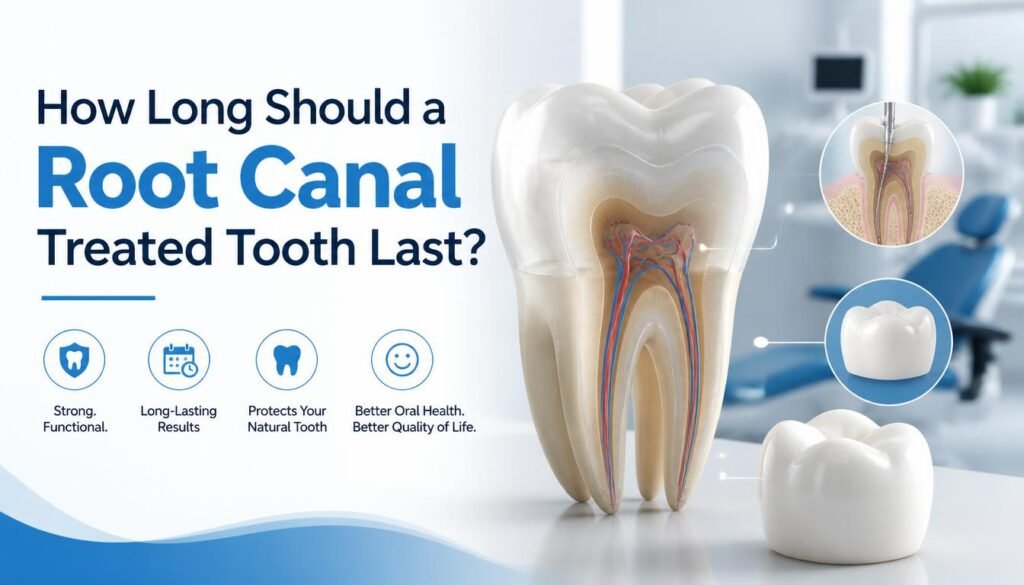
During root canal treatment, the infected or inflamed pulp inside the tooth is removed, and the root canals are cleaned, disinfected, filled, and sealed. Although the infected pulp is removed, the tissues surrounding the root may remain inflamed temporarily while they heal.
According to the American Association of Endodontists, a treated tooth may feel sore or sensitive for a few days, especially if there was infection or significant pain before treatment.
The important thing is the direction of your symptoms.
If sensitivity gradually improves, it is generally less concerning. If the pain becomes stronger, continues for longer than expected, or is accompanied by swelling, you should contact your dentist.
Why Is My Tooth Still Sensitive After a Root Canal?
There are several possible reasons for tooth sensitivity after root canal treatment.
1. The surrounding tissues are still healing
A root canal removes the infected or inflamed pulp from inside the tooth, but the tissues around the tooth’s root can still be irritated after treatment.
This can cause:
- Mild tenderness
- Sensitivity when biting
- A feeling of pressure
- Slight soreness around the tooth
- Discomfort when touching the tooth
This type of sensitivity generally improves as the surrounding tissues heal.
2. The tooth had a significant infection before treatment
If the tooth had a deep infection or abscess before your root canal, the tissues around the root may need additional time to recover.
In these cases, mild tenderness after treatment does not necessarily mean that the root canal has failed.
However, increasing pain, swelling, fever, or the return of the original symptoms requires professional evaluation.
3. Your bite may feel slightly uneven
Sometimes, after a dental restoration, the treated tooth may feel as though it touches the opposite tooth before the other teeth do.
This can make the tooth uncomfortable when you bite or chew.
An uneven bite can place additional pressure on the treated tooth and may contribute to continued discomfort.
If your tooth feels “too high” when you close your mouth, tell your dentist. They can evaluate your bite and determine whether an adjustment is needed.
4. The tooth may need its final restoration
A root canal treats the inside of the tooth, but the tooth may still need a permanent restoration afterward.
Depending on the condition and location of the tooth, your dentist may recommend a dental crown or another suitable restoration to protect it.
A properly restored tooth is better protected against further damage during normal chewing.
If you have been advised to get a crown after your root canal, do not unnecessarily delay the recommended follow-up appointment.
You can also explore our Porcelain Dental Crowns service if you want to understand more about dental crown treatment and tooth restoration.
5. There may be another problem affecting the tooth
Not every source of pain comes from the treated tooth itself.
A nearby tooth may have decay, a crack, gum disease, or another dental problem that creates pain in the same area.
This is why persistent sensitivity should be assessed rather than assuming that the root canal itself is necessarily the problem.
A dental examination and, when appropriate, dental imaging can help identify the actual source of discomfort.
6. The tooth may have complicated root canal anatomy
Teeth can have narrow, curved, or complex root canal systems.
In some situations, a canal or part of the anatomy may be difficult to locate or treat. The American Association of Endodontists notes that complicated canal anatomy and untreated canals can be among the reasons a previously treated tooth may later remain painful or become diseased.
If symptoms continue for a long time or return after initially improving, your dentist may recommend further examination.
7. The tooth may require endodontic retreatment
In some cases, a tooth that has already undergone root canal treatment can develop problems months or years later.
This may happen for several reasons, including persistent infection, complicated canal anatomy, or problems with the restoration or sealing of the tooth.
Endodontic retreatment may sometimes be considered when a previously treated tooth has not healed as expected.
This does not mean that every painful tooth needs another root canal. A dentist or endodontist needs to examine the tooth first.
How Long Does Sensitivity Last After a Root Canal?
For many patients, mild soreness or sensitivity improves within a few days.
The American Association of Endodontists states that mild discomfort can occur for the first few days following treatment and that symptoms should generally improve rather than progressively worsen.
Some NHS guidance also notes that the area around the tooth can remain sore after treatment while healing takes place.
Therefore, instead of focusing only on the number of days, pay attention to how your symptoms are changing.
A useful way to think about it:
Mild discomfort + gradually improving = usually part of healing
Severe pain + worsening symptoms = dental evaluation recommended
Swelling + significant pain = contact your dentist promptly
If you are still experiencing significant pain after the expected healing period, arrange a dental check-up.
Why Does My Root Canal Tooth Hurt When I Bite?
Pain specifically when biting can have several possible causes.
The tissues surrounding the tooth can remain sensitive during healing, which may make chewing uncomfortable temporarily.
However, pain when biting can also be associated with an uneven bite, inflammation around the root, a crack, or another dental issue.
Do not repeatedly bite hard foods on the painful tooth to “test” it.
Instead, avoid putting unnecessary pressure on the tooth and speak with your dentist if the discomfort persists or becomes worse.
Why Is My Root Canal Tooth Sensitive to Cold?
A properly treated tooth no longer has the living pulp that originally responded to hot and cold sensations.
Therefore, if you feel cold sensitivity in the area after a root canal, it is worth determining exactly which tooth is responding.
Sometimes the sensation may actually be coming from a neighboring tooth rather than the root-canaled tooth.
Other possibilities include exposed root surfaces, gum recession, decay in another tooth, or another dental condition.
A dentist can use clinical tests to identify the tooth responsible for the sensitivity.
Can a Root Canal Fail?
Root canal treatment is designed to remove infection, clean the root canal system, and seal the tooth.
However, as with any dental treatment, healing does not always occur exactly as expected.
A previously treated tooth can sometimes develop persistent or recurrent disease.
Possible reasons include:
- Complex or untreated canals
- Persistent infection
- Complicated root anatomy
- A crack in the tooth
- Leakage around a restoration
- Delay in placing the recommended permanent restoration
- New decay or damage affecting the tooth
If symptoms return after you previously felt completely comfortable, schedule an examination rather than assuming that the tooth must be extracted.
When Should You See a Dentist After a Root Canal?
Contact your dentist if you experience:
- Severe or increasing tooth pain
- Significant pressure around the tooth
- Swelling in the gum
- Swelling of the face
- Fever or feeling unwell
- A return of the symptoms you had before treatment
- A bite that feels noticeably uneven
- Persistent discomfort that does not appear to be improving
- A temporary filling or crown that has fallen out
The American Association of Endodontists specifically recommends contacting the treating dentist or endodontist when severe pain or pressure persists beyond a few days, when swelling occurs, when the bite feels uneven, or when previous symptoms return.
If you have facial swelling, severe pain, or other signs of a significant infection, seek prompt dental care.
What Can You Do for Tooth Sensitivity After a Root Canal?
Until your dentist evaluates the tooth or while it is healing, you can follow the aftercare instructions provided by your dental professional.
Avoid chewing hard foods on the treated tooth
If your dentist has not yet placed the final restoration, avoid putting excessive pressure on the tooth.
Maintain good oral hygiene
Continue brushing and flossing, while being gentle around the treated area if it is tender.
Follow medication instructions
If your dentist has recommended a pain-relief medicine, take it according to their instructions and the medication label.
Do not exceed the recommended dosage.
Attend your follow-up appointment
Follow-up care is an important part of completing root canal treatment and restoring the tooth properly.
Does a Root Canal Tooth Need a Crown?
Not every root-canaled tooth automatically requires the same type of restoration.
The need for a crown depends on factors such as the tooth’s location, remaining tooth structure, damage, and your dentist’s assessment.
Molars and premolars often require substantial protection because they experience considerable chewing forces, but the appropriate restoration should be determined individually.
A dental crown can help restore the shape, function, and strength of a damaged or weakened tooth.
At The Dental Crowns, you can learn more about our Porcelain Dental Crowns treatment as part of your tooth restoration options.
Root Canal vs. Tooth Extraction: What Should You Know?
When a tooth continues to hurt after root canal treatment, some patients immediately worry that extraction is the only solution.
That is not necessarily the case.
If the tooth can be predictably restored and saved, your dentist may consider options such as further endodontic treatment or retreatment.
The American Association of Endodontists explains that some previously treated teeth can receive retreatment when healing has not occurred as expected.
The correct choice depends on the condition of the tooth, the surrounding tissues, the quality of the previous treatment, and whether the tooth can be restored.
Can Laser Dentistry Help With Dental Treatment?
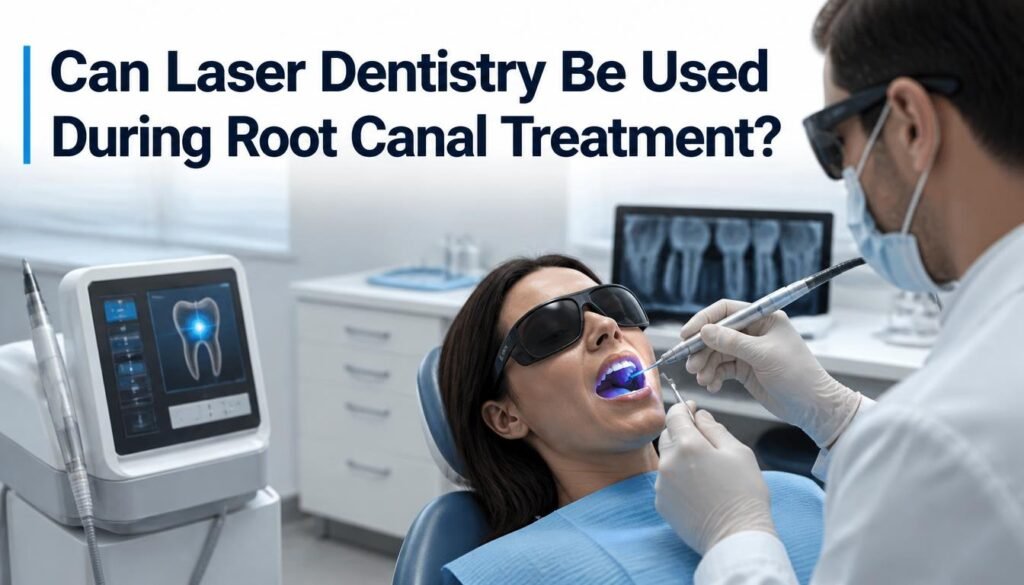
Laser dentistry is used for several dental applications and may be offered as part of a modern dental treatment approach.
The Dental Crowns provides Advanced Clinical Laser Dentistry in Noida and describes its use of laser technology for selected dental procedures.
However, laser treatment is not automatically the solution for every case of post-root-canal sensitivity.
Your dentist first needs to identify the reason for the pain before deciding which treatment is appropriate.
Why Choose The Dental Crowns for Root Canal Treatment in Noida?
If you are experiencing persistent tooth pain or sensitivity after root canal treatment, a professional dental evaluation can help determine the cause.
The Dental Crowns provides Painless Root Canal Treatment in Noida and is located at Civitech Stadia, Sector 79, Noida.
The clinic’s root canal service describes the use of advanced technology and laser-assisted techniques with a focus on patient comfort.
If your symptoms are continuing, you can schedule an appointment to discuss your tooth and determine whether further treatment or monitoring is appropriate.
Frequently Asked Questions
1. Why is my tooth still sensitive after a root canal?
Mild sensitivity can occur because the tissues surrounding the tooth may still be healing. If the sensitivity is severe, worsening, persistent, or accompanied by swelling, the tooth should be evaluated by a dentist.
2. Is sensitivity normal after a root canal?
Mild soreness or tenderness for a few days can be normal after root canal treatment. The symptoms should generally improve as the area heals.
3. How long should a tooth hurt after a root canal?
Many patients experience mild discomfort for a few days. If pain is severe, increasing, or does not appear to be improving, contact your dentist or endodontist.
4. Why does my root canal tooth hurt when I bite?
It may be due to temporary inflammation around the tooth, an uneven bite, or another dental issue. Persistent pain when biting should be evaluated.
5. Can a root canal tooth become infected again?
Yes. A previously treated tooth can sometimes develop persistent or recurrent disease. Complex canal anatomy, untreated canals, leakage, cracks, or other factors may contribute.
6. Can a root canal tooth be sensitive to cold?
The treated tooth itself should no longer contain the pulp that responds normally to cold. If you experience cold sensitivity, the sensation may be coming from another tooth or another dental condition.
7. Does a root canal tooth always need a crown?
Not necessarily. The recommended restoration depends on the tooth’s condition, location, remaining structure, and your dentist’s assessment.
8. What should I do if my root canal tooth is swollen?
Contact your dentist promptly. Swelling can indicate inflammation or infection that requires professional assessment.
9. Can I chew normally after a root canal?
Your dentist may advise you to avoid heavy chewing on the treated tooth until it has been permanently restored and cleared for normal function.
10. Should I get another root canal if my tooth still hurts?
Not automatically. Persistent pain requires diagnosis first. Your dentist or endodontist can determine whether retreatment, restoration adjustment, or another treatment is appropriate.
Final Takeaway
So, why is your tooth still sensitive after a root canal?
In many cases, mild sensitivity is related to the normal healing of the tissues surrounding the treated tooth. This discomfort should gradually improve.
However, severe pain, increasing sensitivity, swelling, an uneven bite, or the return of previous symptoms should be evaluated by a dental professional.
A root canal is intended to remove infected or inflamed pulp and help preserve the natural tooth. Proper follow-up and timely restoration are important parts of protecting the treated tooth.
If you are experiencing persistent tooth sensitivity after a root canal in Noida, consider getting the tooth professionally evaluated rather than waiting for the symptoms to worsen.
Need a dental evaluation? The Dental Crowns offers root canal treatment and other dental services in Sector 79, Noida.