Have you been told that your tooth has a calcified root canal? If so, you may be wondering what it means, whether it is dangerous, and if the tooth can still be saved. A calcified root canal is a dental condition in which hard tissue gradually builds up inside the tooth, making the natural root canal space narrower or difficult to locate.
This condition can make root canal treatment more complicated because the dentist must carefully identify and access the narrow canal without unnecessarily damaging the surrounding tooth structure. However, a calcified canal does not automatically mean that the tooth must be extracted.
With a proper diagnosis, suitable dental imaging, and appropriate endodontic techniques, many teeth with calcified canals can still be treated successfully.
At The Dental Crowns, patients can learn more about root canal treatment and the dental care options available in Noida. This guide explains the causes, symptoms, diagnosis, treatment options, and recovery associated with calcified root canals.
What Is a Calcified Root Canal?
A calcified root canal occurs when additional hard tissue, usually dentin, accumulates inside the pulp chamber or root canal system of a tooth. As this tissue builds up, the space that normally contains the dental pulp becomes narrower and may sometimes be difficult to identify on dental X-rays.
The condition is also known as pulp canal obliteration or, in certain situations, calcific metamorphosis.
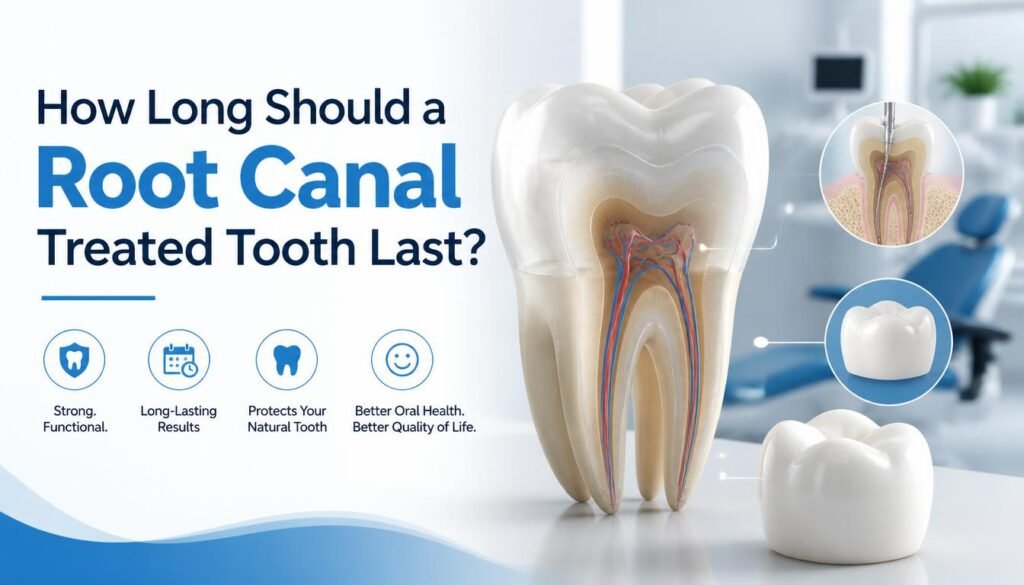
The dental pulp is the soft tissue inside a tooth that contains nerves, blood vessels, and connective tissue. Under normal circumstances, it occupies the pulp chamber and extends through narrow canals inside the roots.
When calcification develops, these spaces may become partially or extensively blocked.
It is important to understand that calcification does not always indicate an active infection. Some teeth with calcified canals remain healthy and may not require immediate root canal treatment. Treatment is generally considered when examination findings indicate irreversible pulp damage, infection, or another condition requiring endodontic care.
What Causes a Root Canal to Become Calcified?
Several factors can contribute to calcification inside a tooth. The most common causes include the following.
1. Dental Trauma or Injury
A blow to the mouth, a sports injury, or an accident can damage the tissues inside a tooth. In some cases, the tooth responds by depositing additional hard tissue within the pulp chamber and root canals.
This process can gradually reduce the available canal space.
2. Age-Related Changes
Dentin continues to form throughout life. As a person gets older, the pulp chamber and root canals may naturally become narrower.
This gradual change can make root canal treatment more challenging, particularly in teeth that already have narrow canals.
3. Previous Dental Procedures
Repeated dental procedures, deep fillings, or other forms of irritation may stimulate changes within the dental pulp. Depending on the circumstances, these changes can contribute to additional dentin formation.
4. Dental Inflammation
Inflammation and other responses to irritation can influence the tissues inside a tooth. The exact cause of calcification varies from one patient to another, so a dentist must evaluate the tooth before determining the most appropriate treatment.
5. Previous Tooth Injury That Went Unnoticed
Sometimes, a tooth develops calcification months or years after an injury. The patient may not remember the original incident, especially if there was little pain at the time.
This is one reason why a tooth can appear unusually calcified even when there is no obvious recent dental problem.
What Are the Symptoms of a Calcified Root Canal?
A calcified root canal does not always cause noticeable symptoms. In many cases, the condition is discovered during a routine dental examination or when a dentist takes an X-ray for another reason.
When symptoms occur, they may be associated with an underlying problem affecting the pulp or surrounding tissues rather than calcification alone.
Possible signs include:
- Tooth discolouration: The affected tooth may gradually become yellowish, grey, or darker than neighbouring teeth, particularly following trauma.
- Persistent toothache: Ongoing pain may indicate inflammation or infection that needs further investigation.
- Sensitivity: Prolonged sensitivity to hot or cold foods may suggest an underlying dental problem.
- Pain while chewing: Discomfort when biting can occur for several reasons, including inflammation around the root.
- Swelling or gum tenderness: These symptoms may indicate infection and require prompt dental evaluation.
- Changes on dental X-rays: The pulp chamber or root canal may appear narrower than expected.
Not everyone with a calcified canal experiences these symptoms. A tooth can have substantial calcification without pain, while another tooth may develop infection that requires treatment.
If you experience facial swelling, fever, or rapidly worsening dental pain, seek urgent dental care. Difficulty swallowing or breathing requires emergency medical attention.
How Is a Calcified Root Canal Diagnosed?
Diagnosing a calcified root canal involves more than simply looking at the tooth. The dentist considers your symptoms, dental history, examination findings, and imaging results.
Clinical Examination
The dentist examines the tooth for discolouration, cracks, cavities, tenderness, swelling, and other signs of damage. Your history of dental trauma or previous treatment may also be relevant.
Dental X-Rays
Dental X-rays help the dentist assess the pulp chamber, root anatomy, and surrounding bone. A narrowed or difficult-to-see canal may suggest calcification.
However, a two-dimensional X-ray does not always show the complete shape or location of a complex root canal system.
Pulp Testing
Depending on the case, the dentist may perform cold testing, electrical pulp testing, or other clinical tests to assess the tooth’s response. These tests help inform the diagnosis but are not interpreted in isolation.
Cone-Beam Computed Tomography (CBCT)
In selected complex cases, a dentist or endodontist may recommend CBCT imaging. This technology provides three-dimensional information about the tooth and its surrounding structures.
How Is a Calcified Root Canal Treated?
Calcified root canal treatment depends on the extent of calcification, the condition of the pulp, the presence of infection, and whether the tooth can be restored.
The objective is to treat the underlying problem while preserving as much healthy tooth structure as possible.
1. Monitoring When Treatment Is Not Necessary
If the tooth is healthy, has no concerning symptoms, and shows no evidence of disease requiring treatment, the dentist may recommend periodic monitoring instead of an immediate root canal.
This avoids unnecessary treatment while allowing the dentist to watch for changes.
2. Root Canal Treatment Using Magnification
When root canal treatment is necessary, the dentist must carefully locate the narrow canal openings.
A dental operating microscope or other magnification system can help improve visibility. Specialised instruments may be used to identify the canal and create a controlled path through the calcified area.
The aim is to avoid excessive removal of dentin and reduce the risk of complications such as perforation.
3. Specialised Endodontic Instruments
Calcified canals may require fine instruments, ultrasonic tips, and carefully selected techniques to negotiate the narrow canal space.
Flexible endodontic instruments and appropriate irrigation methods may help the clinician clean and shape the canal once it has been located.
These procedures require experience and careful planning because excessive force or unnecessary drilling can damage the tooth.
4. Advanced Imaging and Guided Techniques
For particularly complex cases, three-dimensional imaging can help the dentist understand the canal’s position and direction.
In selected situations, guided endodontic techniques may be considered. These approaches can use digital planning and a custom guide to help the clinician access a difficult canal more precisely.
The suitability of guided treatment depends on the tooth’s anatomy, available technology, and the clinician’s assessment.
5. Cleaning, Disinfection, and Sealing
Once the canal has been located and accessed, the dentist removes diseased tissue when present, cleans and disinfects the canal system, and fills and seals it using appropriate materials.
The treatment may require more than one appointment, depending on the complexity of the tooth and the presence of infection.
6. Restoring the Tooth With a Filling or Dental Crown
After root canal treatment, the tooth needs a suitable restoration to protect it and restore its function.
Depending on the amount of remaining tooth structure, the dentist may recommend a filling or a dental crown. A crown can provide additional protection for teeth that have been substantially weakened, but it is not necessary in every case.
Learn more about dental crown treatment and restorative options at The Dental Crowns.
Is Calcified Root Canal Treatment Painful?
Many patients worry that treating a calcified canal will be painful. Modern root canal treatment is generally performed under local anaesthesia, which helps keep the procedure comfortable.
However, calcified canals can be technically challenging, and treatment may take longer than a routine root canal. The experience depends on the tooth, the degree of calcification, the presence of inflammation or infection, and the techniques required.
Some tenderness may occur after treatment. Your dentist can explain what to expect and recommend suitable aftercare.
If you are concerned about discomfort, discuss your concerns with your dentist before the procedure. Do not assume that calcification means the treatment will be painful or that every case can be completed in one visit.
Can a Calcified Root Canal Be Treated Successfully?
Yes, many teeth with calcified canals can be treated successfully, although the outcome depends on the individual case.
Advanced magnification, suitable imaging, and specialised endodontic techniques can help manage difficult cases. Nevertheless, no technique guarantees success, and some teeth may be too damaged or too difficult to treat predictably.
If conventional treatment is not feasible, your dentist may discuss referral to an endodontist, alternative treatment options, or extraction if the tooth cannot be saved.
The priority is to select the safest and most appropriate approach for your long-term oral health.
What Happens If a Calcified Root Canal Is Left Untreated?
Calcification itself does not always require treatment. If the tooth is healthy and there is no evidence of disease, monitoring may be appropriate.
However, if the tooth has an untreated infection or irreversible pulp damage, delaying necessary treatment may allow the condition to progress. Possible complications include:
- Persistent or worsening tooth pain
- Infection around the root
- Formation of a dental abscess
- Swelling of the gums or face
- Damage to surrounding tissues
- Loss of the tooth if it cannot be restored
A calcified canal can also make future treatment more challenging if the canal becomes infected and needs to be accessed.
If your dentist has identified calcification, ask whether the tooth requires monitoring, further diagnostic tests, or treatment now.
How Can You Care for a Tooth After Calcified Root Canal Treatment?
Following your dentist’s instructions can help support healing and protect the treated tooth.
- Maintain oral hygiene: Brush twice daily with fluoride toothpaste and clean between your teeth every day.
- Avoid hard foods initially: If the tooth has a temporary restoration or remains tender, avoid chewing hard or sticky foods on that side until your dentist advises otherwise.
- Complete the recommended restoration: If a permanent filling or crown is planned, attend the follow-up appointment promptly.
- Attend follow-up visits: Your dentist may recommend reviews to assess healing and the condition of the tooth.
- Seek advice if symptoms persist: Worsening pain, swelling, fever, or a damaged temporary filling should not be ignored.
Good oral hygiene can help protect the treated tooth, but it cannot reverse existing calcification or replace professional treatment.
When Should You Visit a Dentist in Noida?
You should arrange a dental examination if you notice unexplained tooth discolouration, persistent sensitivity, pain while chewing, or symptoms following a dental injury.
Even without pain, a tooth that has been identified as calcified may need assessment to determine whether monitoring or treatment is appropriate.
The Dental Crowns provides dental services in Noida, including root canal treatment and restorative dental care. You can explore the clinic’s root canal treatment service to learn more about available care.
For an appointment, contact the clinic at +91 89202 71787 or visit the official website.
A dental examination is the best way to determine whether your tooth can be monitored, needs calcified root canal treatment, or requires another approach.
Frequently Asked Questions
1. What is a calcified root canal?
A calcified root canal is a canal that has become narrowed or partly blocked by the formation of additional hard tissue inside the tooth. This can make the canal difficult to locate and treat.
2. What causes root canal calcification?
Common contributing factors include dental trauma, ageing-related dentin formation, and changes in the pulp following irritation or dental procedures. The exact cause varies between patients.
3. Can a calcified tooth be saved?
Yes, many calcified teeth can be preserved with appropriate treatment. The outcome depends on the extent of calcification, the condition of the tooth, and whether the canal can be accessed and treated safely.
4. Is a calcified root canal dangerous?
Calcification alone is not necessarily dangerous and does not always require treatment. However, an associated infection or other dental disease can cause complications if left untreated.
5. Can a calcified root canal cause pain?
It may be painless. When pain occurs, it can be associated with inflammation, infection, or another dental problem affecting the tooth or surrounding tissues.
6. Does every calcified root canal need treatment?
No. If the tooth is healthy and shows no evidence of disease requiring treatment, the dentist may recommend monitoring. Root canal treatment is considered when the clinical findings justify it.
7. How do dentists treat a severely calcified root canal?
Depending on the case, dentists may use magnification, specialised instruments, additional imaging, and guided techniques to locate and treat the canal. A complex case may require referral to an endodontist.
8. Is a dental crown necessary after calcified root canal treatment?
Not always. A crown may be recommended when the tooth has lost substantial structure or needs additional protection. The choice depends on the tooth’s condition and the amount of healthy structure remaining.
9. How long does calcified root canal treatment take?
Treatment time varies according to the tooth, the extent of calcification, and whether infection is present. Some cases require multiple appointments or specialist treatment.
10. When should I seek urgent care for a calcified tooth?
Seek prompt dental care if you develop persistent or worsening pain, swelling, or fever. Facial swelling accompanied by difficulty swallowing or breathing requires emergency medical attention.
Conclusion
A calcified root canal can make dental treatment more complicated, but it does not automatically mean that a tooth must be removed. The most appropriate approach depends on whether the tooth is healthy, whether infection is present, and how much of the canal remains accessible.
With careful diagnosis, suitable imaging, and appropriate endodontic techniques, many affected teeth can still be treated and preserved.
If you have been told that your tooth has a calcified root canal, arrange an assessment with a qualified dentist to understand your options. Early evaluation can help determine whether monitoring, root canal treatment, or another form of dental care is appropriate.
Need professional dental advice in Noida? Contact The Dental Crowns to discuss your symptoms and arrange a consultation.