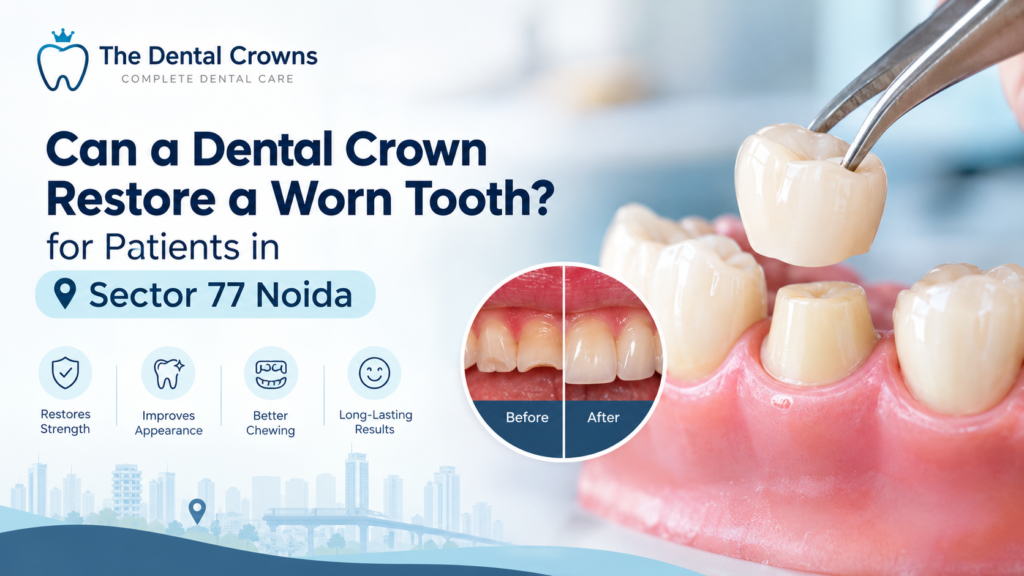
A dental crown is designed to protect and restore a damaged or weakened tooth, but it is not indestructible. Over time, a crown can become chipped, cracked, loose, worn, or damaged. When this happens, one of the first questions patients ask is: Can a dental crown be repaired, or does it need to be replaced?
The answer depends on the type and extent of damage, the condition of the tooth underneath the crown, the crown material, how well the crown fits, and whether there is decay or infection around the tooth.
In some situations, a dentist may be able to repair a damaged crown. In other cases, replacing the crown is the safer and more predictable option.
If you have a broken, loose, or damaged dental crown, it is important to have it examined rather than trying to permanently repair it yourself.
Quick Answer: Can a Dental Crown Be Repaired?
Yes, some dental crowns can be repaired, but not every damaged crown is suitable for repair.
A minor or localized defect may sometimes be repaired if the crown is otherwise stable, properly fitting, and the tooth underneath is healthy enough to support it. The American Dental Association has reported that dentists do repair certain defective restorations when the defect is localized and the remaining structure is suitable.
However, a crown may need replacement when it has a major fracture, poor fit, extensive damage, recurrent decay, significant wear, or when the underlying tooth can no longer adequately support the existing crown.
A dentist needs to examine the crown and tooth before deciding between repair and replacement.
What Is a Dental Crown?
A dental crown is a custom-made restoration that covers the visible portion of a tooth. It can be used to restore a tooth that has been weakened by decay, fracture, extensive restoration or wear.
Crowns may also be used following certain root canal treatments and as the visible restoration on top of a dental implant.
According to Cleveland Clinic, dental crowns can help restore weak, broken, worn or decayed teeth and may last around 5 to 15 years with proper care, although individual results vary.
If you are considering a crown or have questions about your existing restoration, you can learn more about Dental Crown Treatment in Noida.
Why Does a Dental Crown Become Damaged?
A dental crown can remain functional for many years, but several factors can contribute to damage.
Common causes include:
- Normal wear over time
- Biting extremely hard foods
- Accidental trauma
- Teeth grinding or clenching
- A crown that does not fit properly
- Weakness in the underlying tooth
- Recurrent tooth decay
- Changes in the bite
- Poor oral hygiene around the crown
- Chipping or fracture of the crown material
- Age of the restoration
Even though a crown is strong, it is not a permanent or indestructible restoration.
For example, Cleveland Clinic recommends avoiding extremely hard or sticky foods and maintaining good oral hygiene to help protect dental crowns.
Can a Chipped Dental Crown Be Repaired?
A chipped dental crown may sometimes be repaired, depending on how large the chip is and where it occurs.
A small, localized chip may potentially be repaired or smoothed by a dentist. However, the dentist must first determine whether the crown is structurally sound.
The following factors may influence the decision:
1. Size of the Chip
A small surface defect may be easier to manage than a large fracture.
2. Location of the Damage
A chip on a visible front tooth may require a different approach from damage on a crown exposed to heavy chewing forces.
3. Crown Material
Porcelain, zirconia, metal and other crown materials behave differently when damaged. The repair options depend partly on the material used.
4. Condition of the Tooth
Even if the crown itself can be repaired, the dentist must check the natural tooth underneath it.
5. Crown Fit
A damaged crown that already has a poor fit may be better replaced than repaired.
Therefore, a chipped crown should not automatically be considered a replacement case or a repair case. A professional examination is necessary.
Can a Cracked Dental Crown Be Repaired?
A cracked crown requires careful evaluation.
If the crack is superficial or limited to a small area, a dentist may determine that repair is possible. However, a major crack or fracture can compromise the strength and function of the restoration.
Replacement may be recommended when:
- The crown has a major fracture.
- The crack extends through a significant part of the crown.
- The crown no longer fits correctly.
- The underlying tooth is damaged.
- There is decay beneath or around the crown.
- The crown repeatedly breaks.
- The crown cannot provide adequate protection anymore.
A cracked restoration should be evaluated promptly because delaying treatment can expose the tooth to additional damage.
If you are also experiencing pain, swelling or signs of infection, seek dental attention promptly.
Can a Loose Dental Crown Be Repaired?
A loose dental crown does not necessarily mean that the crown must be replaced.
Sometimes a crown becomes loose while the crown itself remains intact. In certain situations, the dentist may be able to assess the crown, clean the area and determine whether it can be re-cemented.
However, the reason the crown became loose matters.
A loose crown may be associated with:
- Failure of the dental cement
- Decay underneath the crown
- Damage to the supporting tooth
- A poor-fitting crown
- Changes in the bite
- Fracture of the underlying tooth
If the crown is loose, do not assume that simply putting it back into place permanently solves the problem.
A dental examination is important because the dentist needs to evaluate both the restoration and the tooth underneath it.
When Does a Dental Crown Need Replacement?
A dentist may recommend dental crown replacement when repairing the existing crown would not provide a reliable long-term result.
Replacement may be considered when:
1. The Crown Is Severely Cracked
A major fracture can compromise the crown’s ability to protect the tooth.
2. The Crown Is Badly Chipped
If too much of the restoration is missing, repair may not restore adequate strength or function.
3. The Crown No Longer Fits Properly
A poor-fitting crown can allow food and bacteria to accumulate around the restoration and may contribute to oral health problems.
4. There Is Decay Under the Crown
If decay has developed around or underneath the crown, the dentist may need to remove the restoration to properly assess and treat the tooth.
5. The Supporting Tooth Is Damaged
Sometimes the problem is not the crown itself. The natural tooth underneath may have fractured or lost additional structure.
6. The Crown Is Significantly Worn
Long-term wear may eventually make replacement necessary.
7. The Crown Keeps Coming Loose
Repeated loosening suggests that the underlying cause needs to be investigated rather than repeatedly re-cementing the restoration without addressing the problem.
Dental Crown Repair vs Replacement: What’s the Difference?
The decision can be easier to understand by comparing the two options.
| Dental Crown Repair | Dental Crown Replacement |
|---|---|
| Used for selected minor or localized defects | Used when the crown is significantly damaged |
| May preserve an otherwise usable crown | Involves removing the existing crown |
| May be less invasive in suitable cases | A new crown is fabricated |
| Depends on crown material and defect | May be necessary when fit or tooth condition is poor |
| Not suitable for every fracture | Often considered for major cracks or structural failure |
The goal is not simply to repair or replace the crown based on appearance. The dentist should determine which option provides the most appropriate protection for the tooth.
The ADA has reported that restoration repair can be a conservative approach when defects are localized and the remaining structure is sound. This supports the idea that replacement is not automatically required for every defective restoration.
How Does a Dentist Decide Between Repair and Replacement?
During an examination, the dentist may evaluate several factors.
1. The Crown’s Condition
The dentist will look for cracks, chips, fractures, wear and other visible defects.
2. The Tooth Underneath
The crown may look damaged, but the tooth underneath could also have decay, a crack or another problem.
3. Crown Fit
The dentist will assess whether the crown still fits appropriately.
4. Your Bite
Excessive biting forces or an uneven bite may contribute to repeated crown damage.
5. Gum Health
The gums around the crown should also be evaluated.
6. Signs of Infection
Pain, swelling, tenderness or other symptoms may indicate a problem with the tooth beneath the crown.
7. Crown Material
The available repair options can depend on whether the crown is made from porcelain, zirconia, metal, porcelain-fused-to-metal or another material.
8. Age of the Crown
An older crown that is already showing significant wear may be more suitable for replacement than repair.
What Happens If a Dental Crown Falls Out?
If your dental crown falls out, don’t panic, but don’t ignore it either.
First, keep the crown safe and contact your dentist for an appointment.
If possible:
- Pick up the crown carefully.
- Rinse it gently with water.
- Keep it in a clean container.
- Avoid chewing on the affected side.
- Arrange a dental examination as soon as practical.
Do not use super glue or household adhesive to permanently attach the crown.
Cleveland Clinic advises patients with a broken or dislodged crown or bridge to make a dental appointment and bring the restoration with them.
A dentist can determine whether the crown can be re-cemented, repaired or needs to be replaced.
Can You Repair a Dental Crown at Home?
No, a permanent dental crown repair should not be attempted at home.
Temporary dental products may sometimes be used according to professional instructions, but they do not replace a dental examination.
DIY repairs can be problematic because you may not know whether:
- The crown is cracked.
- The underlying tooth is fractured.
- There is decay.
- The bite has changed.
- The crown no longer fits.
- There is an infection.
Using household glue is particularly unsafe and should be avoided.
If your crown has fallen out, contact a dentist rather than trying to permanently bond it yourself.
What Are the Signs That Your Crown Needs Attention?
Contact your dentist if you notice:
- A loose crown
- A cracked crown
- A chipped crown
- Pain when biting
- Persistent sensitivity
- Swelling around the tooth
- Bad taste or bad breath around the crown
- A sharp crown edge
- Food repeatedly getting trapped around the crown
- A change in your bite
- A crown that has fallen out
These symptoms do not automatically mean that you need a replacement. They indicate that the crown and the underlying tooth should be evaluated.
Does a Damaged Crown Always Mean the Tooth Is Damaged?
No.
Sometimes the crown is the only part that has been damaged.
However, it is important not to assume that the natural tooth underneath is healthy simply because the crown looks like the problem.
A dentist may need to examine the tooth and, when clinically appropriate, use dental X-rays or other diagnostic methods.
If decay, fracture or infection is found underneath the crown, additional treatment may be required before a new restoration is placed.
What If the Tooth Under the Crown Needs a Root Canal?
If the tooth beneath a crown develops an infection or the dental pulp becomes affected, root canal treatment may be necessary.
In some cases, the existing crown may need to be removed to properly access and treat the tooth.
After root canal treatment, the dentist will determine what type of restoration is appropriate to protect and restore the tooth.
If you are experiencing tooth pain beneath an existing crown, you can learn more about Root Canal Treatment in Noida and discuss your symptoms with a dental professional.
How Long Does a Dental Crown Last?
A dental crown does not last forever.
Cleveland Clinic states that dental crowns generally last around 5 to 15 years with proper care, although individual crowns can last longer or require replacement sooner.
The lifespan can depend on:
- Crown material
- Oral hygiene
- Bite forces
- Teeth grinding
- Diet
- The condition of the natural tooth
- Crown fit
- Regular dental examinations
- Daily dental care
A crown that is several years old does not automatically need replacement. If it remains healthy, functional and properly fitted, your dentist may recommend continuing to monitor it.
How Can You Make Your Dental Crown Last Longer?
Good daily care can help protect both your crown and the natural tooth underneath it.
Brush Twice a Day
Use a soft-bristled toothbrush and fluoride toothpaste unless your dentist recommends otherwise.
Clean Between Your Teeth
Floss or use another dentist-recommended interdental cleaning method daily.
Avoid Extremely Hard Foods
Biting hard objects or foods can increase the risk of chipping or damaging a crown.
Don’t Use Your Teeth as Tools
Avoid using your teeth to open packages, cut materials or bite non-food objects.
Address Teeth Grinding
If you grind or clench your teeth, ask your dentist whether a custom night guard may be appropriate.
Attend Regular Dental Checkups
Regular examinations allow your dentist to identify problems with the crown and surrounding tooth before they become more serious.
How Much Does Dental Crown Repair or Replacement Cost in Noida?
The cost of repairing or replacing a dental crown can vary considerably.
Factors that may affect the final cost include:
- Type of crown material
- Extent of damage
- Whether the existing crown can be repaired
- Whether a new crown is required
- Condition of the natural tooth
- Whether root canal treatment is needed
- Whether additional tooth preparation is required
- Laboratory charges
- Complexity of the case
Therefore, it is better to have the crown examined before relying on a fixed online price.
If you are looking for dental crown treatment in Noida, you can explore the services available at The Dental Crowns.
Dental Crown Repair or Replacement Near Noida
The Dental Crowns is located in Civitech Stadia, Sector 79, Noida, and provides dental treatments including dental crowns, root canal treatment, dental implants and other restorative services.
You can explore the clinic’s complete dental services before scheduling a consultation.
For patients specifically interested in crown treatment, you can also read:
- Dental Crown Treatment Near Noida Sector 78: Cost and Treatment Options
- Dental Crown Treatment Near Noida Sector 79: Types, Benefits and Cost
- Dental Crown Treatment in Sector 76 Noida: Types, Procedure, Benefits & Cost
- Dental Crown Treatment Near Noida Sector 77: How Long Do Crowns Last?
These internal links can help readers move naturally from the repair/replacement question to more detailed information about dental crowns.
Frequently Asked Questions About Dental Crown Repair and Replacement
Can a dental crown be repaired instead of replaced?
Yes. Some crowns with small or localized defects may be repairable. The decision depends on the extent of damage, crown material, crown fit and condition of the underlying tooth.
Is it better to repair or replace a dental crown?
Neither option is automatically better. If the crown is structurally sound and has a localized defect, repair may be appropriate. If it has extensive damage, poor fit or problems underneath it, replacement may be more appropriate.
Can a chipped dental crown be fixed?
A small chip may sometimes be repaired. A large chip or fracture may require replacement. Your dentist needs to examine the restoration before deciding.
Can a loose crown be re-cemented?
Sometimes. If the crown and supporting tooth are healthy and the restoration remains suitable, a dentist may determine that it can be re-cemented. If the crown or tooth is damaged, replacement or additional treatment may be necessary.
What should I do if my dental crown falls out?
Keep the crown, avoid chewing on that side and contact your dentist. Do not use super glue to permanently reattach the crown.
How long can a dental crown last?
Many crowns last approximately 5 to 15 years with proper care, although lifespan varies from person to person and some crowns last longer.
Can a crown be repaired after a root canal?
The answer depends on the condition of the existing crown and the tooth. If the crown is damaged or access to the tooth is required, the dentist may recommend repair or replacement.
Is a broken crown a dental emergency?
A broken crown should be evaluated promptly, particularly if there is significant pain, swelling, bleeding or damage to the underlying tooth. Severe swelling, severe pain or signs of infection require urgent dental attention.
Can I eat normally with a repaired crown?
Your dentist will advise you based on the type of repair performed. Until the crown has been properly assessed, it is sensible to avoid chewing hard or sticky foods on the affected side.
Final Verdict: Repair or Replace Your Dental Crown?
So, can a dental crown be repaired or does it need replacement?
The answer is: sometimes it can be repaired, but sometimes replacement is necessary.
A minor, localized defect in an otherwise healthy and well-fitting crown may be suitable for repair. A severely cracked, badly damaged, poorly fitting or repeatedly loose crown may need to be replaced.
Most importantly, the dentist should assess both the crown and the natural tooth underneath it before making a decision.
If your crown is chipped, cracked, loose, painful or has fallen out, don’t rely on a DIY repair. A professional examination can determine whether repair, replacement or another dental treatment is the most appropriate option.
For patients looking for dental crown treatment in Noida, The Dental Crowns can evaluate the condition of the affected tooth and discuss suitable treatment options.
Medical Disclaimer: This article is intended for general educational purposes only and does not replace an examination, diagnosis or treatment plan from a qualified dental professional. Dental crown repair or replacement depends on the individual condition of the restoration and the natural tooth underneath it.