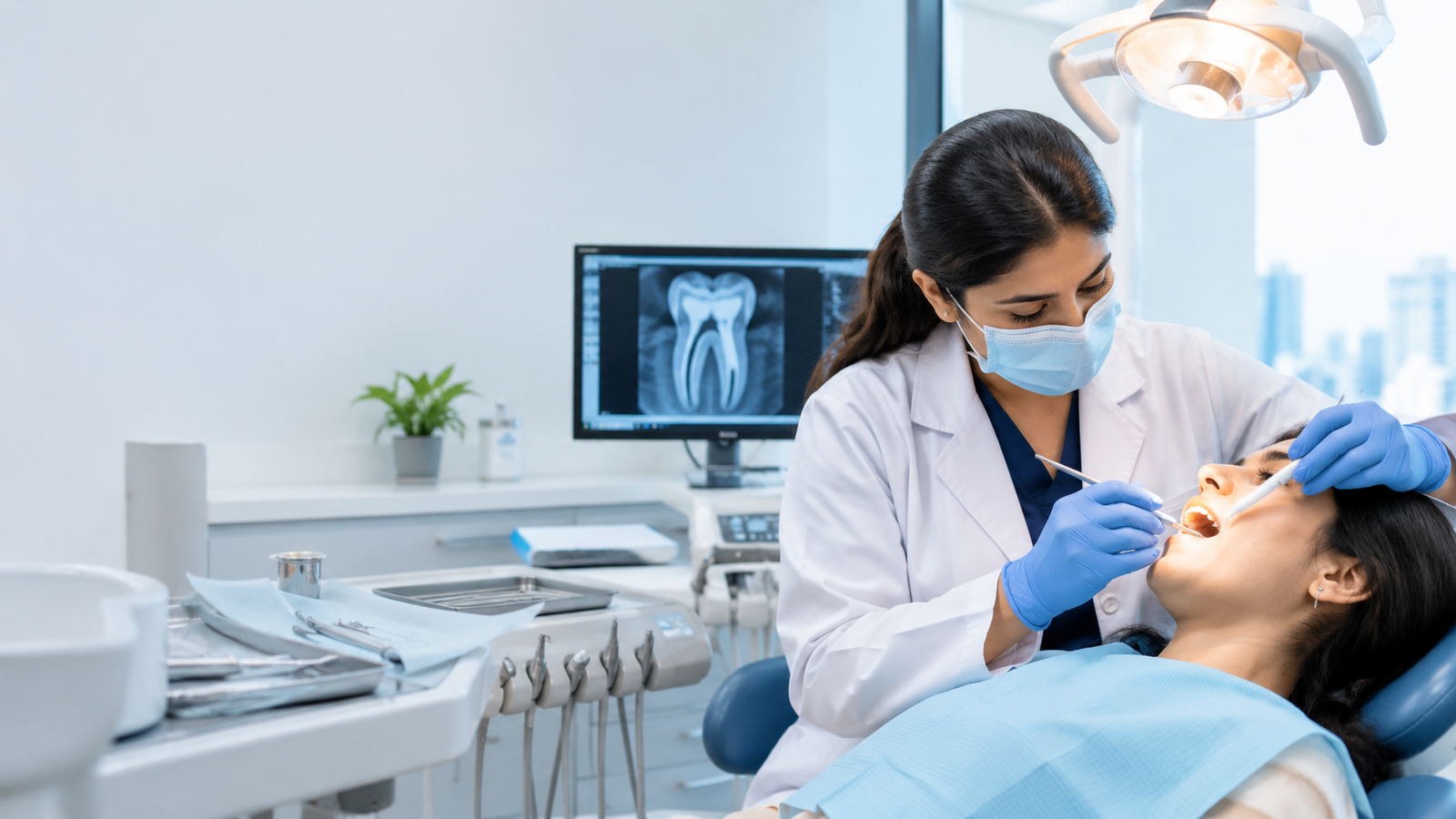
A balanced smile depends on more than just the shape and colour of your teeth. The gum line also plays an important role in how your smile looks. If too much gum tissue covers your teeth, your gum line appears uneven, or you have a “gummy smile,” gum reshaping may help create a more proportionate appearance.
But can laser dentistry be used for gum reshaping?
Yes. Laser dentistry can be used for certain gum reshaping procedures, including laser gingivectomy and laser-assisted gum contouring. During treatment, a dental professional uses a dental laser to remove or reshape excess gum tissue and create a more even gum line. The exact approach depends on the amount of gum tissue present, the health of the gums, tooth proportions and the underlying bone structure.
At The Dental Crowns in Noida, laser dentistry is one of the clinic’s surgical dentistry services, with laser technology used for selected dental and gum procedures.
What Is Gum Reshaping?
Gum reshaping, also called gum contouring or gingivoplasty, is a dental procedure designed to change the shape or position of the gum line.
Some people naturally have more gum tissue covering their teeth. In other cases, gum enlargement can be associated with inflammation, certain medications, orthodontic treatment or other factors.
When excess gum tissue makes the teeth look unusually short or creates an uneven gum line, a dentist may evaluate whether gum contouring is appropriate.
According to Cleveland Clinic, gum contouring removes excess gum tissue and reshapes the gum line to create a more uniform appearance.
For patients interested in improving their overall smile, gum reshaping may sometimes be considered alongside other cosmetic dental treatments. You can explore the Smile Makeover services available at The Dental Crowns.
How Can Laser Dentistry Be Used for Gum Reshaping?
Laser dentistry uses concentrated light energy to interact with soft tissue. In appropriate cases, a dental laser can be used to remove excess gum tissue and carefully reshape the gum margin.
A common application is laser gingivectomy, in which excess or overgrown gum tissue is removed using a dental laser.
During a laser gum reshaping procedure, the dentist may:
- Examine the teeth and gums.
- Assess the existing gum line and tooth proportions.
- Identify how much gum tissue should be reshaped.
- Use local anesthesia when necessary.
- Carefully remove or reshape excess gum tissue using an appropriate laser.
- Check the symmetry and contour of the gum line.
- Provide aftercare instructions.
The treatment plan is individualized because not every uneven gum line has the same underlying cause.
Is Laser Gum Reshaping the Same as Laser Gingivectomy?
The terms are related, but they are not always interchangeable.
Laser gingivectomy generally refers to removing excess or overgrown gum tissue. It can be performed for certain gum conditions as well as cosmetic concerns such as a gummy smile.
Gingivoplasty, on the other hand, focuses more specifically on reshaping the gum tissue and creating a more desirable contour.
Cleveland Clinic explains that gingivectomy involves removal of excess or overgrown gum tissue, while gingivoplasty involves reshaping the gum line.
Your dentist will determine which procedure, or combination of procedures, is appropriate after examining your gums and teeth.
Who May Benefit From Laser Gum Reshaping?
Laser gum reshaping may be considered for people who have:
- Excess gum tissue covering part of the teeth
- An uneven gum line
- A gummy smile caused partly by excess gum tissue
- Enlarged or overgrown gum tissue
- Gum tissue that makes teeth appear unusually short
- Certain cases of gum enlargement associated with orthodontic treatment
- Specific cosmetic concerns involving gum-to-tooth proportions
However, having a gummy smile does not automatically mean that laser gum reshaping is the right treatment.
The appearance of excessive gums can have different causes, including tooth position, lip movement, gum tissue, or the underlying bone. Cleveland Clinic notes that a dentist evaluates factors such as the gum-to-tooth ratio, lip position, tooth wear and facial bone structure when planning gum contouring.
That is why a professional dental examination is important before choosing treatment.
What Are the Benefits of Laser Gum Reshaping?
When appropriate for the patient, laser treatment can offer several potential advantages.
1. Precise Gum Contouring
A dental laser can allow the dentist to work carefully around the gum margin. Precision is particularly important when the goal is to create a symmetrical smile.
2. Less Invasive Soft-Tissue Treatment
Depending on the procedure and the patient’s condition, laser treatment may involve less conventional cutting than some traditional surgical techniques.
3. Reduced Bleeding During Certain Procedures
Laser energy can interact with soft tissue and help control bleeding during treatment. Cleveland Clinic notes that laser gingivectomy may not require sutures in some cases because the laser can seal the tissue.
4. Potentially Comfortable Treatment
Laser dentistry may be used as a minimally invasive approach in selected dental procedures. However, the level of comfort varies between patients and procedures, and local anesthesia may still be used.
5. Improved Gum-Line Appearance
For suitable cosmetic cases, reshaping excess gum tissue can make the teeth appear more proportionate and the gum line more symmetrical.
Can Laser Gum Reshaping Fix a Gummy Smile?
In some cases, yes.
A gummy smile can occur when excess gum tissue covers more of the teeth than expected. If excess gum tissue is the primary cause, gum contouring or laser gingivectomy may be considered.
However, a gummy smile is not always caused by excess gums.
Other contributing factors may include:
- Tooth eruption and tooth proportions
- Position of the teeth
- Movement or position of the upper lip
- Jaw structure
- Excessive vertical growth of the upper jaw
- The relationship between the gums, teeth and lips
This means laser gum reshaping should not be treated as a universal solution for every gummy smile.
Your dentist needs to identify the cause before recommending treatment.
Is Laser Gum Reshaping Painful?
Many patients are concerned about discomfort when they hear the word “gum surgery.”
Laser treatment can be designed to minimize tissue trauma in appropriate cases, but laser dentistry does not automatically mean completely painless treatment.
The dentist may use local anesthesia to keep the treatment area comfortable. After the procedure, some patients may experience temporary soreness, sensitivity or mild discomfort while the gums heal.
Your dentist can explain the expected level of discomfort based on the procedure planned for you.
How Long Does It Take to Heal After Gum Reshaping?
Healing time varies depending on how much gum tissue was treated, the technique used and the patient’s individual healing response.
Cleveland Clinic states that gum contouring generally heals within about a week for many patients, although individual recovery can vary.
During recovery, your dentist may recommend:
- Keeping the treated area clean according to their instructions
- Eating softer foods for a short period
- Avoiding hard or crunchy foods
- Avoiding activities that could irritate the treated gums
- Following any prescribed medication instructions
- Attending the recommended follow-up appointment
Do not rely on a generic recovery timeline if your dentist provides different instructions for your specific procedure.
Is Laser Gum Reshaping Safe?
Laser gum reshaping can be an appropriate treatment for selected patients when performed by a qualified dental professional using suitable equipment and technique.
However, like other dental procedures, it has potential risks.
Possible complications can include:
- Temporary discomfort
- Swelling
- Bleeding
- Infection
- Changes in gum appearance
- Gum tissue regrowth in some cases
- The need for additional treatment
Cleveland Clinic notes that infection and relapse or regrowth of gum tissue are among the possible complications of gum contouring.
This is why proper diagnosis and treatment planning are more important than simply choosing a laser because it is marketed as a newer technology.
Laser Gum Reshaping vs Traditional Gum Contouring
Both laser and conventional techniques can be used to reshape gum tissue.
The main difference is the instrument and technique used to remove or reshape the tissue.
| Feature | Laser Gum Reshaping | Traditional Gum Contouring |
|---|---|---|
| Main instrument | Dental laser | Surgical instruments |
| Soft-tissue reshaping | Yes | Yes |
| Possible bleeding control | Laser may help control bleeding | Conventional bleeding-control methods |
| Sutures | May not be necessary in some laser procedures | May be required depending on procedure |
| Recovery | Depends on treatment | Depends on treatment |
| Suitable for every patient? | No | No |
| Treatment choice | Based on clinical assessment | Based on clinical assessment |
The best technique is not necessarily the one that sounds more advanced. Your dentist should select the method based on your gum health, anatomy, treatment objectives and clinical requirements.
Does Gum Reshaping Require Bone Removal?
Not always.
In some patients, excess gum tissue is the main issue and only the soft tissue needs to be reshaped.
In other situations, the position of the underlying bone can influence the final gum line. Cleveland Clinic explains that some patients undergoing gum contouring may require a small amount of bone reshaping, depending on their anatomy.
If bone reshaping is necessary, a simple soft-tissue laser procedure may not be sufficient.
This is another reason why an examination is essential before deciding on treatment.
What Happens During a Laser Gum Reshaping Consultation?
A consultation usually begins with an examination of your teeth and gums.
Your dentist may evaluate:
- The amount of visible gum tissue
- Gum health
- Gum-to-tooth proportions
- Tooth shape and position
- Existing dental restorations
- Smile symmetry
- Lip position and movement
- Underlying bone levels when clinically necessary
If you have active gum disease, cavities or another oral health problem, those conditions may need to be addressed before cosmetic gum reshaping.
The goal is not simply to remove as much gum tissue as possible. The goal is to create a healthy and proportionate relationship between the gums and teeth.
Can Laser Dentistry Be Used for Gum Disease Too?
Yes, lasers have applications in periodontal treatment as well.
Laser periodontal therapy may be used in selected cases to target diseased tissue and bacteria around the gums. However, treatment depends on the severity and type of periodontal disease.
The American Dental Association recognizes laser applications in periodontics, while Cleveland Clinic notes that laser periodontal therapy can be used in some cases of gum disease.
It is important to distinguish laser gum reshaping for cosmetic purposes from laser periodontal treatment for gum disease. They are different clinical applications.
If you are experiencing bleeding gums, swelling or persistent bad breath, you should have your gums examined rather than assuming that cosmetic gum reshaping is the answer.
Can Gum Reshaping Be Combined With Other Cosmetic Dental Treatments?
Sometimes.
Depending on your smile goals, gum reshaping may be considered as part of a broader smile makeover. Other treatments may include veneers, teeth whitening or dental crowns.
For example, after gum reshaping, the visible proportions of the teeth may change. Your dentist can therefore assess whether additional cosmetic dentistry is appropriate.
The Dental Crowns provides several cosmetic dentistry options, including veneers, teeth whitening and porcelain crowns.
You can also explore the clinic’s Dental Implants service if missing teeth are another concern affecting your smile.
When Should You See a Dentist About Your Gum Line?
Consider arranging a dental consultation if you notice:
- Too much gum showing when you smile
- An uneven gum line
- Teeth that appear unusually short because of gum coverage
- Persistent gum swelling
- Gum enlargement
- Bleeding while brushing
- Persistent bad breath
- Changes in the appearance of your gums
Not every gum problem requires surgery. Some cases of gum enlargement may improve after addressing plaque, inflammation or other underlying causes.
Cleveland Clinic notes that gum overgrowth can have several causes, including inflammation, medications, orthodontic treatment and genetics.
Frequently Asked Questions About Laser Gum Reshaping
Can laser dentistry be used for gum reshaping?
Yes. Dental lasers can be used for selected gum reshaping procedures, including laser gingivectomy. The suitability of laser treatment depends on the patient’s gum health, anatomy and treatment goals.
Is laser gum reshaping the same as gingivectomy?
Not exactly. Gingivectomy generally involves removing excess gum tissue, while gingivoplasty focuses on reshaping the gum line. A laser may be used for either type of soft-tissue treatment depending on the clinical situation.
Can laser gum contouring fix a gummy smile?
It can help when excess gum tissue is a major cause of the gummy smile. However, gummy smiles can have other causes, so a dental examination is necessary before selecting treatment.
Does laser gum reshaping hurt?
Local anesthesia may be used to keep the procedure comfortable. Some temporary soreness or sensitivity can occur afterward. The amount of discomfort varies according to the treatment and individual patient.
How long does laser gum reshaping take to heal?
Healing varies from patient to patient. Many gum-contouring patients heal within approximately a week, but your dentist should provide a recovery plan specific to your procedure.
Can gums grow back after laser reshaping?
Gum tissue can sometimes regrow or the original problem can recur. The likelihood depends on the underlying cause and the treatment performed.
Is laser gum reshaping better than traditional gum surgery?
Not automatically. Laser treatment can offer advantages in selected cases, but the appropriate technique depends on the patient’s anatomy, gum condition and treatment objective.
Can laser dentistry treat gum disease?
Lasers have applications in periodontal treatment, but they are not a universal replacement for conventional periodontal care. Your dentist or periodontist should determine the most appropriate treatment.
How do I know if I am a candidate for laser gum reshaping?
A dentist needs to examine your gums, teeth and smile to determine whether excess gum tissue is actually causing the concern and whether laser reshaping is appropriate.
Final Thoughts: Can Laser Dentistry Be Used for Gum Reshaping?
Yes, laser dentistry can be used for gum reshaping in selected cases. Laser gingivectomy and laser-assisted gum contouring can help remove or reshape excess gum tissue and improve the appearance of an uneven gum line.
However, the most important step is identifying why the gum line looks uneven or why too much gum is visible. A gummy smile may result from excess gum tissue, tooth position, lip movement, jaw structure or a combination of factors.
A personalized dental examination can help determine whether laser gum reshaping, traditional gum contouring, crown lengthening or another treatment is more appropriate.
If you are considering laser dentistry or gum reshaping in Noida, The Dental Crowns offers advanced clinical laser dentistry as part of its surgical dentistry services. The clinic is located at Civitech Stadia, Sector 79, Noida.
Book a consultation with The Dental Crowns to discuss your gum-line concerns and find out which treatment may be suitable for your smile.