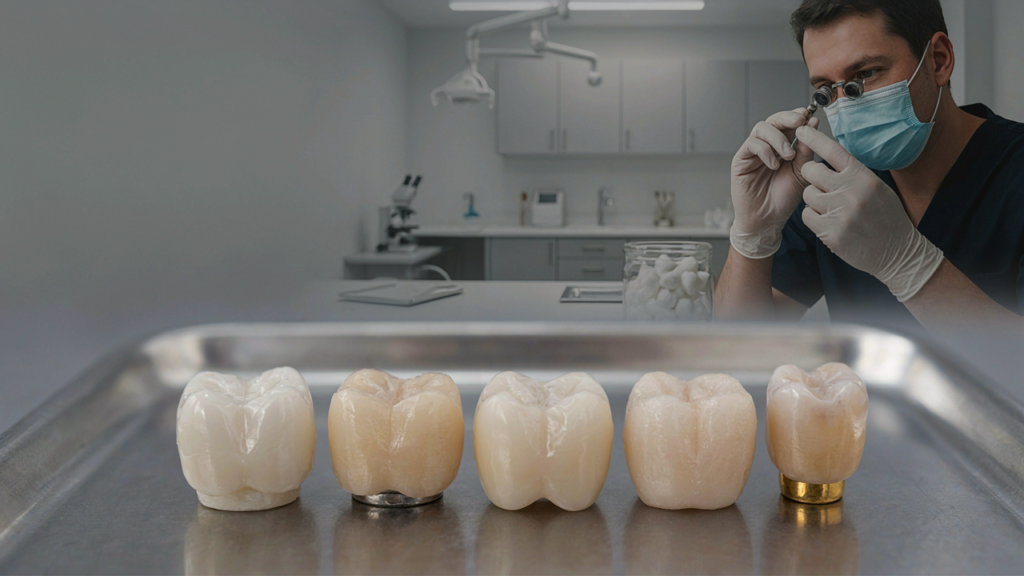
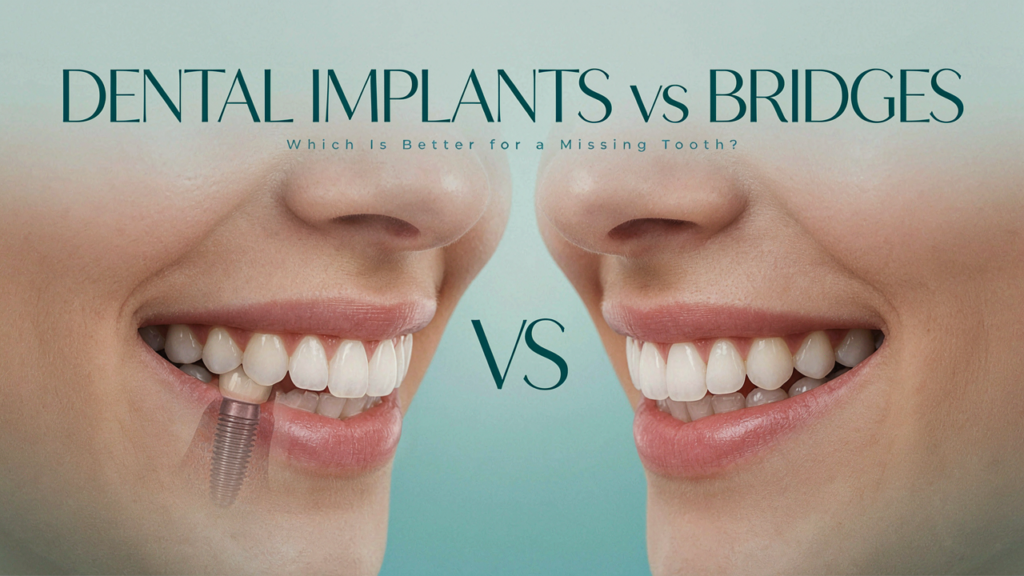
A damaged tooth can affect more than your smile. It may cause discomfort while chewing, sensitivity, or concerns about the appearance of your teeth. When a tooth needs additional protection, a dental crown may be recommended to restore its shape, strength, and function.
Today, patients have several dental crown options to discuss with their dentist, including metal-free crowns made from materials such as zirconia and dental ceramics. These restorations are designed to provide a tooth-coloured appearance without a metal framework.
If you are searching for metal-free dental crowns near Sector 74 Noida, understanding the available materials, their benefits, and their limitations can help you prepare for an informed consultation.
At The Dental Crowns, located at Civitech Stadia, Sector 79, Noida, patients can explore restorative dental treatment options based on their individual dental needs.
What Are Metal-Free Dental Crowns?
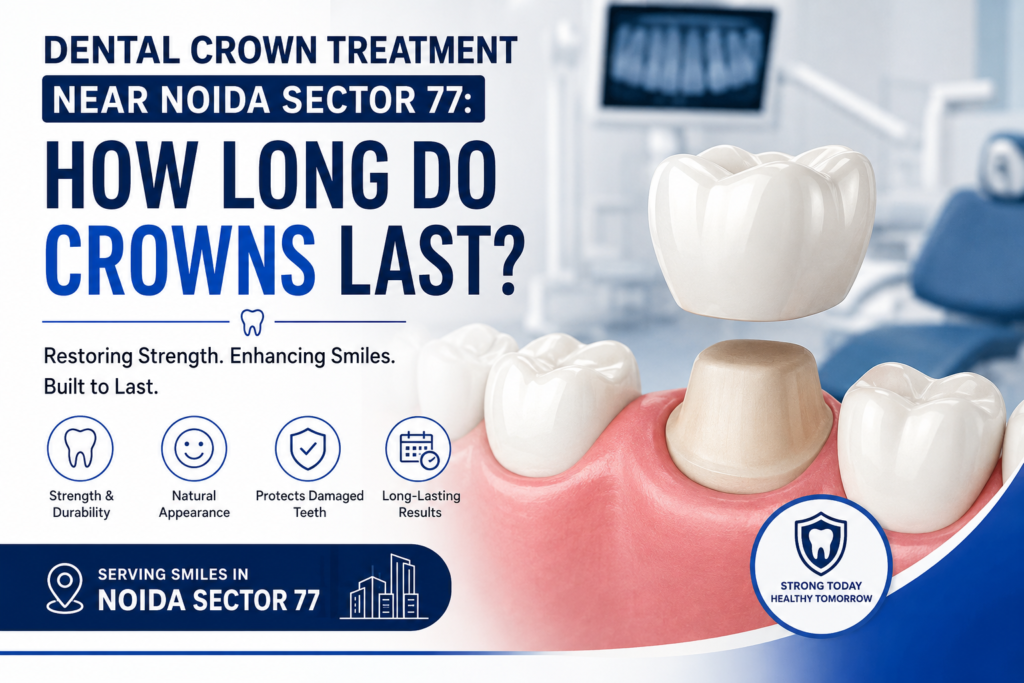
A dental crown is a custom-made restoration that covers the visible portion of a tooth. Dentists may recommend one when a tooth is significantly weakened, damaged, cracked, or extensively restored.
Metal-free dental crowns are restorations made without a metal substructure. Depending on the clinical situation, they may be fabricated from zirconia, lithium disilicate, or other dental ceramic materials.
Unlike traditional metal crowns, metal-free crowns can be designed to blend with the colour and appearance of surrounding teeth.
However, not all ceramic materials have identical properties. Their strength, translucency, suitability, and performance depend on the material selected and the individual patient’s bite and dental condition.
Which Types of Metal-Free Dental Crowns Are Available?
1. Zirconia Dental Crowns
Zirconia is a ceramic material known for its strength and resistance to fracture when appropriately selected and designed.
A zirconia crown may be considered for certain front or back teeth, depending on the type of zirconia, the amount of available tooth structure, and the forces placed on the tooth during chewing.
Potential advantages include:
- A tooth-coloured appearance.
- Good strength for appropriately selected cases.
- No metal framework.
- Suitability for some teeth exposed to substantial chewing forces.
One important consideration is that different zirconia formulations have different aesthetic and mechanical properties. Your dentist can explain which type may suit your tooth.
2. Lithium Disilicate and Other Glass-Ceramic Crowns
Some glass-ceramic materials, including lithium disilicate, are valued for their natural-looking appearance and translucency.
These materials may be considered when matching the colour and appearance of neighbouring teeth is particularly important.
Their suitability depends on the location of the tooth, remaining tooth structure, bite, and restoration design. They are not automatically the best choice for every patient.
3. Other All-Ceramic Crowns
Other dental ceramic materials may also be used for crowns, depending on the treatment plan and the laboratory or restorative system selected.
The most appropriate material should be chosen after examining the tooth rather than simply selecting the option described as the most advanced or attractive.
What Are the Benefits of Metal-Free Dental Crowns?
Metal-free crowns can offer several advantages for suitable patients.
A More Natural-Looking Smile
One of the main reasons patients consider metal-free crowns is their appearance. Tooth-coloured ceramic materials can be selected to complement the shade, shape, and size of nearby teeth.
This may be especially relevant when restoring a front tooth or another tooth that is visible when smiling.
No Metal Framework
Metal-free crowns do not have the metal substructure used in porcelain-fused-to-metal crowns. Patients who prefer a restoration without a metal framework may find this an important consideration.
Options for Different Dental Needs
Zirconia and other ceramic materials have different characteristics, giving dentists options for various restorative situations.
The appropriate choice depends on the tooth’s location, the amount of remaining healthy structure, aesthetic requirements, and bite forces.
Potentially Suitable for Patients With Certain Metal Sensitivities
Some patients have concerns about sensitivity or reactions to particular dental metals. A metal-free restoration may be worth discussing with a dentist in such cases.
However, suspected metal allergy or sensitivity should be assessed appropriately. A metal-free crown does not guarantee that every possible material-related reaction will be avoided.
Are Metal-Free Dental Crowns Suitable for Everyone?
No. Although metal-free crowns can be an excellent option for selected cases, they are not necessarily suitable for every damaged tooth.
Before recommending a crown, a dentist may assess:
- The amount of healthy tooth structure remaining.
- The location of the tooth.
- The condition of the surrounding gums.
- Whether decay, cracks, or infection are present.
- Your bite and chewing forces.
- Whether you grind or clench your teeth.
- Your aesthetic expectations.
- Your overall oral health and treatment budget.
For example, a patient who wants to restore a visible front tooth may have different priorities from someone who needs to restore a heavily loaded back tooth.
In some situations, a metal-free crown may be appropriate. In others, a different crown material or a less extensive restoration may be more suitable.
A dental examination is necessary to determine the right approach.
Metal-Free vs Metal-Based Dental Crowns: What Is the Difference?
| Feature | Metal-free crowns | Metal-based or porcelain-fused-to-metal crowns |
|---|---|---|
| Appearance | Usually tooth-coloured throughout | May have a metal framework beneath the outer layer |
| Aesthetic considerations | Often preferred when natural appearance is important | Appearance depends on the design and material |
| Material choices | Zirconia and various dental ceramics | Dental alloys or metal frameworks with ceramic coverings |
| Strength | Depends on the ceramic material and design | Depends on the alloy, ceramic layer, and design |
| Best option | Depends on tooth location and clinical needs | Depends on tooth location and clinical needs |
There is no single material that is best for every patient. The goal is to choose a restoration that balances appearance, function, durability, and the condition of the tooth.
What Is the Procedure for Getting a Metal-Free Dental Crown?
If your dentist determines that a metal-free crown is appropriate, treatment generally involves several stages.
Step 1: Dental Examination
The dentist examines the tooth and surrounding tissues. X-rays may be recommended when needed to assess decay, the roots, or other underlying concerns.
Step 2: Treatment Planning and Material Selection
Your dentist explains whether a crown is necessary and discusses the suitable materials, expected appearance, treatment stages, and cost.
Step 3: Tooth Preparation
If a crown is required, the tooth is prepared to create space for the restoration. The amount of preparation depends on the tooth’s condition and the crown design.
Step 4: Impression or Digital Scan
An impression or digital scan is taken so that the crown can be fabricated to fit the prepared tooth.
A temporary crown may be placed while the final restoration is being made, depending on the treatment process.
Step 5: Crown Placement
The dentist checks the fit, appearance, and bite before securing the final crown. Any necessary adjustments are made to help the restoration function comfortably.
The exact number of visits and treatment timeline depend on the case and the fabrication process.
How Much Do Metal-Free Dental Crowns Cost Near Sector 74 Noida?
The cost of metal-free dental crowns in Noida varies according to several factors, including:
- The material used, such as zirconia or another ceramic.
- The tooth being restored.
- The complexity of the treatment.
- Whether additional treatment is required.
- The laboratory and fabrication process.
- The dentist’s treatment plan and follow-up requirements.
A crown’s price alone does not establish whether it is the right option for your tooth.
When comparing treatment plans, ask for a clear explanation of the recommended material, what the quoted fee includes, whether a temporary crown is required, and whether any additional procedures will be necessary.
For an accurate estimate, arrange a dental consultation rather than relying on a generic online price.
Where Can You Explore Metal-Free Dental Crowns Near Sector 74 Noida?
If you live or work in Sector 74, choosing a dental clinic in the surrounding Noida area may make consultations and follow-up appointments more convenient.
The Dental Crowns is located at Civitech Stadia, Sector 79, Noida. Patients can contact the clinic to discuss their dental concerns and ask whether a metal-free crown may be appropriate for their situation.
Before beginning treatment, ask your dentist to explain the available crown materials, their advantages and limitations, and why a particular restoration is recommended for your tooth.
You can also explore the clinic’s information about porcelain dental crowns in Noida and its dental services.
Frequently Asked Questions
1. Are metal-free dental crowns better than metal crowns?
Not in every situation. Metal-free crowns can offer aesthetic advantages, while other materials may be appropriate for different clinical requirements. The best choice depends on the tooth, bite, remaining structure, and treatment goals.
2. Are zirconia crowns completely metal-free?
Yes. Zirconia dental crowns are made from a ceramic material rather than a metal alloy. The precise material and design should still be confirmed with your dentist.
3. Can I get a metal-free crown on a back tooth?
In some cases, yes. Certain zirconia crowns may be suitable for back teeth, but the dentist must consider chewing forces, bite, tooth structure, and the specific crown material.
4. Can a metal-free crown be placed after root canal treatment?
A crown may be recommended after root canal treatment when the remaining tooth structure needs additional protection. However, not every root-canal-treated tooth automatically requires a crown. The decision depends on the tooth’s condition and the amount of remaining structure.
5. How long do metal-free dental crowns last?
Their lifespan varies according to the material, crown design, bite forces, oral hygiene, and regular dental care. No specific lifespan can be guaranteed for an individual crown.
6. Are metal-free crowns suitable for patients who grind their teeth?
They may be suitable in selected cases, but grinding and clenching can increase the risk of damage to dental restorations. Your dentist should assess your bite and may recommend protective measures, such as a night guard, when appropriate.
7. Where can I ask about metal-free dental crowns near Sector 74 Noida?
You can contact The Dental Crowns at Civitech Stadia, Sector 79, Noida, to discuss consultation options and the crown materials that may be available for your case.
Final Thoughts
Metal-free dental crowns can be a suitable option for patients who want a tooth-coloured restoration and need to protect or rebuild a damaged tooth. Zirconia and other ceramic materials offer different combinations of strength and appearance, so the right choice depends on the individual clinical situation.
If you are considering metal-free dental crowns near Sector 74 Noida, begin with a dental examination. Understanding the condition of your tooth, the available materials, and the reasons behind your dentist’s recommendation will help you make a more informed decision.
Contact The Dental Crowns in Sector 79, Noida, to discuss your restorative dental needs and explore the options appropriate for your smile.
Medical disclaimer: This article is for general educational purposes only. It does not replace a dental examination, diagnosis, or individual treatment advice from a qualified dental professional.