
Are you searching for root canal treatment near Noida Sector 79 because of persistent tooth pain, sensitivity, swelling, or discomfort while chewing? A damaged or infected tooth can make eating, sleeping, and even daily activities uncomfortable. The good news is that modern root canal treatment can often help remove infection, relieve symptoms, and preserve your natural tooth.
If you are looking for a reliable dental clinic in Sector 79, Noida, The Dental Crowns provides painless root canal treatment along with comprehensive dental care. The clinic is located at Civitech Stadia, Sector 79, Noida.
In this guide, you will learn about root canal treatment cost in Noida Sector 79, the RCT procedure, signs you may need treatment, benefits, recovery, and why timely dental care matters.
What Is Root Canal Treatment?
Root canal treatment, also called RCT or endodontic treatment, is a dental procedure used to treat infection or inflammation inside the pulp of a tooth.
The pulp contains nerves and blood vessels. When deep tooth decay, cracks, trauma, or repeated dental procedures damage the pulp, bacteria can enter and cause infection.
During an RCT, the dentist removes the infected or inflamed pulp, cleans and disinfects the root canals, fills and seals them, and then restores the tooth.
According to the American Association of Endodontists, root canal treatment is designed to eliminate infection and help save the natural tooth. American Association of Endodontists – What Is a Root Canal?
For patients searching for root canal treatment in Noida Sector 79, early diagnosis can be important because an untreated infection may become more complicated.
Signs You May Need Root Canal Treatment
Not every toothache means you need an RCT. A dentist needs to examine the tooth and determine the underlying cause.
However, several symptoms may indicate that your tooth needs professional evaluation.
Common signs include:
- Persistent or severe toothache
- Pain while chewing or biting
- Lingering sensitivity to hot or cold
- Swelling around the tooth or gums
- Tender gums
- A pimple or boil on the gums
- Deep tooth decay
- A cracked or chipped tooth
- Tooth discoloration
- Recurring pain after previous dental treatment
The American Association of Endodontists lists symptoms such as severe pain when chewing, prolonged hot/cold sensitivity, swollen gums, deep decay, and gum pimples among signs associated with teeth that may require endodontic treatment.
American Association of Endodontists – Root Canal Explained
If you have persistent symptoms, do not rely only on home remedies or painkillers. A dental examination can help determine whether you need a filling, root canal, crown, extraction, or another treatment.
Why Do People Need Root Canal Treatment?
Several dental problems can damage the pulp and create the need for root canal treatment.
1. Deep Tooth Decay
When a cavity becomes very deep, bacteria can reach the pulp. At this stage, a simple filling may no longer be sufficient.
2. Cracked or Broken Tooth
A crack can provide a pathway for bacteria to reach the inner part of the tooth.
3. Dental Trauma
An accident or injury can damage the pulp even when the tooth does not appear badly broken.
4. Repeated Dental Procedures
A tooth that has undergone multiple procedures may sometimes develop pulp problems.
5. Dental Abscess
An untreated infection can lead to an abscess around the tooth or gums.
The NHS explains that root canal treatment is used to remove infection from inside the tooth and seal it to help prevent reinfection. NHS – Root Canal Treatment
Root Canal Treatment Procedure: Step-by-Step
If your dentist confirms that you require an RCT, understanding the process can make the treatment feel much less stressful.
Step 1: Dental Examination
The dentist first examines your tooth and discusses your symptoms.
Depending on your condition, dental X-rays or other diagnostic tests may be used to understand the tooth and surrounding structures.
The goal is to determine whether root canal treatment is actually required.
Step 2: Local Anesthesia
Before starting the procedure, the treatment area is numbed with local anesthesia.
This helps keep the procedure comfortable.
Modern root canal treatment is generally performed under anesthesia, and reputable endodontic sources describe the procedure as comfortable for most patients. American Association of Endodontists – Root Canal Treatment
Step 3: Creating Access to the Tooth
The dentist creates a small opening in the tooth to access the infected pulp and root canal system.
Step 4: Removing the Infected Pulp
The damaged or infected pulp is carefully removed from inside the tooth.
This is an important part of controlling the source of infection.
Step 5: Cleaning and Disinfecting the Root Canals
The root canals are carefully cleaned, shaped, and disinfected.
This helps remove bacteria and infected material from the canal system.
Step 6: Filling and Sealing the Canals
After the canals have been cleaned, they are filled with an appropriate material and sealed.
The purpose is to help prevent bacteria from entering the treated canal again.
Step 7: Restoring the Tooth
After an RCT, the tooth may require a permanent filling or dental crown depending on its condition.
A badly weakened tooth may need a crown for additional protection. Cleveland Clinic also notes that a permanent crown may be placed after root canal treatment to protect and restore the tooth. Cleveland Clinic – Root Canal
Learn more about Porcelain Dental Crowns offered by The Dental Crowns.
Is Root Canal Treatment Painful?
This is one of the most common concerns among people searching for painless root canal treatment in Noida Sector 79.
Modern RCT is performed using local anesthesia, which numbs the treatment area. According to the American Association of Endodontists, modern root canal treatment is generally comfortable for most patients. Some mild soreness or sensitivity may occur after treatment as the area heals. American Association of Endodontists – Root Canal Pain Management
The Dental Crowns offers painless root canal treatment in Sector 79, Noida, with a focus on patient comfort and modern dental technology.
Painless Root Canal Treatment in Noida
It is important to remember that every patient’s experience is different. The level of discomfort can depend on the severity of infection, tooth condition, individual sensitivity, and complexity of the treatment.
Root Canal Treatment Cost in Noida Sector 79
One of the most searched questions is:
“How much does root canal treatment cost in Noida Sector 79?”
There is no single RCT price that applies to every patient.
The total cost can vary depending on several factors.
Factors that can affect RCT cost include:
- Type of tooth being treated
- Front tooth, premolar, or molar
- Number of root canals
- Complexity of the canal anatomy
- Severity of infection
- Whether the tooth requires retreatment
- Diagnostic requirements
- Type of restoration required
- Whether a dental crown is needed
- Overall complexity of the case
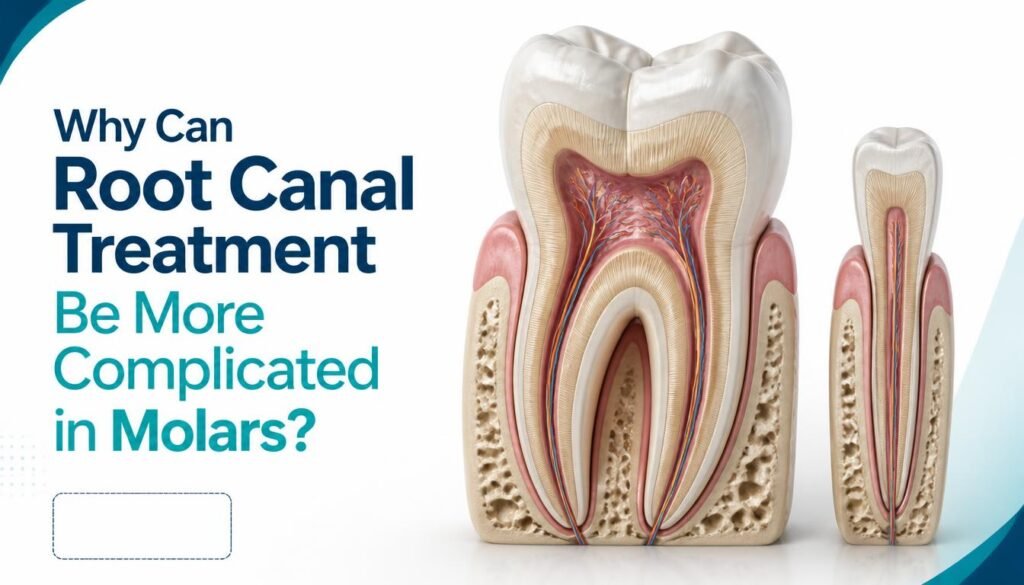
A molar root canal can be more complex than treatment of a front tooth because molars generally have more complicated root and canal anatomy.
Therefore, instead of choosing a clinic solely because it advertises the cheapest root canal treatment in Noida, it is better to have the tooth examined and receive a case-specific treatment estimate.
The American Association of Endodontists also notes that the cost of root canal treatment varies depending on the affected tooth and complexity of the problem. AAE – What Is a Root Canal?
Does the RCT cost include the dental crown?
Not necessarily.
Root canal treatment and the final restoration are separate parts of treatment. Depending on the tooth’s condition, your dentist may recommend a permanent filling or a dental crown after the RCT.
If a crown is recommended, ask your dentist whether the quoted treatment cost includes the crown or whether it is charged separately.
Benefits of Root Canal Treatment
Root canal treatment has an important advantage: it can help preserve your natural tooth when the tooth is suitable for restoration.
1. Helps Save Your Natural Tooth
Instead of immediately extracting an infected tooth, RCT can remove the infected pulp while allowing the remaining tooth structure to be retained.
2. Helps Relieve Tooth Pain
When the source of pain is infected or inflamed pulp, treating the underlying problem can help relieve toothache.
3. Helps Control Infection
Cleaning and sealing the root canal system helps remove infected material and reduce the risk of continued infection.
4. Restores Chewing Function
Once the tooth has been properly restored, it can function as part of your normal bite.
5. Maintains Your Natural Smile
Preserving a natural tooth can help maintain your existing smile and tooth arrangement.
6. May Help Avoid Extraction
When a tooth can be predictably treated and restored, RCT may allow you to avoid extraction and the additional treatment that may be needed to replace a missing tooth.
The American Association of Endodontists highlights preserving natural teeth, maintaining chewing function, and reducing the need for additional dental work among the benefits of endodontic treatment. AAE – Benefits of Root Canal Treatment
How Long Does Root Canal Treatment Take?
The duration of RCT depends on the tooth and the complexity of the case.
Some root canal treatments can be completed in one appointment, while others may require multiple visits.
For example, treatment may take longer if:
- The tooth has a complicated canal structure
- There is significant infection
- The tooth requires retreatment
- Additional procedures are needed
- A final crown or restoration needs to be placed
Cleveland Clinic notes that many root canals take around 60–90 minutes, although some cases require more than one visit.
Cleveland Clinic – Root Canal
Your dentist can provide a more accurate estimate after examining your tooth.
What Happens After a Root Canal?
Some patients experience mild sensitivity or soreness after treatment.
This can happen as the tissues around the treated tooth recover.
After your RCT, your dentist may advise you to:
- Follow your dentist’s aftercare instructions
- Avoid chewing hard foods on the treated tooth until it is permanently restored
- Attend the recommended follow-up appointment
- Maintain regular brushing and flossing
- Return for your permanent crown or restoration if recommended
The American Association of Endodontists recommends following post-treatment instructions and contacting your dentist or endodontist if you experience concerning symptoms. AAE – Post Treatment Care
If pain becomes severe, continues to worsen, or does not improve as expected, contact your dental professional.
Why You Should Not Delay Root Canal Treatment
If an infected tooth is left untreated, the problem may become more serious.
Pain may sometimes decrease temporarily, but that does not necessarily mean the infection has disappeared.
An untreated pulp infection can progress and may result in an abscess or, in some cases, tooth loss.
NHS – Root Canal Treatment
Getting the tooth examined early can help your dentist determine the most appropriate treatment.
If you are experiencing persistent tooth pain, swelling, prolonged sensitivity, or pain while chewing, consider scheduling a dental consultation.
Why Choose The Dental Crowns for Root Canal Treatment?
When choosing a dental clinic for RCT, consider factors such as the dentist’s experience, diagnostic approach, technology, treatment options, patient comfort, and follow-up care.
The Dental Crowns highlights:
- Painless root canal treatment
- Modern dental technology
- Laser-assisted treatment options
- Patient-focused dental care
- Comprehensive dental services
- Convenient Sector 79 location
The clinic’s dedicated painless RCT service page describes its approach to comfort and the use of advanced laser technology.
The Dental Crowns – Painless Root Canal Treatment
Frequently Asked Questions About Root Canal Treatment Near Noida Sector 79
1. What is the cost of root canal treatment in Noida Sector 79?
The cost depends on the tooth, number and complexity of canals, infection severity, diagnostic requirements, and whether a crown or other restoration is required. A dental examination is recommended for an accurate estimate.
2. Is root canal treatment painful?
Modern RCT is performed under local anesthesia and is generally comfortable for most patients. Mild soreness or sensitivity can occur after treatment.
3. Can a root canal save my natural tooth?
Yes. When a tooth has sufficient healthy structure and can be restored, root canal treatment can help preserve the natural tooth.
4. How many visits are required for an RCT?
Some cases can be completed in one appointment, while other cases require multiple visits depending on infection, tooth anatomy, and treatment complexity.
5. Will I need a crown after root canal treatment?
Not every tooth requires a crown. Your dentist will assess the amount of remaining tooth structure, tooth location, bite, and overall condition before recommending the final restoration.
6. What happens if I delay a root canal?
If the tooth has an untreated infection, the infection can progress and may lead to an abscess or tooth loss.
7. Can I eat normally after an RCT?
Your dentist may recommend avoiding chewing on the treated tooth until the permanent restoration has been placed. Follow your dentist’s specific instructions.
8. Is painless RCT available in Sector 79, Noida?
Yes. The Dental Crowns provides painless root canal treatment at its clinic in Civitech Stadia, Sector 79, Noida.
9. Is RCT better than tooth extraction?
When a tooth can be successfully treated and restored, saving the natural tooth is often an important goal. Your dentist should evaluate the tooth and explain whether RCT, extraction, or another option is appropriate.
10. Should I see a dentist for tooth sensitivity?
Persistent or prolonged sensitivity, especially when accompanied by pain, swelling, or discomfort while chewing, should be evaluated by a dental professional.
Final Takeaway
If you are searching for root canal treatment near Noida Sector 79, don’t ignore persistent tooth pain, sensitivity, swelling, or discomfort while chewing.
Root canal treatment can help remove infection, relieve symptoms, and preserve your natural tooth when the tooth is suitable for treatment and restoration.
The cost of RCT depends on the individual case, while the procedure generally involves diagnosis, anesthesia, removal of infected pulp, cleaning and disinfection, filling and sealing, and final restoration.
If you need professional evaluation for a painful or damaged tooth, The Dental Crowns in Sector 79, Noida provides painless root canal treatment and other comprehensive dental services.
Clinic Address: Shop No. 16, 1st Floor, Civitech Stadia, Sector 79, Noida, Uttar Pradesh 201301
Phone: +91 89202 71787
Email: thedentalcrowns@gmail.com
Don’t let tooth pain control your day. Get your tooth examined and understand your treatment options.
Medical Disclaimer
This article is intended for general educational purposes and does not replace a professional dental examination, diagnosis, or personalized treatment plan. Root canal treatment may not be appropriate for every tooth. Always consult a qualified dental professional for advice regarding your individual dental condition.