Have you undergone a root canal treatment and been told that you may need a post and core before getting a dental crown? If so, you might be wondering what this procedure involves, why it is necessary, and whether every tooth treated with a root canal requires it.
A post and core in dental crown treatment is a restorative dental technique used when a tooth has lost a significant amount of its natural structure due to decay, damage, or previous dental treatment. It helps create a suitable foundation for a dental crown when the remaining tooth structure is insufficient to support it.
Understanding the post and core procedure can help you make informed decisions about your dental health. In this guide, we explain what a post and core is, when it is needed, the different types available, the treatment process, benefits, potential risks, and factors affecting its cost.
If you are looking for dental crown treatment in Noida, understanding these basics can help you prepare for a consultation with your dentist.
What Is a Post and Core in Dental Crown Treatment?
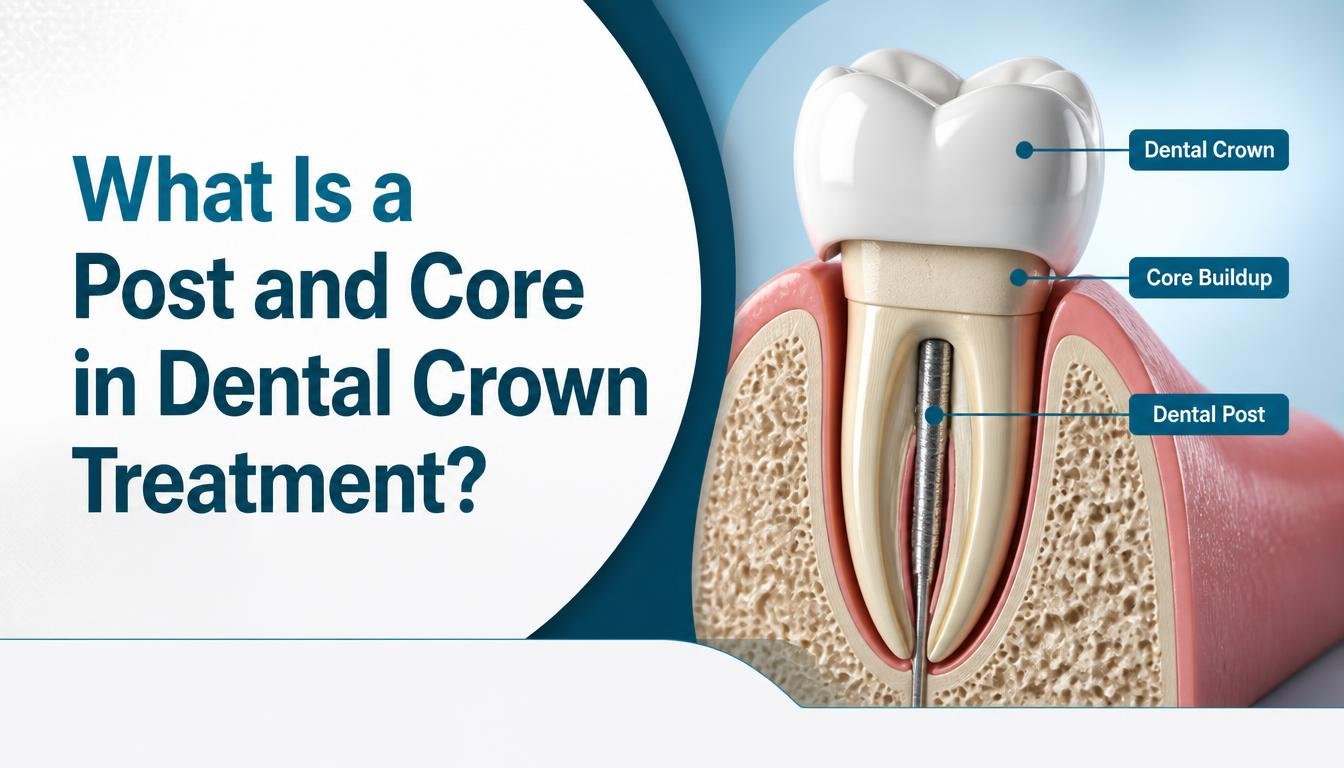
A post and core is a dental restoration used to rebuild a badly damaged tooth so that it can support a dental crown.
It consists of two main components:
- Post: A small supporting structure placed inside the prepared root canal of a tooth when additional retention is required.
- Core: A restorative material built around the post or attached to the remaining tooth structure to create a foundation for the final crown.
The dental crown is then placed over the prepared tooth to restore its shape, appearance, and chewing function.
According to the American Dental Association’s glossary of dental terms, a post is designed to fit inside a prepared root canal, while a core buildup replaces missing tooth structure to support a crown.
It is important to understand that a post does not automatically make a tooth stronger. Its primary purpose is to retain the core when insufficient natural tooth structure remains.
Why Is a Post and Core Needed Before a Dental Crown?
A dentist may recommend a post and core when a tooth has lost too much of its natural structure to retain a crown securely.
This situation can occur for several reasons:
1. Extensive Tooth Decay
Severe cavities can destroy a substantial portion of a tooth. After the decayed tissue is removed, there may not be enough healthy tooth structure left to support a crown directly.
A core buildup can replace the missing portion, and a post may be required to retain that buildup.
2. After Root Canal Treatment
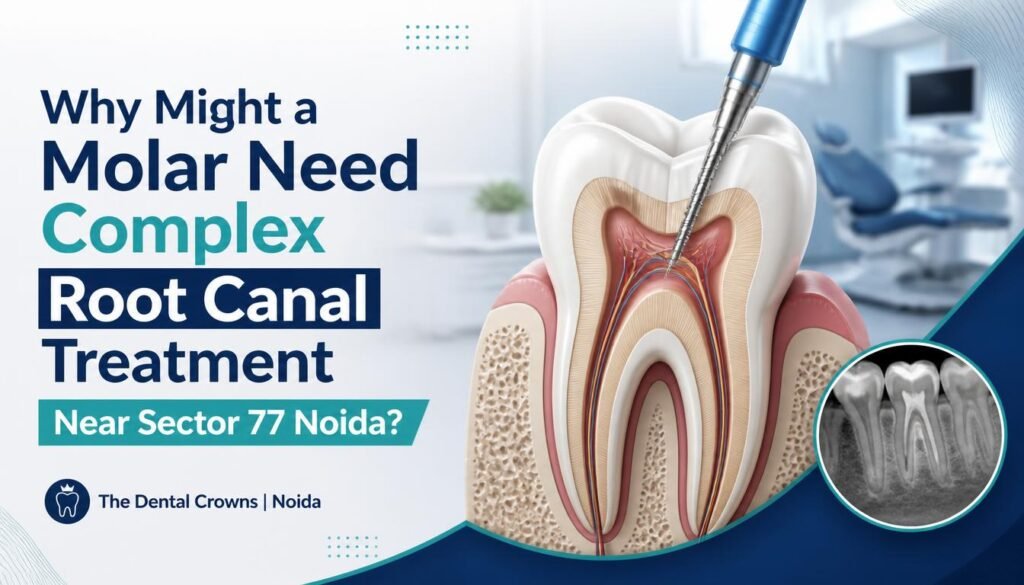
During root canal treatment, the dentist removes infected or damaged pulp from inside the tooth and seals the root canals.
If the tooth has also lost a considerable amount of its outer structure because of decay, fractures, or previous restorations, it may require additional support before a crown can be placed.
However, not every root canal-treated tooth needs a post and core. The decision depends on the amount and condition of the remaining tooth structure.
Learn more about root canal treatment at The Dental Crowns.
3. A Broken or Fractured Tooth
A tooth that has broken because of an injury, excessive biting forces, or weakened tooth structure may need rebuilding before crown placement.
If the remaining tooth cannot retain a core adequately, a post may be considered after the dentist confirms that the root is suitable for restoration.
4. Insufficient Natural Tooth Structure
Sometimes, the tooth is too damaged to provide enough surface area for the crown to remain securely attached.
A core rebuilds the missing portion, while a post may provide the additional retention needed to support that core.
The dentist will assess the remaining tooth structure, root condition, bite, and long-term prognosis before recommending treatment.
What Is the Difference Between a Post, Core, and Dental Crown?
Although these components work together, each serves a different purpose.
| Component | Main purpose |
|---|---|
| Post | Helps retain the core inside the prepared root canal when necessary. |
| Core | Rebuilds missing tooth structure and provides a foundation for the crown. |
| Dental crown | Covers the prepared tooth to restore its shape, function, and appearance. |
Think of the post as an internal retainer, the core as the rebuilt foundation, and the crown as the protective outer covering.
A post and core is not a replacement for a dental crown. When a crown is indicated, the post and core helps prepare the damaged tooth for that final restoration.
What Are the Different Types of Dental Posts?
The appropriate post depends on the tooth’s condition, the amount of remaining structure, the dentist’s assessment, and the material’s suitability.
1. Fibre Posts
Fibre posts, commonly made from glass fibre reinforced with resin, are used in many restorative procedures.
Potential advantages:
- Tooth-coloured materials can offer good aesthetic results.
- Their mechanical properties are more similar to dentine than those of some metal posts.
- They can be bonded into the prepared canal using suitable dental materials.
Their suitability depends on the available tooth structure, root anatomy, bonding conditions, and restoration design.
2. Metal Posts
Metal posts have traditionally been used to retain core restorations.
They can provide effective retention in selected cases, but their suitability depends on the individual tooth and the design of the restoration. Metal posts are not automatically the best option for every patient.
3. Custom-Made Cast Posts and Cores
A custom-made cast post and core is fabricated to fit the prepared tooth and root canal.
It may be considered when the tooth has extensive structural loss and a customised restoration is appropriate. The process can require additional laboratory work and treatment appointments.
Which type is best? There is no universally best post for every tooth. A dentist evaluates the root, remaining dentine, forces from chewing, and planned crown before choosing a suitable option.
How Is the Post and Core Procedure Performed?
The post and core procedure is generally completed through a series of carefully planned steps.
Step 1: Dental Examination
The dentist examines the damaged tooth, reviews its history, and may take dental X-rays to assess the root, surrounding bone, and previous root canal treatment.
This helps determine whether the tooth can be restored predictably.
Step 2: Root Canal Assessment
If root canal treatment has already been completed, the dentist checks whether it has healed appropriately and whether the root canal filling is satisfactory.
If there is an unresolved infection or another underlying problem, that issue may need to be addressed first.
Step 3: Preparation for the Post
When a post is necessary, the dentist prepares space within the root canal while preserving as much healthy root dentine as possible.
The post must fit appropriately without unnecessarily weakening the root or compromising the existing root canal filling.
Step 4: Placement of the Post
The selected post is placed and secured using an appropriate dental cement or bonding system.
The dentist checks its fit and stability before proceeding.
Step 5: Core Buildup
A suitable restorative material is used to rebuild the missing portion of the tooth around the post or the remaining tooth structure.
The core creates the foundation needed to prepare the tooth for the final crown.
Step 6: Dental Crown Placement
The rebuilt tooth is shaped to accommodate the crown. Depending on the case, the dentist may take a digital scan or impression to fabricate the final restoration.
The crown is then fitted and cemented or bonded as appropriate. The dentist checks the bite, comfort, and fit.
For more information about restorative options, explore The Dental Crowns’ dental services.
What Are the Benefits of a Post and Core?
When correctly indicated, a post and core can offer several benefits.
- Improved core retention: A post helps retain the core when insufficient natural tooth structure remains.
- Support for crown placement: The core provides a suitable shape and foundation for the final restoration.
- Preservation of the natural tooth: It may allow a restorable natural tooth to be retained rather than extracted.
- Restored chewing function: Once the final restoration is completed, the tooth can contribute to normal chewing.
- Improved appearance: A well-designed crown can restore the visible shape and appearance of a damaged tooth.
These benefits depend on the tooth’s condition, the quality of treatment, the final restoration, and ongoing oral hygiene.
A post should not be placed simply because a tooth has undergone root canal treatment. Unnecessary post-space preparation can remove additional dentine and increase the risk of root complications.
Are There Any Risks or Disadvantages?
Like other dental procedures, post and core treatment has potential risks.
Possible complications include:
- Loosening or debonding of the post.
- Fracture of the core or crown.
- Root fracture, particularly when the remaining root structure is compromised.
- Recurrent decay around the restoration.
- Persistent or recurrent infection if the underlying root canal problem has not resolved.
The risk varies according to the tooth’s original condition, the amount of remaining tooth structure, the restoration design, and the patient’s oral hygiene.
A careful examination and an appropriate treatment plan help reduce avoidable complications. Regular dental reviews are also important for monitoring the restoration.
How Long Does a Post and Core Last?
There is no fixed lifespan for a post and core. Some restorations remain functional for many years, while others develop complications earlier.
Their longevity depends on factors such as:
- The amount of healthy tooth structure remaining.
- The condition and length of the root.
- The quality of the root canal treatment.
- The type of post and core material used.
- The fit and durability of the final crown.
- Teeth grinding, clenching, and excessive biting forces.
- Daily brushing, interdental cleaning, and routine dental check-ups.
To help protect the restored tooth, maintain good oral hygiene, attend regular dental appointments, and follow your dentist’s recommendations. Report a loose crown, persistent discomfort, swelling, or a change in your bite promptly.
What Is the Cost of Post and Core Dental Crown Treatment in Noida?
The cost of post and core treatment in Noida varies depending on the complexity of the case and the materials required.
Factors that can influence the total cost include:
- The type of post used, such as fibre, metal, or a custom-made post.
- The amount of missing tooth structure.
- Whether root canal treatment is needed or requires further evaluation.
- The material selected for the final dental crown.
- The need for additional diagnostic procedures or restorative treatment.
The cost of a post and core may be quoted separately from the crown, so it is helpful to ask for an itemised treatment estimate.
Rather than choosing treatment based on price alone, discuss the expected benefits, alternatives, materials, and long-term prognosis with your dentist.
For a personalised assessment, you can contact The Dental Crowns in Noida.
Is a Post and Core Always Necessary After Root Canal Treatment?
No. A post is only required when the remaining tooth structure cannot adequately retain the core or restoration.
Some root canal-treated teeth have enough healthy structure to support a core buildup and crown without a post. In other cases, a post may be needed because a large portion of the tooth has been lost.
The dentist considers the amount of remaining dentine, the position of the tooth, the root’s condition, and the design of the planned restoration.
The main goal is to preserve as much healthy tooth structure as possible while providing a durable restoration.
Frequently Asked Questions
1. Is a post and core painful?
The procedure is generally performed using local anaesthesia when needed. You may experience some temporary tenderness or discomfort afterwards, depending on the condition of the tooth and the treatment performed. Persistent or worsening pain should be assessed by your dentist.
2. Can a post and core be done without a root canal?
A conventional post is placed within a prepared root canal, so the procedure is generally associated with a tooth that has already undergone root canal treatment. The dentist must assess the tooth and its treatment history before recommending this approach.
3. How many appointments are required?
The number of appointments varies. Some cases can be completed relatively quickly, while others require separate visits for assessment, core buildup, crown fabrication, and final crown placement.
4. Is a post and core better than a simple filling?
Neither option is automatically better. A filling may be sufficient when enough healthy tooth structure remains. A post and core may be appropriate when extensive tooth structure is missing and a post is required to retain the core before crown placement.
5. Can a tooth with a post and core break?
Yes. A post and core does not make a tooth immune to fracture. The remaining root structure, biting forces, crown design, and oral hygiene all influence the outcome.
6. Is a post and core the same as a dental implant?
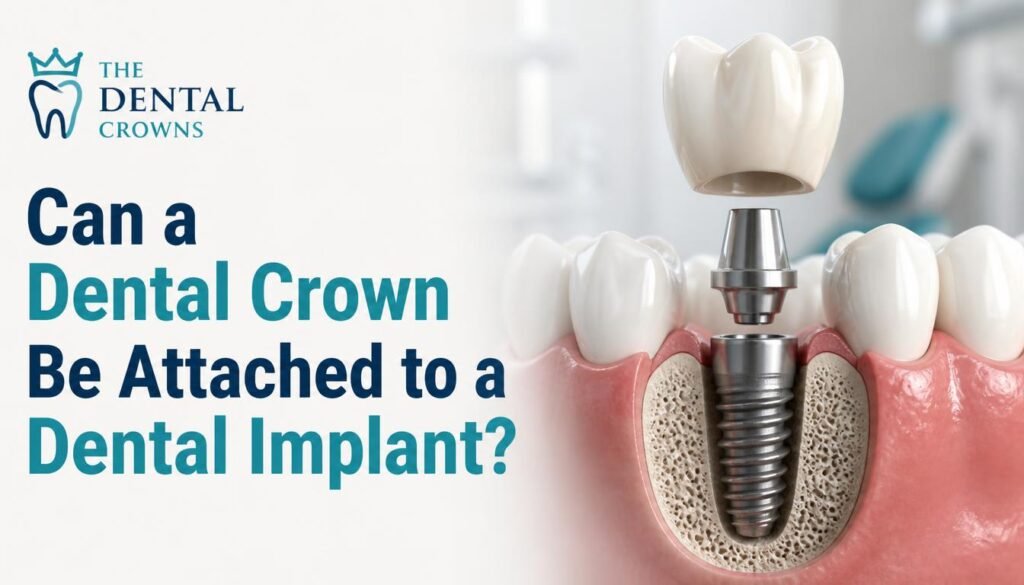
No. A post and core restores a natural tooth whose root remains suitable for treatment. A dental implant is a separate treatment option used to replace a missing tooth or, in appropriate cases, a tooth that cannot be saved.
7. Can I eat normally after post and core treatment?
Follow your dentist’s instructions, especially if a temporary restoration has been placed. Avoid chewing hard or sticky foods on the treated tooth until your dentist confirms that it is safe to do so.
8. How do I know if I need a post and core?
Only a dental examination can establish whether you need one. If your tooth has extensive decay, a large fracture, or significant structural loss after root canal treatment, your dentist may recommend a post and core after evaluating the remaining tooth and root.
Conclusion
A post and core in dental crown treatment can help restore a severely damaged tooth when there is insufficient natural structure to retain a crown. The post helps retain the core, the core rebuilds the missing portion, and the crown restores the tooth’s shape and function.
However, not every root canal-treated tooth needs a post. The best treatment depends on the remaining tooth structure, root condition, and long-term restorative plan.
If you have been advised to undergo post and core treatment, discuss the available options, expected costs, and prognosis with your dentist before proceeding.
For professional guidance on dental crowns and restorative treatment, visit The Dental Crowns or explore the clinic’s dental services in Noida.
Disclaimer: This article is for general educational purposes only and does not replace an examination, diagnosis, or personalised advice from a qualified dental professional.