

If you are considering laser dentistry but feel nervous about pain, you are not alone. Many patients searching for laser dentistry in Noida have the same question: Is laser dentistry painful?
The good news is that many laser dental procedures can be very comfortable, and some may require less anesthesia than certain conventional techniques. However, laser dentistry is not automatically completely painless for every patient or every dental procedure.
The amount of discomfort depends on the treatment being performed, the area being treated, the condition of your teeth and gums, your individual sensitivity, and whether conventional dental instruments are also required.
At The Dental Crowns in Sector 79, Noida, laser dentistry is offered as part of a broader range of general, cosmetic, restorative and surgical dental treatments. The goal is to select the right treatment approach according to each patient’s dental condition rather than using laser technology simply because it is newer.
Quick Answer: Is Laser Dentistry Painful?
Usually, laser dentistry is designed to make selected dental procedures more comfortable, but it cannot be described as completely painless in every situation.
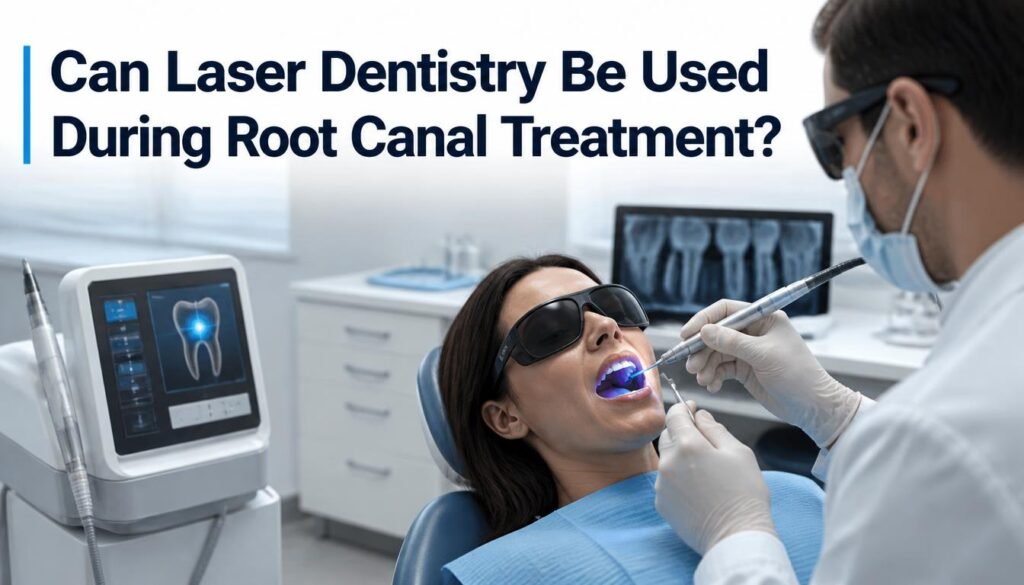
Dental lasers use concentrated light energy to interact with dental tissues. Depending on the type of laser and procedure, they may be used for selected soft-tissue procedures, gum treatments, certain hard-tissue procedures, root canal disinfection and other applications.
Some patients experience little or no significant discomfort during suitable laser procedures. Local anesthesia may still be used when necessary.
According to Cleveland Clinic, dental lasers do not completely replace conventional dental instruments. Instead, they can complement traditional dental techniques for appropriate procedures.
This means the real question should not simply be, “Is laser dentistry painless?”
A better question is:
“Is laser dentistry appropriate for my particular dental problem?”
What Is Laser Dentistry?
Laser dentistry is a dental treatment approach that uses focused light energy to interact with oral tissues.
Different dental lasers are designed for different applications. Some are used primarily for soft tissue such as gums, while others can be used for hard tissue or specific therapeutic applications.
Laser technology may be considered for selected procedures such as:
- Gum treatment and reshaping
- Selected cavity treatments
- Root canal disinfection
- Treatment of certain soft-tissue conditions
- Frenectomy procedures
- Dental sensitivity management
- Selected periodontal procedures
- Certain restorative procedures
- Some cosmetic dental applications
However, laser dentistry does not mean that every dental procedure can be performed using a laser.
Your dentist should first examine your teeth and gums, identify the underlying problem and determine whether laser treatment is suitable.
Why Does Laser Dentistry Often Feel More Comfortable?
One reason patients are interested in laser dentistry is the possibility of a more comfortable treatment experience.
Traditional dental procedures may involve instruments that create pressure, vibration or noise. For some patients, these sensations can increase dental anxiety.
Laser treatment can reduce or eliminate some of these sensations during selected procedures.
Potential advantages of laser dentistry may include:
1. Greater Precision
Laser energy can be focused on a specific treatment area. This can allow the dentist to work precisely on the targeted tissue.
2. Less Bleeding in Certain Procedures
During selected soft-tissue procedures, laser energy can help coagulate small blood vessels. This may result in less bleeding compared with some conventional techniques.
3. Reduced Tissue Trauma
When appropriately used, laser treatment can allow the dentist to target specific tissues while limiting unnecessary trauma to surrounding areas.
4. Potentially Less Post-Treatment Discomfort
Some laser procedures may result in less discomfort following treatment. However, recovery depends on the procedure and the individual patient.
5. Reduced Anxiety for Some Patients
Patients who dislike the sound and vibration of dental drills may find certain laser procedures more comfortable.
The Indian Dental Association also discusses the use of lasers in dentistry for selected applications, including soft-tissue procedures and management of dental sensitivity.
Does Laser Dentistry Need Anesthesia?
This is one of the most common questions patients ask.
The answer is:
Sometimes yes, sometimes no.
Whether anesthesia is required depends on the type and depth of the treatment.
For some superficial soft-tissue laser procedures, local anesthesia may not be necessary. For deeper or more invasive procedures, your dentist may still use local anesthesia to keep you comfortable.
Cleveland Clinic notes that dental lasers may be used alongside conventional dental instruments and that numbing medicine can be used during dental laser treatment when necessary.
Therefore, you should not assume that laser treatment automatically means “no injection.”
Instead, your dentist should explain:
- Whether anesthesia is required
- What you may feel during treatment
- How long the procedure may take
- What to expect after treatment
- Whether conventional instruments will also be required
What Does Laser Dental Treatment Feel Like?
Every patient’s experience is different, but many patients describe laser treatment as more comfortable than they expected.
Depending on the procedure, you may notice:
- Mild pressure
- Warmth around the treatment area
- A slight sensation during tissue treatment
- Minimal vibration compared with some conventional instruments
- Little or no significant pain when adequate anesthesia is used
The experience also depends on your pain sensitivity and the condition being treated.
If you are anxious about dental treatment, tell your dentist before the procedure. Knowing what will happen can make the appointment much easier.
Is Laser Dentistry Less Painful Than Traditional Dentistry?
Laser dentistry can be more comfortable for certain procedures, but it is not universally better than conventional dentistry.
Lasers have specific applications and limitations.
For example, a dentist may use a laser as part of a gum procedure but still use conventional instruments during the same treatment.
Similarly, laser technology may assist with root canal disinfection, but it does not necessarily eliminate the need for conventional root canal treatment.
The best treatment is the one that appropriately treats the dental condition while protecting your oral health.
If you are experiencing severe tooth pain or infection, delaying treatment simply because you are looking for a “completely painless” option can allow the problem to become more complicated.
You can also learn more about painless root canal treatment if your symptoms may be related to an infected tooth.
Can Laser Dentistry Treat Gum Problems?
Yes, lasers can have applications in selected gum and periodontal procedures.
Depending on the diagnosis, laser technology may be considered for:
- Certain gum procedures
- Gum reshaping
- Removal of selected soft tissue
- Treatment of specific periodontal areas
- Bacterial reduction in selected applications
- Treatment of certain oral soft-tissue conditions
However, laser treatment should not automatically replace conventional periodontal care.
The appropriate treatment depends on the severity and type of gum disease.
If you have bleeding gums, persistent bad breath, gum swelling, gum recession or loose teeth, a professional examination is important.
Can Laser Dentistry Help With Dental Sensitivity?
Laser technology has also been investigated and used for selected cases of dentin hypersensitivity.
The Indian Dental Association describes laser applications for sensitive teeth and notes that laser interaction with dental tissue can help reduce sensitivity in appropriate cases.
However, sensitivity can have many causes, including:
- Tooth decay
- Gum recession
- Worn enamel
- Exposed dentin
- Cracked teeth
- Aggressive brushing
- Existing dental restorations
Therefore, treating the sensitivity without identifying its cause may not solve the underlying problem.
A dentist should determine why your tooth is sensitive before recommending laser treatment.
Is Laser Dentistry Safe?
When used appropriately by a trained dental professional with suitable equipment and clinical protocols, dental lasers can be used safely.
However, laser dentistry is still a clinical procedure.
Lasers use concentrated energy and heat, which means incorrect settings or improper technique can potentially damage healthy tissue.
That is why your dentist should determine:
- Which laser is appropriate
- What power and settings should be used
- How long the laser should be applied
- Which tissue is being treated
- Whether protective eyewear is required
- Whether conventional instruments are also needed
Cleveland Clinic explains that dental lasers are an additional tool rather than a complete replacement for traditional dental instruments.
What Happens During a Laser Dentistry Appointment?
If you are visiting a dental clinic in Noida for laser treatment, your appointment may follow these general steps.
Step 1: Dental Examination
Your dentist examines your teeth, gums and overall oral health.
Step 2: Diagnosis
Depending on your symptoms, the dentist may recommend X-rays or other diagnostic procedures.
Step 3: Treatment Planning
The dentist explains your condition and determines whether laser treatment is appropriate.
Step 4: Discussion of Anesthesia
If anesthesia is required, your dentist explains the process before treatment.
Step 5: Laser Treatment
The appropriate dental laser is used according to the treatment plan.
Step 6: Conventional Treatment When Necessary
Laser dentistry does not always replace conventional dental instruments. Your dentist may combine techniques to achieve the best result.
Step 7: Post-Treatment Instructions
You may receive instructions about eating, brushing, mouth rinses, medication and follow-up care.
What Is Recovery Like After Laser Dentistry?
Recovery depends more on the procedure than simply on whether a laser was used.
After a minor laser procedure, you may experience very little discomfort.
More extensive procedures may result in:
- Mild soreness
- Temporary sensitivity
- Minor swelling
- Tenderness around the treated area
Your dentist may recommend softer foods, gentle brushing around the treated area or other specific aftercare instructions.
If you experience severe or increasing pain, significant swelling, persistent bleeding, fever or another unusual symptom, contact your dentist promptly.
Laser Dentistry vs Traditional Dentistry
It is easy to assume that laser dentistry is automatically superior because it uses advanced technology.
That is not necessarily true.
Laser Dentistry
Potential advantages may include:
- Precision
- Reduced bleeding in selected procedures
- Less tissue trauma in appropriate cases
- Reduced vibration and noise for certain treatments
- Potentially improved comfort
- Selected applications for soft tissue and hard tissue
Traditional Dentistry
Conventional dental instruments remain extremely important and are still appropriate for many procedures.
They can be used for:
- Fillings
- Root canal procedures
- Extractions
- Dental crowns
- Implants
- Scaling
- Restorative procedures
- Surgical procedures
In many cases, the most appropriate approach may actually combine laser technology with conventional dentistry.
Who May Benefit From Laser Dentistry?
Laser dentistry may be considered for patients requiring selected:
- Gum procedures
- Soft-tissue treatments
- Dental sensitivity treatment
- Root canal disinfection
- Certain cavity procedures
- Gum reshaping
- Frenectomy
- Selected periodontal procedures
However, not every patient is a candidate for every laser procedure.
Your dentist should make the recommendation after examining your individual oral health.
Is Laser Dentistry Suitable for Children?
Laser technology can be used for selected pediatric dental procedures, but suitability depends on the child’s age, dental condition, treatment required and the dentist’s clinical judgment.
Parents should not choose laser dentistry simply because they believe it will always be painless.
Instead, discuss:
- The child’s specific dental problem
- Whether laser treatment is necessary
- Whether anesthesia is required
- How the child is likely to respond
- Whether conventional treatment would be more appropriate
Is Laser Dentistry a Good Option for Dental Anxiety?
For patients with dental anxiety, laser dentistry can sometimes make treatment more comfortable.
The absence or reduction of certain drill-related sensations may help some patients feel less nervous.
However, dental anxiety is different for everyone.
A comfortable dental experience also depends on:
- Clear communication
- A supportive dental team
- Understanding the procedure
- Adequate anesthesia
- Appropriate treatment planning
- Taking breaks when necessary
If you are nervous about dental treatment, tell your dentist before your appointment.
Laser Dentistry in Noida: What Should Patients Look For?
If you are searching for laser dentistry in Noida, don’t select a clinic based only on the word “laser.”
Look for a dental clinic that provides:
Proper Diagnosis
Laser treatment should be based on your dental diagnosis.
Experienced Dental Professionals
The technology is only one part of successful dental treatment. Clinical knowledge and treatment planning are equally important.
Comprehensive Dental Care
Choose a clinic that can provide conventional treatment when laser treatment is not appropriate.
Clear Communication
Your dentist should explain the procedure, expected discomfort, benefits, limitations and aftercare.
Appropriate Technology
Different lasers have different applications, so ask which type of laser is being used and why it is appropriate for your treatment.
Why Choose The Dental Crowns for Laser Dentistry in Noida?
The Dental Crowns is located at Civitech Stadia, Sector 79, Noida, and offers laser dentistry along with a range of general, cosmetic, restorative and surgical dental services.
The clinic’s listed services include:
- Laser Dentistry
- Painless Root Canal Treatment
- Dental Implants
- Dental Crowns
- Dental Bridges
- Tooth-Coloured Restorations
- Braces
- Veneers
- Teeth Whitening
- Dentures
- Tooth Extraction
- Wisdom Tooth Extraction
You can explore the clinic’s complete dental services in Noida to understand the available treatment options.
For patients living around Sector 75, 76, 77, 78 and 79, the Sector 79 location can also make dental consultations and follow-up visits convenient.
Questions to Ask Your Dentist Before Laser Treatment
Before undergoing laser dentistry, consider asking your dentist:
- Is laser treatment appropriate for my dental problem?
- Why do I need laser treatment?
- Which type of dental laser will be used?
- Will I need local anesthesia?
- Will I feel pain during the procedure?
- Will conventional dental instruments also be required?
- How long will the procedure take?
- What should I eat after treatment?
- How long will recovery take?
- What symptoms should make me contact the clinic?
- Are there alternative treatment options?
- How many appointments will I need?
These questions can help you make an informed decision instead of choosing treatment based only on marketing claims.
Frequently Asked Questions About Laser Dentistry
Is laser dentistry completely painless?
No dental treatment can be guaranteed to be completely painless for every patient. Many laser procedures can be comfortable and may require less anesthesia, but discomfort depends on the procedure and individual patient.
Does laser dentistry hurt more than a dental drill?
Many patients find selected laser procedures more comfortable because they may involve less vibration and noise. However, the experience varies depending on the treatment.
Does laser dentistry require anesthesia?
Sometimes. Some procedures may require little or no anesthesia, while deeper treatments may still require local anesthesia.
Can laser dentistry treat cavities?
Certain dental lasers can be used for selected hard-tissue procedures, including some cavity-related applications. Your dentist should determine whether laser treatment is appropriate for your particular cavity.
Can lasers be used during root canal treatment?
Yes. Lasers may be used as an adjunct to help disinfect root canals, but laser treatment does not necessarily replace conventional root canal treatment.
Can laser dentistry treat gum disease?
Lasers may be used in selected periodontal and gum procedures. However, the appropriate treatment depends on the type and severity of gum disease.
Does laser dentistry cause bleeding?
Certain soft-tissue laser procedures may result in less bleeding because laser energy can help coagulate blood vessels. The amount of bleeding depends on the procedure.
Is laser dentistry safe?
Dental lasers can be used safely when appropriate equipment, settings and clinical protocols are followed by trained professionals. Your dentist should explain the benefits and potential risks.
How long does laser dental treatment take?
Treatment time varies. A simple soft-tissue procedure may be relatively quick, while more complex treatment can take longer or require multiple appointments.
How long does it take to recover from laser dentistry?
Recovery depends on the procedure. Some minimally invasive treatments may have very little downtime, while more extensive procedures can require several days of healing.
Is laser dentistry better than traditional dentistry?
Not always. Laser dentistry offers advantages for selected procedures, but traditional dental instruments remain essential for many treatments. Sometimes both approaches are used together.
Is laser dentistry available near Sector 75 Noida?
Yes. Patients in Sector 75 can consider dental clinics in nearby sectors, including The Dental Crowns in Sector 79, Noida.
Is laser dentistry available near Sector 76 Noida?
The Dental Crowns in Sector 79, Noida, provides laser dentistry and serves patients from nearby residential sectors.
Is laser dentistry available near Sector 77 Noida?
Yes. The Dental Crowns is located in Sector 79 and provides laser dentistry for patients from Sector 77 and surrounding areas.
Is laser dentistry available near Sector 78 Noida?
Patients from Sector 78 can visit nearby dental clinics in Sector 79 for laser dentistry consultation and treatment.
Final Verdict: Is Laser Dentistry Painful?
So, is laser dentistry painful?
For many suitable procedures, laser dentistry can provide a comfortable treatment experience and may reduce discomfort, bleeding or tissue trauma compared with certain conventional techniques.
But “laser” does not automatically mean “100% painless.”
The amount of discomfort depends on the procedure, the dental condition being treated, the type of laser, the treatment depth and your individual sensitivity.
The best approach is to get a professional dental examination and ask whether laser treatment is actually appropriate for your condition.
If you are searching for laser dentistry in Noida, The Dental Crowns offers laser dentistry at Civitech Stadia, Sector 79, along with comprehensive dental treatments for restorative, cosmetic and surgical needs.
Explore the complete dental services offered by The Dental Crowns and discuss your treatment options with a dental professional before making a decision.
References:
- Cleveland Clinic – Laser Dentistry — supports claims about what dental lasers are, their applications, anesthesia and limitations.
- Indian Dental Association – Lasers in Dentistry — useful Indian dental authority for laser applications and dental sensitivity.