
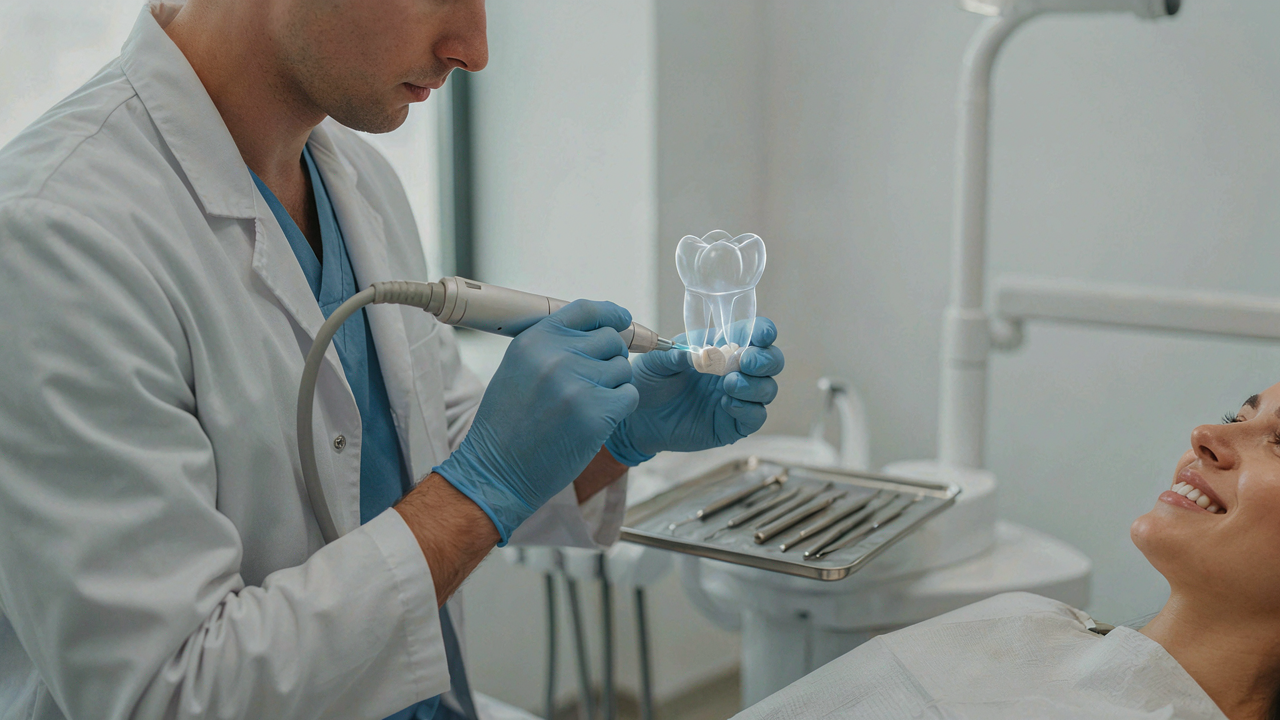
A dental crown is designed to restore a damaged, weakened, cracked, or heavily restored tooth while improving its strength, function, and appearance. But achieving a successful crown result involves more than simply placing a crown over a tooth.
The health of the surrounding gums, the condition of the tooth, the amount of remaining tooth structure, the accuracy of preparation, infection control, bite, and the final fit of the crown can all influence the outcome.
This raises an important question:
Can laser dentistry help improve the results of dental crown treatment?
In selected cases, yes—laser dentistry can be a useful supporting technology during certain stages of dental crown treatment. Lasers may be used for procedures involving gum tissue, tooth preparation in selected situations, bacterial reduction, or other treatments that may be needed before or around restorative treatment.
However, laser dentistry does not automatically make every dental crown better. The dentist must first determine whether laser treatment is clinically appropriate for the patient’s specific condition.
At The Dental Crowns in Noida, laser dentistry is offered as part of a broader range of restorative, cosmetic, general, and surgical dental services. The clinic’s services include dental crowns, porcelain crowns, root canal treatment, implants, and laser dentistry.
Let’s understand how laser dentistry may complement dental crown treatment.
What Is Laser Dentistry?
Laser dentistry uses concentrated light energy to treat or assist with certain dental procedures.
Different dental lasers can be used for different applications. Some are designed primarily for soft tissues such as gums, while others can be used with hard tissues such as teeth.
According to Cleveland Clinic, dental lasers can be used as a complement to conventional dental instruments and may have applications including root canal disinfection and preparation of teeth or gums for restorations such as crowns.
This means laser dentistry should not be thought of as a complete replacement for conventional dentistry.
Instead, your dentist may combine laser technology with traditional techniques when it provides a clinical advantage.
How Can Laser Dentistry Help With Dental Crown Treatment?
1. Laser Dentistry Can Help With Gum Contouring Around a Crown
One of the most important factors affecting the appearance of a dental crown is the surrounding gum tissue.
If excessive gum tissue covers part of a tooth, the dentist may need to reshape the gum line to create a more balanced appearance or provide better access to the tooth.
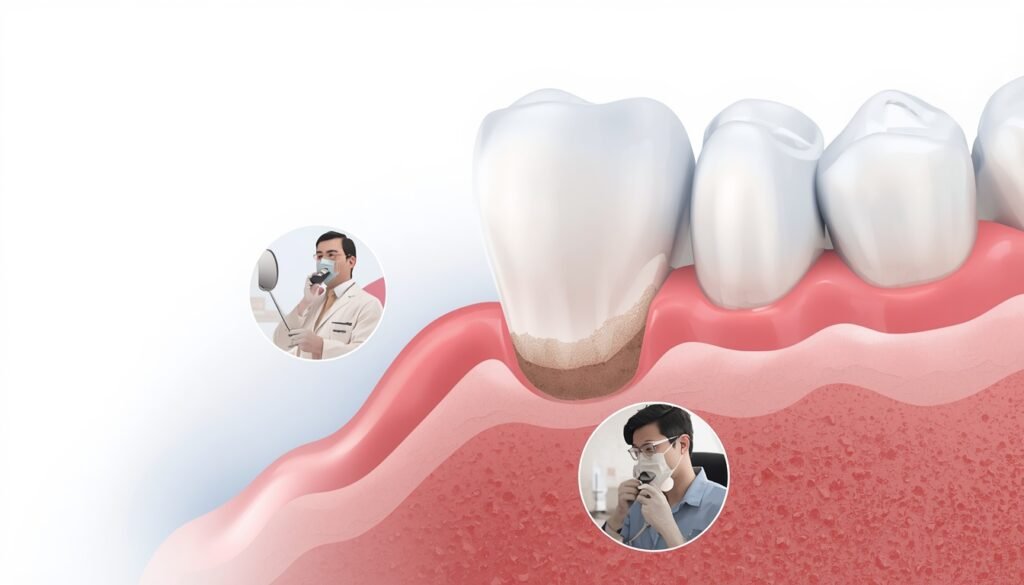
In selected cases, a dental laser may be used for soft-tissue procedures such as gum contouring.
Because the laser can precisely target soft tissue, it may help the dentist manage the gum line while minimizing unnecessary tissue disruption.
This can be particularly relevant for front teeth and cosmetic dental crowns, where the relationship between the crown and gum line can significantly affect the final smile.
2. It May Improve Access During Certain Restorative Procedures
A dental crown needs to fit properly around the prepared tooth.
Sometimes, gum tissue can make it difficult for the dentist to access or clearly visualize the area that needs treatment.
Laser-assisted soft-tissue procedures may help create better access in selected cases.
Better access can allow the dentist to evaluate the treatment area more effectively and perform the required restorative work with greater control.
However, whether laser treatment is necessary depends entirely on the individual tooth and gum condition.
3. Laser Technology Can Provide Precise Soft-Tissue Treatment
Precision is one of the major advantages associated with dental lasers.
During selected procedures, laser energy can be directed toward a specific area of tissue.
This can be useful when the dentist needs to reshape or treat a small area of gum tissue around a tooth receiving a crown.
The goal is not simply to use a laser because it is technologically advanced. The goal is to use the appropriate technology when it can help achieve a clinically suitable result.
4. It May Help Reduce Bleeding During Certain Gum Procedures
Some soft-tissue laser procedures can help control bleeding because laser energy can coagulate small blood vessels during treatment.
Reduced bleeding can make the treatment area easier for the dentist to see and manage.
It may also contribute to a more comfortable recovery in appropriate cases.
However, laser dentistry does not guarantee completely blood-free treatment. Bleeding depends on the procedure, tissue condition, patient’s oral health, and individual healing response.
5. Laser Dentistry May Support a More Comfortable Treatment Experience
Many patients feel anxious about dental treatment because of drills, vibration, injections, or the fear of pain.
Depending on the procedure, laser technology may reduce the need for some conventional instruments and can sometimes reduce the amount of anesthesia required.
The experience varies from patient to patient and from one dental procedure to another.
Therefore, it is more accurate to describe laser dentistry as a potentially more comfortable option for suitable procedures, rather than promising that every laser treatment will be completely painless.
For patients who are particularly anxious about dental procedures, this can be an important consideration.
6. Lasers May Help With Bacterial Reduction in Selected Procedures
Maintaining a healthy tooth and surrounding tissues is important before placing a dental crown.
If a tooth requires root canal treatment before receiving a crown, infection control becomes particularly important.
Laser technology may be used as an adjunct during certain endodontic procedures, including root canal disinfection.
Cleveland Clinic notes that lasers can be used to help disinfect areas during root canal treatment.
If you need a crown after root canal treatment, explore our Painless Root Canal Treatment service as part of your overall restorative treatment plan.
A healthy foundation is essential for a successful restoration.
7. Laser Treatment May Help With Certain Gum Problems Before Crown Placement
Healthy gums are an important part of successful restorative dentistry.
If a patient has gum inflammation or requires a soft-tissue procedure before receiving a crown, the dentist may recommend appropriate periodontal or laser-assisted treatment.
The purpose is to address the underlying oral-health problem before proceeding with restorative treatment.
This is important because simply placing a crown without addressing an unhealthy surrounding environment may not provide the desired long-term result.
If you’re experiencing gum-related problems, your dentist should evaluate the gums before finalizing your crown treatment plan.
8. Laser Dentistry May Support Faster Recovery in Selected Procedures
One reason patients are interested in laser dentistry is the possibility of reduced tissue trauma.
Some laser procedures can be less invasive than certain conventional soft-tissue techniques.
As a result, selected patients may experience reduced postoperative discomfort or faster tissue recovery.
However, healing is influenced by many factors, including:
- Type of procedure
- Extent of treatment
- Oral hygiene
- Gum health
- Patient’s healing response
- Aftercare
- Existing dental conditions
Therefore, faster healing should be considered a potential benefit, not a guaranteed outcome.
9. It Can Be Part of a Modern, Comprehensive Crown Treatment Plan
Perhaps the biggest advantage of laser dentistry is that it gives dentists another treatment option.
A modern crown treatment plan may involve several technologies and procedures, including:
- Digital dental examination
- Dental X-rays
- Tooth preparation
- Gum management
- Root canal treatment when required
- Temporary crown placement
- Dental impressions or digital scanning
- Laboratory-fabricated crown
- Crown fitting and bite adjustment
- Follow-up care
Laser technology may be incorporated into specific stages when clinically appropriate.
The important point is that the laser is a tool—not the treatment itself.
The quality of the final crown still depends on proper diagnosis, treatment planning, tooth preparation, crown fabrication, fit, occlusion, oral hygiene, and professional follow-up.
Laser Dentistry vs Traditional Techniques for Dental Crowns
Patients often ask whether laser dentistry is better than conventional dentistry.
The answer is: not necessarily for every patient or every procedure.
Laser dentistry may provide advantages for certain soft-tissue procedures, but conventional dental instruments remain essential for many restorative procedures.
For example, your dentist may use conventional rotary instruments for parts of tooth preparation while using a laser for selected gum-related treatment.
Cleveland Clinic also explains that dental lasers generally complement traditional instruments rather than replacing them completely.
Simple Comparison
| Feature | Laser-Assisted Dentistry | Conventional Dentistry |
|---|---|---|
| Soft-tissue precision | Potentially excellent | Excellent |
| Bleeding control | Can be beneficial in selected procedures | Depends on technique |
| Tissue trauma | May be reduced in suitable procedures | Depends on procedure |
| Drill/vibration | May be reduced for some procedures | More likely |
| Anesthesia | May sometimes be reduced | Depends on procedure |
| Crown preparation | May assist in selected situations | Commonly used |
| Gum contouring | Can be useful | Also possible |
| Suitable for every crown? | No | No |
| Dentist’s clinical judgment | Essential | Essential |
The best approach is the one that is appropriate for your individual dental condition.
Can Laser Dentistry Make Dental Crowns Last Longer?
This is one of the most important questions patients ask.
Laser dentistry alone does not guarantee that a dental crown will last longer.
The longevity of a crown depends on multiple factors, including:
- Quality of the tooth underneath
- Proper diagnosis
- Amount of remaining natural tooth structure
- Crown material
- Accuracy of crown fit
- Bite forces
- Gum health
- Oral hygiene
- Teeth grinding or clenching
- Diet and habits
- Regular dental check-ups
Laser treatment may help address certain supporting conditions, such as gum or soft-tissue problems, but it should not be marketed as a guarantee of longer crown life.
A properly planned crown treatment with appropriate maintenance is more important than simply choosing a particular technology.
Can Laser Dentistry Improve the Appearance of Dental Crowns?
In selected cosmetic cases, laser-assisted gum contouring may help improve the relationship between the crown and surrounding gum tissue.
This can be particularly important for visible front teeth.
For example, if excessive gum tissue makes a tooth look short, carefully planned gum reshaping may create a more balanced gum-to-tooth proportion.
However, the final appearance of a dental crown also depends on:
- Crown shape
- Crown shade
- Tooth position
- Gum symmetry
- Crown margins
- Smile line
- Facial proportions
- Bite
- Quality of laboratory fabrication
Therefore, laser dentistry is only one possible component of achieving an attractive cosmetic result.
If you’re considering cosmetic restoration, you can also explore our Porcelain Crowns service.
What Happens During Laser-Assisted Dental Crown Treatment?
The exact procedure varies depending on why laser treatment is recommended.
A typical treatment journey may involve:
Step 1: Dental Examination
The dentist examines the tooth, gums, bite, and surrounding structures.
X-rays may be recommended to evaluate the condition of the tooth and its roots.
Step 2: Treatment Planning
Your dentist determines whether the tooth requires:
- A crown
- Root canal treatment
- Gum treatment
- Tooth preparation
- Core buildup
- Other restorative treatment
Not every patient needs every procedure.
Step 3: Laser Assessment
If laser treatment could provide a benefit, the dentist determines whether laser-assisted treatment is appropriate.
Step 4: Preparation
The tooth and surrounding tissues are prepared according to the treatment plan.
If gum contouring or another soft-tissue procedure is necessary, laser technology may be used at this stage.
Step 5: Crown Preparation
The dentist prepares the tooth so the crown can be properly fitted.
Depending on the situation, conventional dental instruments may still be used.
Step 6: Crown Fabrication
An impression or digital scan may be taken so the dental laboratory can fabricate a crown designed for the patient’s tooth.
Step 7: Crown Placement
Once the crown is ready, the dentist checks its:
- Fit
- Shape
- Shade
- Margins
- Bite
- Overall appearance
The crown is then cemented or bonded according to the selected restoration.
Step 8: Follow-Up
Your dentist may recommend a follow-up appointment to assess healing, comfort, bite, and crown function.
Who May Benefit From Laser Dentistry During Crown Treatment?
Laser-assisted treatment may be considered for patients who require:
- Gum contouring
- Soft-tissue management
- Selected periodontal procedures
- Root canal disinfection
- Certain restorative preparation procedures
- Treatment of specific gum conditions
- Cosmetic gum reshaping
However, laser dentistry is not automatically required for every dental crown patient.
The dentist should first identify the dental problem and then determine whether laser technology adds a meaningful clinical benefit.
Is Laser Dentistry Necessary Before Getting a Dental Crown?
No.
Most patients receiving dental crowns do not automatically require laser treatment.
Laser dentistry is generally an additional treatment option that may be useful in specific circumstances.
For example, a patient with healthy gums and an uncomplicated crown may not need any laser treatment.
Another patient may require gum contouring, periodontal treatment, or additional infection-control procedures where laser technology could potentially be useful.
The correct treatment should always be based on diagnosis rather than technology preference.
What Should You Ask Your Dentist Before Choosing Laser Dentistry?
Before undergoing laser-assisted treatment, consider asking:
- Why do I need laser treatment?
- How will the laser improve my particular crown treatment?
- Is conventional treatment also an option?
- Which type of laser will be used?
- Will I still need a dental drill?
- Will I need anesthesia?
- How long will the procedure take?
- What should I expect during recovery?
- Are there additional costs for laser treatment?
- What happens if laser treatment is not used?
A good dentist should explain the reasoning behind the recommended treatment instead of simply promoting the technology.
Why Choose The Dental Crowns for Laser and Crown Treatment in Noida?
The Dental Crowns offers a range of dental treatments under one roof, including laser dentistry, porcelain crowns, painless root canal treatment, implants, bridges, veneers, and other general and cosmetic dental services.
The clinic’s laser dentistry service describes the use of laser technology for selected dental treatments, including gum disease treatment, cavity-related procedures, root canal disinfection, and certain cosmetic procedures.
If you’re looking for laser dentistry in Noida or need a dental crown evaluation, the appropriate treatment can be determined after examining your tooth and oral health.
You can explore the clinic’s complete dental services to understand the available treatment options.
Frequently Asked Questions
1. Can laser dentistry improve dental crown treatment?
Yes, laser dentistry may improve certain aspects of crown treatment when used appropriately. It can assist with selected gum procedures, soft-tissue management, and certain procedures performed before or around restorative treatment.
2. Is laser dentistry required for dental crowns?
No. Laser treatment is not required for every dental crown. It is recommended only when the dentist believes it provides a clinical benefit.
3. Can a laser be used to prepare a tooth for a crown?
Certain dental lasers can be used with hard tissue and may assist with selected restorative procedures. However, conventional dental instruments may still be required depending on the tooth and treatment plan.
4. Can laser dentistry make crowns last longer?
Laser treatment does not guarantee longer-lasting crowns. Crown longevity depends on factors such as fit, tooth health, bite, material, oral hygiene, gum health, and maintenance.
5. Is laser crown treatment painless?
Laser dentistry may make certain procedures more comfortable, and some laser procedures may require less anesthesia. However, pain and sensitivity vary according to the procedure and patient.
6. Can lasers help with gum contouring before a crown?
Yes. In selected cases, dental lasers can be used for soft-tissue procedures such as gum contouring or reshaping.
7. Can laser dentistry help after a root canal before crown placement?
Laser technology may be used as an adjunct for root canal disinfection in selected cases. The dentist will determine whether it is appropriate for your treatment.
8. Is laser dentistry safe?
When appropriately used by a trained dental professional, dental laser treatment can be a useful clinical technology. The appropriate laser type, settings, and technique depend on the procedure.
9. Should I choose laser dentistry or traditional dentistry?
Neither is automatically better for everyone. Your dentist should select the technique based on your diagnosis, treatment requirements, comfort, and expected outcome.
10. Where can I get laser dentistry and dental crown treatment in Noida?
Patients looking for these services can consult The Dental Crowns in Sector 79, Noida, where laser dentistry and crown-related treatments are among the available dental services.
Final Verdict: Can Laser Dentistry Improve Dental Crown Results?
Yes, laser dentistry can potentially improve certain aspects of dental crown treatment—but only when it is clinically appropriate.
It may help with:
- Precise gum treatment
- Gum contouring
- Reduced bleeding during selected procedures
- Minimally invasive soft-tissue treatment
- Patient comfort
- Selected bacterial reduction
- Access around restorative areas
- Recovery in appropriate cases
However, the laser itself is not what determines the success of a dental crown.
Accurate diagnosis + proper tooth preparation + healthy gums + a well-fitting crown + good oral hygiene + professional follow-up = the foundation of successful crown treatment.
If you’re considering a dental crown and wondering whether laser dentistry could benefit your specific case, the best next step is a professional dental evaluation.
For patients searching for dental crowns and laser dentistry in Noida, The Dental Crowns provides a range of restorative and advanced dental treatment options.
Book a consultation to find out whether laser-assisted treatment is appropriate for your dental crown case.