Getting a dental crown can help restore a damaged, weakened, cracked, or severely decayed tooth and improve both chewing function and appearance. However, getting the crown placed is only one part of the treatment. Proper dental crown aftercare is essential to protect the crown, maintain healthy gums, and keep the natural tooth underneath healthy.
If you live in Sector 78 Noida and have recently received a dental crown—or are planning to undergo dental crown treatment—following the right aftercare routine can help you avoid unnecessary complications and maintain your oral health.
At The Dental Crowns, patients from Sector 78 and nearby Noida sectors can consult a dental professional for crowns, root canal treatment, dental implants, laser dentistry, and other dental services.
In this guide, we explain the most important dental crown aftercare tips for patients in Sector 78 Noida, including brushing, flossing, food choices, sensitivity, warning signs, and long-term maintenance.
What Is a Dental Crown?
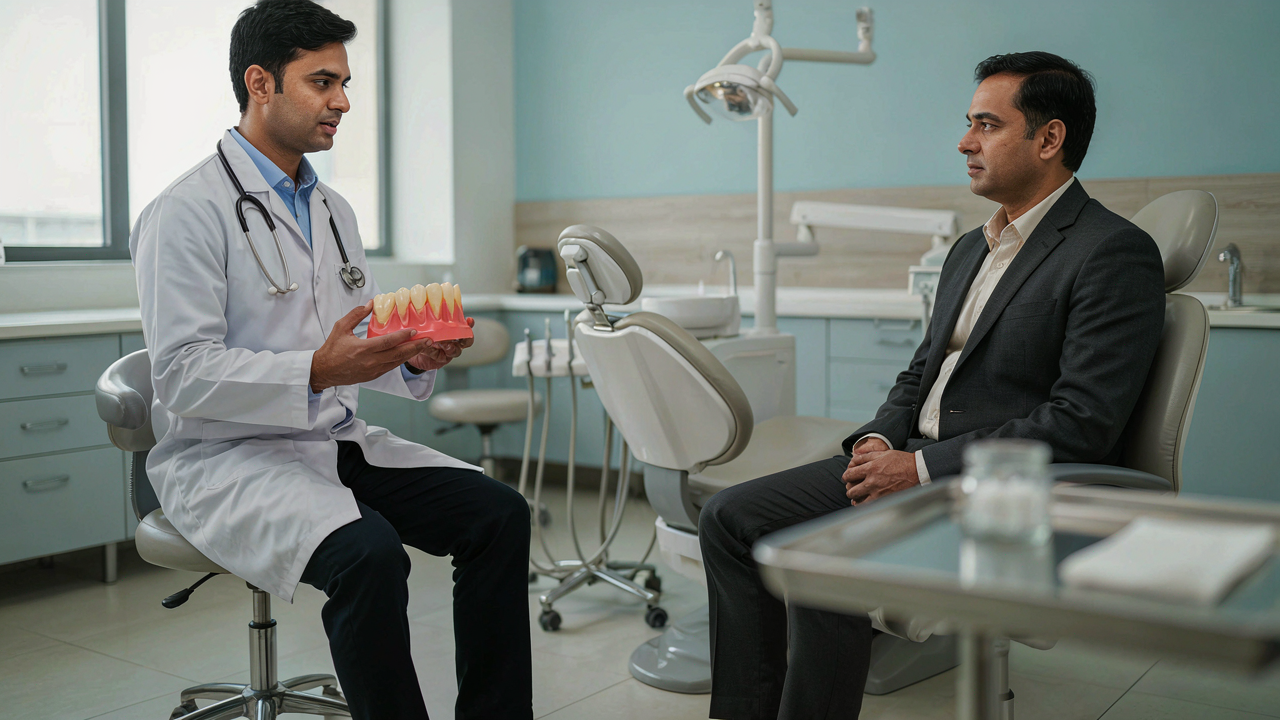
A dental crown is a custom-made restoration that covers a damaged or weakened tooth. It can help restore the tooth’s shape, strength, function, and appearance.
Dentists may recommend crowns for teeth affected by extensive decay, fractures, large fillings, significant wear, or certain teeth that have undergone root canal treatment. Crowns can also be used as restorations over dental implants.
According to Cleveland Clinic, dental crowns can be made from different materials, including ceramic, porcelain, metal, and resin. With appropriate care, crowns can last for many years, although their lifespan varies depending on factors such as oral hygiene, bite forces, material, and individual circumstances.
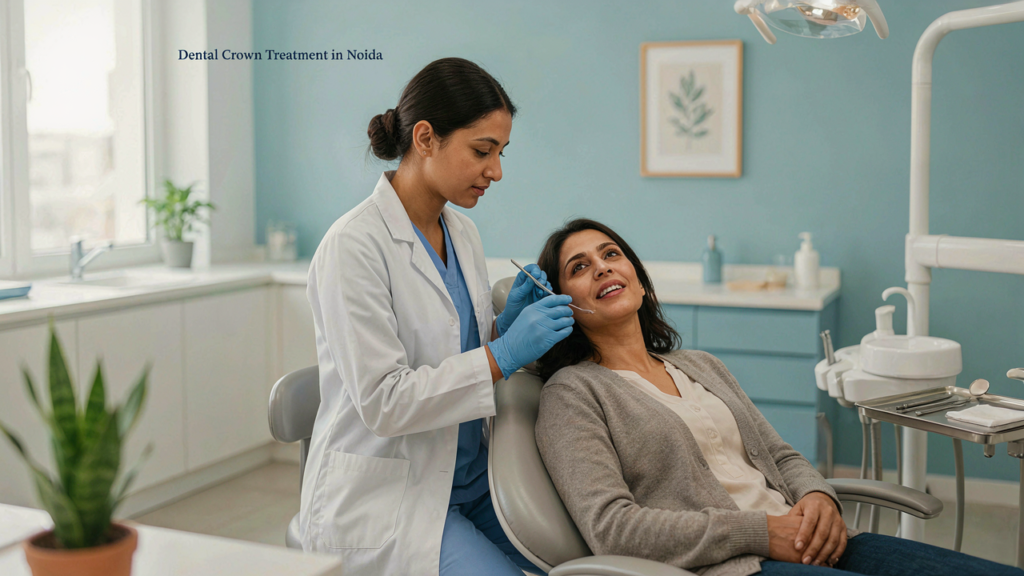
If you are still deciding whether a crown is suitable for your tooth, you can learn more about dental crown treatment in Noida Sector 78.
Why Is Dental Crown Aftercare Important?
A dental crown is strong, but it does not mean that the tooth underneath and the surrounding gums no longer need care.
The natural tooth beneath a crown can still be affected by decay if plaque and bacteria accumulate around the crown margins. The surrounding gum tissue can also become inflamed when oral hygiene is inadequate.
The American Dental Association recommends brushing twice daily with fluoride toothpaste and cleaning between teeth every day as part of good oral hygiene.
Therefore, maintaining a consistent oral-care routine after dental crown treatment is important.
10 Dental Crown Aftercare Tips for Patients in Sector 78 Noida
1. Brush Your Teeth Twice a Day
One of the simplest but most important dental crown aftercare tips is to maintain regular brushing.
Brush your teeth twice a day for approximately two minutes using fluoride toothpaste and a soft-bristled toothbrush.
Pay particular attention to the area where the crown meets the gumline. Plaque can accumulate around this area if it is not cleaned properly.
The ADA recommends brushing twice daily with fluoride toothpaste, while a soft-bristled toothbrush can help clean the teeth and gumline effectively.
Brushing tips after getting a crown:
- Use a soft-bristled toothbrush.
- Brush gently around the crown.
- Do not scrub aggressively.
- Clean the gumline carefully.
- Brush for around two minutes.
- Replace your toothbrush when the bristles become worn.
Good brushing habits can help protect both the crown and the natural tooth underneath.
2. Clean Between Your Teeth Every Day
Flossing or another form of interdental cleaning is especially important around a crowned tooth.
A toothbrush cannot effectively reach all the spaces between teeth. Food particles and plaque can accumulate between the crowned tooth and neighbouring teeth.
The American Dental Association states that interdental cleaning helps remove food debris and plaque from areas that toothbrush bristles cannot adequately reach.
Depending on your dental situation, your dentist may recommend:
- Traditional dental floss
- Floss threaders
- Interdental brushes
- Water flossers
- Other interdental cleaning devices
If you are unsure which method is appropriate, ask your dentist during your follow-up appointment.
3. Pay Attention to the Crown-Gumline Area
The area where the crown meets the gum is particularly important.
If plaque remains around this margin for long periods, it can contribute to gum irritation and other oral-health problems.
When brushing:
- Position your soft toothbrush gently near the gumline.
- Use small, controlled movements.
- Clean around the entire crown.
- Avoid applying excessive pressure.
Healthy gums are an important part of maintaining a comfortable dental crown.
4. Avoid Extremely Hard Foods
Although dental crowns are designed to withstand normal chewing forces, they are not indestructible.
Immediately after treatment, and as a long-term precaution, avoid habits that place unnecessary stress on the crown.
Examples include:
- Chewing ice
- Biting hard objects
- Opening packages with your teeth
- Biting pens or pencils
- Chewing very hard nuts
- Biting directly into unusually hard foods
Cleveland Clinic specifically advises people with crowns to avoid extremely hard, crunchy, or sticky foods that could damage or dislodge a restoration.
Your dentist may provide additional recommendations depending on the type and location of your crown.
5. Be Careful With Sticky Foods After Crown Placement
Sticky foods can place additional pulling forces on a newly placed crown, particularly if the restoration is still settling or if you have a temporary crown.
Foods such as:
- Caramel
- Toffee
- Very sticky sweets
- Chewy candy
may potentially pull on a temporary or compromised restoration.
If you have recently undergone crown treatment, follow the specific dietary instructions provided by your dentist.
6. Don’t Use Your Crowned Tooth as a Tool
This is one of the most common habits that can damage dental restorations.
Never use your teeth to:
- Open bottles
- Tear packets
- Cut plastic
- Break threads
- Hold objects
- Open packaging
Even a strong crown can chip, fracture, loosen, or become damaged when subjected to forces outside normal chewing.
Protect your crown by using your teeth only for eating and speaking.
7. Manage Temporary Sensitivity Properly
Some patients may experience mild sensitivity after dental crown treatment, particularly to hot or cold foods and drinks.
Cleveland Clinic notes that some sensitivity can occur after crown placement and may improve over time.
However, persistent, severe, or worsening discomfort should not simply be ignored.
Contact your dentist if you experience:
- Severe tooth pain
- Increasing sensitivity
- Pain while biting
- Persistent gum swelling
- A feeling that your crown is too high
- Difficulty chewing
- Pain that does not improve
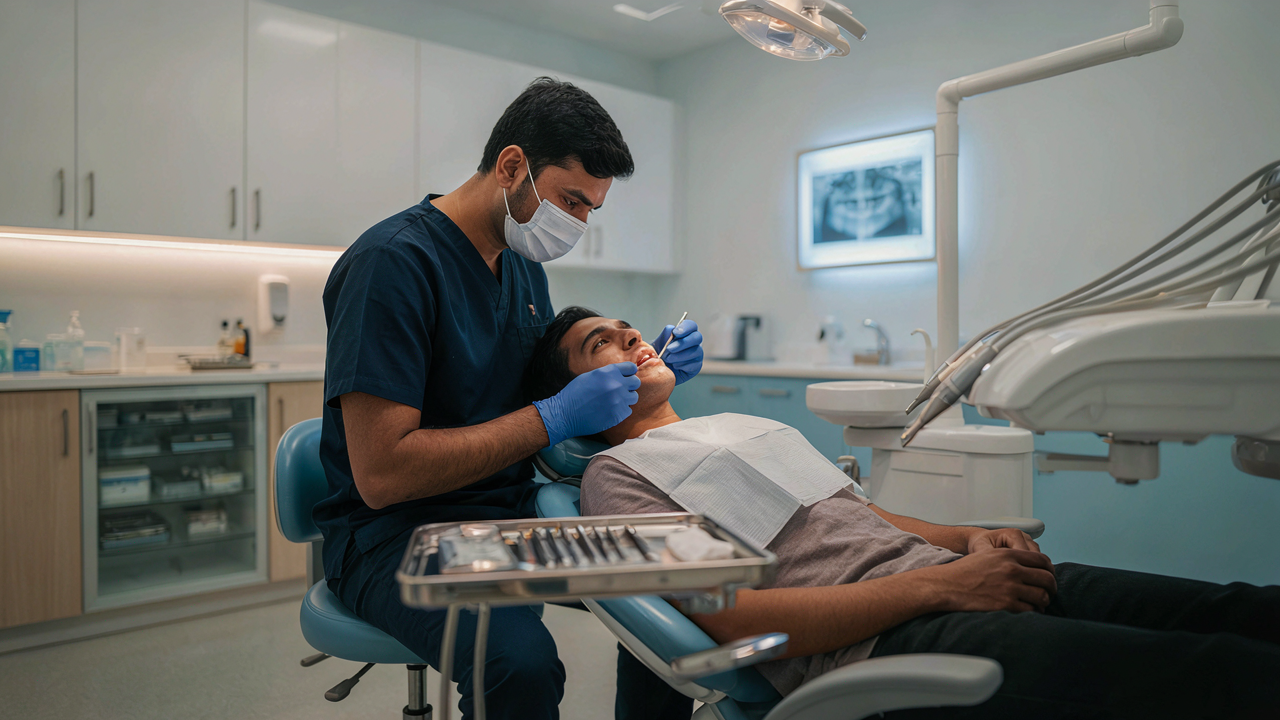
Your dentist can examine the crown and determine whether an adjustment or further treatment is required.
8. Avoid Teeth Grinding and Excessive Clenching
If you grind or clench your teeth, your crown may experience additional forces.
People who grind their teeth at night may benefit from discussing a custom mouthguard or night guard with their dentist.
Do not purchase a generic appliance without professional guidance if you have recently received a crown, particularly if your bite needs to be evaluated.
Cleveland Clinic also recommends discussing a custom mouthguard with a dentist when bruxism is present.
9. Maintain Regular Dental Check-Ups
A crown should not be considered a substitute for routine dental care.
Regular dental examinations allow your dentist to check:
- Crown condition
- Crown margins
- Gum health
- Tooth stability
- Bite
- Plaque and tartar
- Possible decay around the restoration
- Other teeth that may require treatment
Regular professional dental care is particularly useful because some crown-related problems may not cause obvious symptoms during their early stages.
Patients in Sector 78 Noida can plan regular follow-up appointments with a conveniently located dental clinic in the surrounding area.
10. Follow Your Dentist’s Personalized Instructions
Every patient is different.
Your dental crown may have been placed because of:
- Tooth decay
- A cracked tooth
- A large filling
- Tooth wear
- Root canal treatment
- Structural damage
- A dental implant
Your dentist may therefore provide personalized aftercare instructions based on your tooth and restoration.
Follow those instructions even if they differ slightly from general online advice.
What Foods Can You Eat After Getting a Dental Crown?
Your dentist may recommend softer foods immediately after certain crown procedures, especially while the effects of local anesthesia are wearing off or while a temporary crown is in place.
Depending on your dentist’s instructions, easier-to-chew foods may include:
- Soft rice
- Yogurt
- Cooked vegetables
- Eggs
- Soft fruits
- Oatmeal
- Pasta
- Soups
- Soft bread
Once your dentist confirms that normal eating is appropriate, you can generally return to a regular diet while continuing to avoid habits that place excessive stress on the crown.
If you have a temporary crown, follow your dentist’s specific food restrictions because temporary restorations may not tolerate the same forces as permanent crowns.
Can You Floss Around a Dental Crown?
Yes, cleaning between the teeth is an important part of dental crown aftercare.
The key is to clean gently and thoroughly rather than pulling aggressively on the floss.
If your crown is located between two teeth, your dentist may demonstrate the appropriate flossing technique.
If conventional floss is difficult to use, ask about alternative interdental cleaning options such as interdental brushes or water flossers.
The ADA recognizes several forms of interdental cleaning and notes that the most appropriate method can depend on individual circumstances.
What Should You Do If Your Dental Crown Becomes Loose?
A loose crown should be evaluated by a dentist.
Do not ignore a crown that moves when you bite or touch it with your tongue.
A loose crown may be associated with problems such as:
- Cement failure
- Damage to the restoration
- Decay underneath or around the crown
- Tooth damage
- Bite-related problems
If your crown becomes loose or falls out, contact your dentist promptly.
Do not attempt to permanently glue the crown back yourself.
Cleveland Clinic recommends seeing a dentist as soon as possible if a crown becomes broken or dislodged.
Warning Signs You Should Not Ignore
Contact your dentist if you notice:
Persistent pain
Pain that continues or becomes worse should be evaluated.
Crown movement
A crown that feels loose requires professional assessment.
Cracks or chips
A damaged crown may require repair or replacement.
Gum swelling
Swelling around the crowned tooth can indicate an underlying dental or gum problem.
Pain while biting
A crown that feels uncomfortable when you bite may need evaluation or bite adjustment.
Bad taste or bad breath
A persistent unusual taste or bad breath around a restoration should be discussed with your dentist.
Sensitivity that does not improve
Ongoing sensitivity should be assessed rather than ignored.
These symptoms do not necessarily mean that the crown has failed, but they are reasons to contact a dental professional.
How Long Can a Dental Crown Last?
The lifespan of a dental crown varies from patient to patient.
Factors that can influence longevity include:
- Crown material
- Oral hygiene
- Bite forces
- Teeth grinding
- Crown fit
- Gum health
- Diet
- Habits such as chewing hard objects
- Regular dental examinations
Cleveland Clinic reports an average crown lifespan of approximately 5 to 15 years, while individual crowns may last longer or require replacement sooner depending on circumstances.
Proper dental crown aftercare can therefore be an important part of maintaining your restoration.
Dental Crown Aftercare for Patients in Sector 78 Noida
For residents of Sector 78 Noida, regular dental care can be easier when your dental clinic is conveniently accessible for follow-up appointments.
The Dental Crowns is located at Civitech Stadia, Sector 79, Noida, which is close to Sector 78 and surrounding residential areas.
The clinic provides a range of dental treatments, including:
- Dental crown treatment
- Painless root canal treatment
- Dental implants
- Porcelain crowns
- Dental bridges
- Tooth-coloured restorations
- Laser dentistry
- Teeth whitening
- Veneers
- Braces
- Tooth extraction
You can explore the clinic’s complete range of dental services in Noida.
If you are specifically researching crowns in Sector 78, you may also find this guide useful: Dental Crown Treatment Near Noida Sector 78: Cost and Treatment Options.
For patients interested in porcelain restorations, see Porcelain Dental Crowns in Noida Sector 78.
You can also learn more about how to care for your dental crown and make it last longer.
Dental Crown Aftercare Checklist
Save this quick checklist if you have recently received a dental crown:
☑ Brush twice a day with fluoride toothpaste
☑ Use a soft-bristled toothbrush
☑ Clean between your teeth every day
☑ Keep the crown-gumline clean
☑ Avoid chewing ice and extremely hard objects
☑ Don’t open packages with your teeth
☑ Limit very sticky foods, especially with temporary crowns
☑ Follow your dentist’s instructions
☑ Consider a dentist-recommended night guard if you grind your teeth
☑ Attend regular dental check-ups
☑ Report persistent pain or sensitivity
☑ Contact your dentist if the crown becomes loose or damaged
Frequently Asked Questions About Dental Crown Aftercare
1. How should I clean my dental crown?
Brush twice daily with fluoride toothpaste and a soft-bristled toothbrush. Clean between your teeth every day and pay attention to the gumline around the crown.
2. Can I floss after getting a dental crown?
Yes. Daily interdental cleaning is an important part of oral hygiene. Your dentist can show you the safest technique for cleaning around your particular crown.
3. Can a dental crown get a cavity?
The crown material itself does not develop a cavity like natural tooth structure, but the natural tooth underneath or around the crown can still develop decay if oral hygiene is poor.
4. How long does a dental crown last?
A dental crown can last many years. Cleveland Clinic reports an average lifespan of around 5 to 15 years, although individual results vary.
5. What should I avoid after getting a dental crown?
Avoid chewing ice, extremely hard foods, sticky foods when advised by your dentist, and non-food objects such as pens or packaging.
6. Why does my crowned tooth hurt when I bite?
Pain while biting can have several possible causes, including bite-related issues or an underlying dental problem. Your dentist should examine the crown rather than relying on online advice.
7. What if my dental crown becomes loose?
Contact your dentist as soon as possible. Do not use household glue or attempt a permanent repair yourself.
8. Is sensitivity normal after crown treatment?
Some temporary sensitivity can occur after crown placement. However, severe, persistent, or worsening symptoms should be evaluated by a dentist.
9. Do I still need dental check-ups after getting a crown?
Yes. Regular dental examinations help monitor the crown, gums, underlying tooth, bite, and overall oral health.
10. Where can patients from Sector 78 Noida get dental crown treatment?
Patients from Sector 78 can consult The Dental Crowns, located at Civitech Stadia, Sector 79, Noida, for dental crown treatment and other dental services.
Conclusion: Take Care of Your Crown for a Healthier Smile
Getting a dental crown can restore a damaged or weakened tooth, but proper aftercare plays an important role in maintaining the restoration and the natural tooth underneath.
For patients in Sector 78 Noida, the most important habits are simple: brush twice daily with fluoride toothpaste, clean between your teeth every day, avoid damaging habits, be cautious with extremely hard or sticky foods, attend regular dental check-ups, and contact your dentist if you notice pain, looseness, cracks, swelling, or persistent sensitivity.
If you are considering a dental crown in Sector 78 Noida, a professional examination can help determine whether a crown is appropriate and which treatment approach suits your individual dental needs.
The Dental Crowns is located at:
Shop No. 16, 1st Floor, Civitech Stadia, Sector 79, Noida, Uttar Pradesh 201301
Phone: +91 89202 71787
Explore the complete range of dental treatments and services at The Dental Crowns.
Trusted Dental Resources
For additional evidence-based information about oral hygiene and dental crowns, readers can consult:
- American Dental Association – Home Oral Care
- American Dental Association – Dental Floss & Interdental Cleaners
- American Dental Association – Toothbrushes
- Cleveland Clinic – Dental Crowns
- Leeds Teaching Hospitals NHS Trust – Crowns
Medical Disclaimer
This article is intended for general educational and informational purposes only. It does not replace an examination, diagnosis, or personalized treatment advice from a qualified dental professional. Dental crown material, aftercare, expected longevity, and treatment recommendations can vary depending on the individual patient’s oral health and clinical condition.