

Losing just one tooth may seem like a small dental problem, but even a single missing tooth can affect your smile, chewing ability and confidence. Over time, the empty space can also allow neighboring teeth to shift and may make it more difficult to maintain proper oral hygiene.
For people looking for a long-term solution to replace one missing tooth, single tooth dental implants are one option worth discussing with a qualified dentist.
A single dental implant replaces the missing tooth root with an implant placed in the jawbone and supports an individual dental crown. Unlike a traditional dental bridge, a single implant does not normally require the adjacent healthy teeth to be prepared as bridge supports.
But is a single tooth implant right for everyone?
The answer depends on factors such as your gum health, jawbone condition, overall oral health, the location of the missing tooth, your expectations and your dentist’s clinical assessment.
If you are considering dental implants in Noida Sector 79, this guide explains how single tooth dental implants work, who may be a suitable candidate, their advantages and limitations, the treatment process, recovery and the questions you should ask before making a decision.
What Is a Single Tooth Dental Implant?
A single tooth dental implant is a tooth-replacement treatment designed to replace one missing tooth.
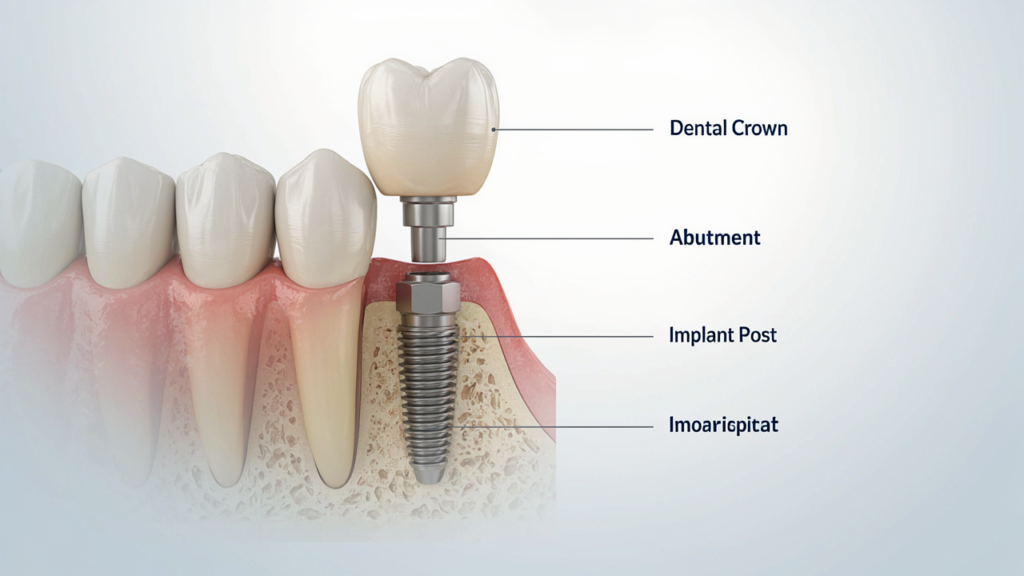
Generally, the treatment has three main components:
- Dental implant: A small implant fixture is placed into the jawbone and functions as an artificial tooth root.
- Abutment: This component connects the implant to the final restoration.
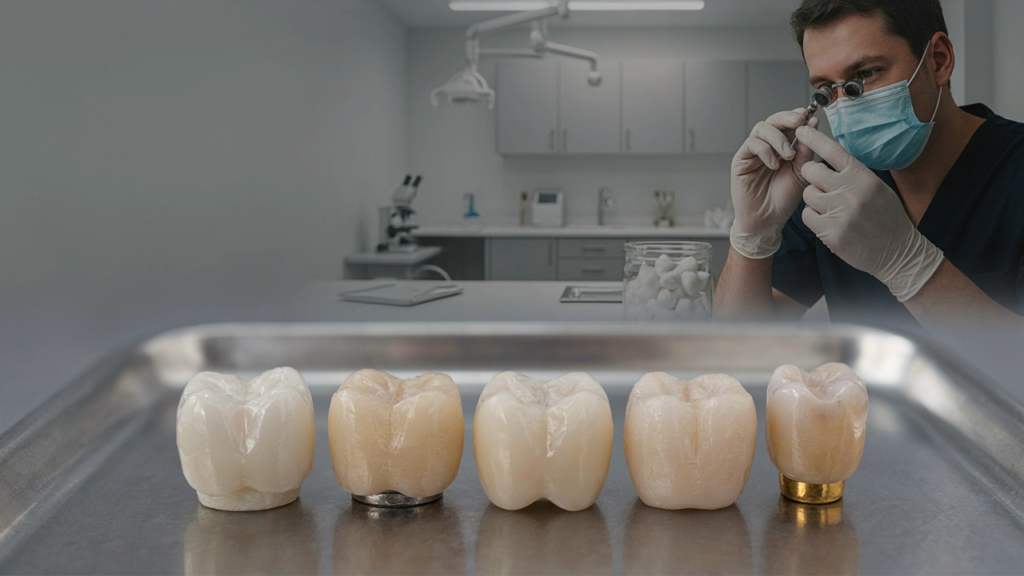
- Dental crown: A customized crown is attached to the implant to replace the visible part of the missing tooth.
The result is an individual replacement tooth that is supported by an implant rather than by neighboring teeth.
The American Dental Association explains that dental implants can be used as one of several options for restoring oral function, with the appropriate treatment depending on the patient’s diagnosis, oral health and individual needs.
If you want to learn more about the treatment available at our clinic, you can explore our Dental Implant Treatment in Noida page.
Why Consider a Single Dental Implant for One Missing Tooth?
When one tooth is missing, patients may have several possible replacement options, including a dental bridge, removable partial denture or dental implant.
A single dental implant can be attractive because it is designed to replace both the missing tooth and its root.
Some potential advantages include:
- Replacing one missing tooth without using a removable denture
- Providing a stable foundation for a dental crown
- Helping restore chewing function
- Creating an individual replacement tooth
- Avoiding preparation of neighboring teeth in many cases
- Supporting a natural-looking smile
- Providing a long-term tooth-replacement option when properly planned and maintained
However, dental implants are not automatically the best option for every patient. A comprehensive dental examination is important before deciding on treatment.
The ADA also recommends that patients discuss available treatment options and alternatives with their dentist before proceeding with complex dental procedures such as implants.
Who Is a Good Candidate for Single Tooth Dental Implants?
One of the most common questions patients ask is:
“Can I get a dental implant if I am missing only one tooth?”
In many cases, yes. However, suitability needs to be determined through an individual dental examination.
You may be considered a candidate for a single dental implant if:
1. You Have One Missing Tooth
Single implants are specifically designed to replace individual missing teeth.
Whether you lost the tooth because of decay, trauma, infection or another dental problem, an implant may be considered after the area has been evaluated.
2. You Have Adequate Jawbone
The implant needs sufficient bone support for proper placement and integration.
If the jawbone has reduced after tooth loss, additional procedures may sometimes be considered before or during implant treatment.
Your dentist may recommend dental X-rays or 3D imaging to evaluate the implant site.
3. Your Gums Are Healthy
Healthy gums and surrounding tissues are important for implant treatment.
If you have active gum disease, your dentist may recommend treating the gum condition before considering implant placement.
4. Your Oral Health Is Suitable
Untreated cavities, infections or other dental problems may need to be addressed first.
A complete dental examination allows your dentist to identify problems that could affect the treatment.
5. You Are Able to Maintain Good Oral Hygiene
An implant is not a replacement for regular dental care.
Brushing, cleaning between teeth, professional dental checkups and following your dentist’s maintenance recommendations remain important after implant treatment.
When Might a Single Tooth Implant Not Be the First Choice?
Dental implants are not suitable for every situation.
Your dentist may recommend another treatment or additional preparation if you have:
- Significant bone loss at the implant site
- Active gum disease
- An untreated dental infection
- Poor oral hygiene
- Certain medical or lifestyle factors that could affect healing
- Insufficient space for the proposed restoration
- An unsuitable bite or other anatomical considerations
This does not necessarily mean you can never receive an implant.
For example, a patient with insufficient bone may sometimes require additional treatment before implant placement.
The important point is that implant candidacy should be determined individually rather than through an online checklist.
Single Tooth Dental Implant vs Dental Bridge
If you have one missing tooth, you may hear about both dental implants and dental bridges.
So, which one is better?
There is no universal answer.
A dental bridge generally replaces a missing tooth by using neighboring teeth for support.
A single dental implant uses an implant placed in the jawbone to support an individual crown.
Here is a simplified comparison:
| Feature | Single Dental Implant | Dental Bridge |
|---|---|---|
| Replaces missing tooth | Yes | Yes |
| Replaces tooth root | Yes | No |
| Removable | No | No |
| Uses neighboring teeth for support | Usually no | Yes |
| Requires surgical placement | Yes | No implant surgery |
| Treatment timeline | Can take several months | Often shorter |
| Bone integration required | Yes | No |
| Suitable for everyone | No | No |
The right choice depends on your oral health, bone condition, neighboring teeth, budget, treatment preferences and long-term goals.
You can also read our guide on How to Choose the Right Dental Implant Treatment in Noida Sector 79 to understand the factors that can influence implant treatment decisions.
What Is the Single Tooth Dental Implant Procedure?
The exact procedure varies between patients, but treatment commonly involves several stages.
Step 1: Dental Examination
Your dentist first examines your mouth, gums, remaining teeth and the area where the tooth is missing.
Imaging may be recommended to evaluate the jawbone and surrounding structures.
Step 2: Treatment Planning
Your dentist develops an individualized treatment plan based on:
- Missing tooth location
- Bone availability
- Gum health
- Bite
- Aesthetic requirements
- Type of implant
- Final crown
- Any additional procedures that may be required
Step 3: Implant Placement
The implant fixture is surgically placed into the jawbone.
Local anesthesia is generally used to control discomfort during the procedure.
Step 4: Healing and Integration
After placement, the implant needs time to heal and integrate with the surrounding bone.
The length of this stage varies depending on the individual case.
Step 5: Abutment and Crown
Once the implant has sufficiently healed, the restorative stage begins.
An abutment connects the implant to the dental crown, and the customized crown is placed to restore the missing tooth.
The final crown is designed to fit your bite and complement the appearance of your surrounding teeth.
Is a Single Tooth Dental Implant Painful?
This is one of the biggest concerns for patients considering dental implants.
During implant placement, local anesthesia is used to numb the treatment area. You should discuss your concerns about pain or anxiety with your dentist before the procedure.
After treatment, some patients may experience temporary:
- Swelling
- Tenderness
- Mild discomfort
- Bruising
- Sensitivity around the treatment area
Your dentist will provide specific post-operative instructions based on your procedure.
If you are particularly concerned about dental treatment discomfort, you can also explore our information about Painless Dental Treatment in Noida.
How Long Does a Single Tooth Dental Implant Take?
The complete treatment timeline can vary considerably.
Some patients may complete treatment relatively quickly, while others require additional healing time.
Factors that can affect the timeline include:
- Bone quality
- Need for bone grafting
- Gum condition
- Implant location
- Healing response
- Type of restoration
- Individual treatment planning
It is therefore better to ask your dentist for a personalized timeline rather than relying on a fixed number of days or weeks.
What Happens After a Single Dental Implant?
After the implant has healed and the final crown has been placed, maintaining good oral hygiene becomes very important.
You should:
- Brush your teeth regularly
- Clean around the implant carefully
- Clean between your teeth as recommended
- Attend dental checkups
- Follow your dentist’s maintenance instructions
- Avoid habits that could damage the restoration
- Contact your dentist if you notice persistent discomfort, swelling or changes around the implant
Dental implants still require professional monitoring and good oral hygiene.
The American Dental Association has reported long-term follow-up research involving single-tooth implants, highlighting the importance of long-term monitoring and maintenance.
How Long Can a Single Dental Implant Last?
There is no guaranteed lifespan that applies to every patient.
The long-term performance of an implant can be influenced by:
- Oral hygiene
- Gum health
- Bite forces
- Smoking or tobacco use
- Overall health
- Implant positioning
- Quality of restoration
- Regular dental maintenance
A well-maintained implant can provide a long-term tooth-replacement solution, but the implant and crown can experience biological or mechanical complications over time.
For this reason, regular dental checkups should remain part of your long-term care plan.
What Does a Single Tooth Dental Implant Cost in Noida?
The cost of a single tooth dental implant varies from patient to patient.
It can depend on:
- Implant system and components
- Type of dental crown
- Diagnostic imaging
- Bone condition
- Need for bone grafting
- Additional procedures
- Dentist’s professional fees
- Complexity of the case
- Follow-up requirements
Therefore, searching only for the “cheapest dental implant in Noida” may not give you a meaningful comparison.
Instead, ask what is included in the quoted treatment cost.
For example:
Does the quoted price include the implant, abutment, crown, consultation, imaging and follow-up care?
A complete treatment plan is more useful than comparing one isolated price.
For more information about the factors involved in implant treatment, read our complete guide to dental implants near Noida Sector 79.
Single Tooth Dental Implant for Front Teeth vs Back Teeth
The location of the missing tooth can influence treatment planning.
Front Tooth Implant
For a front tooth, aesthetics are particularly important.
The dentist may consider:
- Crown shape
- Tooth colour
- Gum appearance
- Implant position
- Smile line
- Symmetry with neighboring teeth
Back Tooth Implant
Back teeth experience significant chewing forces.
The dentist may therefore pay particular attention to:
- Available bone
- Bite forces
- Implant positioning
- Crown strength
- Functional requirements
The same treatment approach is not necessarily appropriate for every tooth.
Can a Dental Crown Be Placed on a Single Implant?
Yes.
A dental crown is commonly used as the visible replacement tooth supported by a single dental implant.
The implant itself acts as the artificial root, while the crown replaces the visible portion of the tooth.
The quality, fit, appearance and function of the crown are therefore important parts of the overall implant treatment.
If you are interested in crown options, you can read our guide to Dental Crown Treatment in Noida Sector 79.
You can also explore our Porcelain Dental Crowns service page.
Are Single Tooth Dental Implants Better Than Dentures?
A single missing tooth usually does not require a full denture.
A removable partial denture may sometimes be considered, depending on the patient’s circumstances.
An implant-supported crown, on the other hand, is designed as an individual fixed tooth replacement.
The best option depends on your dental condition and preferences.
Your dentist should explain the advantages, limitations and costs of the available alternatives before you decide.
What Questions Should You Ask Your Dentist Before Getting an Implant?
Before proceeding with treatment, consider asking:
- Am I a suitable candidate for a single dental implant?
- Do I have enough bone for implant placement?
- Do I need bone grafting?
- Are my gums healthy enough for implant treatment?
- Which implant system do you recommend and why?
- Which crown material is suitable for me?
- How long will my complete treatment take?
- What will the complete treatment cost?
- What is included in the quoted price?
- What alternatives do I have?
- What should I expect during recovery?
- How should I maintain the implant after treatment?
- How frequently should I return for dental checkups?
A good consultation should give you enough information to make an informed decision.
Why Choose The Dental Crowns for Single Tooth Dental Implants in Noida?
If you are looking for single tooth dental implants in Noida Sector 79, The Dental Crowns provides dental implant treatment from its clinic at Civitech Stadia, Sector 79, Noida.
The clinic focuses on individualized treatment planning and provides dental implants alongside other restorative and cosmetic dental services.
The Dental Crowns’ implant service includes a focus on natural appearance, function, patient comfort and personalized treatment planning.
You can learn more through the Dental Implants service page.
For patients exploring other dental treatments, you can also visit the main Dental Services page.
Frequently Asked Questions About Single Tooth Dental Implants
Can one dental implant replace one missing tooth?
Yes. A single dental implant can support an individual dental crown to replace one missing tooth when the patient is an appropriate candidate.
Is a single tooth implant better than a bridge?
Not necessarily for everyone. Both options have advantages and limitations. Your dentist should assess your teeth, gums, bone, bite and long-term goals before recommending one.
How long does a single tooth implant take?
Treatment time varies. The overall process may take several months when healing and bone integration are required.
Does getting a dental implant hurt?
The procedure is performed using anesthesia to control discomfort. Temporary soreness or swelling can occur during recovery.
Can I get an implant after a tooth extraction?
In some cases, implant treatment can be planned after extraction. The timing depends on factors such as infection, bone condition and the individual treatment plan.
What if I don’t have enough bone for an implant?
Your dentist may discuss additional procedures such as bone grafting if appropriate. The decision depends on the amount and location of available bone.
Can a single dental implant look natural?
A properly planned implant-supported crown can be designed to blend with surrounding teeth. Aesthetic results depend on factors including implant position, gum condition, crown design and individual anatomy.
How do I take care of a single dental implant?
Maintain regular brushing and interdental cleaning, follow your dentist’s instructions and attend regular dental checkups.
Is a dental implant permanent?
Dental implants are intended as a long-term tooth-replacement option, but no treatment can guarantee a lifetime result. Proper oral hygiene, professional maintenance and healthy habits are important.
Where can I get single tooth dental implants near Sector 79 Noida?
The Dental Crowns provides dental implant treatment at Civitech Stadia, Sector 79, Noida. You can contact the clinic to arrange a dental examination and discuss whether a single dental implant is appropriate for your situation.
Final Thoughts: Is a Single Tooth Dental Implant Right for You?
If you have lost one tooth, a single tooth dental implant may provide a stable and natural-looking way to restore your smile and chewing function.
However, the right treatment cannot be determined by the number of missing teeth alone.
Your dentist should evaluate:
- Gum health
- Jawbone condition
- Remaining teeth
- Bite
- Implant location
- Overall oral health
- Aesthetic expectations
- Treatment alternatives
- Long-term maintenance requirements
If you are considering single tooth dental implants in Noida Sector 79, the best first step is a professional dental consultation.
At The Dental Crowns, patients can discuss their individual requirements and explore suitable tooth-replacement options.
The Dental Crowns
Shop No. 16, 1st Floor, Civitech Stadia,
Sector 79, Noida, Uttar Pradesh 201301
Phone: +91 89202 71787
Medical & Dental Resources
For additional patient education, readers can consult reputable dental and medical organizations: