If you are searching for laser dental procedures near Sector 75 Noida, you may be wondering whether dental lasers are genuinely useful, what treatments they can perform and whether laser dentistry is suitable for your particular dental problem.
Dental laser technology is used for selected procedures involving the gums, teeth and other oral tissues. Depending on the type of laser and the treatment required, it may be used for gum procedures, selected cavity treatments, root canal disinfection, tooth sensitivity management, soft-tissue procedures and certain cosmetic treatments. Importantly, dental lasers are generally considered an additional treatment technology rather than a complete replacement for conventional dental instruments.
For patients living in Sector 75 and nearby areas of Noida, understanding the procedure before choosing a clinic can help you have a more informed conversation with your dentist.
What Is Laser Dentistry?
Laser dentistry uses concentrated light energy to interact with oral tissues.
Different dental lasers are designed for different applications. Some are primarily used for soft tissues such as gums, while others can be used with hard tissues such as teeth. Lasers may also be used alongside conventional dental techniques.
According to Cleveland Clinic, dental lasers can have applications that include gum treatment, cavity treatment, root canal disinfection, treatment of tooth sensitivity, selected soft-tissue procedures and certain restorative or cosmetic applications.
This means that “laser dentistry” is not a single procedure. It is a technology that can be incorporated into different types of dental treatment.
Why Are Patients in Sector 75 Noida Considering Laser Dental Procedures?
People looking for dental treatment often have concerns about conventional procedures, including discomfort, bleeding, dental instruments and recovery.
Laser technology may provide advantages in selected cases because it allows dentists to target specific areas of tissue with concentrated energy.
Potential advantages can include:
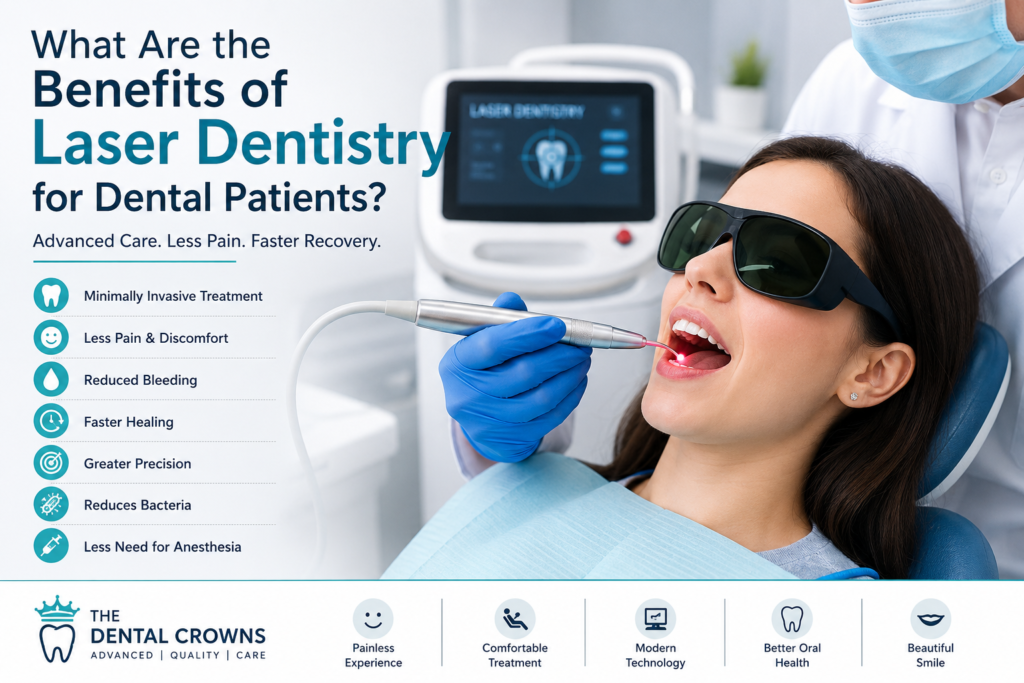
- Precise treatment of selected tissues
- Reduced bleeding during some soft-tissue procedures
- Potentially less tissue trauma in appropriate cases
- Reduced discomfort for some procedures
- Potentially shorter recovery for selected treatments
- Better access to certain treatment areas
- Additional options for patients with dental anxiety
However, these advantages depend on the procedure, the patient’s dental condition, the laser being used and the dentist’s technique. Laser treatment should therefore be recommended because it is appropriate for the patient’s condition, rather than simply because laser equipment is available.
Which Dental Problems Can Be Treated With Lasers?
One of the most important things to understand before choosing laser dentistry near Sector 75 Noida is that lasers are not appropriate for every dental problem.
Your dentist may consider laser-assisted treatment for selected conditions such as the following.
1. Gum Procedures
Dental lasers can be used during certain gum and soft-tissue procedures.
Laser technology can allow the dentist to work precisely on targeted tissue. In selected periodontal procedures, lasers may also be used to address bacteria around affected areas. Cleveland Clinic notes that laser treatment can be used in some cases of gum disease, although treatment depends on the severity and individual circumstances.
2. Selected Cavity Treatments
Certain dental lasers can be used for selected hard-tissue applications, including removing some decayed tooth material.
However, not every cavity requires or is suitable for laser treatment. Your dentist will determine the appropriate treatment after examining the tooth.
Early evaluation is important because untreated tooth decay can progress into deeper layers of the tooth and may eventually require more extensive treatment.
3. Laser-Assisted Root Canal Treatment
Lasers may be used as an adjunct during root canal treatment, particularly for disinfection.
A root canal itself involves removing infected or damaged pulp, cleaning and filling the canals and sealing the tooth. Laser technology may be incorporated into the disinfection stage in selected cases.
If you want to learn more, you can also explore our Root Canal Treatment service.
4. Gum Reshaping
Some cosmetic and restorative procedures require controlled modification of gum tissue.
Laser technology may be used for selected gum-contouring or soft-tissue procedures. The goal is to achieve the required tissue shape while maintaining healthy surrounding structures.
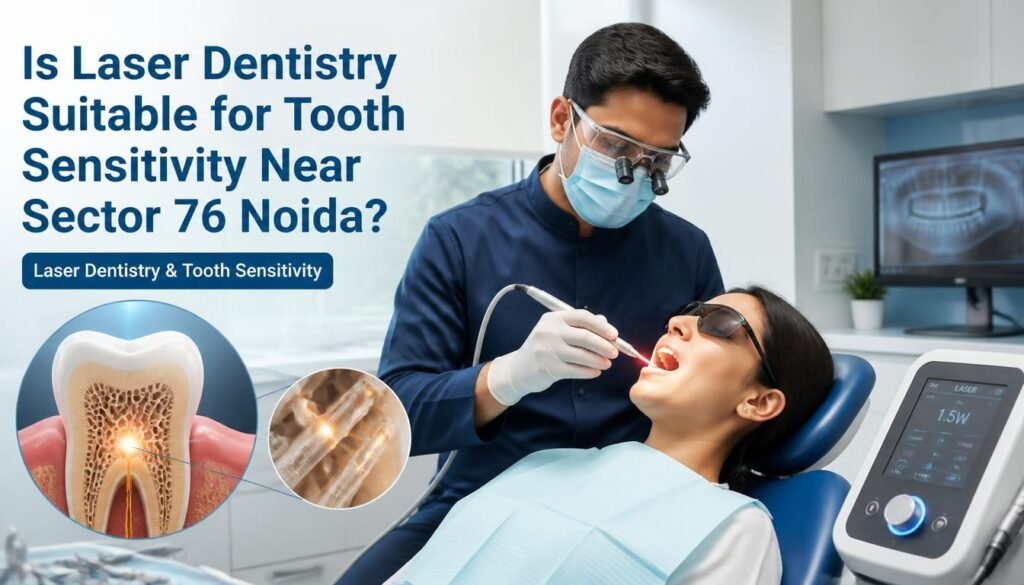
5. Tooth Sensitivity
Some laser applications may be considered for dentin hypersensitivity.
Tooth sensitivity can have several causes, including enamel wear, exposed dentin, gum recession, cavities or other dental problems. A dentist should first identify the underlying cause before deciding whether laser treatment is appropriate.
6. Selected Soft-Tissue Procedures
Dental lasers may also be used for certain oral soft-tissue procedures.
The suitability of laser treatment depends on the diagnosis, location and nature of the tissue problem.
7. Selected Cosmetic Dental Procedures
Lasers may be incorporated into certain cosmetic dental protocols, including some teeth-whitening procedures.
However, patients should understand that laser technology does not automatically make every cosmetic treatment faster or better. Your dentist should explain exactly what technology will be used and why.
What Happens During a Laser Dental Procedure?
If you visit a dentist for laser dental procedures near Sector 75 Noida, the process will usually begin with diagnosis rather than immediately starting laser treatment.
Step 1: Dental Examination
The dentist examines your teeth, gums and oral tissues.
Depending on your symptoms, dental X-rays or other diagnostic tests may be required.
Step 2: Treatment Planning
Your dentist should explain:
- Your dental condition
- Whether laser treatment is appropriate
- What type of laser may be used
- Whether conventional dental instruments will also be required
- Whether local anesthesia is necessary
- Expected treatment time
- Aftercare requirements
- Estimated treatment cost
Step 3: Protective Measures
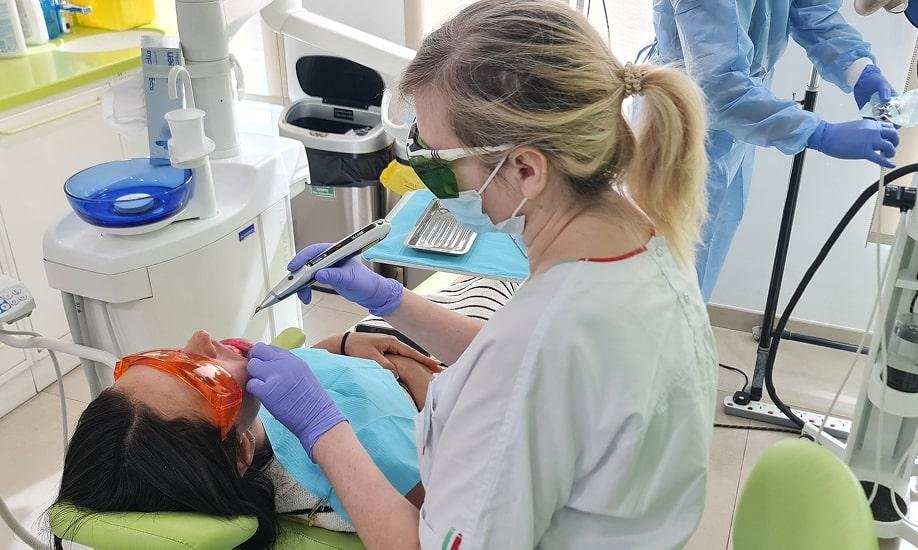
Laser procedures require appropriate safety precautions. Eye protection may be used depending on the laser and procedure.
Step 4: Anesthesia When Required
A common misconception is that every laser dental procedure is completely painless and never requires anesthesia.
That is not necessarily true.
Some laser procedures may involve less discomfort, but anesthesia can still be appropriate depending on the treatment. Cleveland Clinic notes that numbing medicine may be used for dental laser procedures in the same way it can be used with conventional dental treatment.
Step 5: Laser Treatment
The dentist directs the laser toward the selected treatment area using settings appropriate for the procedure.
Depending on the treatment, the laser may be used to modify tissue, treat selected areas, reduce bacterial load or assist another dental procedure.
Step 6: Conventional Treatment If Required
Laser dentistry does not necessarily mean “no drill” or “no conventional dental instruments.”
In many situations, laser technology works alongside established dental techniques.
This is particularly important for patients considering laser-assisted root canal treatment or restorative procedures.
Step 7: Aftercare
Your dentist will provide instructions based on the procedure performed.
Aftercare may include:
- Maintaining good oral hygiene
- Following specific gum-care instructions
- Avoiding irritating foods temporarily
- Taking prescribed medication if required
- Avoiding smoking or tobacco
- Returning for a follow-up appointment when recommended
Is Laser Dentistry Completely Painless?
This is one of the most common questions patients ask.
The answer depends on the procedure.
Some laser procedures may involve less discomfort than certain conventional techniques, but it would be inaccurate to assume that every laser dental procedure is completely painless.
Your experience can depend on:
- The treatment being performed
- The condition of your tooth or gums
- The type of laser
- The treatment area
- Your individual sensitivity
- Whether anesthesia is required
A reliable dentist should explain the expected experience before treatment rather than making a blanket promise about pain.
Laser Dentistry vs Conventional Dental Treatment
Patients often ask whether laser treatment is better than traditional dentistry.
There is no single answer that applies to every patient.
Lasers can provide useful advantages in selected procedures, but conventional dental instruments remain an important part of modern dentistry.
| Factor | Laser-Assisted Treatment | Conventional Treatment |
|---|---|---|
| Precision | Useful for selected targeted procedures | Also highly precise when appropriately performed |
| Bleeding | May reduce bleeding in some soft-tissue procedures | Depends on the procedure |
| Anesthesia | May sometimes reduce the need | Frequently used when appropriate |
| Recovery | May be shorter for selected procedures | Depends on treatment |
| Applicability | Suitable for selected cases | Applicable to a very broad range of procedures |
| Equipment | Requires specialized laser technology | Uses established dental instruments |
The important question is therefore not simply “Is laser better?”
Instead, ask:
“Is laser treatment appropriate for my specific dental problem?”
That is the question your dentist can answer after diagnosis.
Who May Benefit From Laser Dental Procedures?
Laser treatment may be considered for patients requiring selected:
- Gum procedures
- Soft-tissue procedures
- Cavity treatments
- Root canal disinfection
- Sensitivity treatments
- Gum reshaping
- Cosmetic procedures
However, not every patient is a candidate for laser treatment.
Your dentist should assess your oral health, treatment requirements and medical/dental history before recommending a procedure.
What Should You Ask a Dentist Before Laser Treatment?
If you are comparing options for laser dental procedures near Sector 75 Noida, consider asking these questions during your consultation:
1. Do I actually need laser treatment?
Laser technology should have a clinical purpose.
2. What type of laser will you use?
Different laser systems have different applications.
3. Will conventional dental instruments also be required?
In many treatments, the answer may be yes.
4. Will I need anesthesia?
Ask what level of discomfort you should realistically expect.
5. How long will the procedure take?
The duration varies according to the treatment.
6. What should I expect after treatment?
Ask about sensitivity, swelling, food restrictions and oral hygiene.
7. How many appointments will I need?
Some procedures can be completed relatively quickly, while others require multiple visits.
8. What are my alternatives?
You should understand both laser-assisted and conventional treatment options where applicable.
How Much Does Laser Dentistry Cost Near Sector 75 Noida?
The cost of laser dental treatment can vary considerably.
There is no single price that applies to every laser procedure because the total cost depends on factors such as:
- Type of procedure
- Number of teeth involved
- Severity of the dental problem
- Type of laser used
- Dentist’s expertise
- Diagnostic tests required
- Whether additional conventional treatment is necessary
- Number of appointments
For this reason, it is better to request a personalized treatment estimate after examination rather than choosing a clinic based only on an advertised starting price.
How to Choose a Laser Dental Clinic Near Sector 75 Noida
When searching online for a laser dentist near Sector 75 Noida, do not evaluate a clinic solely on whether it owns laser equipment.
Consider:
Dentist’s Experience
Ask about the dentist’s experience with the specific procedure you require.
Diagnosis Before Treatment
A proper dental examination should come before recommending a treatment.
Range of Dental Services
It can be useful to choose a clinic capable of providing comprehensive care if your treatment requires multiple procedures.
The Dental Crowns provides laser dentistry along with treatments such as root canal treatment, dental implants, dental crowns and other dental services. The clinic is located in Sector 79 and serves patients from surrounding Noida sectors.
You can explore the complete Dental Services at The Dental Crowns.
Transparent Treatment Planning
A good consultation should explain why a particular procedure is being recommended, what alternatives exist and what you can expect during recovery.
Hygiene and Safety
Dental procedures should be performed using appropriate infection-control and laser-safety protocols.
Is Sector 79 Convenient for Patients From Sector 75?
Patients searching for dental treatment near Sector 75 do not necessarily need to restrict their search to a clinic located inside Sector 75.
The Dental Crowns is located at Civitech Stadia, Sector 79, Noida, making it a nearby option for patients living in Sector 75 and surrounding sectors. The clinic offers laser dentistry as part of its broader dental treatment services.
Patients should nevertheless compare clinics based on the suitability of treatment, dentist expertise, diagnostic facilities, hygiene standards and overall treatment plan—not distance alone.
When Should You See a Dentist?
You should consider a dental examination if you experience:
- Persistent tooth sensitivity
- Toothache
- Bleeding or swollen gums
- Gum recession
- Pain while chewing
- A broken or damaged tooth
- Persistent bad breath
- Swelling around a tooth or gum
- A recurring dental problem
For example, persistent sensitivity can sometimes be associated with exposed dentin, gum recession, cavities or other dental conditions, so identifying the cause is important.
Likewise, severe tooth pain, swelling or signs of infection should not be ignored.
Frequently Asked Questions About Laser Dental Procedures Near Sector 75 Noida
Is laser dentistry available near Sector 75 Noida?
Yes. Patients in Sector 75 and surrounding areas can find dental clinics offering laser-assisted procedures. The Dental Crowns in Sector 79, Noida, also offers laser dentistry and serves patients from nearby sectors.
Is laser dental treatment painful?
Some laser procedures may involve less discomfort, but the experience varies according to the treatment and patient. Anesthesia may still be used when appropriate.
Can lasers replace root canal treatment?
No. A laser does not replace the complete root canal procedure. It may be used as an adjunct for selected disinfection steps.
Can laser dentistry treat cavities?
Certain dental lasers can be used for selected cavity-related applications, but not every cavity requires laser treatment. Your dentist will determine the appropriate method.
Does laser dentistry cause less bleeding?
Laser treatment can reduce bleeding during certain soft-tissue procedures, but the amount of bleeding depends on the procedure and individual circumstances.
Is laser dentistry suitable for children?
Laser treatment may be used for selected pediatric dental procedures, but suitability depends on the child’s age, dental condition and procedure required. A pediatric dental assessment is recommended.
How long does laser dental treatment take?
Treatment time varies. A simple soft-tissue procedure may be relatively quick, while laser-assisted treatment combined with conventional dentistry may take longer.
Is laser dentistry safe?
Dental lasers are established clinical tools, but they must be used appropriately by trained dental professionals with suitable safety precautions. As with any treatment, potential risks depend on the procedure.
Final Thoughts
If you are searching for laser dental procedures near Sector 75 Noida, the most important step is understanding which treatment is actually appropriate for your dental condition.
Laser technology can be useful for selected gum, tooth, root canal, sensitivity, soft-tissue and cosmetic procedures. However, it is not a universal replacement for conventional dentistry.
A proper dental examination, clear treatment plan and discussion of alternatives can help you understand whether laser-assisted treatment is suitable for you.
If you live in Sector 75 or nearby Noida sectors, you can explore The Dental Crowns’ dental services or learn more about Advanced Clinical Laser Dentistry.
For additional information about laser dentistry, Cleveland Clinic provides an evidence-based overview of how dental lasers are used and where they fit alongside conventional dental treatment.