If a dentist has recommended a root canal because of deep decay, infection, persistent tooth pain or an injured tooth, delaying treatment is generally not a good idea.
There is no fixed number of days that is safe for everyone. A tooth with inflamed or infected pulp can worsen at different rates depending on the extent of infection, the condition of the tooth and whether an abscess has developed.
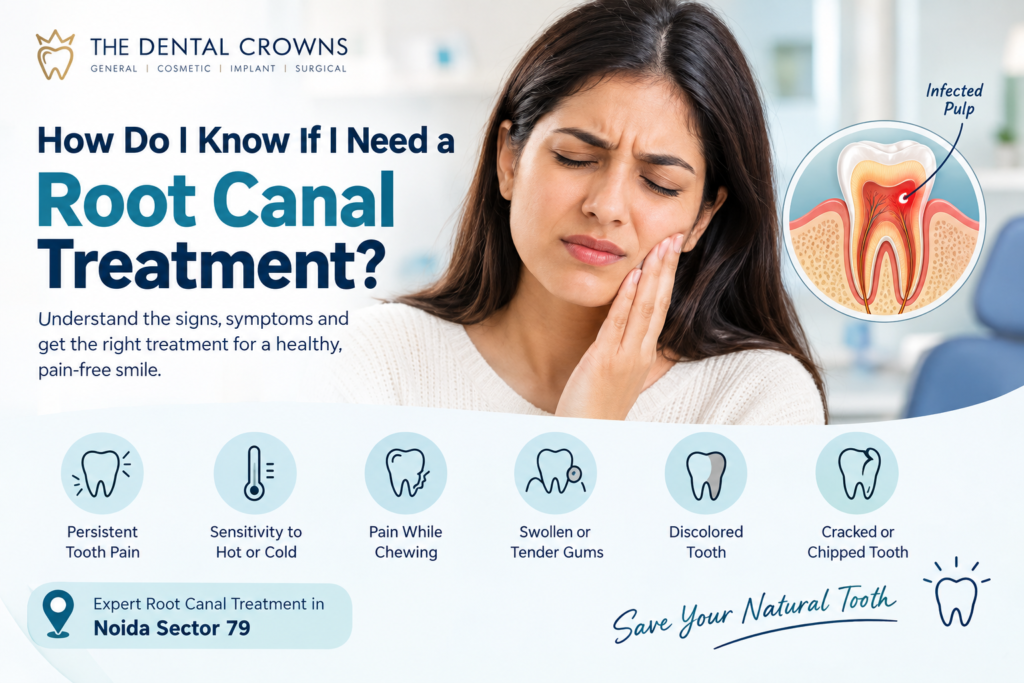
If you are experiencing persistent toothache, sensitivity to hot or cold, pain while biting, gum swelling or a pimple on the gum, it is better to have the tooth professionally evaluated rather than waiting for the symptoms to disappear.
The American Association of Endodontists explains that root canal treatment is used when the pulp inside a tooth becomes inflamed or infected and that timely treatment can help save the natural tooth.
For patients looking for root canal treatment near Sector 79 Noida, The Dental Crowns provides root canal treatment at its clinic in Civitech Stadia, Sector 79, Noida.
How Long Can You Wait for a Root Canal?
There is no universal “safe waiting period” for a tooth that has been diagnosed as needing root canal treatment.
If the pulp is seriously inflamed or infected, postponing treatment can allow the problem to progress. In some cases, pain may temporarily reduce even though the underlying infection remains.
This is one reason why waiting until the tooth hurts again can be misleading.
According to Cleveland Clinic, a tooth abscess cannot be expected to heal on its own, and the time it takes for an infection to spread can vary from days to weeks or even months. Because the timing is unpredictable, professional dental evaluation should not be delayed.
What this means for patients in Sector 79 Noida
If your dentist has already confirmed that you need root canal treatment, schedule the treatment as soon as reasonably possible rather than choosing a specific number of days to wait.
If you have only mild symptoms and have not yet received a diagnosis, arrange a dental examination to determine whether the tooth actually needs root canal treatment.
You can also learn more about Painless Root Canal Treatment at The Dental Crowns before your consultation.
Why Should You Not Delay Root Canal Treatment?
Root canal treatment is usually recommended when the soft tissue or pulp inside the tooth becomes inflamed or infected.
Common causes include:
- Deep tooth decay
- A cracked or fractured tooth
- Dental trauma
- Repeated dental procedures
- Extensive fillings
- Untreated tooth infection
During root canal treatment, the dentist removes the diseased pulp, cleans and disinfects the root canal system, and seals the space to help prevent reinfection.
Delaying treatment can allow the infection or inflammation to progress beyond the inside of the tooth.
In some situations, an untreated infection can result in an abscess around the tooth root. An abscess may cause swelling, pain while chewing, gum tenderness or a bad taste in the mouth.
Can a Tooth Stop Hurting Even If You Still Need a Root Canal?
Yes.
A reduction in pain does not necessarily mean that the underlying dental problem has disappeared.
An infected tooth can sometimes become less painful when the pulp tissue dies. However, bacteria and infection can remain around the tooth.
Cleveland Clinic notes that pain from an abscess can stop when the nerves inside the pulp stop functioning, while the bacteria can continue to damage surrounding tissues.
Therefore, if your toothache suddenly disappears after several days of pain, do not automatically assume that you are cured.
A dental examination is still important.
What Are the Signs You May Need a Root Canal?
Some common signs that can indicate significant pulp damage or infection include:
1. Lingering Sensitivity to Hot or Cold
If sensitivity continues after the hot or cold food or drink has been removed, the pulp may be seriously inflamed.
The American Association of Endodontists recommends dental evaluation when sensitivity persists, particularly when the pain lingers after the stimulus is removed.
2. Severe Toothache
Persistent or severe tooth pain should not simply be managed indefinitely with painkillers.
The cause of the pain needs to be identified by a dentist.
3. Pain When Biting or Chewing
Pain when biting can occur with several dental conditions, including damage to the pulp or a cracked tooth.
An examination is required to identify the actual cause.
4. Swollen or Tender Gums
Swelling around a tooth can indicate infection.
5. A Pimple or Boil on the Gum
A small pimple on the gum near a painful tooth can be associated with drainage from a dental infection.
6. Darkening of the Tooth
A tooth that becomes darker after trauma or significant damage may require further dental evaluation.
7. Facial or Jaw Swelling
Swelling can indicate that an infection has progressed and should be assessed promptly.
When Should You Get Root Canal Treatment Immediately?
You should seek urgent dental evaluation if you have symptoms such as:
- Severe or worsening tooth pain
- Facial or jaw swelling
- Gum swelling with pus
- Fever associated with dental pain
- Difficulty opening your mouth
- Increasing swelling around the tooth
- A dental abscess
- Pain that is interfering with eating or sleeping
The NHS advises urgent dental care for suspected dental abscesses because an abscess does not go away on its own.
What if You Have Difficulty Breathing or Swallowing?
This is more serious.
If dental swelling is affecting your ability to breathe, swallow or speak, seek emergency medical care immediately.
The NHS specifically identifies significant mouth, throat or neck swelling accompanied by breathing or swallowing difficulty as an emergency.
Can You Wait a Few Days for Root Canal Treatment?
The answer depends on your symptoms and the dentist’s assessment.
A person with mild, stable symptoms who has already been examined may receive specific instructions from their dentist about timing.
However, if you have severe pain, swelling or signs of infection, you should not intentionally postpone treatment.
The important point is that there is no reliable countdown such as “you can safely wait seven days” or “you can wait one month.”
Every tooth and infection is different.
If you have been diagnosed with an infected pulp or dental abscess, follow the treatment timeline recommended by your dentist.
What Happens If You Keep Delaying Root Canal Treatment?
When a tooth requires root canal treatment, continued delay may allow the dental infection to progress.
Possible consequences can include:
Increased Pain
Dental pain can become more intense and may interfere with sleep, eating and everyday activities.
Development of an Abscess
An infection can develop into an abscess around the tooth.
Gum or Facial Swelling
As infection progresses, swelling can develop around the tooth, jaw or face.
Damage to Surrounding Tissues
A dental infection can extend into tissues surrounding the tooth.
Possible Tooth Loss
Root canal treatment is designed to save the natural tooth where possible. If a tooth becomes too damaged or cannot be successfully treated, extraction may eventually become necessary.
The treatment options for an abscess can include drainage, root canal treatment or extraction depending on the condition of the tooth.
Do Antibiotics Mean You Can Delay Root Canal Treatment?
Not necessarily.
This is a common misunderstanding.
Antibiotics may be appropriate in specific situations, particularly when there are signs of systemic involvement or spreading infection, but they do not automatically eliminate the underlying source inside an infected tooth.
The American Dental Association’s guidance emphasizes dental treatment for many pulpal and periapical conditions rather than relying on antibiotics alone.
If your dentist prescribes antibiotics, take them exactly as directed. Do not use leftover antibiotics or self-medicate without professional advice.
What Can You Do While Waiting for Your Dental Appointment?
If you are waiting for a scheduled dental appointment, you can take reasonable steps to reduce discomfort.
Depending on your individual health circumstances:
- Follow your dentist’s instructions.
- Maintain normal oral hygiene without aggressively irritating the painful area.
- Choose softer foods if chewing is uncomfortable.
- Avoid extremely hot or cold foods if they trigger pain.
- Use only recommended over-the-counter pain medication and follow the label or your healthcare professional’s instructions.
- Do not place aspirin directly on the tooth or gums.
- Do not attempt to drain an abscess yourself.
These measures are only temporary. They do not replace definitive dental treatment.
What Happens During Root Canal Treatment?
Root canal treatment is designed to remove infected or inflamed pulp and preserve the natural tooth.
A typical treatment involves:
Step 1: Examination
The dentist examines the tooth and may use dental X-rays and other tests to determine the source and extent of the problem.
Step 2: Local Anaesthesia
The tooth and surrounding area are numbed to keep the procedure comfortable.
Step 3: Accessing the Tooth
The dentist creates an opening through the tooth to access the infected pulp.
Step 4: Cleaning the Canals
The infected or inflamed tissue is removed and the root canals are cleaned and shaped.
Step 5: Disinfection
The canal system is disinfected according to the dentist’s treatment protocol.
Step 6: Sealing
The cleaned canals are filled and sealed to help prevent reinfection.
Step 7: Final Restoration
Depending on the amount of remaining tooth structure and the location of the tooth, a filling or dental crown may be recommended to restore and protect it.
The American Association of Endodontists describes root canal treatment as a procedure that removes inflamed or infected pulp, cleans and disinfects the canals, and seals them.
Do You Need a Dental Crown After Root Canal Treatment?
Not every root-canal-treated tooth automatically requires the same restoration.
The dentist considers:
- Which tooth was treated
- How much natural tooth structure remains
- The amount of chewing force on the tooth
- Whether the tooth is cracked or weakened
- The type of restoration appropriate for your case
For many significantly weakened teeth, a crown may be recommended to provide additional protection.
If you want to understand crown options, you can read our guide on How to Choose the Best Dental Crown Treatment in Noida Sector 79.
You can also explore Dental Crown Treatment Near Noida Sector 78 for additional information about crown treatment.
Can Laser Dentistry Be Used During Root Canal Treatment?
In selected cases, laser technology may be used as an adjunct to conventional root canal treatment.
Laser dentistry does not mean that every conventional step of root canal treatment is automatically replaced.
The suitability of laser-assisted treatment depends on the patient’s dental condition, the technology available and the dentist’s treatment protocol.
You can read more about Laser Dentistry and Root Canal Treatment.
Patients in Sector 79 can also explore Modern Laser Dentistry Near Sector 79 Noida to understand where dental lasers may be used.
Where Can You Get Root Canal Treatment Near Sector 79 Noida?
If you live in or around Sector 79, Sector 78, Sector 77, Sector 76, Sector 75 or Sector 74 Noida, The Dental Crowns is located at:
Shop No. 16, 1st Floor, Civitech Stadia, Sector 79, Noida, Uttar Pradesh – 201301
The clinic lists root canal treatment, dental crowns, dental implants, laser dentistry and other dental services.
You can explore the complete Dental Services in Noida before scheduling a consultation.
For patients specifically searching for root canal treatment near Noida Sector 79, our detailed guide on Root Canal Treatment Near Noida Sector 79: Cost, Procedure and Benefits provides additional information.
Why Choose a Local Dental Clinic for Root Canal Treatment?
Choosing a dental clinic close to home can make treatment and follow-up appointments more convenient.
Root canal treatment may involve examination, treatment and restoration, depending on the tooth and clinical situation.
For patients around Sector 79, having a dental clinic nearby can make it easier to attend appointments and contact the dental team if a problem develops during recovery.
The Dental Crowns is located at Civitech Stadia in Sector 79, Noida, making it accessible for patients searching for dental treatment in the surrounding sectors.
Frequently Asked Questions
How long can you wait for a root canal?
There is no fixed safe waiting period. If a tooth has been diagnosed as requiring root canal treatment, it is generally advisable to arrange treatment according to your dentist’s recommended timeline rather than waiting for symptoms to become severe.
Can I wait one week for a root canal?
Whether waiting a week is appropriate depends on your diagnosis and symptoms. Severe pain, swelling, fever or an abscess should be assessed promptly. Ask your dentist how quickly your specific tooth needs treatment.
What happens if I delay root canal treatment?
The infection or inflammation may progress, potentially causing an abscess, swelling, increased pain or damage to surrounding tissues. In some cases, the tooth may eventually become difficult or impossible to save.
Can a root canal infection go away by itself?
An infected tooth generally requires professional dental treatment. An abscess does not simply disappear because the pain becomes less intense.
Can antibiotics cure an infected tooth?
Antibiotics may be prescribed in certain circumstances, but they do not necessarily eliminate the source of an infection inside a tooth. Definitive dental treatment may still be required.
Is root canal treatment painful?
Modern root canal treatment is performed using local anaesthesia, and the aim is to treat the source of dental pain while preserving the natural tooth. Some sensitivity or discomfort can occur after treatment.
Can laser dentistry be used for root canals?
Laser technology can be used as an adjunct in selected root canal procedures. Your dentist should determine whether it is appropriate for your specific tooth.
When is a dental infection an emergency?
Seek emergency medical attention if swelling is making it difficult to breathe, swallow or speak, or if severe facial or neck swelling is developing.
Final Takeaway: Don’t Wait for the Pain to Become Severe
If you are asking “How long can you wait for root canal treatment near Sector 79 Noida?”, the safest answer is that there is no fixed number of days that applies to everyone.
A tooth that needs root canal treatment should be professionally evaluated and treated according to the urgency of the infection and your dentist’s recommendations.
Persistent toothache, lingering sensitivity, pain while chewing, swelling, gum tenderness or an abscess are reasons to arrange a dental assessment rather than repeatedly waiting for symptoms to disappear.
If you are looking for root canal treatment near Sector 79 Noida, you can consult The Dental Crowns at Civitech Stadia, Sector 79, Noida for an examination and personalized treatment plan.
The Dental Crowns
Shop No. 16, 1st Floor, Civitech Stadia
Sector 79, Noida, Uttar Pradesh – 201301
Phone: +91 89202 71787
Important Medical Disclaimer
This article is intended for general educational purposes and should not replace an examination or diagnosis by a qualified dental professional. The appropriate timing and treatment for root canal therapy depend on the individual tooth, symptoms, infection status and clinical findings.