
Mouth ulcers can make everyday activities such as eating, drinking, speaking and brushing your teeth uncomfortable. Although most minor mouth ulcers heal naturally within one to two weeks, the pain can affect your daily routine. If you are looking for a treatment that may provide faster pain relief, you might wonder: Can dental lasers be used to treat mouth ulcers?
Yes, certain dental laser treatments may help reduce the pain associated with mouth ulcers and support faster healing in selected cases. Research on low-level laser therapy suggests promising results for recurrent aphthous ulcers, although effectiveness depends on the type of ulcer, the laser used and the treatment protocol.
At The Dental Crowns, patients can learn about modern dental treatment options and whether laser dentistry may be appropriate for their oral health concerns. Here is what you should know about laser treatment for mouth ulcers, its potential benefits, the procedure and when to consult a dentist.
What Are Mouth Ulcers?
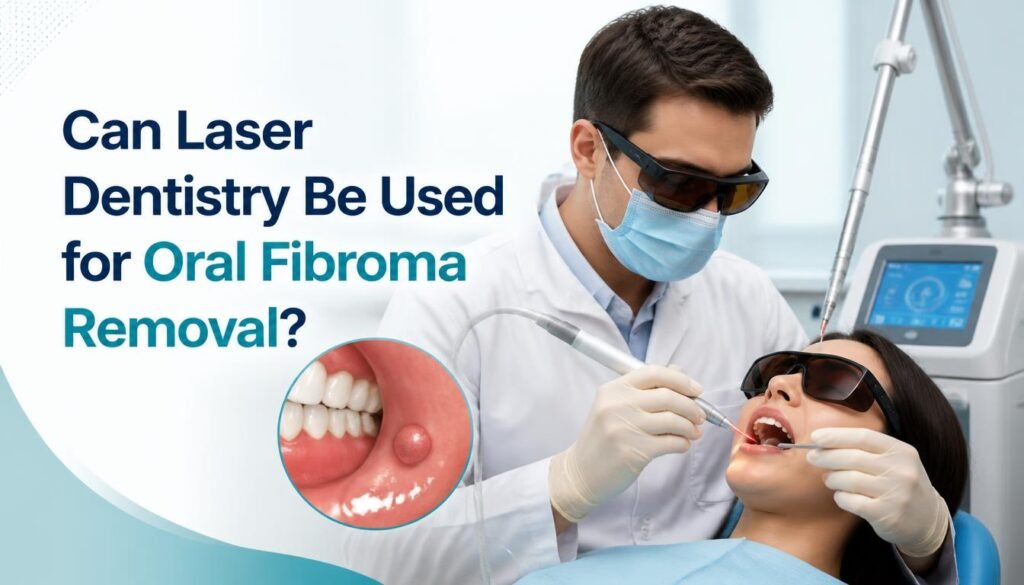
Mouth ulcers are small, painful sores that develop on the soft tissues inside the mouth, including the inner cheeks, lips, tongue and gums. They may appear as round or oval sores with a white or yellowish centre and a red border.
One common type is an aphthous ulcer, also known as a canker sore. These ulcers are usually not contagious and often heal without specific treatment.
Common causes and triggers of mouth ulcers include:
- Accidentally biting the inside of your cheek or lip.
- Irritation from braces, dentures or sharp teeth.
- Minor injuries caused by hot food or drinks.
- Stress, tiredness or hormonal changes.
- Nutritional deficiencies, including iron, folate or vitamin B12 deficiency.
- Certain medications or underlying health conditions.
Identifying the cause is important, particularly when ulcers keep returning or take longer than expected to heal.
Can Dental Lasers Be Used to Treat Mouth Ulcers?
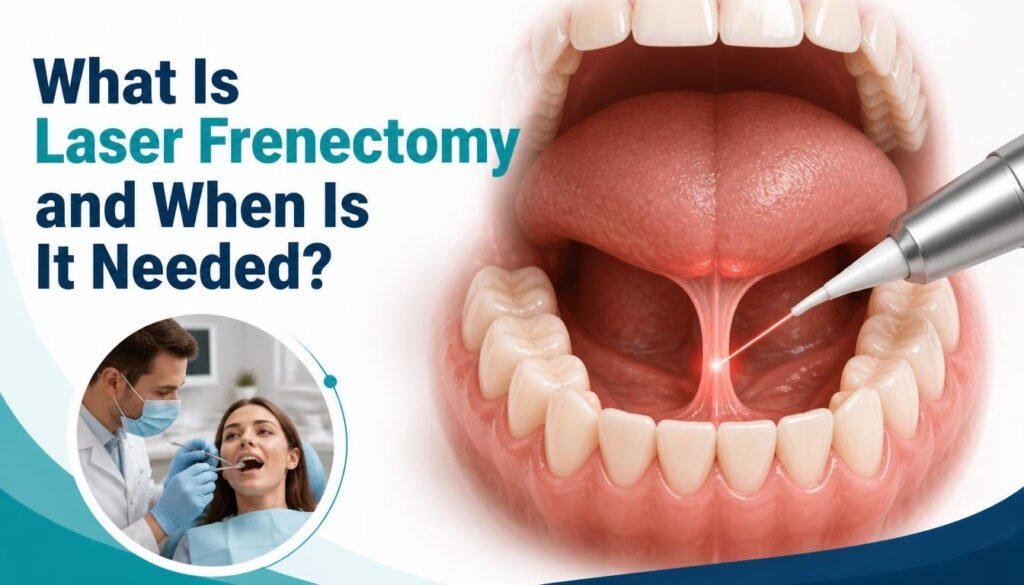
Yes, dental lasers may be used to manage certain mouth ulcers, particularly recurrent aphthous ulcers. Depending on the laser and treatment protocol, therapy may help reduce pain and shorten healing time.
Low-level laser therapy, sometimes called photobiomodulation, uses specific wavelengths of light to influence biological processes in tissue. Studies have investigated its potential to reduce inflammation-related discomfort and support tissue healing.
A systematic review and meta-analysis published in 2024 reported reduced pain scores with low-level laser therapy for recurrent aphthous stomatitis. Some studies also found shorter healing times, although the evidence has limitations and treatment protocols vary.
Read the published research: Effectiveness of low-level laser therapy for recurrent aphthous stomatitis.
It is important to understand that not every mouth ulcer needs laser treatment. Many minor ulcers heal naturally, and conventional treatments may be sufficient. A dentist should first determine the type and likely cause of the ulcer before recommending a procedure.
How Does Laser Treatment for Mouth Ulcers Work?
Dental lasers deliver concentrated light energy to targeted tissues. The way a laser works depends on its wavelength, power, exposure time and intended clinical application.
In low-level laser therapy, the objective is generally to influence cellular activity rather than remove tissue. Researchers have investigated this approach for pain relief and healing in patients with recurrent aphthous ulcers.
Potential effects include:
- Pain relief: Laser therapy may reduce discomfort during eating, drinking and speaking.
- Support for tissue healing: Some clinical studies suggest that treated ulcers may heal sooner.
- Targeted treatment: The dentist can focus treatment on the affected area.
- Minimal tissue disruption: Depending on the device and protocol, treatment may be performed without cutting the tissue.
The results are not identical for every patient. Different types of ulcers respond differently, and the evidence supporting laser treatment is stronger for some outcomes, such as pain relief, than for others.
Benefits of Laser Therapy for Mouth Ulcers
Patients who experience frequent or particularly painful mouth ulcers may benefit from discussing laser therapy with a qualified dentist.
1. May Provide Faster Pain Relief
Pain is often the most troublesome symptom of a mouth ulcer. Clinical studies have reported that certain laser protocols can reduce discomfort, sometimes soon after treatment.
This may make eating, drinking and speaking more comfortable while the ulcer heals.
2. May Support Faster Healing
Some research suggests that low-level laser therapy can shorten the healing time of recurrent aphthous ulcers. However, the response depends on the ulcer’s characteristics and the treatment used.
Laser therapy does not guarantee immediate healing, and individual results can vary.
3. Targets the Affected Area
Dental lasers allow the clinician to direct treatment towards a specific area of the oral tissues. The procedure is selected according to the diagnosis and the type of laser available.
4. May Reduce the Need for Symptom-Relief Medication
If laser therapy provides sufficient relief, some patients may need fewer additional measures to manage discomfort. Medication should only be adjusted according to advice from a dentist or doctor.
5. Can Be Considered Alongside Other Treatment Options
Laser therapy is one possible approach to managing selected ulcers. Depending on the diagnosis, a dentist may recommend protective gels, topical medication, mouth rinses or treatment of an irritating tooth or dental appliance instead.
What Happens During a Dental Laser Procedure?
If your dentist determines that laser therapy is suitable, the appointment generally involves an examination followed by treatment tailored to your condition.
Step 1: Examination and diagnosis
The dentist examines the ulcer, checks how long it has been present and asks about recurring symptoms, medications and possible triggers.
Step 2: Treatment planning
The dentist decides whether laser therapy is appropriate or whether another treatment is more suitable. Not all ulcers should be treated with a laser.
Step 3: Laser application
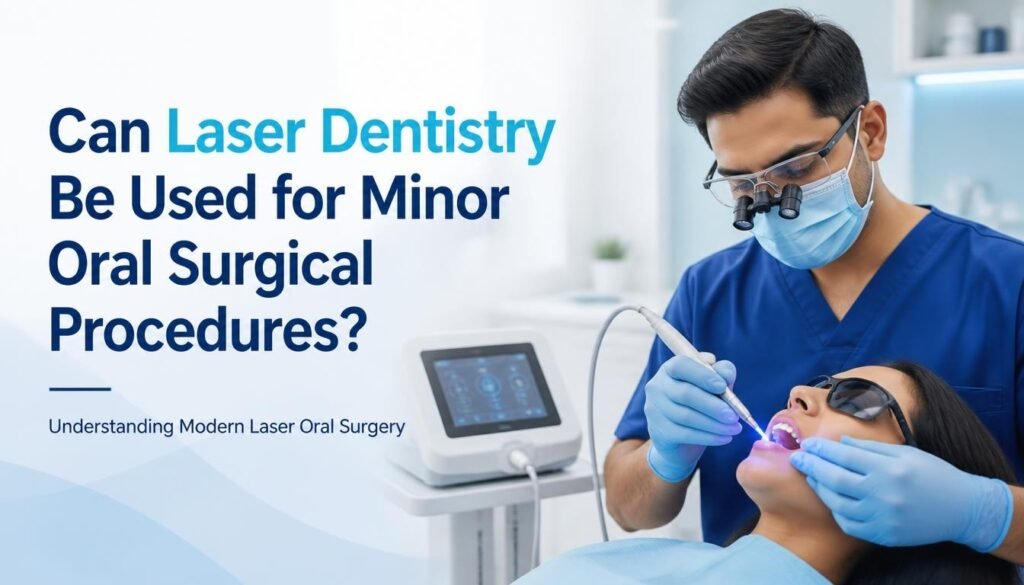
If recommended, the clinician applies the appropriate laser using a device-specific protocol. The procedure may be relatively brief, but treatment time depends on the equipment and the number and location of the ulcers.
Step 4: Aftercare guidance
You receive instructions on protecting the affected area, maintaining oral hygiene and managing discomfort. Follow-up may be advised if the ulcer does not improve.
The procedure and expected results vary, so your dentist should explain the benefits, limitations and possible risks before treatment.
Is Laser Treatment for Mouth Ulcers Safe?
Dental laser treatment can be appropriate when performed by a trained dental professional using suitable equipment and protocols. However, safety depends on the type of laser, the diagnosis and the way treatment is delivered.
Possible discomfort, tissue irritation or other adverse effects depend on the treatment used. Proper eye protection and adherence to laser safety procedures are essential.
Laser therapy is not a substitute for diagnosing an ulcer that looks unusual, keeps returning or fails to heal. A persistent ulcer may need further examination or investigation rather than repeated symptom treatment.
Laser Treatment vs Conventional Mouth Ulcer Treatment
Both laser therapy and conventional treatments can have a role in managing mouth ulcers. The best option depends on the cause, severity and duration of symptoms.
| Feature | Laser therapy | Conventional treatment |
|---|---|---|
| Main objective | May relieve pain and support healing | Relieves symptoms and addresses the cause where possible |
| Treatment approach | Uses a suitable dental laser | May include gels, mouth rinses or prescribed medication |
| Appointment required | Yes, for professional laser treatment | Depends on the treatment |
| Suitable for every ulcer? | No | Depends on the product and diagnosis |
| Healing results | Vary by ulcer and protocol | Vary by ulcer and treatment |
For a minor ulcer, avoiding irritating foods and using appropriate symptom-relief measures may be enough. For recurrent, severe or unusual ulcers, professional assessment is important before deciding on treatment.
To learn more about the technology used in modern dental care, visit our page on advanced clinical laser dentistry.
How Can You Care for Mouth Ulcers at Home?
While an ulcer is healing, simple measures may help reduce irritation and discomfort.
- Use a soft-bristled toothbrush and brush gently.
- Choose softer foods that are less likely to rub against the sore.
- Avoid very spicy, salty, acidic or hot foods and drinks.
- Drink enough water to stay hydrated.
- Avoid picking at the ulcer or repeatedly touching it.
- Ask a dentist or pharmacist about suitable mouth rinses or pain-relief products.
- If you have braces, dentures or a sharp tooth that repeatedly irritates the area, arrange a dental examination.
Do not apply household chemicals or attempt to burn, cut or treat an ulcer with an unapproved device.
For additional guidance, read the NHS advice on mouth ulcers.
When Should You Visit a Dentist for a Mouth Ulcer?
Most ordinary mouth ulcers clear up within one to two weeks. However, some symptoms should not be ignored.
Arrange an assessment with a dentist or doctor if:
- An ulcer lasts longer than three weeks.
- It is unusually large, keeps returning or looks different from previous ulcers.
- It becomes increasingly painful, red or starts bleeding.
- You have multiple ulcers or additional symptoms elsewhere in your body.
- You experience difficulty eating or drinking because of the pain.
Persistent mouth ulcers sometimes indicate a condition that needs further investigation. Do not rely on laser treatment alone to manage an ulcer without establishing its cause.
Mouth Ulcer Treatment at The Dental Crowns, Noida
If you are experiencing painful or recurring mouth ulcers, a dental examination can help identify the likely cause and determine which treatment is appropriate.
The Dental Crowns offers dental care in Noida, including laser dentistry. Depending on your symptoms and clinical assessment, the dental team can advise whether laser treatment or a different approach is suitable.
Explore our laser dentistry services in Noida to learn more about available treatment options.
Book a dental consultation if you need help with persistent or painful mouth ulcers.
The Dental Crowns
Civitech Stadia, Sector 79, Noida, Uttar Pradesh 201301
Phone: +91 89202 71787
Frequently Asked Questions
1. Can dental lasers cure mouth ulcers permanently?
No. Laser therapy may help relieve pain and support healing in selected ulcers, but it does not guarantee a permanent cure or prevent all future ulcers. Recurrent ulcers may require investigation into their triggers or underlying causes.
2. How quickly does laser treatment relieve mouth ulcer pain?
Some clinical studies report pain relief soon after laser treatment. However, the degree and duration of relief vary depending on the ulcer, laser protocol and individual response.
3. Does laser treatment help mouth ulcers heal faster?
Research suggests that certain low-level laser protocols may shorten healing time for recurrent aphthous ulcers. More standardised, high-quality research is still needed, and results cannot be guaranteed for every patient.
4. Is laser treatment better than mouth ulcer gels?
Neither treatment is best for every situation. Laser therapy may offer pain relief for selected ulcers, while gels and other topical treatments may be suitable for routine symptom management. A dental professional can help determine the appropriate option.
5. Can every type of mouth ulcer be treated with a dental laser?
No. Mouth ulcers have different causes, including trauma, recurrent aphthous ulcers, infections and certain systemic conditions. Treatment should be based on the diagnosis rather than the appearance of the sore alone.
6. Are mouth ulcers contagious?
Ordinary aphthous ulcers are not contagious. However, some conditions that cause sores in or around the mouth, including certain viral infections, can be contagious. Correct diagnosis is important.
7. When should I seek professional help for a mouth ulcer?
Seek an assessment if the ulcer lasts longer than three weeks, becomes more painful, bleeds, looks unusual or repeatedly returns. Earlier assessment may be appropriate for severe symptoms or difficulty eating and drinking.
Conclusion
So, can dental lasers be used to treat mouth ulcers? Yes, selected dental laser treatments may reduce pain and help certain mouth ulcers heal faster. Research is promising, particularly for recurrent aphthous ulcers, but outcomes depend on the diagnosis and treatment protocol.
Most minor mouth ulcers heal naturally, while persistent or unusual sores need professional assessment. If you are experiencing recurring mouth ulcers, consult a dentist to understand the cause and discuss the most suitable treatment.
For guidance on laser dentistry and other dental care options, contact The Dental Crowns in Noida to arrange an assessment.