Modern dentistry is continuously evolving, introducing advanced technologies that make dental treatments more precise and comfortable. One such advancement is laser dentistry, which has transformed the way dentists approach selected gum treatments and minor oral surgical procedures.
Traditionally, minor oral surgeries involved conventional instruments such as scalpels and surgical blades. Today, dental lasers offer an alternative technique for certain procedures involving the gums and other soft tissues of the mouth.
But can laser dentistry actually be used for minor oral surgical procedures? Can it help with gum reshaping, tissue removal or other oral surgical treatments? And is it suitable for every patient?
The answer is yes, dental lasers can be used for several minor oral surgical procedures when clinically appropriate. However, their suitability depends on the type of dental condition, the laser technology being used and the dentist’s clinical assessment.
Let’s explore how laser dentistry works, which procedures it can assist with and what patients should know before considering laser-assisted oral surgery.
What Is Laser Dentistry?
Laser dentistry is an advanced dental treatment technique that uses concentrated light energy to interact with specific tissues inside the mouth.
The term LASER stands for Light Amplification by Stimulated Emission of Radiation. In dentistry, different laser wavelengths are used for different purposes, depending on whether the dentist is treating soft tissues, hard tissues or providing therapeutic light treatment.
Dental lasers may be used for:
- Gum reshaping and contouring.
- Selected gum disease treatments.
- Removal of excess gum tissue.
- Frenectomy procedures.
- Certain oral soft-tissue surgeries.
- Selected periodontal procedures.
- Certain applications in root canal treatment.
Unlike conventional surgical instruments, some dental lasers can simultaneously cut and coagulate soft tissue, potentially helping control bleeding during selected procedures.
However, not every laser is designed for every dental procedure. The equipment and technique must be selected according to the patient’s treatment requirements.
Can Laser Dentistry Be Used for Minor Oral Surgical Procedures?
Yes. Laser dentistry can be used for several minor oral surgical procedures, particularly those involving soft tissues such as the gums, lips, tongue and inner lining of the mouth.
Depending on the laser system and its approved clinical applications, dentists may use laser technology to remove, reshape or release selected soft tissues.
Some procedures that may involve laser technology include gingivectomy, gingivoplasty, frenectomy, removal of certain oral soft-tissue lesions and selected periodontal treatments.
Here are some common examples.
1. Gingivectomy: Removing Excess Gum Tissue
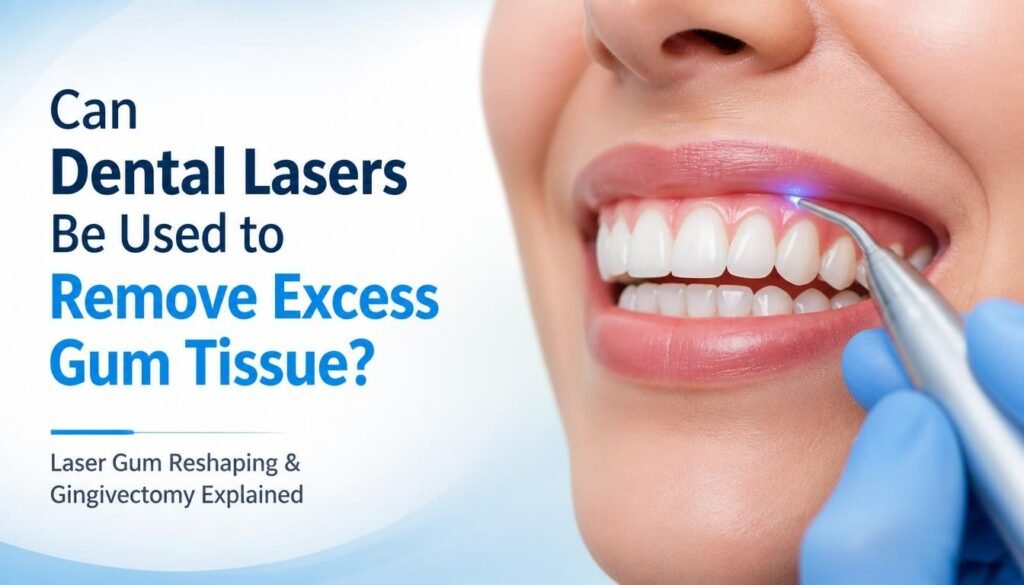
Gingivectomy is a minor oral surgical procedure in which excess gum tissue is removed to improve gum health or reshape the appearance of the gums.
Some people develop excessive gum tissue due to periodontal conditions, medication-related gum enlargement or other dental concerns.
A dentist may recommend gingivectomy when excess gum tissue:
- Covers a significant portion of the teeth.
- Makes oral hygiene difficult.
- Creates irregular gum contours.
- Contributes to certain periodontal problems.
- Affects the appearance of the smile.
Laser-assisted gingivectomy uses focused laser energy to remove selected gum tissue.
Potential benefits include:
- Controlled soft-tissue removal.
- Reduced bleeding in suitable cases.
- Better visibility during treatment.
- Potentially less postoperative discomfort.
- Reduced need for sutures in selected procedures.
The dentist first examines the gums to determine whether laser treatment is appropriate or whether conventional surgery is more suitable.
2. Frenectomy: Treating a Tight Lip or Tongue Frenum
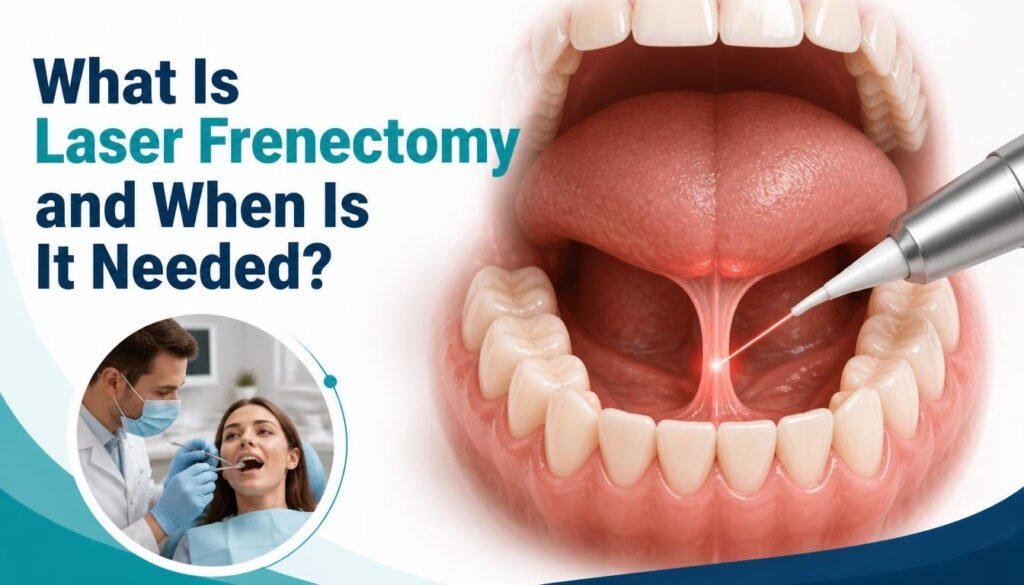
A frenectomy is a minor surgical procedure performed to release or remove a restrictive fold of tissue called the frenum.
The frenum connects the lips or tongue to the surrounding oral tissues. When it is unusually tight or restrictive, it may interfere with certain oral functions.
A dentist may recommend frenectomy for conditions involving:
- Restricted tongue movement.
- Certain tongue-tie-related difficulties.
- Feeding difficulties associated with restricted tongue movement.
- A gap between the upper front teeth associated with an abnormal lip frenum.
- Certain speech or oral function concerns.
Laser-assisted frenectomy uses focused light energy to release the restrictive tissue.
Compared with conventional surgical techniques, some clinical studies have reported reduced intraoperative bleeding and less early postoperative discomfort with laser frenectomy. However, results vary according to the laser system, surgical technique and individual patient.
Read more about the research: https://pubmed.ncbi.nlm.nih.gov/38028885/
3. Gingivoplasty: Reshaping the Gum Line
Gingivoplasty is a procedure performed to reshape the gum tissue and improve its appearance or contour.
Uneven gum lines, excessive gum tissue and irregular gum shapes can affect the appearance of a person’s smile.
In selected cases, laser technology can help dentists reshape the soft tissues with controlled precision.
Laser-assisted gingivoplasty may be considered for:
- Uneven gum contours.
- Excessive gum tissue around teeth.
- Selected cosmetic gum concerns.
- Certain periodontal treatment requirements.
The dentist evaluates the gum health, tooth proportions and underlying supporting structures before recommending treatment.
It is important to distinguish gingivoplasty from gingivectomy. Gingivectomy focuses on removing excess gum tissue, whereas gingivoplasty focuses on reshaping the remaining gum tissue.
4. Removal of Certain Oral Soft-Tissue Lesions
Small growths or lesions can sometimes develop inside the mouth, including on the gums, tongue, lips and inner cheeks.
Depending on the diagnosis, location and size, some soft-tissue lesions may require surgical removal.
Certain dental laser systems can be used for selected soft-tissue procedures, including:
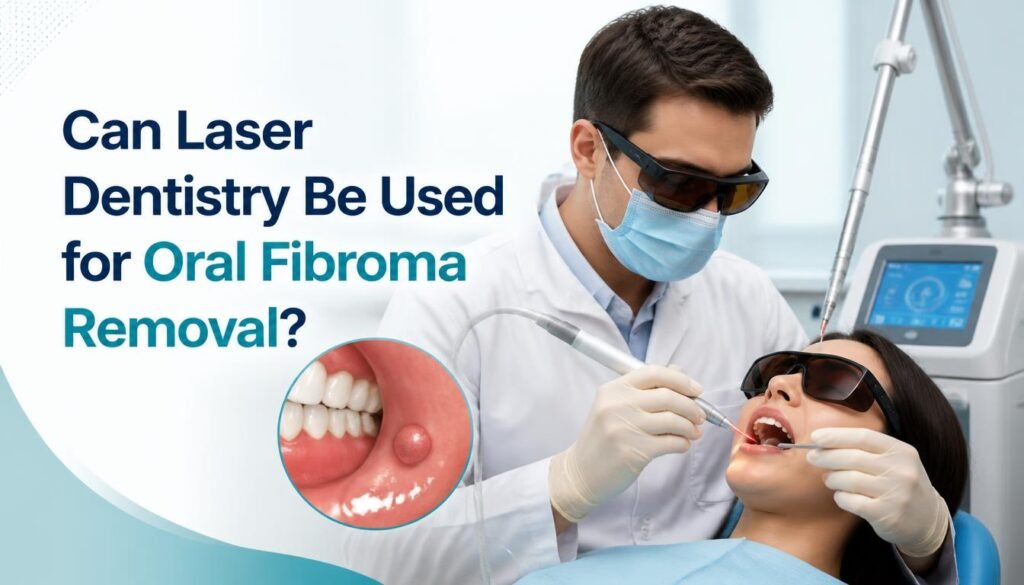
- Removal of certain fibromas.
- Selected benign soft-tissue growths.
- Excision of certain oral lesions.
- Selected soft-tissue biopsy procedures.
Laser treatment may help provide controlled tissue removal and bleeding management in suitable cases.
An important precaution: Not every oral lesion should be removed using a laser. Suspicious or persistent lesions require proper diagnosis and, where indicated, biopsy and histopathological examination. The treatment method must preserve the ability to obtain an appropriate diagnostic specimen.
Patients should never assume that a painless or small oral growth is harmless without professional examination.
5. Crown Lengthening: Exposing More Natural Tooth Structure
Crown lengthening is a dental procedure performed to expose more of the natural tooth structure by adjusting the surrounding gum tissue and, when necessary, supporting bone.
It may be recommended when:
- A tooth is broken close to the gum line.
- There is insufficient tooth structure for a dental restoration.
- Excessive gum tissue covers part of the tooth.
- Additional tooth structure needs to be exposed before placing a dental crown.
Laser technology may assist with the soft-tissue component of selected crown-lengthening procedures.
However, when bone modification is required, an appropriate conventional or specialised surgical technique may also be necessary.
If you are considering a dental restoration, explore our dental services and crown treatment options.
6. Treatment of Selected Mouth Ulcers
Mouth ulcers can cause discomfort when eating, drinking or speaking.
Certain low-level laser therapy or photobiomodulation techniques may be used to manage symptoms associated with selected oral ulcers, including recurrent aphthous ulcers.
Depending on the treatment protocol, laser therapy may help:
- Reduce discomfort.
- Improve patient comfort.
- Support symptom management.
- Make eating and speaking more comfortable during recovery.
However, low-level laser therapy for pain management is different from surgical laser treatment that cuts or removes tissue.
Persistent, recurring or unusual mouth ulcers should be examined by a dental professional to identify their underlying cause.
What Are the Benefits of Laser Dentistry for Minor Oral Surgery?
Laser dentistry offers several potential advantages when used for appropriate procedures.
1. Better Bleeding Control
Certain surgical dental lasers can coagulate small blood vessels while treating soft tissues. This may reduce bleeding during selected minor oral surgical procedures.
2. Controlled Tissue Removal
Laser energy can be directed towards a specific treatment area, allowing dentists to remove or reshape selected soft tissues.
3. Potentially Less Postoperative Discomfort
Some patients may experience less postoperative discomfort following selected laser-assisted procedures compared with conventional techniques.
However, the outcome depends on the procedure, treatment settings and individual healing response.
4. Reduced Need for Stitches in Selected Cases
Some laser-assisted soft-tissue procedures may not require sutures because of the coagulation effect of certain laser systems.
Nevertheless, stitches may still be necessary depending on the treatment area and surgical requirements.
5. Improved Treatment Experience
For selected procedures, laser technology can make treatment more convenient by providing controlled tissue interaction and bleeding management.
The actual treatment time depends on the complexity of the procedure.
Is Laser Dentistry Safer Than Traditional Oral Surgery?
Laser dentistry can be a safe and effective option when performed by a suitably trained dental professional using appropriate equipment and safety protocols.
However, it is not automatically safer or better than conventional oral surgery in every situation.
Both techniques have their own advantages, limitations and clinical applications.
Possible risks of laser-assisted procedures include:
- Temporary pain or swelling.
- Thermal damage to surrounding tissues if used incorrectly.
- Delayed healing in certain circumstances.
- Incomplete removal of the targeted tissue.
- Infection or postoperative complications.
- Need for additional surgical treatment.
Protective eyewear appropriate for the laser wavelength is essential for the patient and dental team.
The dentist must select the correct wavelength, power settings and treatment technique according to the procedure.
For additional information, read the FDA’s guide to medical lasers.
Laser Dentistry vs Traditional Oral Surgery: Which Is Better?
Both laser dentistry and conventional oral surgery have important roles in modern dental care.
The difference mainly lies in the instruments and techniques used to perform the procedure.
| Comparison | Laser Dentistry | Traditional Oral Surgery |
|---|---|---|
| Treatment method | Focused laser energy | Conventional surgical instruments |
| Bleeding | May be reduced in selected procedures | Depends on surgical technique |
| Tissue removal | Controlled laser interaction | Mechanical cutting and removal |
| Sutures | May not be required in some cases | May be required |
| Postoperative discomfort | May be lower for selected procedures | Depends on the procedure |
| Suitability | Depends on laser indications | Suitable for a broad range of procedures |
Which treatment should you choose?
There is no universal answer. A dentist should examine the affected area and determine which approach is most appropriate.
In some situations, laser technology may be used alongside conventional instruments rather than replacing them completely.
Who Is a Suitable Candidate for Laser-Assisted Oral Surgery?
Laser-assisted oral surgery may be suitable for patients who require selected soft-tissue procedures.
You may be considered for laser dentistry if you have:
- Excessive gum tissue.
- A restrictive lip or tongue frenum.
- Uneven gum contours.
- Certain oral soft-tissue growths.
- Selected periodontal conditions.
- Specific oral ulcers requiring symptom management.
However, suitability depends on several factors, including your oral health, medical history, the location of the affected tissue and the type of laser available.
Patients with complex oral infections, suspicious lesions or conditions requiring extensive bone surgery may need another treatment approach.
A proper dental examination is essential before deciding on laser treatment.
What Happens During a Laser-Assisted Oral Surgical Procedure?
If your dentist recommends laser-assisted oral surgery, the treatment generally involves the following stages.
Step 1: Initial Dental Examination
The dentist examines your teeth, gums and oral tissues to identify the problem. Dental X-rays or additional investigations may be recommended when necessary.
Step 2: Treatment Planning
The dentist determines whether laser technology is suitable or whether conventional surgery would provide a better clinical outcome.
Step 3: Preparation of the Treatment Area
The affected area is prepared, and local anaesthesia may be administered depending on the procedure and patient’s comfort.
Step 4: Laser Treatment
The dentist uses an appropriate dental laser to perform the planned soft-tissue procedure.
Step 5: Post-Treatment Instructions
After the procedure, the dentist provides instructions regarding oral hygiene, eating habits, prescribed medication and follow-up appointments.
Following these instructions is important for proper healing.
Where Can You Get Laser Dentistry in Noida?
If you are searching for laser dentistry in Noida, selecting a dental clinic with appropriate technology, trained professionals and a patient-focused approach is important.
The Dental Crowns offers laser dentistry alongside other general, cosmetic and surgical dental services.
Located at Civitech Stadia, Sector 79, Noida, the clinic serves patients looking for dental care in and around nearby residential areas.
Patients from Sector 74, Sector 75, Sector 76, Sector 77, Sector 78 and Sector 79 can explore the available treatment options.
Whether you need an assessment for gum reshaping, frenectomy or another minor oral surgical procedure, a professional consultation can help determine whether laser-assisted treatment is suitable.
Explore our Laser Dentistry in Noida page to learn more about laser-based dental treatment.
You can also visit our complete dental services page to explore other available dental treatments.
Conclusion
Laser dentistry has created new possibilities for performing selected minor oral surgical procedures. From gingivectomy and frenectomy to gum reshaping and certain soft-tissue lesion procedures, dental lasers can offer controlled tissue removal and potentially improved bleeding management and patient comfort.
However, laser technology is not a replacement for every conventional surgical technique. Its suitability depends on the dental condition, the type of laser, the procedure involved and the dentist’s clinical assessment.
If you are considering laser dentistry in Noida, consult a qualified dental professional to understand your treatment options.
At The Dental Crowns, patients can explore laser dentistry and other dental treatment options based on their individual oral health requirements.
Frequently Asked Questions (FAQs)
1. Can laser dentistry be used for minor oral surgical procedures?
Yes. Dental lasers can be used for selected minor oral surgical procedures, including gingivectomy, frenectomy, gingivoplasty and removal of certain soft-tissue lesions.
2. Is laser oral surgery painful?
Some laser-assisted procedures may involve less postoperative discomfort than conventional techniques. Local anaesthesia may still be required depending on the procedure and patient’s sensitivity.
3. Can lasers be used for gum surgery?
Yes. Certain dental lasers are used for selected gum procedures, including gingivectomy, gingivoplasty and soft-tissue crown lengthening.
4. Is laser frenectomy better than conventional frenectomy?
Laser frenectomy may offer benefits such as reduced bleeding and less early postoperative discomfort in some cases. However, the most appropriate method depends on the patient’s condition and the dentist’s expertise.
5. Does laser dentistry require stitches?
Not always. Certain laser-assisted soft-tissue procedures may not require stitches. However, sutures may still be necessary depending on the surgical site and procedure.
6. How long does recovery take after laser oral surgery?
Recovery varies according to the procedure, the amount of tissue treated and the patient’s healing response. Your dentist can provide a more specific recovery timeline after examination.
7. Can dental lasers remove oral cysts?
Some laser systems are suitable for selected soft-tissue procedures, but oral cysts may require conventional surgical removal and histopathological examination. The appropriate treatment depends on the diagnosis and location.
8. Can laser dentistry be used for wisdom tooth removal?
Laser technology may assist with selected soft-tissue procedures around partially erupted teeth. However, it does not replace the instruments needed to remove the tooth itself. Wisdom tooth extraction requires an individual surgical assessment.
9. Is laser dentistry suitable for everyone?
No. Suitability depends on the patient’s dental condition, medical history, treatment requirements and the type of laser available.
10. Where can I get laser dentistry in Sector 79, Noida?
The Dental Crowns offers laser dentistry at Civitech Stadia, Sector 79, Noida. Patients can contact the clinic to discuss their dental concerns and arrange a consultation.