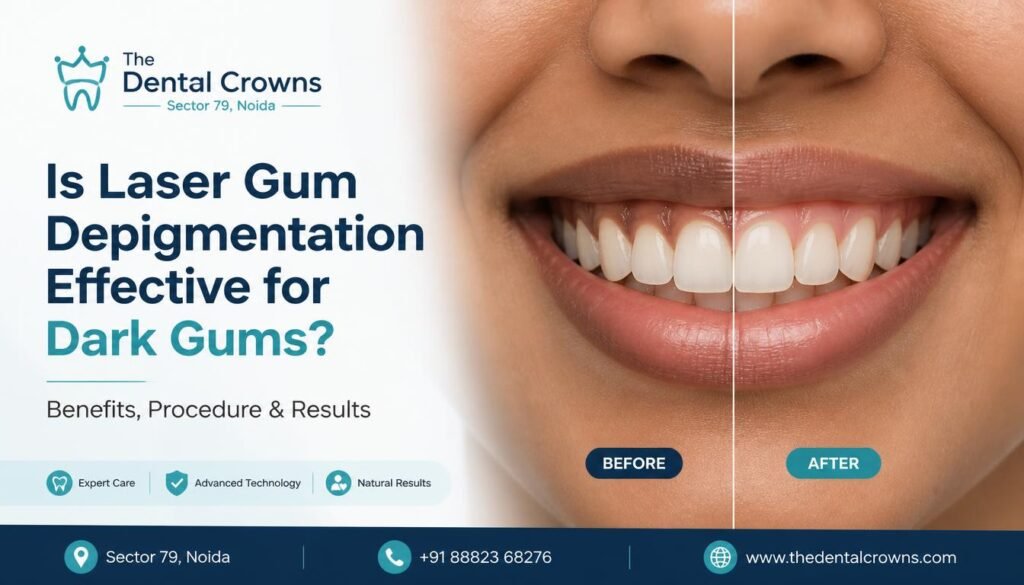
Have you ever noticed that your gums cover too much of your teeth when you smile? Or do your teeth appear shorter because of excessive gum tissue? These concerns are more common than you might think. Excess gum tissue can affect the appearance of your smile and, in some cases, make maintaining proper oral hygiene more difficult.
The good news is that modern dentistry offers several treatment options for reshaping and removing unwanted gum tissue. One increasingly popular option is laser gum treatment.
But can dental lasers actually be used to remove excess gum tissue? Yes! Specific dental lasers can be used for procedures such as laser gingivectomy and gum contouring, helping dentists carefully remove or reshape excess gum tissue.
In this guide, we will explore how laser gum removal works, its benefits, who may need the treatment, and what you can expect during recovery.
What Is Excess Gum Tissue?
Excess gum tissue refers to a condition in which the gums cover more of the teeth than usual. It can make teeth appear smaller or create an uneven gumline, sometimes resulting in what is commonly known as a gummy smile.
This condition can occur for several reasons, including:
- Genetics: Some people naturally have more prominent gum tissue.
- Gum inflammation: Gingivitis or periodontal disease can cause swollen gums.
- Certain medications: Some medicines may contribute to gum overgrowth.
- Orthodontic factors: Tooth positioning and orthodontic appliances can influence how the gums appear.
- Poor oral hygiene: Plaque accumulation can contribute to gum inflammation and enlargement.
The appropriate treatment depends on the underlying cause. A dental examination is important before deciding whether gum reshaping or another periodontal treatment is necessary.
Can Dental Lasers Be Used to Remove Excess Gum Tissue?
Yes, dental lasers can be used to remove excess gum tissue through procedures such as laser gingivectomy and laser gum contouring.
During the procedure, a dentist uses a specialised dental laser to carefully remove or reshape selected areas of gum tissue. The laser energy interacts with the soft tissue, allowing the dentist to create a more balanced gumline.
Unlike conventional surgical techniques that generally involve a scalpel, laser procedures use focused light energy to perform specific soft-tissue treatments.
Depending on the patient’s condition and the type of laser used, the procedure may help:
- Remove excess gum tissue.
- Improve an uneven gumline.
- Expose more of the natural tooth surface.
- Improve the appearance of a gummy smile.
- Remove certain areas of overgrown gum tissue.
However, laser treatment is not suitable for every gum condition. The dentist must first determine whether the excess tissue is caused by inflammation, gum disease, genetics or another underlying issue.
What Is Laser Gingivectomy?
Laser gingivectomy is a dental procedure in which excess or diseased gum tissue is removed using a specialised dental laser.
It can be recommended for patients who have enlarged gums, certain periodontal conditions or excessive gum tissue affecting the appearance of their smile.
The procedure generally involves the following steps:
1. Dental Examination
The dentist examines your gums, teeth and overall oral health to understand the reason behind the excess gum tissue.
2. Treatment Planning
The dentist identifies the areas that require reshaping and determines whether laser gingivectomy is appropriate.
3. Local Anaesthesia
Depending on the extent of treatment and individual sensitivity, local anaesthesia may be administered to keep the procedure comfortable.
4. Laser Gum Reshaping
The dentist carefully directs the dental laser towards the targeted gum tissue to remove or reshape the required areas.
5. Final Assessment
After reshaping, the dentist checks the gumline and provides instructions for post-treatment care.
The duration of the procedure depends on how much gum tissue needs to be treated and the complexity of the case.
Benefits of Using Dental Lasers for Excess Gum Tissue Removal
Laser gum treatment offers several potential advantages when performed for suitable cases by a trained dental professional.
1. Greater Precision
Dental lasers allow dentists to target specific soft-tissue areas, helping them reshape the gumline with controlled precision.
2. Reduced Bleeding
Some dental lasers can coagulate small blood vessels during treatment, which may reduce bleeding compared with certain conventional techniques.
3. Less Tissue Trauma in Selected Cases
Laser treatment may cause less mechanical trauma to surrounding tissues in appropriately selected procedures.
4. Potentially Faster Recovery
Some patients experience a comfortable recovery following laser gum treatment. However, healing time depends on the extent of tissue removal and individual health factors.
5. Improved Smile Appearance
Laser gum contouring can help create a more balanced appearance by reshaping excessive or uneven gum tissue.
6. No Stitches in Many Cases
Some laser gingivectomy procedures do not require stitches, although this depends on the treatment technique and the amount of tissue involved.
Laser Gum Removal vs Traditional Gum Surgery
Both laser treatment and conventional surgical techniques can be used to remove excess gum tissue. The right option depends on the patient’s oral health and treatment requirements.
| Feature | Laser Gum Treatment | Traditional Gum Surgery |
|---|---|---|
| Technique | Focused laser energy | Surgical instruments |
| Bleeding | May be reduced | May involve more bleeding |
| Precision | Controlled soft-tissue removal | Depends on surgical technique |
| Stitches | Often unnecessary in suitable cases | May be required |
| Recovery | May be comfortable in selected cases | Depends on the procedure |
| Suitability | Specific soft-tissue conditions | A wider range of surgical cases |
Laser treatment is not automatically better for every patient. If bone reshaping or more extensive periodontal surgery is necessary, conventional surgical techniques may be more appropriate.
Who Is a Good Candidate for Laser Gum Reshaping?
You may be a suitable candidate for laser gum reshaping if you:
- Have excessive gum tissue covering your teeth.
- Have an uneven gumline.
- Want to improve the appearance of a gummy smile.
- Have certain types of gum overgrowth.
- Need soft-tissue reshaping for functional or cosmetic reasons.
However, patients with active gum infections or uncontrolled periodontal disease may need treatment for the underlying condition before cosmetic gum reshaping is considered.
A dentist or periodontist can evaluate your gum health and recommend the most appropriate procedure.
What Is the Recovery Time After Laser Gum Removal?
Recovery after laser gum removal varies depending on the amount of tissue removed, the patient’s health and the specific treatment technique.
Some patients can return to their regular activities relatively quickly, while others may require additional healing time.
For a smoother recovery, follow these general precautions:
- Avoid very hot, spicy or hard foods immediately after treatment.
- Choose soft foods during the initial healing period.
- Maintain oral hygiene according to your dentist’s instructions.
- Avoid brushing directly over the treated area until advised.
- Do not smoke during the healing period.
- Attend follow-up appointments as recommended.
Contact your dentist if you experience increasing pain, persistent bleeding, swelling or signs of infection.
Is Laser Gum Removal Safe?
Dental lasers can be used safely for appropriate dental procedures when operated by trained professionals using suitable equipment and safety precautions.
However, the safety and effectiveness of treatment depend on factors such as:
- The type of dental laser.
- The wavelength and power settings.
- The dentist’s training and experience.
- The patient’s existing gum condition.
- The amount of tissue that needs to be removed.
Laser treatment also has limitations. It cannot replace every conventional periodontal or surgical procedure.
For this reason, a proper dental assessment is essential before undergoing laser gum surgery.
Where Can You Get Laser Gum Treatment in Noida?
If excess gum tissue is affecting your smile, consulting an experienced dental professional is the first step towards finding the right treatment.
At The Dental Crowns, Noida, patients can explore modern dental treatment options, including laser dentistry, based on their individual oral health requirements.
The clinic offers dental care with an emphasis on personalised treatment planning, modern technology and patient comfort.
Whether you are considering gum reshaping for cosmetic reasons or need an assessment for excessive gum tissue, a professional consultation can help determine the most suitable approach.
If you are looking for laser dentistry in Noida, visit The Dental Crowns to learn more about available treatment options.
Book a Dental Consultation Today!
Website: https://thedentalcrowns.in/
Phone: +91 89202 71787
Address: Shop No. 16, 1st Floor, Civitech Stadia, Sector 79, Noida, Uttar Pradesh.
Frequently Asked Questions (FAQs)
1. Can dental lasers remove excess gum tissue?
Yes. Specific dental lasers can remove or reshape excess gum tissue through procedures such as laser gingivectomy and gum contouring.
2. Is laser gum removal painful?
Many patients find laser gum treatment comfortable. Local anaesthesia may be used depending on the procedure and the patient’s sensitivity. Some discomfort can occur during healing.
3. How long does laser gum reshaping take?
Treatment time depends on the amount of gum tissue being removed and the complexity of the case. Your dentist can provide a more accurate estimate after examination.
4. Does laser gum removal require stitches?
Many laser gingivectomy procedures do not require stitches. However, this depends on the extent and type of treatment.
5. Can laser gum treatment fix a gummy smile?
Yes. Laser gum contouring may improve a gummy smile when excessive gum tissue is the primary reason for the appearance. Other causes may require orthodontic or surgical treatment.
6. Is laser gum surgery better than traditional gum surgery?
Laser surgery offers advantages such as controlled soft-tissue removal and potentially reduced bleeding. However, traditional surgery may be more appropriate for certain complex cases.
7. How long does it take for gums to heal after laser treatment?
Healing varies according to the extent of the procedure and individual health. Your dentist will explain the expected recovery period and aftercare requirements.
8. Where can I get laser dentistry in Noida?
You can consult The Dental Crowns in Sector 79, Noida, to discuss laser dentistry and whether laser gum reshaping is appropriate for your condition.
Final Thoughts
Excess gum tissue does not always require traditional gum surgery. Modern dental lasers offer an additional option for carefully removing or reshaping gum tissue, improving gumline appearance and treating selected soft-tissue conditions.
However, the right treatment depends on the cause of the excess gum tissue and your overall oral health.
If you are considering laser gum reshaping, schedule a dental consultation to understand your options and choose a treatment plan suited to your needs.