
Dental plaque is one of the most common causes of oral health problems. It is a sticky, colourless film of bacteria that continuously forms on teeth and along the gumline. When plaque is not removed regularly, it can contribute to tooth decay, gum inflammation, bad breath and periodontal disease.
Traditional brushing, flossing and professional dental cleaning play an essential role in controlling plaque. However, modern dental technology has introduced another approach that may help manage harmful oral bacteria: Laser Dentistry.
But can laser dentistry actually help reduce dental plaque bacteria? Can it improve gum health, and is it more effective than conventional dental cleaning?
Let’s understand how laser technology works, its potential benefits and when a dentist may recommend it.
What Is Dental Plaque and Why Is It Harmful?
Dental plaque is a biofilm containing bacteria, food particles and other substances that accumulate on tooth surfaces. It develops naturally throughout the day, particularly around the gumline and between teeth.
If plaque is not removed through proper oral hygiene, it can contribute to several dental problems, including:
- Gingivitis: Plaque accumulation can irritate the gums, causing redness, swelling and bleeding.
- Periodontal disease: Persistent bacterial infection and inflammation can damage the tissues supporting the teeth.
- Tooth decay: Certain plaque bacteria produce acids that gradually damage tooth enamel.
- Bad breath: Bacterial activity can release unpleasant-smelling compounds.
- Tartar formation: When plaque hardens, it becomes tartar (calculus), which cannot be effectively removed through regular brushing.
This is why maintaining good oral hygiene and scheduling regular dental check-ups are essential for long-term oral health.
How Does Laser Dentistry Work Against Dental Plaque Bacteria?
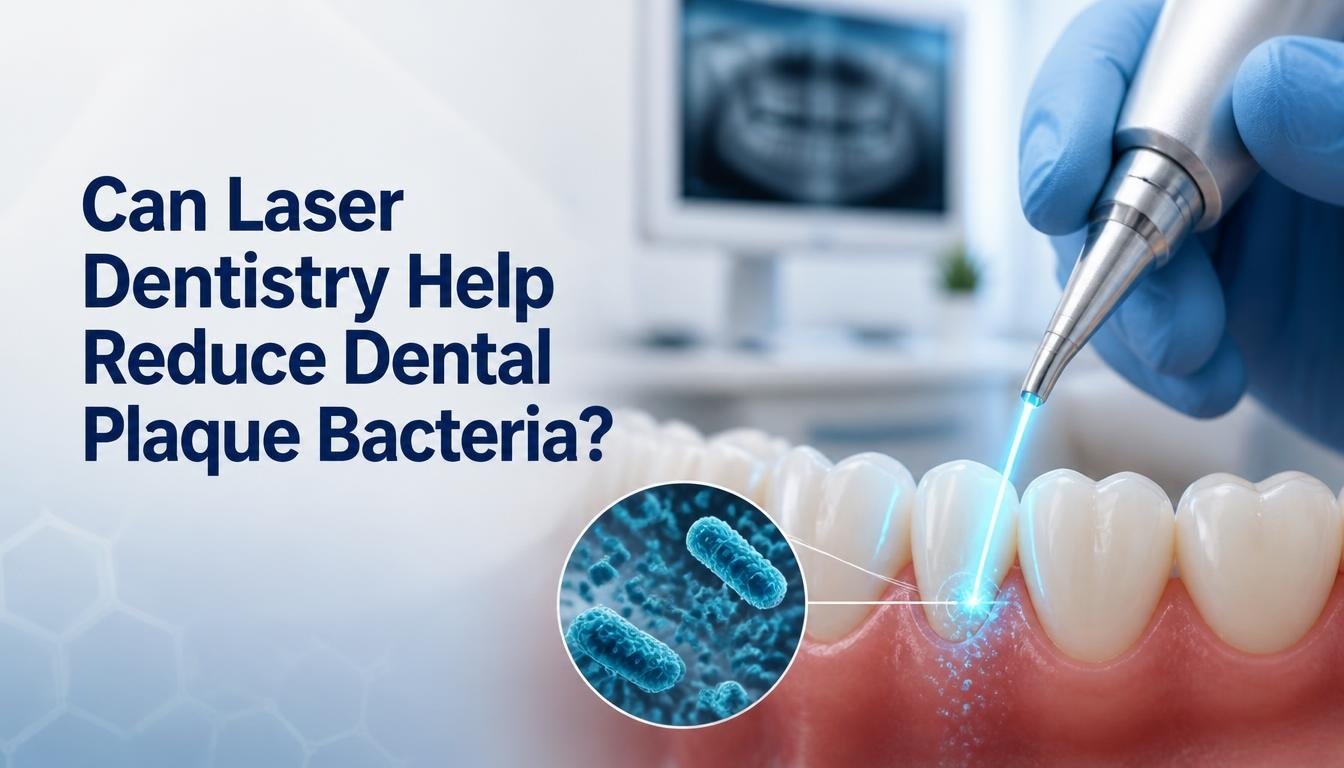
Laser Dentistry uses concentrated light energy to perform specific dental procedures. Depending on the type of laser and treatment technique, it can target soft tissues, assist with certain periodontal procedures and help reduce bacteria in selected treatment areas.
Some dental lasers have demonstrated antimicrobial effects against oral bacteria in laboratory research. These effects may occur through thermal and other energy-related mechanisms that damage bacterial cells.
In periodontal treatment, lasers may be used as an additional tool alongside conventional procedures to address bacterial deposits and infected tissues in selected cases.
However, it is important to understand that laser dentistry does not automatically eliminate all plaque from the mouth. Its effectiveness depends on the laser wavelength, energy settings, treatment area and the patient’s dental condition.
5 Ways Laser Dentistry May Help Improve Oral Health
1. Helps Reduce Harmful Oral Bacteria
Certain dental laser systems demonstrate antibacterial activity against microorganisms associated with dental infections and gum disease.
However, laboratory findings should not be interpreted as proof that laser treatment completely removes plaque bacteria in patients.
2. Supports Gum Disease Treatment
Plaque bacteria are closely associated with gingivitis and periodontitis. When bacteria accumulate below the gumline, they can contribute to inflammation and periodontal pocket formation.
Laser-assisted periodontal procedures may help manage infected areas when used alongside conventional periodontal treatment.
Depending on the patient’s condition, a dentist may recommend laser treatment as an adjunct to scaling and root planing.
3. Helps Target Difficult-to-Reach Treatment Areas
Bacteria can accumulate in periodontal pockets and other areas that are difficult to clean using ordinary oral hygiene methods.
Certain laser techniques may help dentists access and treat selected areas during periodontal procedures.
The suitability of laser treatment depends on the location and severity of the infection, as well as the equipment and technique being used.
4. May Support a More Comfortable Dental Experience
One reason patients explore laser dentistry is its potential to provide a minimally invasive approach to certain dental procedures.
Depending on the treatment, lasers may reduce the need for conventional cutting and may help minimise discomfort and bleeding.
However, comfort and recovery vary according to the procedure, individual sensitivity and treatment requirements.
5. Complements Conventional Dental Cleaning
Laser technology should not be considered a replacement for professional dental cleaning.
Scaling and root planing mechanically remove plaque and hardened deposits from teeth and root surfaces. Laser treatment may provide additional benefits in selected periodontal cases, but it does not eliminate the need for conventional cleaning.
Combining appropriate professional dental care with good daily oral hygiene is essential for maintaining healthy teeth and gums.
Is Laser Dentistry More Effective Than Traditional Dental Cleaning?
This is an important question for anyone considering advanced dental treatment.
Traditional dental cleaning and laser dentistry serve different purposes.
Professional cleaning focuses on physically removing plaque and tartar from tooth surfaces. Laser-assisted periodontal treatment may provide additional antimicrobial or tissue-related effects depending on the technique.
Here is a simple comparison:
| Feature | Traditional Cleaning | Laser-Assisted Treatment |
|---|---|---|
| Plaque removal | Mechanically removes plaque | Depends on the laser procedure |
| Tartar removal | Removes hardened deposits | Certain lasers can assist with calculus removal |
| Bacterial reduction | Reduces bacterial deposits | May provide additional antimicrobial effects |
| Gum treatment | Commonly used for gum disease | Can complement selected procedures |
| Daily oral hygiene | Still necessary | Still necessary |
Neither approach is universally superior. The right treatment depends on your oral health, the presence of gum disease and your dentist’s clinical assessment.
Who May Benefit From Laser Dentistry?
Laser-assisted dental procedures may be considered for patients experiencing:
- Persistent gum inflammation or bleeding.
- Periodontal pockets associated with gum disease.
- Bacterial infection requiring additional periodontal treatment.
- Specific soft-tissue dental conditions.
- Dental conditions where laser-assisted treatment is clinically appropriate.
Not everyone with dental plaque requires laser treatment. In many cases, regular brushing, flossing and professional scaling are sufficient to maintain healthy teeth and gums.
A dental examination is necessary before deciding whether laser treatment is appropriate.
How Can You Prevent Dental Plaque Bacteria Naturally?
Even with modern dental technology, daily oral hygiene remains the foundation of plaque prevention.
Follow these essential practices:
1. Brush twice daily: Use a soft-bristled toothbrush and fluoride toothpaste. Brush for approximately two minutes.
2. Floss every day: Clean between your teeth to remove plaque and food particles that a toothbrush may miss.
3. Clean your tongue: Bacteria can accumulate on the tongue and contribute to bad breath.
4. Limit sugary foods: Frequent consumption of sugary foods and drinks can increase the risk of tooth decay.
5. Schedule regular dental check-ups: Professional examinations help identify plaque accumulation, tartar and early signs of gum disease.
6. Follow your dentist’s advice: If you have persistent gum bleeding, swelling or discomfort, seek professional dental evaluation.
Where Can You Get Laser Dentistry Treatment in Noida?
If you are experiencing gum inflammation, bleeding gums or concerns about bacterial accumulation, consulting an experienced dental professional can help you understand the most suitable treatment.
At The Dental Crowns, located in Sector 79, Noida, patients can explore advanced clinical laser dentistry as part of a personalised dental care approach.
The clinic provides dental services with an emphasis on modern technology, patient comfort and individual treatment planning.
Whether you are looking for laser dentistry or professional guidance for gum health, an initial consultation can help determine your treatment requirements.
Patients from Noida Sector 74, Sector 75, Sector 76, Sector 77, Sector 78 and Sector 79 can contact The Dental Crowns to discuss their dental concerns and schedule an appointment.
Explore the clinic’s Laser Dentistry Treatment page to learn more.
Frequently Asked Questions (FAQs)
1. Can laser dentistry kill dental plaque bacteria?
Certain dental lasers demonstrate antibacterial effects against specific oral microorganisms. They may help reduce bacterial levels in selected treatment areas. However, they do not completely eliminate all dental plaque or replace regular oral hygiene.
2. Can laser treatment remove plaque from teeth?
Laser treatment is not a universal substitute for professional plaque removal. Conventional dental cleaning remains important for removing plaque and tartar from tooth surfaces.
3. Is laser dentistry effective for gum infections?
Laser-assisted procedures may help manage selected periodontal infections when combined with conventional periodontal treatment. Their effectiveness depends on the patient’s condition and the treatment technique.
4. Does laser dentistry prevent gum disease?
Laser dentistry may support certain gum disease treatments, but it cannot independently guarantee prevention. Daily brushing, flossing, professional cleaning and regular dental examinations remain essential.
5. Is laser dentistry painful?
Many laser dental procedures are designed to be minimally invasive and may involve less discomfort than certain conventional techniques. However, the experience depends on the procedure and individual sensitivity.
6. How often should I get professional dental cleaning?
The recommended frequency depends on your oral health and risk of gum disease. Many patients benefit from regular six-monthly check-ups, while others may need more frequent professional cleaning.
7. Can laser dentistry replace scaling and root planing?
No. Laser dentistry should not automatically replace scaling and root planing. It may be used as an additional treatment in selected periodontal cases, depending on the dentist’s assessment.
8. Where can I find laser dentistry treatment near Sector 79 Noida?
You can contact The Dental Crowns at Civitech Stadia, Sector 79, Noida, to enquire about laser dentistry and arrange a dental consultation.
Final Thoughts
Laser Dentistry represents an important development in modern dental care, particularly in procedures involving gum tissues and bacterial management.
If you are experiencing bleeding gums, persistent bad breath or signs of gum inflammation, consult a dentist to identify the underlying cause.
Looking for advanced Laser Dentistry in Noida? Contact The Dental Crowns to discuss your oral health concerns and explore suitable treatment options.
Book your consultation today.