A small cavity may not seem like a serious dental problem, especially when it does not hurt. However, untreated tooth decay can gradually move deeper into the tooth. Once decay reaches the inner pulp containing nerves and blood vessels, a simple filling may no longer be enough.
For people experiencing deep tooth decay in Sector 77 Noida, one common question is: When can root canal treatment help?
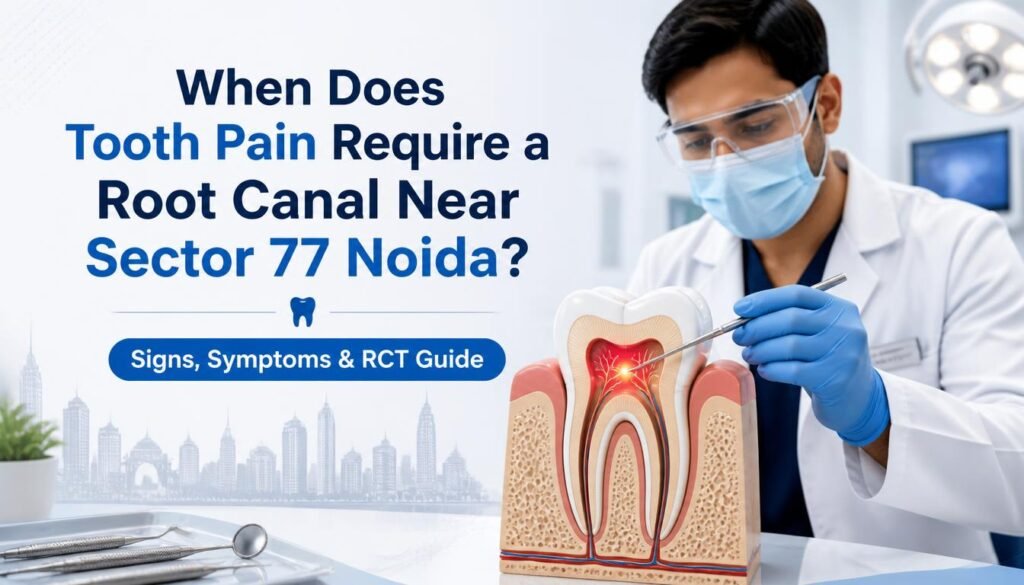
Root canal treatment, also called RCT, is used when the pulp inside a tooth becomes inflamed or infected. The procedure removes the damaged pulp, cleans and disinfects the root canals, and seals the tooth to help preserve the natural tooth.
According to the American Association of Endodontists, deep decay is one of the reasons a tooth may require root canal treatment.
If you live in Sector 77 or nearby areas of Noida and have persistent tooth pain, sensitivity or swelling, an examination can help determine whether the problem can be treated with a filling or whether root canal treatment may be required.
What Is Deep Tooth Decay?
Tooth decay is a gradual process in which acids produced by bacteria damage the hard structures of a tooth.
A cavity can begin in the enamel, progress through the dentin and eventually reach the pulp.
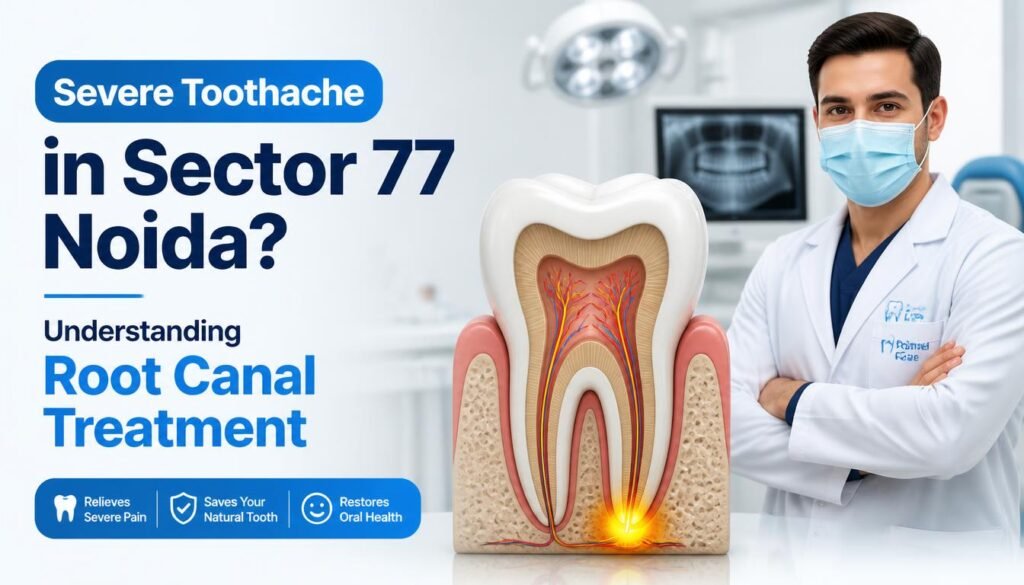
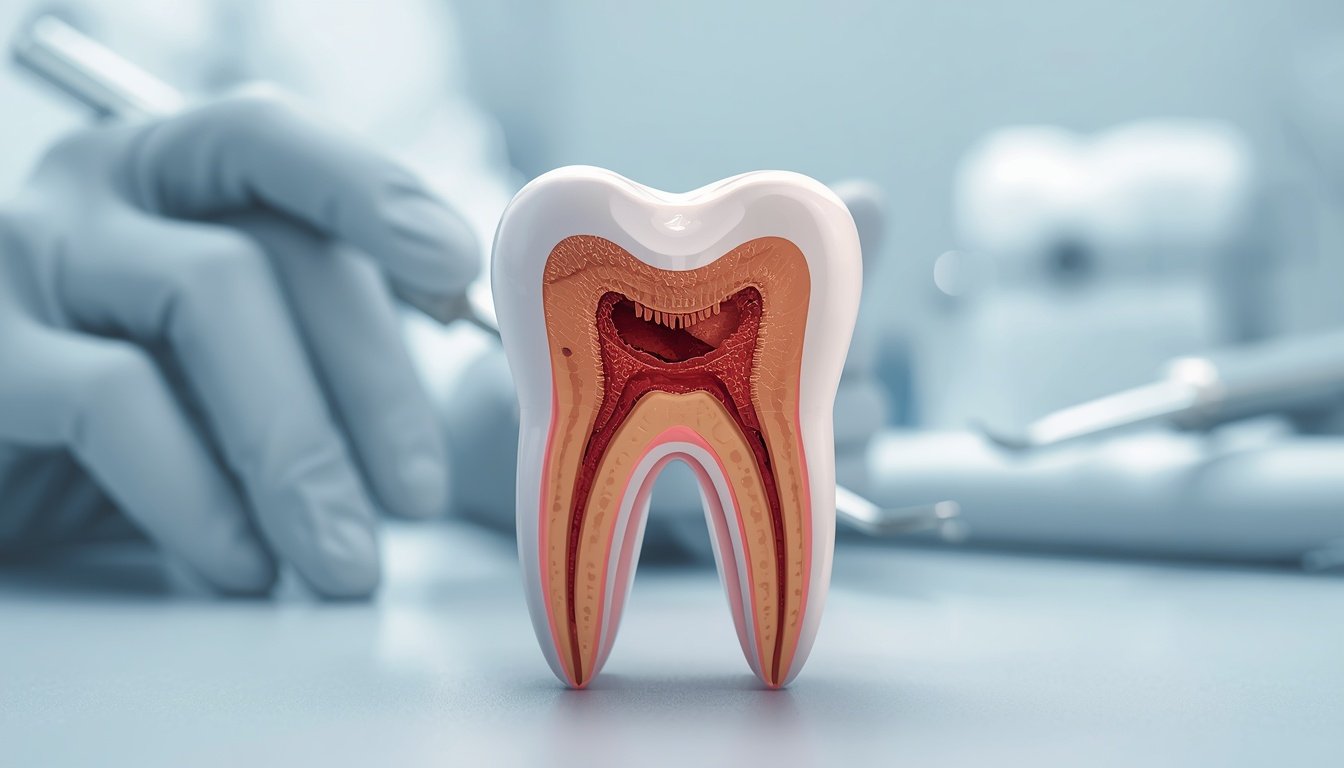
The tooth has several important layers:
- Enamel: The hard outer protective layer
- Dentin: The layer underneath the enamel
- Pulp: The inner part containing nerves and blood vessels
- Root canals: The spaces within the roots that contain pulp tissue
When decay is detected early, a dentist may be able to remove the damaged portion and restore the tooth with a filling.
However, when decay becomes extensive and affects the pulp, the treatment approach can change.
The NHS notes that when tooth decay reaches the pulp in the centre of the tooth, root canal treatment may be needed.
How Does Deep Tooth Decay Reach the Pulp?
Tooth decay does not usually become severe overnight. It can develop gradually, particularly when a cavity is left untreated.
A typical progression may look like this:
Enamel damage → Dentin decay → Deep cavity → Pulp inflammation → Pulp infection → Possible abscess
At the early stage, a person may experience little or no discomfort.
As decay progresses, symptoms can become more noticeable, including sensitivity, toothache or pain while chewing.
Once bacteria reach the pulp, the tooth may require endodontic treatment such as root canal treatment.
When Can Root Canal Treatment Help With Deep Tooth Decay?
Root canal treatment may be considered when deep decay has caused irreversible inflammation or infection of the tooth’s pulp.
A dentist may recommend RCT after evaluating your symptoms, examining the tooth and, when necessary, taking dental X-rays.
Some signs that may indicate deeper involvement include:
1. Lingering Sensitivity to Hot or Cold
Brief sensitivity can have several causes and does not automatically mean that you need a root canal.
However, sensitivity that continues after the hot or cold stimulus has been removed can be a sign that the pulp is significantly irritated.
The American Association of Endodontists lists lingering sensitivity to hot or cold among symptoms that may indicate the need for root canal treatment.
2. Persistent or Severe Toothache
A deep cavity can cause increasingly uncomfortable tooth pain.
The pain may be spontaneous, persistent or particularly noticeable at night.
However, toothache has many possible causes, so pain alone cannot confirm that an RCT is necessary.
A dental examination is needed to identify the underlying cause.
3. Pain While Biting or Chewing
Pain when biting down may occur when the tissues around the affected tooth become inflamed.
The AAE identifies severe pain while chewing or biting as one of the symptoms that can be associated with a tooth requiring root canal treatment.
4. Swelling or Tenderness Around the Tooth
Deep infection can sometimes cause swelling or tenderness around the affected tooth.
A gum pimple or drainage near the tooth can also occur with an infection.
These symptoms should not be ignored.
5. A Deep Cavity Visible in the Tooth
Sometimes a cavity becomes visibly large before the person experiences severe pain.
A large cavity does not automatically mean that an RCT is required. The important question is whether the decay has affected the pulp and whether the tooth remains restorable.
Does Every Deep Cavity Need a Root Canal?
No.
This is an important distinction.
A deep cavity does not automatically mean that the tooth needs RCT.
If the decay has not irreversibly damaged the pulp, the dentist may be able to remove the decayed tissue and restore the tooth.
Depending on the condition of the tooth, treatment may include:
- Dental filling
- Tooth-coloured restoration
- Protective restoration
- Root canal treatment
- Dental crown after RCT
- Extraction when the tooth cannot be predictably restored
The correct treatment depends on how far the decay has progressed and the overall condition of the tooth.
That is why a professional dental examination is more useful than trying to diagnose the problem based only on symptoms.
Deep Decay vs. Root Canal: How Does a Dentist Decide?
When you visit a dentist for deep tooth decay, the dentist may consider several factors.
Depth of the decay
The dentist checks whether the cavity has reached or is very close to the pulp.
Pulp condition
The dentist may perform tests to determine whether the pulp is healthy, inflamed or no longer functioning normally.
Symptoms
Pain, sensitivity, swelling and discomfort while chewing can provide useful diagnostic information.
X-ray findings
A dental X-ray may help the dentist assess the extent of decay and look for changes around the root.
Remaining tooth structure
Even if a root canal can remove the infection, the tooth still needs enough healthy structure to support a restoration.
Cracks or fractures
A severely cracked tooth may require a different treatment approach.
This is why root canal treatment should be based on diagnosis rather than simply the presence of a cavity.
What Happens During Root Canal Treatment?
If RCT is recommended, the basic objective is to remove infected or inflamed pulp and preserve the remaining natural tooth.
The procedure generally involves:
Step 1: Examination and diagnosis
The dentist evaluates the tooth and determines whether root canal treatment is appropriate.
Step 2: Local anaesthesia
Local anaesthesia is used to numb the treatment area.
Step 3: Accessing the tooth
The dentist creates an opening through the tooth to access the infected or inflamed pulp.
Step 4: Removing damaged pulp
The damaged pulp tissue is removed from inside the tooth.
Step 5: Cleaning and disinfecting
The root canals are carefully cleaned, shaped and disinfected.
Step 6: Filling and sealing
The cleaned canals are filled and sealed to reduce the risk of reinfection.
Step 7: Restoring the tooth
Depending on the amount of remaining tooth structure and the tooth’s location, a filling or dental crown may be recommended.
The NHS describes root canal treatment as removing infection from inside the tooth, cleaning and filling the tooth, and sealing it to prevent reinfection.
Why Might a Dental Crown Be Needed After Root Canal Treatment?
A root canal treats the inside of the tooth, but the tooth may still need protection afterward.
This can be particularly important when a large amount of tooth structure has already been lost because of deep decay.
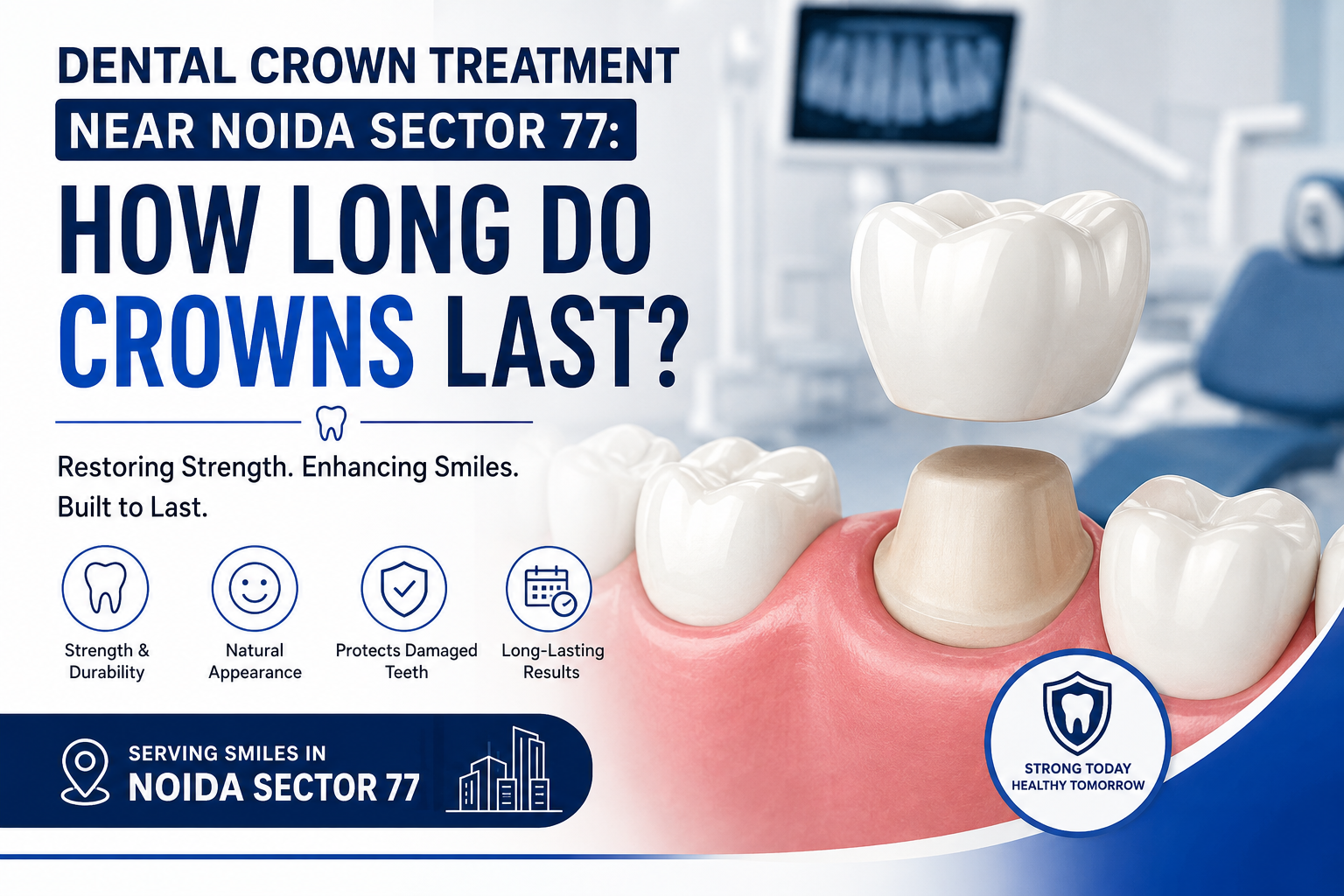
A dental crown can cover and protect the remaining tooth structure while restoring its shape and chewing function.
The AAE explains that after endodontic treatment, the tooth can be restored with a crown or filling depending on the individual situation.
If you are interested in learning more about crowns, see our guide on dental crown treatment near Noida Sector 77.
Can Deep Tooth Decay Be Treated Without RCT?
Sometimes, yes.
If the pulp has not suffered irreversible damage, the dentist may be able to treat the decay without performing a root canal.
Possible treatment options can include a filling or other restorative procedure.
But once the pulp is irreversibly inflamed or infected, simply placing a filling over the cavity will generally not address the underlying problem.
This is why delaying treatment can make a straightforward cavity more complicated.
What Happens If Deep Tooth Decay Is Ignored?
Ignoring a deep cavity does not allow the tooth to heal itself.
As decay progresses, it can move deeper into the tooth.
Potential complications can include:
- Increasing tooth pain
- Persistent sensitivity
- Pulp infection
- Swelling
- Dental abscess
- Damage to surrounding tissues
- Possible tooth loss
The NHS notes that an untreated infected tooth may ultimately require extraction if root canal treatment is not performed.
The American Association of Endodontists also notes that untreated pulp inflammation or infection can result in pain or an abscess.
Is Root Canal Treatment Painful?
The fear of pain is one reason some people postpone dental treatment.
Modern root canal treatment is performed using local anaesthesia, which is intended to numb the area during treatment.
Some soreness or sensitivity can occur after treatment, but the experience varies between patients.
The NHS states that local anaesthetic is normally used during root canal treatment.
The Dental Crowns also offers painless root canal treatment in Noida as one of its dental services.
When Should You See a Dentist in Sector 77 Noida?
Consider arranging a dental examination if you have:
- Persistent toothache
- Lingering hot or cold sensitivity
- Pain while chewing
- A visibly deep cavity
- Swelling around a tooth
- A gum boil or pimple near a tooth
- A broken or cracked tooth
- Repeated pain from a previously treated tooth
You should seek urgent dental or medical attention for serious swelling, particularly if it is accompanied by difficulty breathing or swallowing.
Deep Tooth Decay in Sector 77 Noida: Why Early Diagnosis Matters
If you notice a cavity, waiting until the tooth becomes extremely painful may allow the problem to progress.
Early dental assessment can help determine whether the tooth can be treated with a simpler restoration or whether the pulp has already been affected.
For residents of Sector 77 Noida, getting an evaluation early can be especially useful if you are experiencing recurring tooth pain or sensitivity.
The aim of root canal treatment, when appropriate, is to remove infection and preserve the natural tooth rather than automatically extracting it.
Why Choose The Dental Crowns for Root Canal Treatment Near Sector 77 Noida?
The Dental Crowns provides a range of dental services, including:
- Painless root canal treatment
- Dental crowns
- Dental implants
- Tooth-coloured restorations
- Dental bridges
- Dentures
- Laser dentistry
- Tooth extraction
- Wisdom tooth extraction
- Braces
- Veneers
- Teeth whitening
The clinic is located at Civitech Stadia, Sector 79, Noida, serving patients from Sector 77 and surrounding Noida areas.
If you have deep tooth decay or persistent tooth pain, a dentist can examine the affected tooth and determine whether a filling, root canal treatment, crown or another treatment is appropriate.
Frequently Asked Questions
1. Can deep tooth decay be treated with root canal treatment?
Yes, root canal treatment may be recommended when deep decay has reached the pulp and caused irreversible inflammation or infection.
2. Does every deep cavity require RCT?
No. A deep cavity does not automatically require root canal treatment. The dentist needs to determine the condition of the pulp and whether the tooth can be restored without endodontic treatment.
3. What are common signs that deep decay has affected the pulp?
Persistent toothache, lingering sensitivity to hot or cold, pain while chewing, swelling and other symptoms may indicate pulp involvement. However, these symptoms can have different causes and require professional diagnosis.
4. Can a tooth be saved after severe decay?
In some cases, yes. If enough healthy tooth structure remains and the tooth is restorable, root canal treatment followed by an appropriate restoration may allow the natural tooth to be preserved.
5. Is a crown necessary after RCT?
Not every root canal-treated tooth automatically needs a crown. The recommendation depends on the tooth, the amount of remaining structure, its function and other clinical factors.
6. How long can I wait before treating a deep cavity?
It is better not to delay evaluation. Tooth decay does not normally reverse once a significant cavity has formed, and deeper decay can eventually affect the pulp.
7. Where can I get root canal treatment near Sector 77 Noida?
The Dental Crowns provides root canal treatment at its clinic in Civitech Stadia, Sector 79, Noida, which is near Sector 77.
Final Takeaway
Deep tooth decay in Sector 77 Noida does not always mean that you need a root canal, but once decay affects the tooth’s pulp, RCT may become an important option for treating the infection and preserving the natural tooth.
The earlier a deep cavity is examined, the more clearly your dentist can determine the appropriate treatment.
If you are experiencing persistent tooth pain, lingering sensitivity, swelling or pain while chewing, consider scheduling a dental examination rather than waiting for the symptoms to become severe.
For root canal treatment near Sector 77 Noida, The Dental Crowns provides RCT and other restorative dental treatments from its clinic in Sector 79, Noida.