Tooth pain can range from mild sensitivity to severe, throbbing pain that makes it difficult to eat, sleep, or concentrate. But how do you know when ordinary toothache has become a problem that may require a root canal near Sector 77 Noida?
Not every toothache requires root canal treatment. Tooth pain can be caused by cavities, gum problems, tooth sensitivity, a cracked tooth, a loose filling, or other dental conditions. However, persistent or severe pain, particularly when combined with lingering sensitivity, pain while biting, swelling, or signs of infection, may indicate damage or infection inside the tooth.
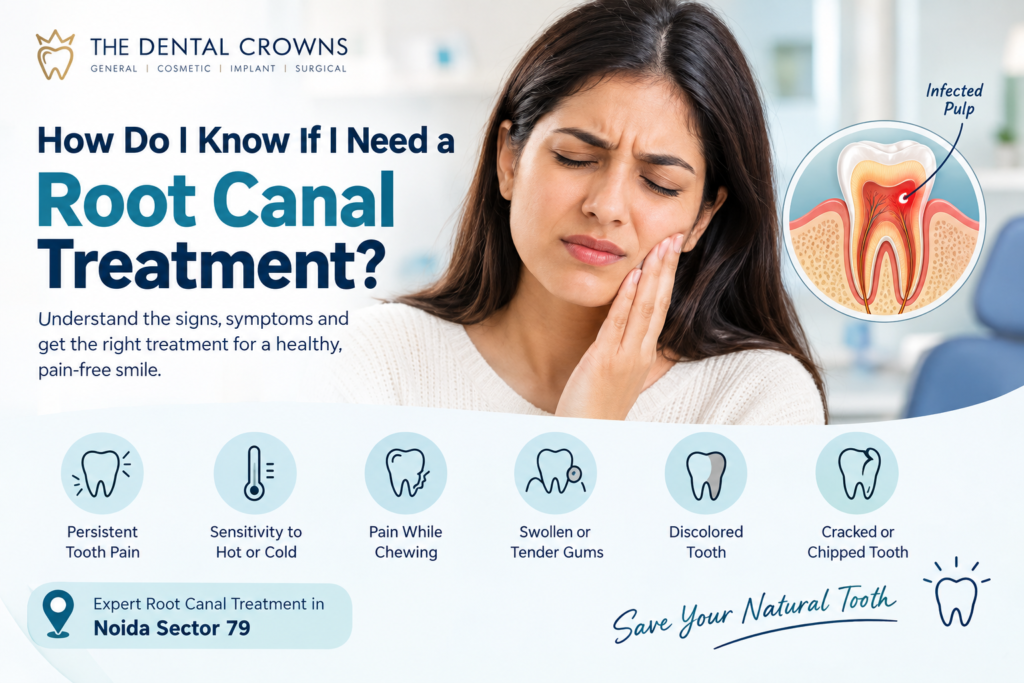
The American Association of Endodontists (AAE) notes that symptoms such as lingering hot or cold sensitivity, severe pain while chewing, swollen or tender gums, and certain types of tooth damage can indicate a problem involving the dental pulp that may require endodontic treatment.
If you live in or around Sector 77 Noida and are experiencing persistent tooth pain, getting a professional dental examination can help identify the actual cause before the problem becomes more complicated.
What Is a Root Canal Treatment?
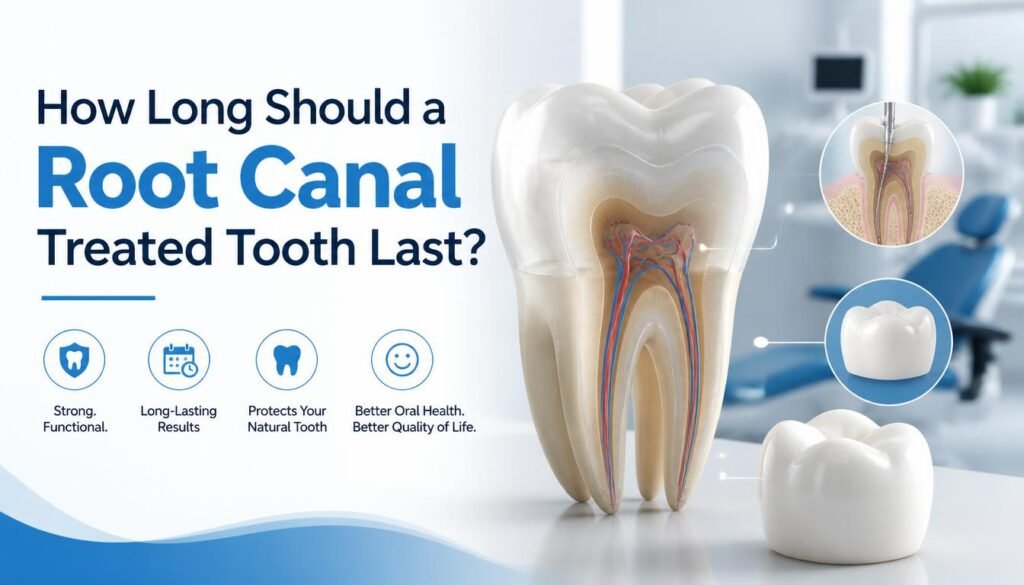
A root canal treatment (RCT) is a dental procedure used to treat inflammation or infection affecting the pulp inside a tooth.
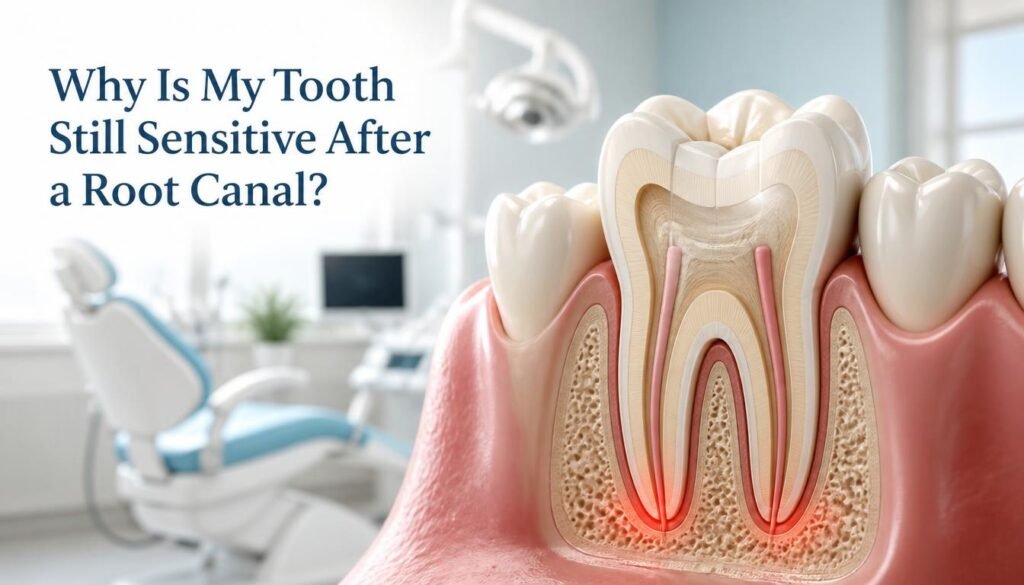
The pulp contains nerves and blood vessels. When deep decay, a crack, trauma, or another dental problem damages the pulp, bacteria can enter the inner part of the tooth and cause infection.
During root canal treatment, the dentist removes the affected pulp, cleans and disinfects the root canal system, and then fills and seals the tooth. A crown may also be recommended when additional protection is needed.
According to the NHS, root canal treatment is used to remove infection from inside the tooth, after which the tooth is cleaned, filled, and sealed.
You can learn more about the treatment on our Painless Root Canal Treatment in Noida page.
When Does Tooth Pain Require a Root Canal Near Sector 77 Noida?
The exact treatment required can only be determined after a dental examination and, when necessary, dental X-rays. However, several symptoms can indicate that the pulp inside a tooth may be seriously inflamed or infected.
1. Severe or Persistent Tooth Pain
Pain that keeps returning or does not settle should not be ignored.
A tooth that causes persistent throbbing, aching, or intense pain may have a deeper problem than ordinary sensitivity. According to the American Association of Endodontists, ongoing tooth pain should be evaluated by a dental professional because it can be associated with decay, cracks, infection, or other dental problems.
If you are searching for a root canal near Sector 77 Noida because your toothache has continued for several days, schedule a dental examination rather than relying only on painkillers.
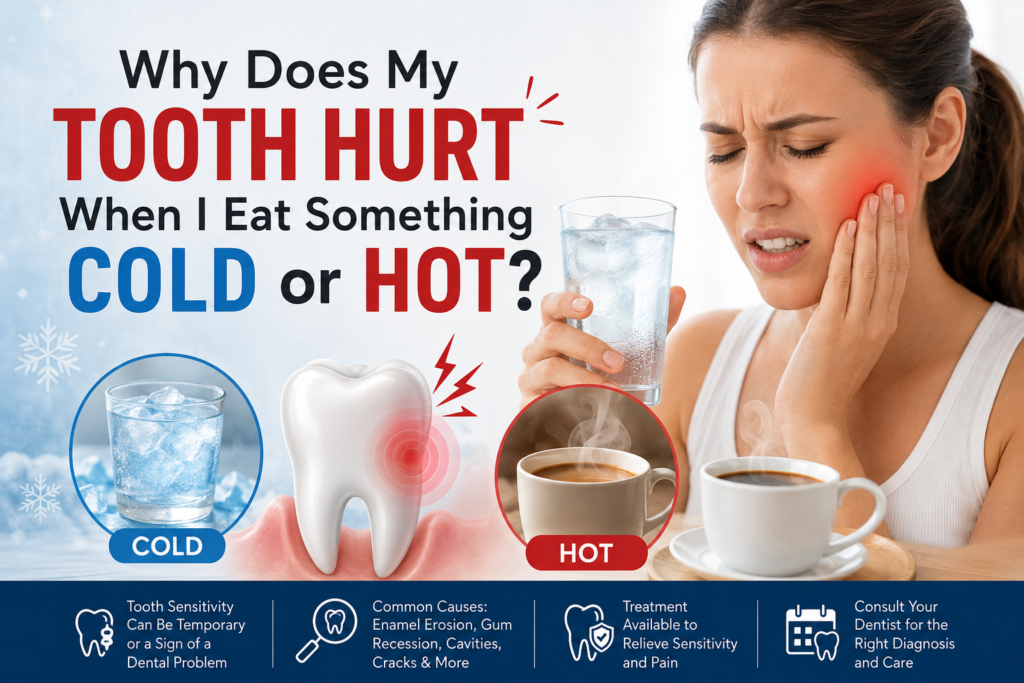
2. Lingering Sensitivity to Hot or Cold
Do you experience sharp pain after drinking tea, coffee, soup, or cold water, and does the pain continue even after the food or drink is gone?
Short-lived sensitivity does not automatically mean you need an RCT. However, lingering sensitivity to hot or cold can be a warning sign of significant pulp irritation.
The AAE specifically identifies prolonged sensitivity after exposure to hot or cold as a symptom that can be associated with irreversible pulp damage.
A dentist can determine whether the sensitivity is caused by deep decay, exposed dentin, gum recession, a damaged restoration, or pulp damage.
3. Pain While Biting or Chewing
If biting down causes a sharp or deep pain in a particular tooth, it is worth getting the tooth examined.
Pain when chewing can occur because of:
- Deep tooth decay
- A cracked tooth
- A damaged filling
- Inflammation of the dental pulp
- Infection around the tooth
- Other dental conditions
The AAE recommends professional evaluation for sharp pain when biting because the cause can vary and may involve damage to the tooth’s pulp.
4. Swelling Around the Tooth or Gums
Swelling around a painful tooth can be a sign of infection.
You may notice:
- Swollen gums
- Tenderness around the tooth
- Facial swelling
- A small pimple or bump on the gum
- Bad taste in the mouth
- Pus around the affected area
These symptoms should not be ignored. An untreated dental infection can become more serious.
If tooth pain is accompanied by significant swelling, fever, or difficulty swallowing or breathing, seek urgent dental or medical care.
5. A Deep Cavity or Broken Tooth
A small cavity may initially cause little or no pain. However, if tooth decay progresses deep into the tooth, it can eventually affect the pulp.
Similarly, a cracked or broken tooth can allow bacteria to reach the inner part of the tooth.
In these situations, a dentist may recommend root canal treatment if the pulp is irreversibly damaged and the tooth is still suitable for restoration.
6. Tooth Pain After an Injury
A dental injury can damage the pulp even when the tooth does not immediately look badly damaged.
For example, an accident or sports injury may cause:
- A cracked tooth
- A chipped tooth
- Damage to the tooth’s nerve
- Discoloration
- Pain or sensitivity
Some pulp problems may develop or become noticeable later, which is why an injured tooth should be professionally assessed.
Does Every Toothache Need a Root Canal?
No.
This is one of the most important things to understand about tooth pain.
A toothache can have several possible causes, including:
- Dental cavities
- Tooth sensitivity
- Gum disease
- Cracked teeth
- Loose or damaged fillings
- Teeth grinding
- Food trapped between teeth
- Pulp inflammation
- Dental infection
Some problems can be treated with a filling, restoration, gum treatment, desensitizing care, or another appropriate procedure.
A root canal is generally considered when the dental pulp is significantly inflamed or infected and the tooth can potentially be preserved.
That is why you should not self-diagnose based on pain alone.
How Does a Dentist Know If You Need RCT?
When you visit a dentist for tooth pain, the dentist may evaluate:
- Your symptoms and medical/dental history
- The location and nature of the pain
- Sensitivity to hot or cold
- Pain when biting or tapping the tooth
- The condition of the gums
- Visible cavities, cracks, or restorations
- Dental X-rays or other diagnostic tests when required
This evaluation helps the dentist determine whether the pain is coming from the pulp, tooth structure, gums, or another source.
The AAE also emphasizes that tooth pain can have different causes and that professional diagnosis is important.
What Happens During Root Canal Treatment?
If RCT is recommended, the procedure generally involves several stages.
Step 1: Examination and Diagnosis
The dentist first identifies the affected tooth and determines the extent of the problem.
Step 2: Local Anaesthesia
Local anaesthesia is normally used to numb the treatment area.
Step 3: Removing the Infected or Inflamed Pulp
The dentist accesses the inside of the tooth and removes the damaged pulp tissue.
Step 4: Cleaning and Disinfecting
The root canals are cleaned and prepared to remove infection and debris.
Step 5: Filling and Sealing
The cleaned canals are filled and sealed to help prevent reinfection.
Step 6: Final Restoration
Depending on the tooth and the amount of remaining structure, a filling or dental crown may be recommended to restore and protect it.
The NHS explains that root canal treatment involves removing infected pulp, cleaning and shaping the inside of the tooth, and sealing it.
Can Root Canal Treatment Save a Natural Tooth?
One of the main purposes of root canal treatment is to preserve a natural tooth when it can be successfully restored.
Without appropriate treatment, an infected tooth may deteriorate further and, in some cases, extraction may eventually become necessary.
However, RCT is not automatically appropriate for every damaged tooth. The dentist needs to assess factors such as the remaining tooth structure, cracks, periodontal health, infection, and whether the tooth can be restored.
The AAE describes root canal treatment as a procedure intended to treat infection or inflammation inside the tooth and help save the natural tooth.
Why Might You Need a Dental Crown After RCT?
A root canal addresses the infected or inflamed pulp, but the tooth may still need structural protection.
Depending on the tooth and the amount of tooth structure remaining, your dentist may recommend a dental crown after root canal treatment.
A crown can help restore the tooth’s shape, function, and structural protection.
If you are considering a crown after RCT, explore our Dental Services to learn about the restorative treatments offered by The Dental Crowns.
When Should You See a Dentist for Tooth Pain?
You should arrange a dental examination if your tooth pain:
- Continues or repeatedly returns
- Makes chewing uncomfortable
- Causes lingering hot or cold sensitivity
- Is accompanied by gum swelling
- Comes with a bad taste in your mouth
- Is associated with a cracked or broken tooth
- Does not improve with ordinary pain-relief measures
The NHS advises seeing a dentist for toothache that lasts more than two days, particularly when it does not go away with painkillers or is accompanied by symptoms such as fever, pain when biting, red gums, bad taste, or swelling.
When Is Tooth Pain an Emergency?
Some dental symptoms require urgent attention.
Seek urgent dental or medical care if tooth pain is accompanied by:
- Rapidly increasing facial swelling
- Significant swelling around the mouth or neck
- Difficulty breathing
- Difficulty swallowing
- Severe infection-related symptoms
- Swelling extending toward the eye or neck
The NHS specifically advises emergency care when swelling around the mouth or neck affects breathing, swallowing, or speaking.
Root Canal Treatment Near Sector 77 Noida
If you live in Sector 77 Noida and are experiencing persistent tooth pain, you do not necessarily need to wait until the pain becomes severe before seeing a dentist.
The Dental Crowns is located at Civitech Stadia, Sector 79, Noida, serving patients from Sector 77 and surrounding Noida sectors. The clinic provides root canal treatment as part of its dental services.
You can visit the Painless Root Canal Treatment service page to learn more about the clinic’s RCT service.
The right treatment depends on the cause of your tooth pain. A professional examination can help determine whether you need a filling, root canal treatment, crown, extraction, or another dental procedure.
Frequently Asked Questions
Is severe tooth pain always a sign that I need a root canal?
No. Severe tooth pain can have multiple causes. A dentist needs to examine the tooth to determine whether the pulp is damaged or infected and whether root canal treatment is appropriate.
Can I need a root canal even if my tooth does not hurt?
Yes. Some dental infections or pulp problems may not cause constant pain. A dental examination and appropriate diagnostic testing can identify problems that may not be obvious from symptoms alone.
How do I know if my tooth pain is from a cavity or requires RCT?
A cavity may cause sensitivity or pain, but deeper decay can reach the pulp and require root canal treatment. The distinction cannot reliably be made from symptoms alone, so professional examination is important.
Is root canal treatment painful?
Modern root canal treatment is performed with local anaesthesia. Some soreness or sensitivity can occur after treatment, but the procedure itself is intended to treat the source of dental pain.
How quickly should I get treatment for a painful tooth?
Do not unnecessarily delay an examination, especially when pain is persistent or accompanied by swelling, fever, pain while biting, or a bad taste. Prompt assessment can help identify the cause and prevent the problem from progressing.
Where can I get a root canal near Sector 77 Noida?
The Dental Crowns is located at Civitech Stadia, Sector 79, Noida, and provides root canal treatment for patients in Noida and nearby sectors, including patients searching for dental treatment near Sector 77.
Final Takeaway
Persistent tooth pain should not automatically be treated as an ordinary toothache.
Lingering sensitivity, severe pain while chewing, swelling, deep decay, a cracked tooth, or signs of infection may indicate that the pulp inside the tooth needs professional evaluation. Root canal treatment may be recommended when the pulp is irreversibly inflamed or infected and the tooth can be restored.
If you are experiencing tooth pain in or around Sector 77 Noida, getting an early dental examination can help identify the cause and determine the appropriate treatment.
For more information, visit The Dental Crowns’ dental services page or explore the dedicated Painless Root Canal Treatment in Noida service.