
Have you ever taken a sip of a cold drink or a bite of hot food and suddenly felt a sharp pain in your tooth? If you are searching for “Why Does My Tooth Hurt When I Eat Something Cold or Hot?”, you are not alone. Tooth sensitivity to hot and cold foods is a common dental concern and can range from a brief, mild sensation to intense or lingering pain.
In many cases, sensitivity happens when the protective enamel wears down or the gums recede, exposing the dentin underneath. However, sensitivity can also be related to cavities, cracked teeth, gum problems, worn fillings, teeth grinding, or inflammation inside the tooth.
My Tooth Hurt When I Eat Something Cold or Hot?
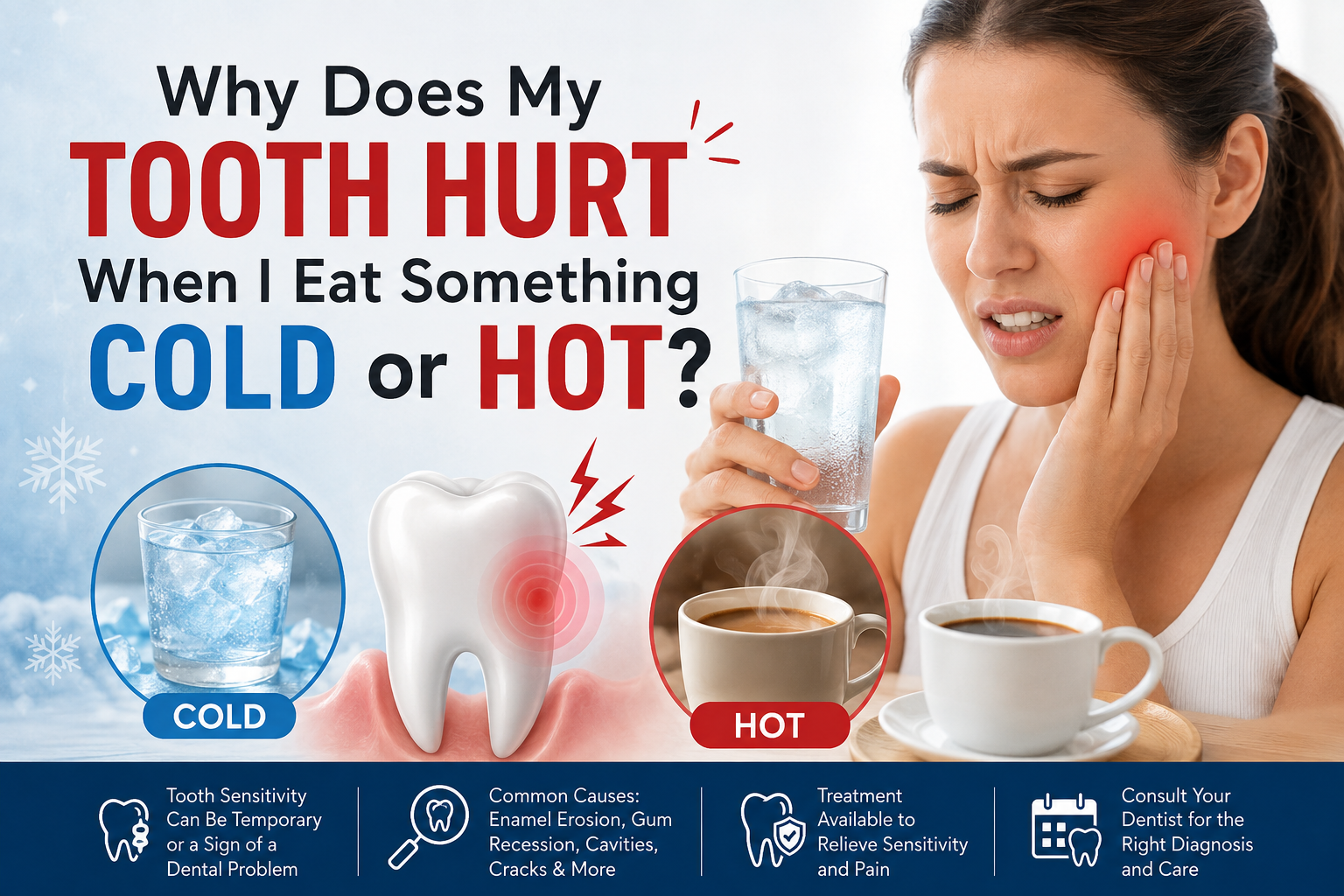
The most common reason your tooth hurts when you eat or drink something cold or hot is exposed dentin.
A healthy tooth has a strong outer layer called enamel. Underneath the enamel is dentin, which contains microscopic channels connected to the inner part of the tooth. When enamel becomes worn or the gum recedes and exposes the root surface, hot and cold temperatures can stimulate these sensitive areas and produce a sharp pain.
The Indian Dental Association explains tooth sensitivity as discomfort triggered by hot, cold, sweet, sour, or even cold air. It can occur when enamel wears away or gums recede and expose sensitive areas of the tooth.
However, sensitivity isn’t always just a minor problem. In some cases, it can be an early warning sign of tooth decay, a cracked tooth, gum disease, or a problem with an existing filling.
What Does Tooth Sensitivity Feel Like?
Tooth sensitivity can feel different from person to person. Common symptoms include:
- A sudden sharp pain when drinking cold water
- Pain when eating ice cream
- Sensitivity when drinking hot tea or coffee
- A shooting sensation after eating hot food
- Pain when breathing cold air
- Discomfort while brushing
- Sensitivity to sweet or acidic foods
- Pain around the gumline
- Sensitivity affecting one particular tooth
If the pain disappears almost immediately after the hot or cold stimulus is removed, it may be related to exposed dentin or minor sensitivity. However, pain that lingers, becomes severe, or occurs without a clear trigger deserves professional dental evaluation.
The American Association of Endodontists notes that short-term hot or cold sensitivity may have several causes, while lingering pain after temperature exposure can indicate a deeper dental problem. Read more about tooth pain symptoms from the American Association of Endodontists.
7 Common Reasons Your Tooth Hurts When You Eat Something Cold or Hot
1. Enamel Erosion
Enamel is the hard protective outer layer of your tooth. It protects the more sensitive dentin underneath.
When enamel becomes thinner, temperature changes can reach the dentin more easily, causing sensitivity.
Enamel erosion may be associated with:
- Frequent consumption of acidic foods and drinks
- Excessive soft drinks
- Citrus-heavy diets
- Acid exposure
- Aggressive brushing
- Teeth grinding
- Poor oral hygiene
Once enamel has been significantly lost, it does not naturally grow back. That’s why identifying the cause early is important.
2. Gum Recession
Your gums protect the roots of your teeth. Unlike the crown of a tooth, the root does not have the same enamel covering.
When gums recede, the root surface can become exposed, making it much more sensitive to temperature.
Gum recession can be associated with:
- Aggressive brushing
- Gum disease
- Plaque and tartar buildup
- Teeth grinding
- Age-related changes
- Poor brushing technique
If you notice sensitivity close to the gumline, gum recession may be one possible explanation.
3. Tooth Decay or Cavities
A cavity can cause sensitivity to hot, cold, sweet, or acidic foods.
As tooth decay progresses deeper into the tooth, the protective structure becomes compromised. This may allow temperature changes to stimulate sensitive tissues inside the tooth.
If your tooth sensitivity is occurring in one specific tooth, particularly if you also notice:
- A visible hole
- A dark spot
- Food getting stuck
- Pain while biting
- Increasing sensitivity
you should arrange a dental examination.
4. Cracked or Chipped Tooth
A cracked tooth can sometimes cause sharp pain when you eat or drink something hot or cold.
The crack may allow temperature changes to affect the inner structures of the tooth. You may also experience pain when biting or releasing your bite.
Not every crack is visible in a mirror, so a dental examination may be required to identify the problem.
5. Worn or Loose Filling
If you previously had a cavity filled and the same tooth has started becoming sensitive again, the filling may need to be evaluated.
A worn, damaged, or leaking restoration can allow temperature changes to reach sensitive areas of the tooth.
Sensitivity after certain dental procedures can sometimes be temporary. However, persistent or worsening symptoms should be checked by your dentist.
6. Teeth Grinding
Do you clench or grind your teeth, especially while sleeping?
Teeth grinding, also known as bruxism, can gradually wear down enamel and contribute to sensitivity. It can also put excessive pressure on teeth and increase the risk of cracks.
If you frequently wake up with jaw discomfort, headaches, or sensitive teeth, discuss these symptoms with your dentist.
7. Tooth Nerve Inflammation or Infection
Sometimes hot or cold sensitivity is related to inflammation of the pulp, the soft tissue inside your tooth that contains nerves and blood vessels.
A deep cavity, crack, trauma, or infection can affect the pulp.
If your tooth pain:
- Continues after eating or drinking
- Becomes increasingly severe
- Occurs spontaneously
- Wakes you at night
- Is accompanied by swelling
- Causes significant pain while biting
you should seek professional dental care promptly.
For patients experiencing persistent sensitivity or toothache, root canal treatment at The Dental Crowns may be considered when the tooth’s inner pulp is infected or significantly damaged.
Why Does My Tooth Hurt More With Hot Food Than Cold Food?
Some people notice that hot foods or beverages trigger more pain than cold foods.
This can sometimes indicate irritation or inflammation deeper inside the tooth. Heat-related pain, especially when it lingers, should not automatically be assumed to be ordinary tooth sensitivity.
A dentist may examine the tooth, check your symptoms, perform temperature or percussion tests, and take dental X-rays when necessary to determine the underlying cause.
This is particularly important if you have had a cavity, filling, crown, trauma, or previous dental treatment on that tooth.
Why Does My Tooth Hurt When I Eat Something Cold?
Cold sensitivity is frequently associated with exposed dentin, gum recession, enamel wear, cavities, or other dental problems.
For example, you may suddenly experience pain when:
- Drinking chilled water
- Eating ice cream
- Drinking a cold soft drink
- Eating frozen foods
- Breathing cold air
If the pain lasts only a few seconds and disappears quickly, it may be associated with sensitivity. If the pain continues or gets worse, a dental examination can help determine whether there is a deeper problem.
Is Tooth Sensitivity Normal?
Occasional mild sensitivity can happen, particularly after certain dental procedures or when the teeth are exposed to very cold or acidic foods.
However, repeated tooth sensitivity should not simply be considered normal.
Sensitivity is a symptom rather than a diagnosis. The underlying cause needs to be identified before the appropriate treatment can be selected.
The Cleveland Clinic’s guide to sensitive teeth explains that sensitivity can be associated with enamel wear, gum recession, cavities, gum disease, cracked teeth, teeth grinding, and recent dental procedures.
How Can I Reduce Tooth Sensitivity at Home?
If your teeth are sensitive, a few everyday habits may help reduce discomfort while you arrange an appropriate dental evaluation.
Use a Soft-Bristled Toothbrush
Avoid aggressive brushing. Brushing too hard can contribute to enamel wear and gum recession.
Use a soft-bristled toothbrush and gentle movements.
Consider Desensitizing Toothpaste
Toothpastes formulated for sensitive teeth may help reduce sensitivity for some people.
Ingredients such as potassium nitrate, stannous compounds, or other desensitizing ingredients may be used in products designed to reduce dentin sensitivity.
Reduce Acidic Foods and Drinks
Frequent exposure to acidic foods and drinks can contribute to enamel erosion.
Try to reduce frequent consumption of:
- Carbonated drinks
- Very acidic juices
- Citrus-heavy foods
- Other highly acidic beverages
Don’t Brush Immediately After Acidic Foods
After consuming acidic foods or drinks, give your mouth some time before brushing. Rinsing with water can be a simple first step.
Avoid Extremely Hot or Cold Foods Temporarily
If temperature triggers are causing discomfort, choosing lukewarm foods and drinks temporarily may make eating more comfortable.
Don’t Ignore Persistent Pain
Home care may reduce symptoms, but it cannot repair a deep cavity, cracked tooth, infected pulp, or damaged filling.
If the sensitivity continues, book a dental examination.
When Should You See a Dentist for Tooth Sensitivity?
You should consider seeing a dentist if:
- Sensitivity continues for several days or keeps returning
- Pain is becoming stronger
- One particular tooth is consistently painful
- Pain lingers after eating or drinking
- You have swelling around the tooth
- You have pain when biting
- You notice a crack or chip
- You have a visible cavity
- Your filling has broken or feels loose
- You experience spontaneous toothache
- Tooth pain is disturbing your sleep
Persistent tooth pain can sometimes indicate a problem that requires treatment rather than simply a sensitivity toothpaste.
How Is Tooth Sensitivity Diagnosed?
When you visit a dentist, the first step is usually understanding your symptoms.
Your dentist may ask:
- Which tooth hurts?
- Is the pain triggered by hot, cold, sweet, or acidic foods?
- How long does the pain last?
- Does it hurt while biting?
- Have you recently had a filling, crown, cleaning, or whitening treatment?
- Do you grind or clench your teeth?
- Have you experienced any dental injury?
Depending on the symptoms, your dentist may examine your gums and teeth and recommend X-rays or other diagnostic procedures.
The goal is to identify the actual cause instead of simply treating the symptom.
Treatment for Sensitive Teeth
Treatment depends entirely on what’s causing the sensitivity.
Depending on the diagnosis, a dentist may recommend:
- Desensitizing toothpaste
- Fluoride treatment
- Dental bonding
- Treatment for gum recession
- Filling or replacing a damaged restoration
- Treatment for tooth decay
- A dental crown
- Treatment for a cracked tooth
- Root canal treatment when the pulp is affected
- A night guard for certain cases of teeth grinding
At The Dental Crowns, patients can access a range of general, cosmetic, and surgical dental treatments, including root canal treatment, tooth-coloured restorations, dental bridges, crowns, implants, braces, teeth whitening, laser dentistry, and tooth extraction.
Can a Dental Crown Help a Sensitive Tooth?
In selected cases, a dental crown may be recommended when a tooth has significant structural damage, extensive decay, or has undergone root canal treatment.
A crown covers and protects the remaining tooth structure. However, a crown is not automatically the treatment for every sensitive tooth. Your dentist needs to determine why the tooth is sensitive before recommending a restoration.
For patients who require restorative treatment, The Dental Crowns’ dental bridge and restorative services are available in Noida.
Tooth Sensitivity After Root Canal or Dental Treatment
It is possible to experience temporary sensitivity after some dental procedures.
For example, the tissues around a recently treated tooth can sometimes remain irritated for a short period.
However, if pain persists, becomes worse, or is accompanied by swelling, contact your dentist rather than assuming it is normal.
If a tooth has significant pulp damage or infection, painless root canal treatment in Noida may be recommended after a professional diagnosis.
What About Teeth Whitening and Sensitivity?
Teeth whitening can temporarily increase tooth sensitivity in some people.
If you already have sensitive teeth, cavities, gum recession, or enamel problems, it is sensible to discuss these issues with your dentist before starting whitening treatment.
Professional evaluation can help determine whether whitening is appropriate and how to minimize unnecessary sensitivity.
If you’re considering professional whitening in Noida, you can learn more about teeth whitening treatment at The Dental Crowns.
Why Choose The Dental Crowns for Tooth Pain in Noida Sector 77?
If you’re searching for a dentist near Noida Sector 77 because your tooth hurts whenever you eat something hot or cold, The Dental Crowns is located at Civitech Stadia in Sector 79, serving patients from Sector 77 and surrounding Noida sectors.
The clinic provides a broad range of dental treatments and focuses on personalized dental care.
The Dental Crowns lists Dr. Anubhav Kesari as its founder, with qualifications including BDS and MDS, and specialization in maxillofacial prosthodontics and oral implantology.
The clinic’s listed services include general dentistry, cosmetic dentistry, surgical dentistry, root canal treatment, dental implants, crowns, bridges, braces, teeth whitening, laser dentistry, and extractions.
If you are coming from Sector 77, the clinic’s Sector 79 location can be convenient for dental consultations and treatment.
The Dental Crowns
Clinic Address: Shop No. 16, 1st Floor, Civitech Stadia, Sector 79, Noida, Uttar Pradesh 201301
Phone: +91 89202 71787
Frequently Asked Questions
Why does my tooth hurt when I eat something cold or hot?
Your tooth may hurt because enamel has worn down or the gum has receded, exposing sensitive dentin. However, cavities, cracks, damaged fillings, gum disease, and inflammation inside the tooth can also cause temperature sensitivity.
Why does cold water make my tooth hurt?
Cold water can stimulate exposed dentin or an exposed tooth root. If the pain is frequent, severe, or occurs in one particular tooth, a dentist should evaluate the tooth for decay, cracks, gum recession, or other causes.
Why does my tooth hurt when I drink hot tea?
Hot drinks can trigger sensitivity when the tooth’s protective layers are compromised. Lingering pain from heat may also be associated with inflammation of the pulp, so persistent symptoms should be checked by a dentist.
How long does tooth sensitivity last?
The duration depends on the cause. Some temporary sensitivity may settle, while persistent or worsening sensitivity can indicate an underlying dental problem requiring treatment.
Can sensitive teeth be fixed permanently?
In many cases, the underlying cause can be treated and symptoms significantly reduced. Treatment may include desensitizing products, fluoride applications, fillings, bonding, gum treatment, crowns, or root canal treatment depending on the diagnosis.
Should I ignore tooth sensitivity if the pain goes away quickly?
No. Brief sensitivity can be relatively minor, but recurring sensitivity may still indicate enamel wear, gum recession, decay, or another dental issue. A dental examination can identify the cause.
Is tooth sensitivity a sign of a cavity?
It can be. Cavities are one possible cause of sensitivity to hot, cold, sweet, or acidic foods, but sensitivity can also result from enamel erosion, gum recession, cracks, grinding, or dental treatment.
When is tooth sensitivity an emergency?
Seek urgent dental care if sensitivity is accompanied by significant swelling, severe or rapidly worsening pain, fever, facial swelling, difficulty swallowing, or difficulty breathing.
Final Thoughts
If you keep asking “Why Does My Tooth Hurt When I Eat Something Cold or Hot?”, don’t assume that the problem is simply sensitive teeth.
Temperature sensitivity can be caused by something as simple as exposed dentin, but it may also be related to cavities, gum recession, enamel erosion, a cracked tooth, a damaged filling, teeth grinding, or inflammation inside the tooth.
The most effective approach is to identify the underlying cause and treat it appropriately.
If your tooth sensitivity is persistent, worsening, or accompanied by lingering pain, swelling, or pain while biting, schedule a dental examination instead of continuing to avoid hot and cold foods.
Helpful Dental Resources