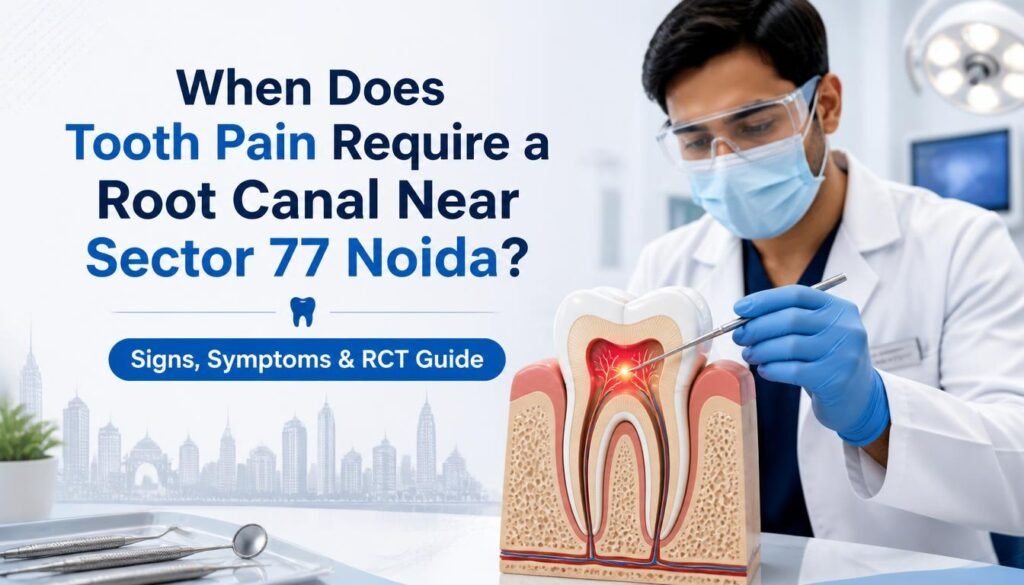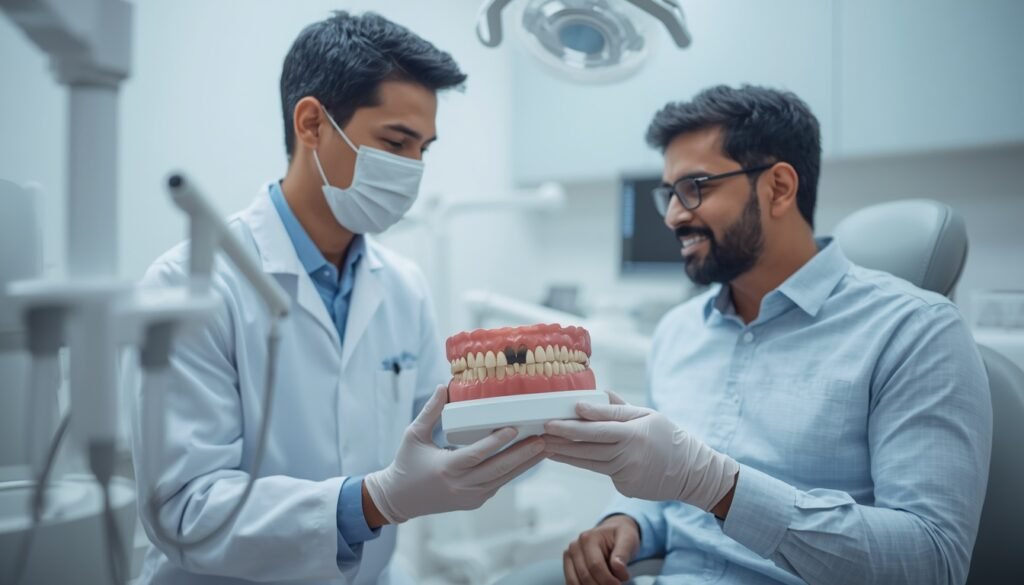


Tooth pain can start as a minor irritation, but persistent pain, sensitivity, or swelling may indicate a deeper dental problem. If you live in Noida Sector 77 and are experiencing recurring tooth discomfort, you may be wondering whether you need a root canal treatment (RCT).
A root canal is generally recommended when the pulp—the soft tissue containing nerves and blood vessels inside the tooth—becomes inflamed or infected. Common causes include deep tooth decay, cracks, trauma, repeated dental procedures, or problems with an existing crown.
The good news is that modern root canal treatment is designed to remove infection, relieve pain, and preserve your natural tooth rather than immediately extracting it.
If you’re searching for root canal treatment in Noida Sector 77, here are five important signs you shouldn’t ignore.
1. Persistent or Severe Toothache
One of the most common warning signs is persistent tooth pain that doesn’t go away.
You may experience:
- Constant or throbbing toothache
- Sharp pain while chewing
- Pain when biting down
- Pain that becomes worse at night
- Pain that radiates toward your jaw, ear, or surrounding teeth
Not every toothache means you need a root canal. However, ongoing or severe pain can indicate inflammation or infection within the tooth and should be evaluated by a dentist.
The American Association of Endodontists (AAE) recommends seeking professional dental care when ongoing tooth pain or discomfort occurs.
If you’re experiencing persistent tooth pain, don’t simply depend on painkillers and wait for the symptoms to disappear. The underlying cause needs to be identified.
2. Lingering Sensitivity to Hot or Cold
Do you feel a sudden, intense pain when drinking hot tea, coffee, or eating ice cream?
Temporary sensitivity can sometimes occur because of exposed dentin, gum recession, or other relatively minor dental issues. However, sensitivity that is intense or continues after the hot or cold stimulus is removed can be a warning sign of pulp damage.
According to the AAE, lingering sensitivity to hot or cold can be one of the symptoms associated with a tooth that may require root canal treatment.
For example, if you drink something cold and the affected tooth continues hurting for a noticeable period after you stop drinking, it is worth getting the tooth examined.
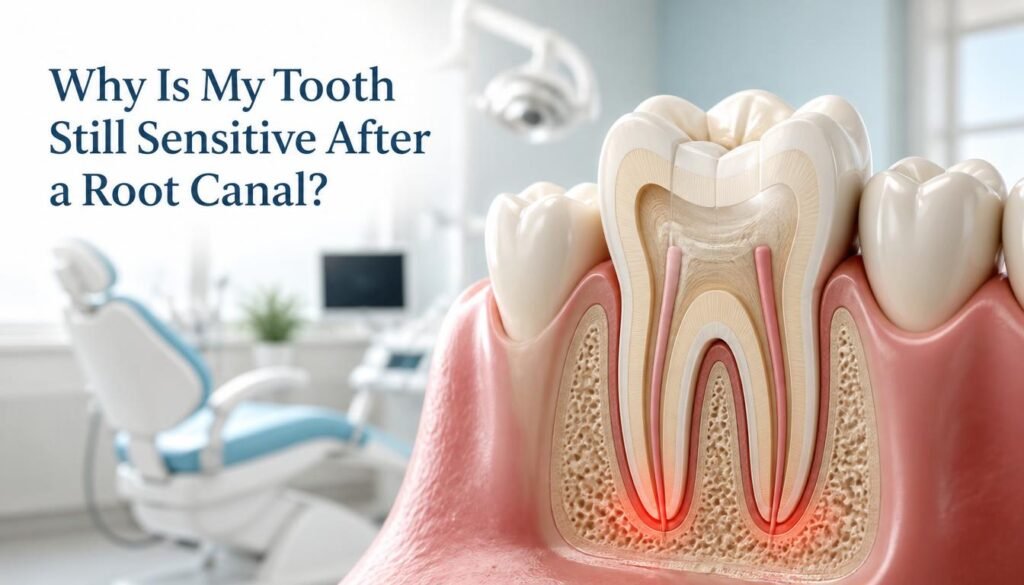
Why Does This Happen?
When the pulp inside a tooth becomes inflamed, the nerves can become highly sensitive. If the inflammation or infection progresses, a dentist may recommend root canal treatment to remove the damaged pulp and save the tooth.
3. Swelling, Tender Gums, or a Pimple on the Gum
Another important warning sign is swelling around a particular tooth.
You may notice:
- Swollen gums
- Tenderness around the tooth
- A small pimple or bump on the gum
- Pus or an unpleasant taste
- Swelling around the jaw
- Pain when touching the area
A pimple-like bump on the gum can sometimes indicate drainage from an infection around the tooth. The AAE specifically lists pimples on the gums among symptoms that may indicate the need for root canal treatment.
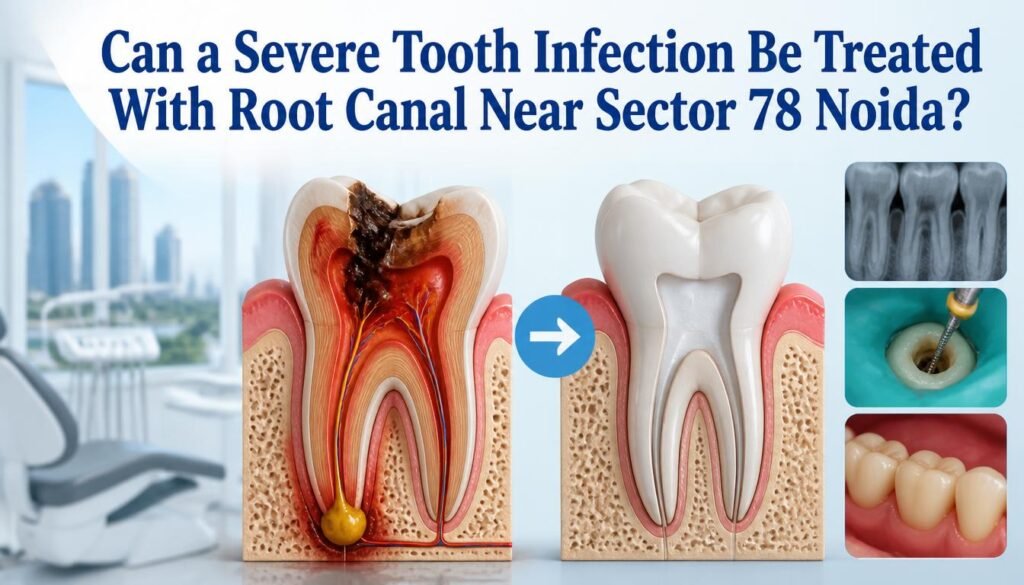
An untreated infection can potentially develop into an abscess. That’s why swelling should not be ignored, even if the pain temporarily decreases.
4. Pain When Chewing or Biting
If your tooth hurts whenever you bite into food, chew, or apply pressure, it may indicate an underlying problem.
This can happen because of:
- Deep tooth decay
- Inflammation or infection of the pulp
- A cracked or damaged tooth
- Previous dental treatment
- Trauma to the tooth
The AAE identifies severe pain while chewing or biting as one of the symptoms that can be associated with the need for root canal treatment.
Sometimes patients unconsciously avoid chewing on one side of their mouth because one tooth feels uncomfortable. If this continues for several days, schedule a dental examination rather than adapting your eating habits around the pain.
5. A Cracked, Chipped, or Severely Decayed Tooth
A tooth that is significantly cracked, chipped, or affected by deep decay may allow bacteria to reach the inner pulp.
The AAE explains that deep decay, cracks or chips, repeated dental procedures, faulty crowns, and dental trauma can contribute to pulp inflammation or infection.
Importantly, a tooth does not always have an obvious visible crack after trauma. Internal damage can sometimes occur even when the outside of the tooth looks relatively normal.
If you have recently experienced a dental injury or have a badly decayed tooth, getting it evaluated early can help determine whether the tooth can be saved.
Does Every Toothache Require a Root Canal?
No.
Having tooth pain does not automatically mean you need a root canal. Tooth sensitivity and pain can have several causes, including cavities, gum problems, cracked teeth, worn fillings, sinus-related issues, or other dental conditions.
A dentist needs to examine the tooth and may use dental X-rays and other diagnostic tests to determine the cause.
Root canal treatment is generally considered when the dental pulp has become inflamed or infected and the tooth can be predictably saved.
That’s why self-diagnosing from symptoms alone isn’t recommended.
What Happens During Root Canal Treatment?
Many people delay RCT because they are afraid that the procedure will be painful. Modern root canal treatment is performed using local anesthesia and is intended to make the patient comfortable.
Generally, the procedure involves:
- Examination and diagnosis – The dentist evaluates the affected tooth and determines the source of the problem.
- Local anesthesia – The area is numbed before treatment.
- Removal of infected pulp – The damaged or infected pulp is removed.
- Cleaning and disinfection – The root canals are carefully cleaned and disinfected.
- Sealing – The cleaned canals are filled and sealed to help prevent reinfection.
- Final restoration – Depending on the condition of the tooth, a filling or dental crown may be recommended to restore strength and function.
The AAE explains that root canal treatment is designed to clean and seal the infected root canal while preserving the natural tooth.
You can learn more about the treatment through the American Association of Endodontists’ root canal guide.
Why Saving Your Natural Tooth Matters
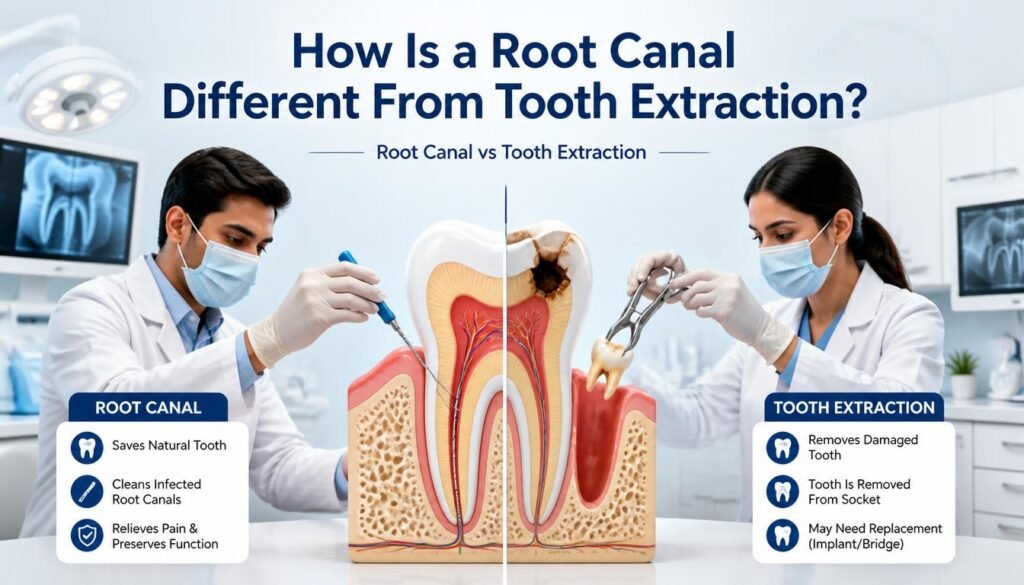
One major advantage of root canal treatment is that it can help preserve your natural tooth.
When successful, root canal treatment allows you to continue chewing with the treated tooth while maintaining your natural smile. The AAE notes that properly treated and restored teeth can often last for many years and, with appropriate care, may last a lifetime.
Avoiding treatment, however, can allow an infection to progress. In some cases, a severely damaged tooth may eventually become impossible to save and require extraction.
If extraction becomes necessary, replacing the missing tooth may involve options such as a dental implant or bridge.
You can explore Dental Implants at The Dental Crowns if you’re interested in learning about tooth replacement options.
Root Canal Treatment in Noida Sector 77: When Should You See a Dentist?
If you are experiencing any of the following symptoms, consider scheduling a dental examination:
- Persistent toothache
- Severe pain while chewing
- Lingering hot or cold sensitivity
- Gum swelling
- A pimple or bump on the gum
- A cracked or chipped tooth
- Deep tooth decay
- Tooth pain following an injury
You don’t necessarily need to wait until the pain becomes unbearable. Early evaluation can help identify the problem and determine the most appropriate treatment.
For patients in and around Noida Sector 77, The Dental Crowns provides dental services from its clinic at Civitech Stadia, Sector 79, Noida. Its listed services include painless root canal treatment, dental crowns, implants, bridges, dentures, cosmetic dentistry, and other dental procedures.
You can visit the Painless Root Canal Treatment service page to learn more about the clinic’s approach to RCT.
Frequently Asked Questions
1. How do I know if I need a root canal?
Persistent tooth pain, severe pain while chewing, lingering sensitivity to hot or cold, gum swelling, or a pimple on the gum can be signs of a tooth that needs root canal evaluation. However, only a dental examination can confirm whether RCT is necessary.
2. Is root canal treatment painful?
Modern root canal treatment is performed with local anesthesia, and the AAE states that patients are generally comfortable during the procedure. Some sensitivity or discomfort can occur for a few days afterward, particularly when there was an infection before treatment.
3. Can a cracked tooth need a root canal?
Yes. A crack can allow bacteria to reach the pulp and cause inflammation or infection. Depending on the extent and location of the crack, root canal treatment may be one part of the treatment plan.
4. Can deep cavities lead to a root canal?
Yes. Deep decay can reach the pulp and cause inflammation or infection. When the pulp is irreversibly damaged, root canal treatment may be recommended to save the tooth.
5. Should I wait if my tooth pain goes away?
It’s better not to assume that the underlying problem has disappeared. Dental infections can sometimes change in symptoms while the underlying condition remains. A professional examination is the safest way to determine what’s happening.
Final Takeaway
If you’re experiencing persistent tooth pain, lingering hot or cold sensitivity, swelling, pain while biting, or a cracked or severely decayed tooth, don’t ignore the warning signs.
These symptoms don’t automatically mean that you need a root canal, but they do justify a professional dental evaluation.
For people searching for root canal treatment in Noida Sector 77, early diagnosis can be important for relieving discomfort, controlling infection, and determining whether your natural tooth can be preserved.
Experiencing tooth pain in or around Sector 77? Book a dental consultation with The Dental Crowns to get your tooth properly evaluated and understand the treatment options available for your specific condition.
References: