A severe tooth infection can be painful, worrying and difficult to ignore. If you live in or around Sector 78 Noida and have severe toothache, swelling, sensitivity, pain while chewing or a recurring gum boil, you may be wondering:
Can a severely infected tooth still be treated with a root canal, or does it need to be extracted?
In many cases, root canal treatment can be used to remove infection from inside a tooth and preserve the natural tooth, provided the tooth is still restorable.
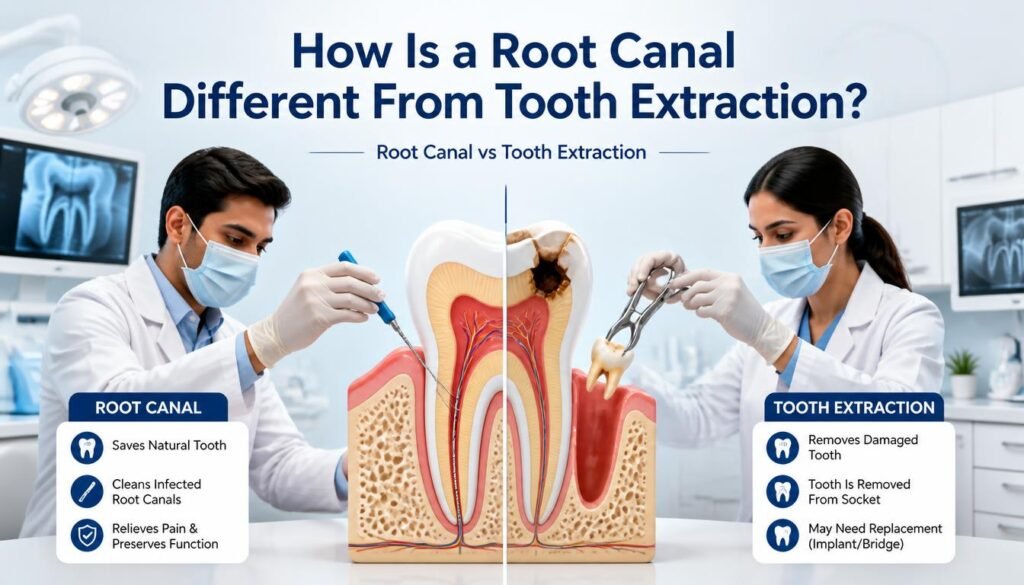
A root canal removes infected or inflamed pulp from inside the tooth. The canals are then cleaned, disinfected, filled and sealed. Depending on the condition of the remaining tooth structure, a dental crown may subsequently be recommended to protect the tooth.
The American Association of Endodontists explains that endodontic treatment is used when the pulp becomes inflamed or infected and can help preserve the natural tooth.
For patients looking for root canal treatment near Sector 78 Noida, The Dental Crowns is located in nearby Sector 79 and provides root canal and restorative dental services.
What Causes a Severe Tooth Infection?
A tooth infection generally develops when bacteria enter the inner part of a tooth and reach the dental pulp.
Common causes include:
- Deep tooth decay
- An untreated cavity
- A cracked or fractured tooth
- Dental trauma
- Repeated dental procedures
- A leaking or damaged filling
- Problems involving an existing crown
- Untreated inflammation of the dental pulp
The American Association of Endodontists notes that deep decay, cracks, trauma and repeated dental procedures can contribute to infection or inflammation of the pulp.
If the infection progresses beyond the pulp, an abscess can develop around the root of the tooth.
Can a Severe Tooth Infection Still Be Treated With Root Canal?
Yes, in many cases.
The severity of an infection does not automatically mean that the tooth has to be extracted.
The dentist first needs to determine whether the tooth is restorable.
During the examination, the dentist may assess:
- How much healthy tooth structure remains
- The extent of decay
- Whether the tooth has a crack or fracture
- The condition of the roots
- The condition of the surrounding bone
- The presence and location of an abscess
- Gum and periodontal health
- Whether the tooth can be properly restored after RCT
If the tooth can be adequately cleaned, sealed and restored, root canal treatment may be considered.
The goal is to remove the source of infection while retaining the natural tooth whenever predictable treatment is possible.
For more information about the procedure, you can explore Painless Root Canal Treatment on The Dental Crowns.
What Happens During Root Canal Treatment for an Infected Tooth?
Root canal treatment generally involves several important stages.
1. Dental Examination
The dentist first examines the tooth and symptoms.
X-rays or other appropriate diagnostic tests may be used to understand the infection and evaluate the tooth’s roots and surrounding structures.
2. Local Anaesthesia
Local anaesthesia is normally used to make the procedure more comfortable.
The exact anaesthetic approach depends on the tooth and the patient’s clinical condition.
3. Accessing the Tooth
The dentist creates an opening in the tooth to reach the infected or inflamed pulp.
4. Removing the Infected Pulp
The damaged or infected pulp tissue is removed from inside the tooth.
5. Cleaning and Disinfecting the Canals
The root canals are carefully cleaned, shaped and disinfected.
This is an important part of controlling the infection because bacteria can remain inside the complex canal system if treatment is incomplete.
6. Filling and Sealing
After adequate cleaning and preparation, the canals are filled and sealed to reduce the possibility of reinfection.
7. Final Restoration
A tooth that has undergone root canal treatment may require a filling or dental crown, depending on how much tooth structure remains and which tooth has been treated.
The Cleveland Clinic describes root canal treatment as a procedure in which infected pulp is removed, the canals are cleaned and sealed, and the tooth may subsequently receive a crown.
What If There Is an Abscess or Pus?
A severe tooth infection can sometimes result in a dental abscess.
An abscess is a collection of pus caused by infection. It may occur around the root of an infected tooth.
Possible symptoms include:
- Severe toothache
- Swelling around the tooth
- A swollen gum
- A gum boil or pimple
- Pus or unpleasant taste
- Pain while chewing
- Sensitivity to hot or cold
- Facial swelling
- Tenderness around the tooth
- Fever in cases involving systemic infection
A dental abscess generally requires professional treatment and should not be left untreated.
The Cleveland Clinic explains that an abscessed tooth does not heal on its own and may require procedures such as root canal treatment, drainage or extraction depending on the condition of the tooth. Cleveland Clinic – Abscessed Tooth
Can Root Canal Treatment Save a Tooth With an Abscess?
It can, depending on the condition of the tooth.
If the tooth is restorable, root canal treatment may be used to remove infected tissue and disinfect the inside of the tooth.
In some situations, drainage may also be necessary.
The American Association of Endodontists states that abscessed teeth may be treated through root canal procedures or endodontic surgery, with the infected canals cleaned, shaped and sealed.
However, not every severely infected tooth can be saved.
If the tooth is fractured beyond repair, has insufficient remaining structure, or cannot be predictably restored, the dentist may recommend extraction.
Does a Severe Tooth Infection Always Need Antibiotics?
No.
Antibiotics are not automatically required for every dental infection.
The American Dental Association recommends prioritizing definitive dental treatment for many pulpal and periapical dental conditions rather than routinely prescribing systemic antibiotics. Depending on the diagnosis, treatment may include root canal treatment, drainage or other dental procedures.
Antibiotics may be appropriate when there are signs of systemic involvement, such as fever or malaise, or when the dentist determines that they are clinically indicated.
Therefore, patients should not self-medicate with leftover antibiotics.
The source of the dental infection needs to be professionally evaluated and treated.
Is Root Canal Better Than Extraction for a Severely Infected Tooth?
The appropriate treatment depends on the individual tooth.
If a severely infected tooth is restorable, root canal treatment can offer a way to retain the natural tooth.
If the tooth cannot be predictably restored, extraction may be necessary.
After extraction, tooth replacement options can include:
- Dental implants
- Dental bridges
- Dentures
The American Association of Endodontists notes that preserving a natural tooth through appropriate endodontic treatment can avoid the need for immediate tooth replacement.
You can also read our guide on Dental Implants Near Noida Sector 78 for information about tooth replacement options.
When Should You See a Dentist Near Sector 78 Noida?
You should arrange a dental examination if you experience:
- Persistent tooth pain
- Severe or throbbing toothache
- Pain while biting
- Swelling around the tooth
- Gum swelling
- A recurring gum boil
- Pus around the tooth
- Tooth sensitivity that persists
- A darkened tooth
- Facial swelling
- Fever associated with dental symptoms
Do not wait for severe pain before seeking an examination.
Interestingly, an infected tooth does not always remain painful. Sometimes the nerve inside the tooth dies, reducing the pain while the infection continues around the root.
The AAE advises professional evaluation for symptoms such as severe pain, swelling and signs of an abscess.
When Is a Dental Infection an Emergency?
Some symptoms require urgent medical attention.
Seek urgent care if dental infection is accompanied by:
- Difficulty breathing
- Difficulty swallowing
- Rapidly increasing facial swelling
- Swelling extending toward the eye
- Swelling extending toward the neck
- High fever
- Severe deterioration in general condition
A spreading dental infection can become serious and should not be managed only with home remedies.
The Cleveland Clinic specifically advises emergency evaluation when an abscess is associated with breathing or swallowing difficulty or spreading facial swelling.
What Happens After Root Canal Treatment?
Root canal treatment removes infection from inside the tooth, but the treated tooth still needs appropriate restoration and care.
Depending on the tooth and its remaining structure, your dentist may recommend a dental crown.
A crown can help protect a weakened tooth from further damage and restore its function.
For patients looking for information about crowns, see our guide:
Dental Crown Treatment Near Noida Sector 78: Cost and Treatment Options
You can also read:
Dental Crown Aftercare Tips for Patients in Sector 78 Noida
Following your dentist’s instructions, maintaining oral hygiene and attending recommended follow-up appointments can help protect the treated tooth.
How Long Can a Root Canal-Treated Tooth Last?
The longevity of a root canal-treated tooth varies according to factors such as:
- Quality of the root canal treatment
- Amount of remaining tooth structure
- Final restoration
- Oral hygiene
- Bite forces
- New decay
- Cracks or fractures
- Regular dental check-ups
The AAE notes that with appropriate treatment and restoration, root canal-treated teeth can continue to function for many years and may last a lifetime.
Root Canal Treatment Near Sector 78 Noida
If you live in Sector 78 Noida, The Dental Crowns is located nearby at Civitech Stadia, Sector 79, Noida.
The clinic’s listed services include:
- Painless root canal treatment
- Dental crowns
- Dental implants
- Laser dentistry
- Dental bridges
- Tooth-coloured restorations
- Dentures
- Veneers
- Braces
- Teeth whitening
- Tooth extraction
You can explore the complete Dental Services offered by The Dental Crowns to understand the available treatment options.
For root canal-specific information, visit Painless Root Canal Treatment in Noida.
Patients experiencing severe tooth pain, swelling or other signs of infection should arrange a professional dental examination so the cause can be diagnosed and an appropriate treatment plan can be recommended.
Frequently Asked Questions
Can a severe tooth infection be treated with a root canal?
Yes. A severe infection can sometimes be treated with root canal treatment if the tooth is restorable. The dentist will assess the tooth, roots, surrounding tissues and remaining tooth structure before deciding.
Can a root canal treat a tooth abscess?
A root canal may treat an abscess caused by infection inside a restorable tooth. Drainage may also be required in some cases.
Can I avoid tooth extraction if I have a severe infection?
Possibly. If the tooth can be predictably cleaned, sealed and restored, root canal treatment may allow the natural tooth to be preserved. However, extraction may be necessary when the tooth cannot be restored.
Is a root canal painful?
Root canal treatment is generally performed under local anaesthesia. Some soreness or sensitivity can occur after treatment. The level of discomfort varies between patients and depends on the condition of the tooth.
Can antibiotics cure an infected tooth?
Antibiotics alone generally do not eliminate the source of an infected tooth. Definitive dental treatment is often necessary. Antibiotics may be prescribed when clinically indicated, particularly when systemic symptoms are present.
Do I need a crown after a root canal?
Not every tooth automatically requires a crown. However, a crown may be recommended when the tooth has significant structural damage or needs additional protection after RCT.
How quickly should I get treatment for a severe tooth infection?
You should arrange a dental examination as soon as possible, especially if you have swelling, severe pain, pus, fever or difficulty chewing.
Where can I get root canal treatment near Sector 78 Noida?
The Dental Crowns is located in nearby Sector 79, Noida, at Civitech Stadia, and provides root canal and other dental treatments for patients from Sector 78 and surrounding Noida sectors.
Final Takeaway
A severe tooth infection does not automatically mean that the tooth must be extracted.
If the tooth is still restorable, root canal treatment may remove the infected pulp, clean and seal the root canals, and allow the natural tooth to remain in function.
However, the only way to determine whether RCT is appropriate is through a professional dental examination and appropriate diagnostic assessment.
If you are experiencing severe tooth pain, swelling, pus, pain while chewing or other signs of infection near Sector 78 Noida, timely dental evaluation is important.
For patients in Sector 78 and nearby areas, The Dental Crowns in Sector 79 provides root canal treatment and comprehensive dental care.
Book a dental consultation if you are experiencing symptoms of a severe tooth infection rather than delaying treatment or relying only on antibiotics or home remedies.