Losing a tooth can seem like a small problem, particularly when the missing tooth is not visible when you smile. However, a missing tooth can affect more than appearance. It may influence chewing, speech, the way your teeth meet and the condition of the bone around the empty space.
This raises an important question:
Can dental implants prevent problems caused by missing teeth?
In many cases, dental implants can help address several problems associated with tooth loss because they are designed to replace the missing tooth root as well as support a replacement tooth. Unlike some other tooth-replacement options, an implant is placed into the jawbone and can provide a stable foundation for a dental crown, bridge or denture.
According to the Mayo Clinic, a dental implant replaces the root portion of a missing tooth and can support an artificial tooth such as a crown.
However, dental implants are not automatically suitable for everyone. A dentist needs to evaluate the gums, jawbone, remaining teeth, bite and overall oral condition before recommending treatment.
What Happens When You Lose a Tooth?
A missing tooth leaves an empty space in the dental arch. Depending on which tooth is missing, this can affect everyday activities such as chewing and speaking.
The American Dental Association’s MouthHealthy explains that missing teeth can affect eating and speaking, while remaining teeth may shift and bone loss can occur around the missing tooth.
Some common problems associated with missing teeth include:
- Difficulty chewing certain foods
- Changes in speech
- Movement or shifting of nearby teeth
- Changes in the way the teeth come together
- Loss of bone around the missing-tooth area
- Difficulty maintaining a balanced bite
- Changes in smile appearance
- Reduced confidence when smiling or speaking
Not every person with a missing tooth will experience all of these problems. The effects depend on factors such as the location and number of missing teeth, oral health and how long the tooth has been missing.
Can Dental Implants Prevent Problems Caused by Missing Teeth?
Dental implants can help prevent or address some of the functional and structural problems associated with missing teeth, but they cannot guarantee that every problem will be prevented.
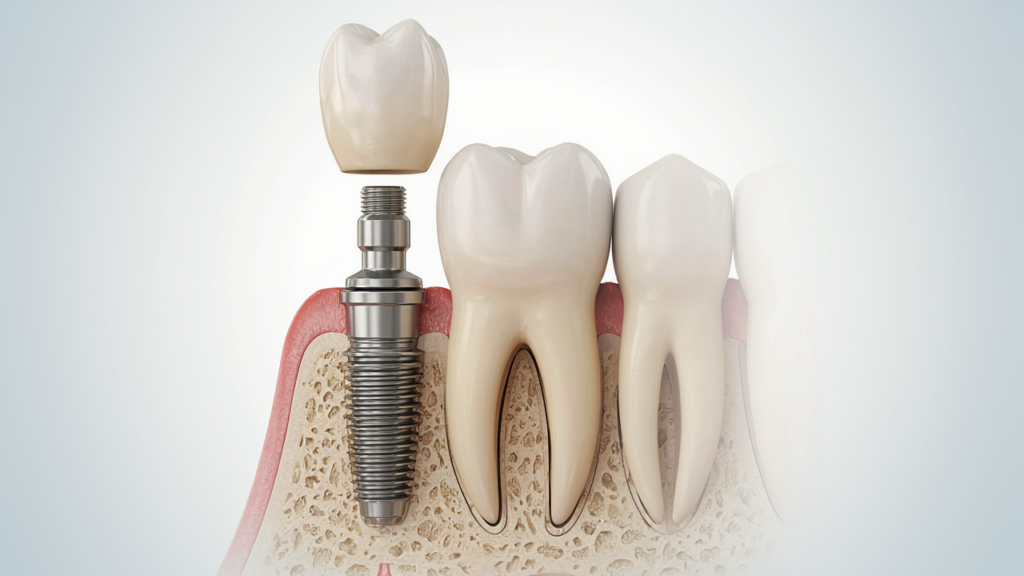
The reason is that a dental implant is designed to replace the root portion of a missing tooth.
A typical implant restoration consists of:
- Dental implant – the component placed into the jawbone.
- Abutment – the connector between the implant and replacement tooth.
- Dental crown – the visible tooth-shaped restoration.
After placement, the implant can integrate with the surrounding bone through a process called osseointegration. Once healing and integration are adequate, the final restoration can be attached.
This creates a stable replacement for the missing tooth.
1. Dental Implants Can Restore Chewing Function
One of the most noticeable effects of tooth loss can be difficulty chewing.
If a molar is missing, for example, you may naturally begin using the opposite side of your mouth more frequently. This can make eating certain foods less comfortable.
A properly planned implant-supported crown can restore a replacement tooth in the empty space and provide a stable chewing surface.
The FDA lists restoration of the ability to chew among the potential benefits of dental implant systems.
However, chewing function depends on the location of the implant, the final restoration, bite, surrounding teeth and overall treatment outcome.
2. Dental Implants Can Help Support the Jawbone
The roots of natural teeth stimulate the surrounding jawbone. When a tooth is lost, the area no longer receives the same stimulation from a natural tooth root.
Bone changes can therefore occur around an empty tooth socket.
Because a dental implant is placed into the jawbone, it can provide a replacement root-like structure. The implant can integrate with the surrounding bone, creating a foundation for the replacement tooth.
The FDA identifies helping maintain jawbone and reducing bone shrinkage as potential benefits of dental implant systems.
This is one reason dental implants differ from tooth-replacement options that do not replace the tooth root.
3. Dental Implants Can Help Maintain the Space for a Missing Tooth
When a tooth is missing, the empty space can affect the position of the surrounding teeth.
The ADA notes that remaining teeth may shift when a tooth is missing.
Replacing the missing tooth with an appropriately planned implant-supported restoration can fill the space and provide a stable replacement.
This does not mean implants completely prevent tooth movement or guarantee perfect alignment. The health, position and condition of the surrounding teeth still matter.
4. A Single Dental Implant Can Replace One Missing Tooth
If you have lost only one tooth, you may not necessarily need a restoration involving several natural teeth.
A single dental implant can be used to support an individual crown.
This can be particularly useful because an implant-supported single crown does not normally require the neighbouring natural teeth to be prepared as bridge supports.
If you are considering a single-tooth replacement, your dentist can assess whether an implant, bridge or another option is appropriate for your specific situation.
You can also read our guide on Dental Implants Near Noida Sector 76: Single Tooth Implant Guide for more information.
5. Dental Implants Can Provide a Stable Tooth Replacement
Removable dentures can move in some situations, particularly when chewing or speaking.
Dental implants are surgically placed into the jawbone and are designed to provide a stable foundation for replacement teeth.
The ADA’s MouthHealthy guide to dental implants describes implants as posts placed in the jaw that function as anchors for replacement teeth.
For some patients, this stability can make everyday activities such as eating and speaking more comfortable.
6. Dental Implants Can Support a Dental Crown
A dental implant by itself is not the visible replacement tooth.
Once the implant has healed sufficiently and the treatment plan allows, a dental crown can be attached to the implant through an abutment.
The crown is designed to restore the visible portion of the missing tooth.
This is where dental implants and dental crown treatment work together.
If you are interested in how crowns are used to restore teeth, explore our dental crown treatment resources.
What Problems Can Happen If a Missing Tooth Is Not Replaced?
Not every missing tooth must immediately be replaced with an implant. However, leaving a missing tooth untreated may have consequences depending on the location and circumstances.
Possible concerns include:
Difficulty chewing
Missing teeth can reduce the available chewing surface and may make certain foods harder to eat.
Tooth movement
Neighbouring teeth may move into or toward the empty space.
Changes in bite
Changes in tooth position can affect how the upper and lower teeth meet.
Bone changes
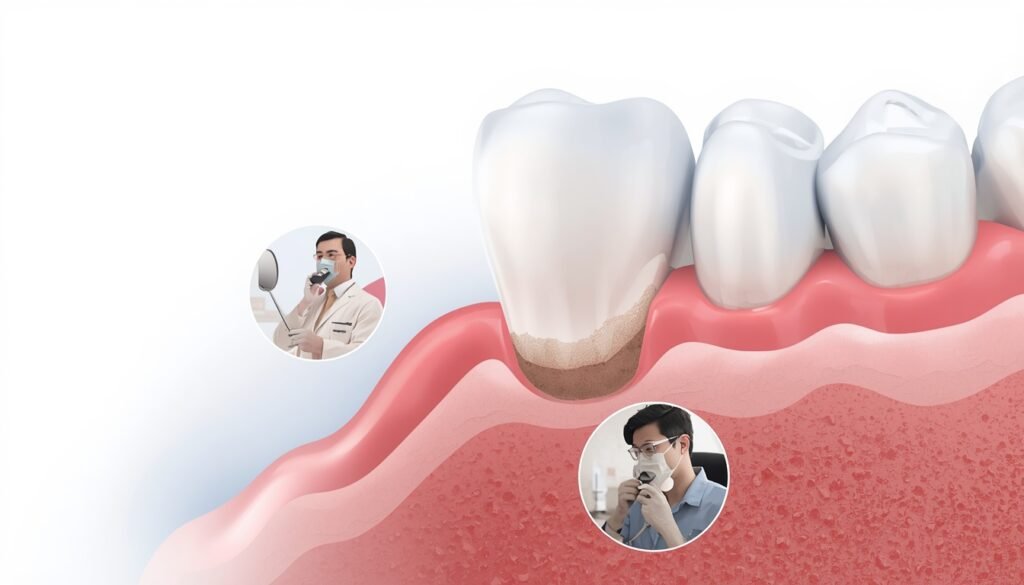
The bone surrounding an empty tooth area can gradually change after tooth loss.
Speech changes
Depending on the location of the missing tooth, speech may be affected.
Aesthetic concerns
Missing front teeth can have an obvious effect on the appearance of a smile.
The ADA recommends discussing tooth-replacement options with a dentist rather than assuming that one treatment is appropriate for everyone.
Are Dental Implants Better Than Bridges or Dentures?
There is no single tooth-replacement option that is best for every patient.
Depending on your oral condition, you may be offered:
- Dental implants
- Dental bridges
- Partial dentures
- Complete dentures
- Other restorative options
Dental implants have the distinctive feature of being placed into the jawbone and designed to replace the root portion of the missing tooth.
A dental bridge, by comparison, generally uses neighbouring teeth or implants to support the replacement tooth.
Dentures are removable appliances that can replace several or all missing teeth.
Your dentist can compare these options based on your jawbone, gum health, remaining teeth, bite, budget, treatment goals and overall oral health.
Who May Be a Candidate for Dental Implants?
Dental implants may be considered for people who have one or more missing teeth and have suitable oral and jawbone conditions.
Your dentist may evaluate:
- Jawbone volume and quality
- Gum health
- Remaining natural teeth
- Oral hygiene
- Bite and tooth position
- Number of missing teeth
- Overall health factors that may affect healing
- Smoking or tobacco use
- Your expectations and treatment goals
Mayo Clinic notes that adequate bone to secure the implants, healthy oral tissues and the ability to heal appropriately are among the factors considered when determining whether implants may be suitable.
If there is insufficient bone, additional procedures such as bone grafting may sometimes be considered.
What Is the Dental Implant Procedure Like?
Dental implant treatment is generally completed in stages.
Step 1: Dental examination
The dentist examines the missing-tooth area, gums, jawbone and remaining teeth.
Step 2: Imaging and treatment planning
Dental imaging may be used to assess the bone and plan implant placement.
Step 3: Implant placement
The implant is surgically placed into the jawbone.
Step 4: Healing and osseointegration
The implant needs time to integrate with the surrounding bone.
Step 5: Abutment placement
An abutment connects the implant to the final restoration.
Step 6: Dental crown placement
Once the area is ready, the final crown is attached.
The exact process and timeline vary from patient to patient. Mayo Clinic notes that implant treatment can take several months because healing and bone integration require time.
Can Dental Implants Prevent Further Bone Loss?
Dental implants can help maintain bone in the area around an implant because the implant functions as an artificial tooth root.
However, this should not be interpreted as a guarantee that there will never be bone loss around an implant.
Implants require proper placement, healthy surrounding tissues and ongoing maintenance.
The American Dental Association also recognizes conditions such as peri-implant disease, which means tissues around implants can develop problems.
This is why regular dental examinations and good oral hygiene remain important even after implant treatment.
What Are the Risks of Dental Implants?
Like any surgical procedure, dental implant treatment has potential risks.
Mayo Clinic lists possible complications including:
- Infection
- Injury to surrounding structures
- Nerve-related problems
- Sinus problems in some upper-jaw cases
- Failure of the implant to integrate with bone
The FDA also notes that implant complications can occur soon after placement or later.
For this reason, choosing an implant simply because it is popular is not enough. A dentist should first determine whether it is clinically appropriate for you.
How Can You Protect Your Dental Implant After Treatment?
Good maintenance is important for the long-term health of an implant and the surrounding tissues.
Follow your dentist’s instructions regarding:
- Brushing
- Flossing or interdental cleaning
- Professional dental cleanings
- Follow-up appointments
- Avoiding damaging habits
- Monitoring for pain, swelling or looseness
Mayo Clinic recommends keeping implants, artificial teeth and surrounding gum tissue clean and attending regular dental checkups.
If an implant feels loose, painful or unusual, contact your dental provider rather than waiting for the problem to resolve on its own.
Dental Implants in Noida: When Should You Get a Consultation?
If you have one or more missing teeth, you do not necessarily have to decide immediately that you need an implant.
The first step is a professional examination.
For patients in Noida, including people living around Sector 74, Sector 75, Sector 76, Sector 77, Sector 78 and Sector 79, a dental consultation can help determine whether dental implants or another tooth-replacement option is appropriate.
The Dental Crowns provides dental implant treatment along with restorative and general dental services.
You can learn more through our Dental Services page.
You may also find these related resources useful:
- Dental Implants Near Noida Sector 78: Cost, Procedure and Recovery
- Dental Implants in Noida Sector 75: Complete Guide
- Dental Implants Near Noida Sector 77: Procedure and Recovery Guide
- How to Choose the Right Dental Implant Treatment in Noida Sector 79
- How Can You Find the Right Dentist for Dental Implants in Noida?
Frequently Asked Questions
1. Can dental implants prevent problems caused by missing teeth?
Dental implants can help address several consequences of tooth loss by replacing the missing tooth root and supporting a replacement tooth. They may help restore chewing function, support the jawbone and fill the space left by a missing tooth. However, results vary and implants do not guarantee that every complication will be prevented.
2. Can one missing tooth cause other teeth to move?
Yes, a missing tooth can allow remaining teeth to shift toward the empty space. The extent of movement varies depending on the location of the missing tooth and individual dental conditions.
3. Do dental implants replace the tooth root?
Yes. A dental implant is designed to replace the root portion of a missing tooth. A crown or another restoration is then attached to the implant.
4. Can dental implants prevent jawbone loss?
Dental implants can help maintain the bone around the implant area because they are placed into the jawbone and function as artificial tooth roots. However, they do not guarantee that bone loss will never occur.
5. Are dental implants suitable for everyone?
No. Implant suitability depends on factors including jawbone condition, gum health, oral hygiene, remaining teeth, healing capacity and other individual considerations.
6. How long does dental implant treatment take?
Treatment time varies. Implant placement is followed by a healing period during which the implant integrates with the bone. Some patients may require additional procedures before or during implant treatment.
7. Is a dental crown required after a dental implant?
For a conventional single-tooth implant restoration, a crown is commonly attached to the implant through an abutment. Other implant restorations may use bridges or dentures depending on the number of missing teeth.
8. Can dental implants improve chewing?
A properly planned and restored dental implant can help restore chewing function by replacing a missing tooth. The final result depends on factors such as implant position, restoration, bite and surrounding oral health.
9. What happens if I do not replace a missing tooth?
Depending on the location and circumstances, an untreated missing tooth may contribute to chewing difficulties, tooth movement, bite changes, speech changes or bone changes.
10. Can I get dental implants in Noida?
Dental implant treatment is available in Noida. Whether an implant is suitable for you should be determined after an examination and appropriate treatment planning.
Final Thoughts
Can dental implants prevent problems caused by missing teeth?
They can help address several important consequences of tooth loss.
By replacing the missing tooth root and supporting a replacement crown, dental implants can provide a stable tooth-replacement solution. They can help restore chewing function, fill the space created by a missing tooth and support the jawbone around the implant.
However, dental implants are not a one-size-fits-all treatment. The right solution depends on your jawbone, gums, remaining teeth, bite, oral health and individual treatment requirements.
If you have a missing tooth, the best first step is to have the area examined by a qualified dental professional. A proper evaluation can help you understand whether a dental implant, bridge, denture or another treatment is appropriate for you.
For patients looking for dental implants in Noida, The Dental Crowns can evaluate your condition and discuss suitable tooth-replacement options.
Book a dental consultation to understand your options for replacing missing teeth and protecting your long-term oral health.
Medical Disclaimer
This article is intended for general educational purposes and does not replace a professional dental examination, diagnosis or treatment plan. Dental implant suitability, treatment sequence, healing time and expected outcomes vary from patient to patient.