Dental implants are a popular solution for replacing missing teeth because they can restore chewing function, improve smile aesthetics and provide a stable foundation for replacement teeth. However, one common concern patients have before treatment is: What happens if there is not enough bone for a dental implant?
The good news is that insufficient jawbone does not automatically mean you cannot get dental implants. Depending on the amount of bone available, its quality and your overall oral health, your dentist may recommend a bone graft, sinus lift surgery or another suitable tooth-replacement option.
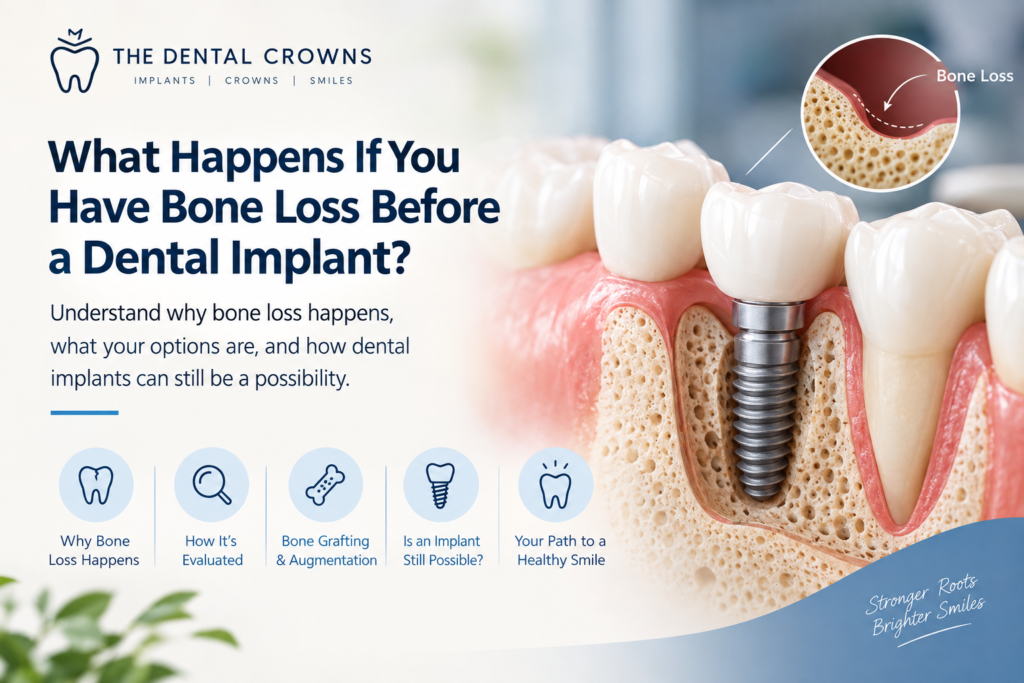
Jawbone is important because a dental implant needs sufficient healthy bone to support it and integrate with the surrounding tissue. When bone has been lost following tooth extraction, gum disease, injury or long-term tooth loss, additional treatment may be needed before an implant can be placed safely.
In this guide, we explain why jawbone loss occurs, how dentists assess bone availability, which treatments may help, how long healing can take and what alternatives may be available.
Why Is Bone Important for Dental Implants?
A dental implant is an artificial tooth root, usually made from a biocompatible material such as titanium, that is surgically placed into the jawbone. After placement, the surrounding bone gradually bonds with the implant through a process called osseointegration.
This connection helps provide the stability needed to support a replacement tooth, dental bridge or implant-supported denture.
For an implant to work predictably, the dentist must assess several factors, including:
- The height and width of the available jawbone.
- The density and quality of the bone.
- The location of nerves, sinuses and nearby anatomical structures.
- The condition of the gums and surrounding teeth.
- The patient’s general health and ability to heal.
If there is insufficient bone, placing an implant without appropriate planning may increase the risk of poor stability, damage to nearby structures or implant complications.
The American Academy of Periodontology explains why bone quantity and quality are important in dental implant treatment.
What Causes Insufficient Bone for a Dental Implant?
Several conditions can reduce the amount of bone available to support a dental implant.
1. Bone Loss After Tooth Extraction
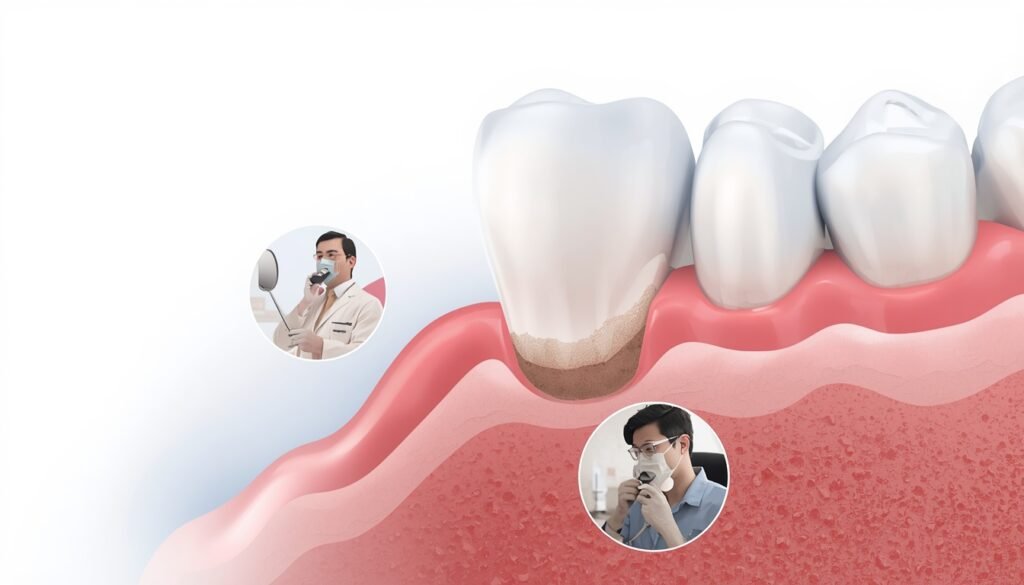
When a tooth is removed, the jawbone that previously supported its root no longer receives the same stimulation. The bone in that area can gradually shrink in height and width.
The amount of bone loss varies between individuals and depends on factors such as the extraction site, healing process and existing oral health.
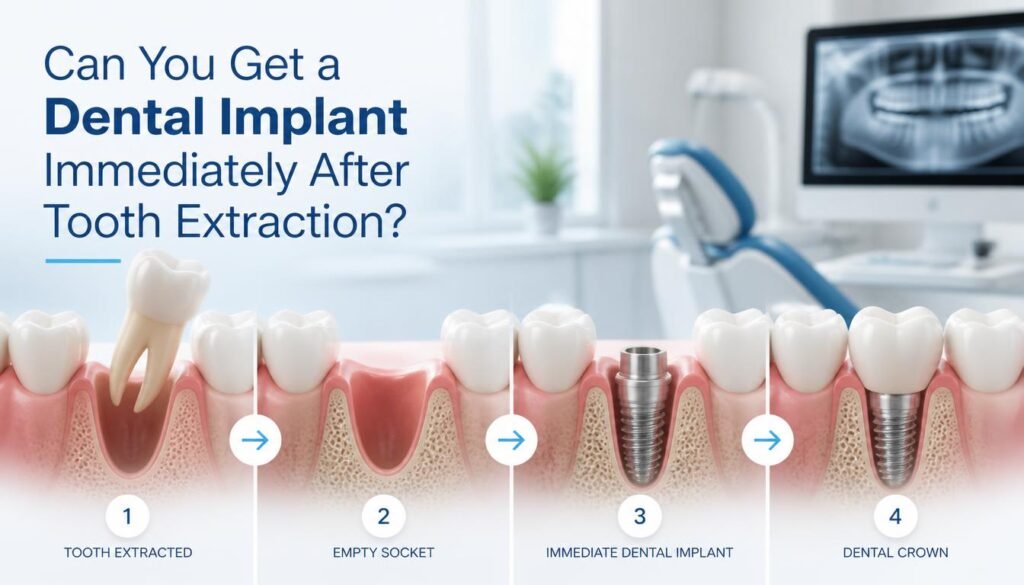
If you are planning to replace a tooth after extraction, ask your dentist whether preserving the extraction site may help maintain the bone needed for a future implant.
2. Long-Term Missing Teeth
Leaving a gap after tooth loss can allow the underlying jawbone to gradually resorb. Over time, the available bone may become too narrow or too short for conventional implant placement without additional treatment.
This is one reason why patients considering dental implants should arrange an assessment rather than assume that the bone will remain unchanged indefinitely.
3. Advanced Gum Disease
Periodontal disease can damage the tissues that support natural teeth, including the surrounding bone. In advanced cases, this bone loss may affect the suitability and timing of dental implant treatment.
Before an implant is considered, active gum disease must be assessed and appropriately managed.
4. Injury or Trauma
An accident, facial injury or damage to the jaw may affect the shape and volume of the bone. Depending on the severity of the injury, reconstructive treatment may be needed before an implant can be considered.
5. Infection or Previous Dental Problems
Certain dental infections and previous surgical procedures can contribute to bone loss around a tooth or extraction site. The dentist must determine whether any infection remains and whether the bone has healed sufficiently before proceeding.
6. Naturally Thin Jawbone
Some people naturally have a narrow jawbone or limited bone height in certain areas. This can be particularly important in the upper back jaw, where the maxillary sinus limits the available space for implant placement.
In these situations, the dentist may consider bone augmentation, sinus lift surgery or an alternative implant design, depending on the clinical findings.
What Happens If There Is Not Enough Bone for a Dental Implant?
If your dentist determines that the available bone is insufficient, the next step is to identify the safest and most appropriate treatment plan. You may have several options.
1. Bone Grafting for Dental Implants
Bone grafting is a procedure that helps rebuild or increase the amount of bone in an area where additional support may be needed.
During the procedure, a dentist or appropriately trained specialist places suitable graft material in the area requiring reconstruction. The material may come from the patient’s own bone or from an approved donor, animal-derived or synthetic source, depending on the clinical situation and treatment plan.
Over time, healing allows new bone to develop in the grafted area.
When might bone grafting be recommended?
A dentist may consider bone grafting when:
- The jawbone is too narrow to support the planned implant.
- There is insufficient bone height in the implant site.
- Bone has been lost following tooth extraction.
- An existing defect needs to be corrected before implant placement.
Bone grafting does not guarantee that every patient will become suitable for implants. The outcome depends on the size and location of the defect, healing, oral health and other individual factors.
Read the American Academy of Periodontology’s guide to ridge modification and bone reconstruction.
2. Sinus Lift Surgery
A sinus lift, also called sinus augmentation, may be recommended when there is insufficient bone height in the upper back jaw.
The maxillary sinuses are air-filled spaces located above the upper back teeth. When teeth in this region have been missing for a long time, the bone beneath the sinus may become too thin to accommodate a conventional implant.
During sinus lift surgery, the sinus membrane is carefully elevated, and suitable graft material may be placed to help develop additional bone beneath it.
After healing, the dentist reassesses the site to determine whether implant placement is appropriate.
Depending on the amount of bone available and the surgical technique, the implant may sometimes be placed during the same procedure. In other cases, the patient needs a separate healing period before implant placement.
For further information, see the American Academy of Periodontology’s explanation of sinus lift surgery.
3. Guided Bone Regeneration
Guided bone regeneration is a technique used in selected cases to encourage bone growth in a specific area.
A dentist or specialist may use bone graft material and a protective membrane to help create conditions that support bone healing while limiting unwanted soft-tissue growth into the area.
The technique may be suitable for certain bone defects around a planned implant site. Its suitability depends on the size, shape and location of the defect.
4. Alternative Implant Techniques
Some patients with limited bone may be suitable for alternative implant approaches.
Depending on the individual anatomy, a specialist may assess options such as carefully selected short implants, angled implants or other advanced implant techniques.
These approaches are not appropriate for everyone. They require detailed diagnosis and treatment planning, and they should not be chosen simply to avoid a bone graft.
5. Dental Bridges or Dentures
If implant surgery is unsuitable, declined or not the preferred treatment, other tooth-replacement options may be considered.
Dental bridges: A fixed bridge replaces a missing tooth by using support from neighbouring teeth or other appropriate structures. Traditional tooth-supported bridges generally require preparation of the supporting teeth.
Removable dentures: Partial or complete dentures may replace one or more missing teeth without requiring an implant to be placed in the jawbone.
The best option depends on your oral health, the number of missing teeth, the condition of neighbouring teeth, comfort, budget and personal preferences.
Explore the American Dental Association’s patient guide to dental implants to understand the basics of implant treatment.
How Do Dentists Check Whether You Have Enough Bone for an Implant?
You cannot reliably determine your jawbone condition by looking at your gums or the gap left by a missing tooth.
Your dentist will examine the mouth and may recommend dental imaging to assess the available bone and nearby anatomical structures.
Clinical Examination
The dentist checks the gums, remaining teeth, missing-tooth area, bite and signs of infection or gum disease. Your medical history and previous dental treatment are also relevant.
Dental X-Rays
Conventional dental X-rays can help assess tooth roots, surrounding bone and certain anatomical features. They may be useful during the initial assessment.
CBCT Scan
A cone-beam computed tomography (CBCT) scan may be recommended when three-dimensional information is needed for implant planning.
It can help the dentist assess bone dimensions and the location of important structures, such as nerves and sinuses. Whether a CBCT scan is necessary depends on the individual case and the information required for safe treatment planning.
After reviewing the findings, your dentist can explain whether an implant can be placed directly, whether bone augmentation may be necessary or whether another treatment is more appropriate.
How Long Does It Take to Get a Dental Implant After Bone Grafting?
The overall timeline varies depending on the amount of bone loss, the type of graft, the surgical technique and how well the area heals.
In some cases, an implant can be placed at the same time as bone grafting. In other cases, the graft needs to heal before the implant can be inserted.
A larger bone graft or sinus lift may require several months of healing. The American Academy of Periodontology notes that bone development after ridge modification or sinus augmentation often takes around four to twelve months, although individual timelines vary.
After implant placement, additional healing time may be required for the implant to integrate with the jawbone before the final replacement tooth is attached.
Your dentist should provide a personalised timeline after assessing your bone condition and proposed treatment.
Is Bone Grafting for Dental Implants Painful?
Bone grafting is a surgical procedure, but local anaesthesia is commonly used to minimise discomfort during treatment. Sedation may be considered in selected cases.
After surgery, you may experience swelling, tenderness, bruising or mild bleeding. These symptoms vary depending on the extent of surgery and your individual healing response.
Your dental professional will provide instructions for oral hygiene, eating, medication and follow-up appointments.
Contact your dentist promptly if you experience worsening pain, increasing swelling, fever, persistent bleeding or other symptoms that concern you. Difficulty breathing or swallowing requires urgent medical attention.
Can You Get Dental Implants Without Bone Grafting?
Yes, some patients can receive dental implants without bone grafting if they have sufficient healthy bone in the correct location.
However, patients with limited bone may require grafting or another carefully selected treatment approach. The decision should be based on clinical examination, appropriate imaging and the proposed implant position.
There is no single rule that applies to every patient. A dentist should explain the benefits, limitations, risks and alternatives of each recommended option.
What Happens If You Never Replace a Missing Tooth?
Not every missing tooth needs to be replaced in exactly the same way, but leaving a gap can have consequences for some patients.
Possible effects include:
- Gradual bone loss in the area where the tooth was lost.
- Shifting of neighbouring teeth in some cases.
- Changes in chewing efficiency.
- Food trapping or difficulties maintaining oral hygiene.
- Changes in the appearance of the smile, depending on the tooth involved.
The impact varies with the location of the missing tooth, the condition of the remaining teeth and your bite.
A dental assessment can help you understand whether tooth replacement is advisable and which options may be appropriate.
Dental Implant Assessment in Noida
If you have been told that you do not have enough bone for a dental implant, it is worth discussing the findings and available treatment options with a qualified dental professional before ruling out implants completely.
At The Dental Crowns, located at Civitech Stadia, Sector 79, Noida, patients can enquire about dental treatment options and arrange an assessment of their individual needs.
During your consultation, consider asking:
- How much bone is available at the proposed implant site?
- Would a bone graft or sinus lift be necessary?
- Can the implant and graft be performed together?
- How long might the complete treatment take?
- What are the risks, costs and alternatives?
- What follow-up care will be required?
The answers will depend on your diagnosis and treatment plan.
To explore the clinic’s treatment information, visit The Dental Crowns’ dental services page or learn more about painless root canal treatment.
Frequently Asked Questions
1. What happens if there is not enough bone for a dental implant?
Your dentist may recommend bone grafting, sinus lift surgery, a suitable alternative implant technique or a non-implant replacement option. The choice depends on the amount and quality of bone available.
2. Can bone grow back for dental implants?
Bone can sometimes be regenerated or augmented using appropriate surgical techniques and graft materials. The amount of regeneration achievable depends on the defect, healing conditions and individual oral health.
3. How much bone is needed for a dental implant?
There is no single measurement suitable for every implant. The required bone dimensions depend on the implant design, the position of the replacement tooth, bone quality and nearby anatomical structures. Your dentist can assess these factors using clinical examination and appropriate imaging.
4. How long after bone grafting can an implant be placed?
The waiting period varies. Some implants can be placed during the grafting procedure, while others require several months of healing before placement. Larger grafts may need more time.
5. Is a sinus lift always necessary for upper jaw implants?
No. A sinus lift is considered when bone height in the upper back jaw is insufficient for the planned implant. Patients with adequate bone may not need the procedure.
6. Can gum disease cause insufficient bone for implants?
Yes. Advanced periodontal disease can destroy the bone supporting natural teeth. Any active gum disease should be assessed and managed before implant treatment is planned.
7. What are the alternatives if I cannot get dental implants?
Depending on your circumstances, a dental bridge or removable denture may be an option. Your dentist can explain which treatment is appropriate for your remaining teeth, gums, jawbone and budget.
8. Where can I get a dental implant assessment in Noida?
You can contact The Dental Crowns at Civitech Stadia, Sector 79, Noida, to enquire about an appointment and the available dental treatment options.
Conclusion
Not having enough bone for a dental implant does not necessarily mean that implant treatment is impossible. Bone grafting, sinus lift surgery and selected alternative techniques may help some patients become suitable candidates.
The most important step is to identify why bone is missing and assess the amount of healthy bone available before deciding on treatment. A personalised dental examination can help you understand the potential benefits, risks, expected healing time and alternatives.
If you are considering dental implants in Noida, consult a qualified dental professional to discuss your options and develop a treatment plan suited to your oral health.
Disclaimer: This article is for general educational purposes and is not a substitute for an individual dental examination, diagnosis or treatment recommendation.