Yes, most people can chew normally after their dental implants have fully healed and the final restoration has been placed. However, you should not expect to eat exactly as you normally would immediately after implant surgery.
Dental implants require a healing period during which the implant gradually integrates with the jawbone. This process, known as osseointegration, is essential for creating a stable foundation for the artificial tooth. Depending on the individual case, healing can take several months.
During the initial recovery period, your dentist may recommend soft foods and advise you to avoid putting excessive pressure on the implant area.
Once healing is complete and your dentist confirms that the implant is stable, a properly restored dental implant can function much like a natural tooth and allow you to eat and chew a wide range of foods.
Can You Chew Normally After Getting Dental Implants?
Yes, you can generally chew normally after a dental implant has completely healed and your dentist has placed the final crown, bridge or other restoration.
One of the major advantages of dental implants is that they are designed to restore both the appearance and function of missing teeth.
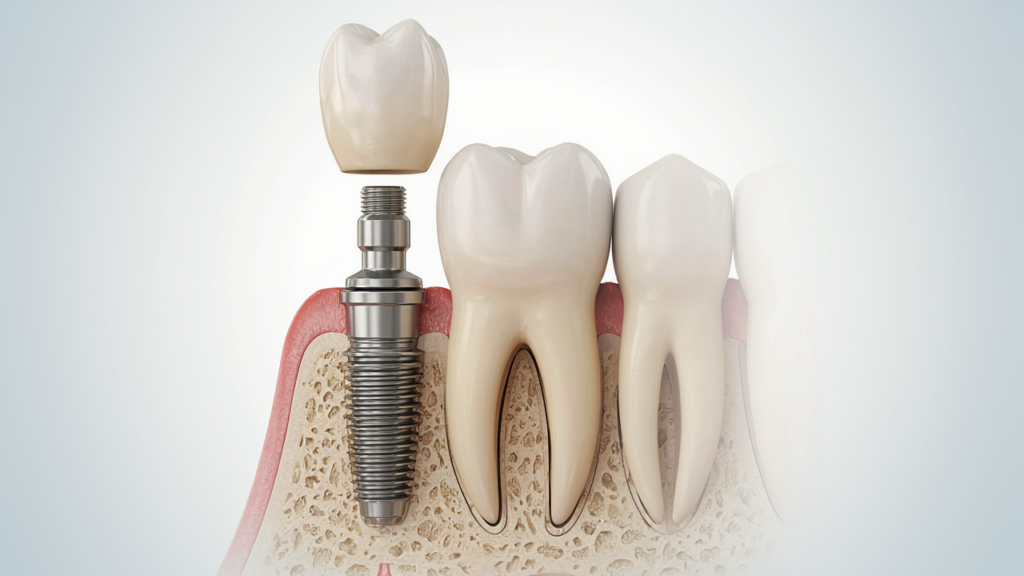
Unlike removable dentures, dental implants are anchored into the jawbone. After successful healing, the implant supports an artificial tooth that can help you bite and chew comfortably.
However, there is an important difference between:
- Immediately after implant surgery
- During the healing period
- After the implant has fully integrated with the bone
Your diet and chewing ability can be different during each stage.
What Happens Immediately After Dental Implant Surgery?
Dental implant placement is a surgical procedure, so your mouth needs time to recover.
Immediately after surgery, the tissues around the implant may be tender or swollen. Your dentist may recommend eating soft foods and avoiding foods that could irritate the surgical area.
Good options may include:
- Yogurt
- Smooth soups
- Mashed potatoes
- Scrambled eggs
- Soft rice
- Oatmeal
- Soft pasta
- Applesauce
- Smoothies without hard ingredients
- Soft-cooked vegetables
Avoid chewing directly over the surgical site unless your dentist specifically tells you that it is safe.
You should also avoid very hard, crunchy or sticky foods during the early recovery period.
The exact diet depends on the type of implant procedure, the number of implants placed, the location of the implant and your individual healing process.
Why Can’t You Chew Normally Immediately After Implant Placement?
A dental implant needs to become stable within the jawbone before it can reliably support normal chewing forces.
During healing, the bone gradually integrates with the implant surface. This biological process is called osseointegration.
According to Cleveland Clinic, osseointegration is critical for implant stability and long-term success, and the healing period can take several months depending on how quickly the individual heals.
This is why you should not assume that an implant is ready for unrestricted chewing simply because the surgical discomfort has disappeared.
Feeling better does not necessarily mean that the implant has completely integrated with the bone.
Your dentist needs to determine when the implant is ready for normal function.
How Long After Dental Implants Can You Eat Normally?
There is no single timeline that applies to every patient.
Some people may be able to gradually return to a more normal diet relatively quickly, while others may need a longer period of dietary restriction.
The timeline can depend on:
- Number of implants placed
- Location of the implant
- Bone quality and quantity
- Whether bone grafting was required
- Type of implant procedure
- Overall healing
- Whether a temporary or immediate restoration was placed
- Stability of the implant
- Your dentist’s treatment protocol
The implant may need several months to fully integrate with the surrounding bone.
Therefore, do not use pain or comfort alone as a sign that you are ready to chew normally.
Your dentist should confirm that the implant has healed sufficiently before you return to unrestricted chewing.
When Can You Eat Hard Foods After Dental Implants?
Hard foods should generally be avoided during the early healing period unless your dentist gives you different instructions.
Examples include:
- Hard nuts
- Ice
- Hard candy
- Very crunchy chips
- Hard crusts
- Tough meat
- Extremely chewy foods
- Foods that require excessive biting force
The concern is not that these foods will automatically damage every dental implant. Rather, excessive pressure during the healing period can interfere with the recovery of the surgical area and may place unnecessary stress on a developing implant.
Once the implant has completely healed and your dentist has approved normal function, you can usually return to a much broader range of foods.
Can You Eat Meat With Dental Implants?
Yes, a fully healed and properly restored dental implant can generally be used to chew meat.
However, during the early healing period, tough or chewy meat may be uncomfortable and may require excessive chewing force.
When returning to meat after surgery, start with softer options and cut food into smaller pieces.
Examples include:
- Tender chicken
- Soft fish
- Minced meat
- Slow-cooked meat
- Tender shredded meat
As your dentist allows you to progress your diet, you can gradually return to your usual foods.
Can You Eat Nuts With Dental Implants?
Once your implant has fully healed, you may be able to eat nuts normally.
However, nuts are hard and require considerable chewing force, so they are generally not ideal during the early healing period.
If your implant is still healing, choose softer foods instead.
After the implant has integrated successfully, your dentist can advise whether there are any foods you should continue to avoid based on your specific restoration, bite and oral health.
Can You Eat Crunchy Foods With Dental Implants?
A fully healed dental implant can usually withstand normal chewing forces, but extremely hard or sticky foods may still be worth limiting.
Even though an implant itself cannot develop tooth decay like a natural tooth, the crown, surrounding gums and supporting tissues still require proper care.
A good long-term approach is to maintain good oral hygiene and avoid unnecessarily damaging habits such as:
- Biting ice
- Opening packages with your teeth
- Chewing very hard objects
- Regularly biting extremely hard candy
- Using excessive force when chewing
Do Dental Implants Feel Like Natural Teeth?
Dental implants can restore much of the function of natural teeth, and many patients are able to eat comfortably after treatment has been completed.
However, an implant is not biologically identical to a natural tooth.
A natural tooth has a periodontal ligament containing sensory receptors that help your nervous system detect pressure. An implant is anchored directly to the bone.
Because of these differences, the sensation may not be exactly the same as a natural tooth.
Nevertheless, after successful healing and restoration, many people find that dental implants provide stable and useful chewing function.
What Can You Eat During Dental Implant Recovery?
Your dentist will provide instructions specific to your surgery, but a soft-food diet is commonly recommended during the initial healing period.
Soft foods you may consider
- Yogurt
- Eggs
- Mashed potatoes
- Soft pasta
- Oatmeal
- Soft rice
- Cottage cheese
- Smooth soups
- Soft-cooked vegetables
- Tender fish
- Smoothies
- Applesauce
Try to choose nutritious foods containing adequate protein, vitamins and minerals to support your overall recovery.
Avoid very hot foods and drinks immediately after surgery while your mouth is numb, because you may accidentally burn your tissues.
What Foods Should You Avoid After Dental Implant Surgery?
During the early healing stage, your dentist may advise you to avoid:
1. Hard foods
Hard foods can require significant chewing pressure.
2. Crunchy foods
Chips, hard crackers and similar foods may irritate the surgical area.
3. Sticky foods
Very sticky foods may be uncomfortable and difficult to clean around the healing area.
4. Very hot foods and drinks
Immediately after surgery, avoid very hot food or drinks while your mouth is numb.
5. Alcohol
Your dentist may advise you to avoid alcohol during recovery, particularly when taking certain medications.
6. Smoking and tobacco
Smoking can negatively affect healing and is particularly important to discuss with your dental professional if you are receiving implants.
Your dentist’s specific instructions should always take priority over general dietary advice.
Can You Chew on the Implant While It Is Healing?
You should not assume that you can chew directly on a newly placed implant simply because it does not hurt.
The implant is undergoing a biological healing process, and your dentist may recommend minimizing pressure on the surgical area.
If you have received an implant in the back of your mouth, your dentist may recommend chewing on the opposite side temporarily.
If you have multiple implants or a full-arch restoration, your instructions may be different.
Always follow the postoperative instructions provided by your implant dentist.
What If My Dental Implant Hurts When I Chew?
Some discomfort can occur during the recovery period, but persistent or worsening pain while chewing should not be ignored.
Contact your dentist if you experience:
- Increasing pain
- Significant swelling
- Persistent bleeding
- Pus or unusual discharge
- Fever
- A loose-feeling implant
- Pain that continues or becomes worse
- Difficulty chewing that does not improve
- A change in the way your teeth bite together
Your dentist may need to examine the implant, surrounding tissues and bite to determine the cause.
Do not try to diagnose implant problems yourself.
Does a Dental Crown Go on the Implant?
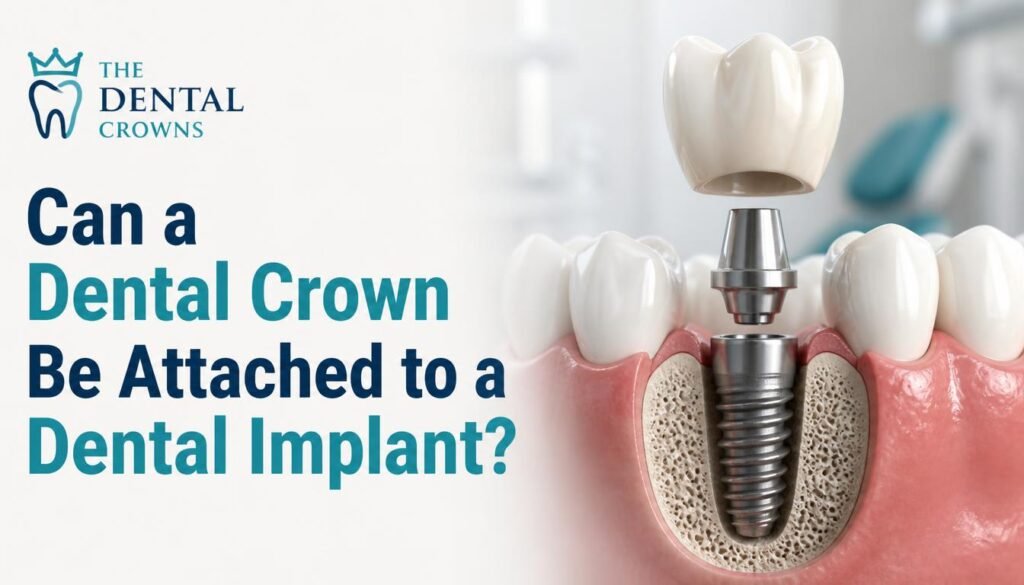
Yes. In many cases, a dental implant supports an artificial tooth such as a crown.
The implant itself replaces the missing tooth root, while an abutment connects the implant to the visible restoration.
The final crown is designed to restore the appearance and function of the missing tooth.
If you are also researching dental crowns, you can learn more about dental crown treatment at The Dental Crowns.
Dental Implants vs Dentures for Chewing
One reason people choose dental implants is their stability.
Traditional removable dentures can move during chewing, particularly when eating certain foods or when the fit changes over time.
Dental implants are anchored in the jawbone and can provide a stable foundation for crowns, bridges or implant-supported dentures.
However, implants are not automatically the right solution for every patient.
The American Dental Association recommends discussing available treatment options with a dentist based on your diagnosis, oral health, needs and preferences.
Possible tooth-replacement options may include:
- Dental implants
- Dental bridges
- Dentures
- Other restorative treatments
A professional examination is necessary before deciding which option is appropriate.
How Can You Protect Your Dental Implants for Long-Term Chewing?
After your implant has healed, maintaining good oral hygiene is important.
Brush twice a day
Use a soft-bristled toothbrush and clean your teeth and implant-supported restoration carefully.
Clean between your teeth
Use floss, interdental brushes or other cleaning tools recommended by your dentist.
Attend regular dental checkups
Regular examinations allow your dentist to monitor the implant, gums and surrounding tissues.
Avoid using your teeth as tools
Do not use your implant-supported teeth to open packages, crack hard objects or bite non-food items.
Address gum problems early
Healthy gums and supporting tissues are important for maintaining your oral health around dental implants.
Can Dental Implants Restore Normal Chewing?
Yes. Restoring chewing function is one of the main purposes of dental implants.
After successful healing and placement of the final restoration, an implant can provide a stable foundation for an artificial tooth and allow many patients to return to normal eating.
Cleveland Clinic notes that once a dental implant has healed, it can be used much like a natural tooth.
However, the result depends on several factors, including:
- Implant placement
- Bone health
- Healing
- Restoration quality
- Bite
- Oral hygiene
- Gum health
- Regular dental care
Therefore, successful implant treatment is not simply about placing the implant. Long-term maintenance also matters.
Frequently Asked Questions
Can I chew normally after getting dental implants?
Yes. Once the implant has fully healed and your final restoration has been placed and approved by your dentist, you can generally chew normally.
How soon can I eat after dental implant surgery?
You can usually eat once the anesthesia has worn off, but your dentist may recommend soft foods initially. Follow the specific instructions given after your procedure.
Can I eat hard foods after dental implants?
After complete healing, many people can eat hard foods. During the healing period, however, hard foods should generally be avoided unless your dentist says otherwise.
Can I eat rice after dental implant surgery?
Soft rice may be suitable for some patients during recovery, but follow your dentist’s dietary instructions, especially during the first few days.
Can I eat chicken after dental implants?
Soft, tender chicken may be easier to eat during recovery. Tough or chewy chicken may require more chewing and should generally be avoided early in the healing process.
Can I chew gum with dental implants?
Ask your dentist before chewing gum during the healing period. Once your implant is fully healed, your dentist can advise whether chewing gum is appropriate for your specific restoration and oral-health situation.
Do dental implants feel like real teeth when chewing?
They can provide very natural and stable chewing function, but the sensation is not exactly identical to that of a natural tooth because an implant does not have the same periodontal ligament and sensory system.
Can dental implants break while chewing?
Implants and implant-supported restorations are designed to withstand normal chewing forces, but excessive forces, certain habits, bite problems or damage to the restoration can cause complications.
What should I do if my implant hurts when I chew?
Contact your dentist, particularly if the pain is persistent, worsening or accompanied by swelling, bleeding, discharge, fever or mobility.
Final Takeaway
Can you chew normally after getting dental implants? Yes — in most cases, once the implant has successfully healed and the final restoration has been placed, you can return to normal chewing.
The key is to be patient during the healing period.
Immediately after implant surgery, choose foods that are easy to chew and follow your dentist’s instructions. Do not put unnecessary pressure on a newly placed implant. As healing progresses and your dentist confirms that the implant is stable, your diet can gradually return to normal.
If you are considering dental implants in Noida, a professional consultation can help determine whether implants are appropriate for your missing tooth or teeth and what type of restoration may be required.
The Dental Crowns provides dental implant treatment along with dental crowns, root canal treatment, laser dentistry and other dental services in Sector 79, Noida.
Book a consultation to discuss your dental condition, treatment options and expected recovery timeline.
Medical Disclaimer
This article is intended for general educational purposes only and does not replace an examination, diagnosis or personalized advice from a qualified dentist. Dental implant recovery and dietary recommendations can vary between patients. Always follow the postoperative instructions provided by your treating dental professional.