

Have you already had a root canal but are experiencing tooth pain, swelling, sensitivity, or discomfort again? If you live in Sector 78 Noida, you may be searching for root canal retreatment near Sector 78 Noida to understand why a previously treated tooth is causing problems again.
A root canal treatment is intended to remove infection from inside the tooth, clean and seal the root canals, and help preserve the natural tooth. However, in some cases, a treated tooth may fail to heal properly or develop a new infection months or even years later. In such situations, root canal retreatment may be considered after a detailed dental examination.
According to the American Association of Endodontists (AAE), a previously treated tooth can sometimes become painful or diseased again because of untreated canals, complicated canal anatomy, leakage around a restoration, new decay, or damage to the tooth.
For patients in and around Noida Sector 78, Sector 77, Sector 79 and nearby areas, The Dental Crowns provides root canal treatment and other restorative dental services from its clinic at Civitech Stadia, Sector 79, Noida.
What Is Root Canal Retreatment?
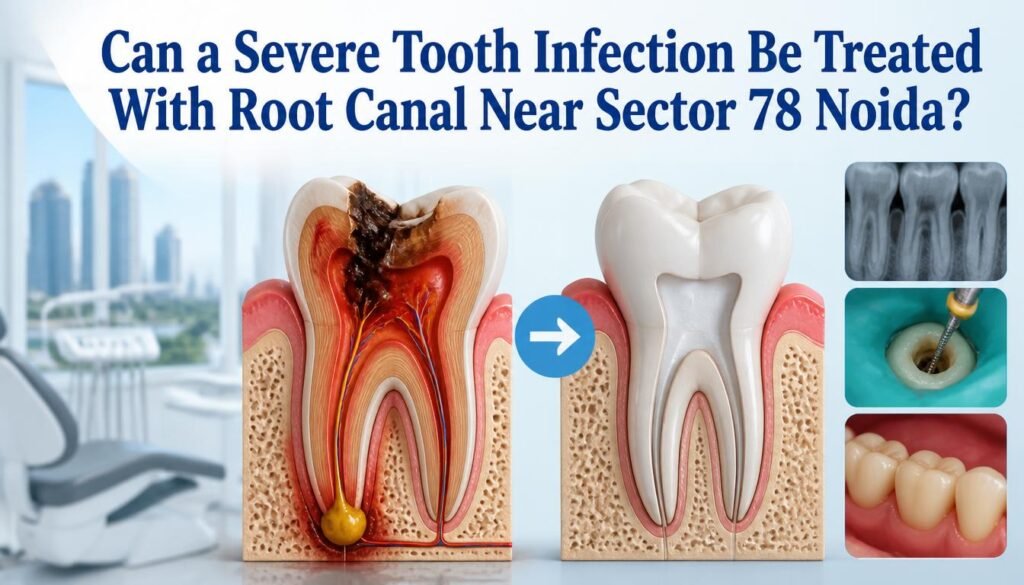
Root canal retreatment is a second endodontic procedure performed on a tooth that has already undergone root canal treatment but has not healed as expected or has developed a new problem.
During the original root canal treatment, infected or inflamed pulp is removed, the root canals are cleaned and shaped, and the canals are filled and sealed. If bacteria remain inside the canal system, if a canal was missed, or if the tooth becomes exposed to bacteria again, additional treatment may be necessary.
During retreatment, the dentist or endodontic specialist may:
- Reopen the previously treated tooth
- Remove the existing root canal filling material
- Examine the canals carefully
- Search for missed or additional canals
- Clean and disinfect the canal system
- Reshape the canals where required
- Refill and reseal the canals
- Plan a permanent restoration such as a crown
The AAE explains that retreatment can provide another opportunity to save a natural tooth when the initial root canal has not healed properly.
When Is Root Canal Retreatment Needed?
Not every tooth that feels uncomfortable after an RCT automatically needs retreatment. The underlying cause needs to be identified first.
A dentist may consider retreatment when there is evidence of persistent infection, inadequate previous treatment, leakage, new decay, or another problem affecting the treated tooth.
1. Persistent Tooth Pain After Root Canal
Some mild soreness can occur after dental treatment, but persistent or recurring pain should not be ignored.
If a tooth that received root canal treatment continues to hurt or becomes painful again after a period of improvement, your dentist may recommend an examination and dental imaging.
Possible causes can include:
- Persistent infection
- Missed canals
- Incomplete cleaning
- Leakage around the restoration
- New decay
- Tooth fracture
- Problems around the root
Pain alone does not confirm that retreatment is required. A professional examination is necessary to determine the cause.
2. Infection Has Returned
One of the major reasons patients may need root canal retreatment near Sector 78 Noida is recurrent infection.
Even after an apparently successful root canal, bacteria can sometimes enter the tooth again. This may happen when a restoration becomes damaged, loose, cracked or fails to provide an adequate seal.
New dental decay can also expose the previously treated canal system to bacteria.
The AAE specifically notes that new decay, a loose or broken restoration, and inadequate sealing can contribute to new infection in a previously treated tooth.
3. A Canal Was Missed During the First Root Canal
Teeth can have complicated internal anatomy.
A tooth may have narrow, curved or additional canals that are difficult to identify during the original treatment. If part of the canal system remains untreated, bacteria can persist and contribute to continuing disease.
During retreatment, the dentist may carefully inspect the tooth for additional canals or unusual anatomy.
This is one reason retreatment can be more complex than the original RCT.
4. The Original Root Canal Was Incomplete
If the first root canal did not adequately clean, shape, fill or seal the entire canal system, infection may persist.
The AAE’s endodontic retreatment standards identify incomplete treatment, missed canals, inadequate obturation and coronal leakage among potential causes of persistent disease after root canal treatment.
In appropriate cases, correcting the original problem through retreatment may help preserve the natural tooth.
5. A Dental Crown or Filling Has Become Damaged
A root canal-treated tooth is often restored with a filling or crown depending on the amount of remaining tooth structure.
If that restoration becomes cracked, loose, broken or poorly sealed, bacteria may gain access to the tooth.
Patients who have previously undergone RCT should therefore pay attention to:
- A loose crown
- A cracked crown
- A broken filling
- New decay around the restoration
- Food getting trapped around the tooth
- Changes in biting comfort
If you notice any of these symptoms, arrange a dental examination rather than waiting for severe pain.
You can also read our guide on Do You Need a Dental Crown After Root Canal Treatment? to understand when a crown may be recommended.
What Are the Signs You May Need Root Canal Retreatment?
If you previously had an RCT and experience any of the following symptoms, speak with a dentist:
Common Warning Signs
- Recurring toothache
- Pain while chewing or biting
- Swelling around the tooth
- Tender gums
- A pimple or draining area on the gums
- Prolonged sensitivity or discomfort
- Tooth discoloration
- A loose or damaged crown
- Recurring infection around the treated tooth
- An abnormal finding on a dental X-ray
Importantly, a previously treated tooth may sometimes have a problem without causing obvious pain. Therefore, dental imaging and clinical examination can be important when evaluating a previously treated tooth.
The AAE notes that a tooth can become diseased after apparently successful treatment and recommends professional evaluation when symptoms occur.
Does Every Failed Root Canal Need Retreatment?
No.
A failed or problematic root canal does not automatically mean that the tooth must be extracted or that retreatment is always the correct option.
The dentist needs to determine:
- Why the original RCT did not succeed
- Whether the tooth can be restored
- Whether infection is present
- Whether additional canals may have been missed
- Whether the existing crown or filling can be removed safely
- Whether retreatment is technically possible
- Whether the tooth has a fracture
- Whether another treatment option would be more appropriate
The AAE states that persistent disease after root canal treatment does not necessarily require extraction and that clinical assessment and appropriate imaging can help determine the cause of treatment failure.
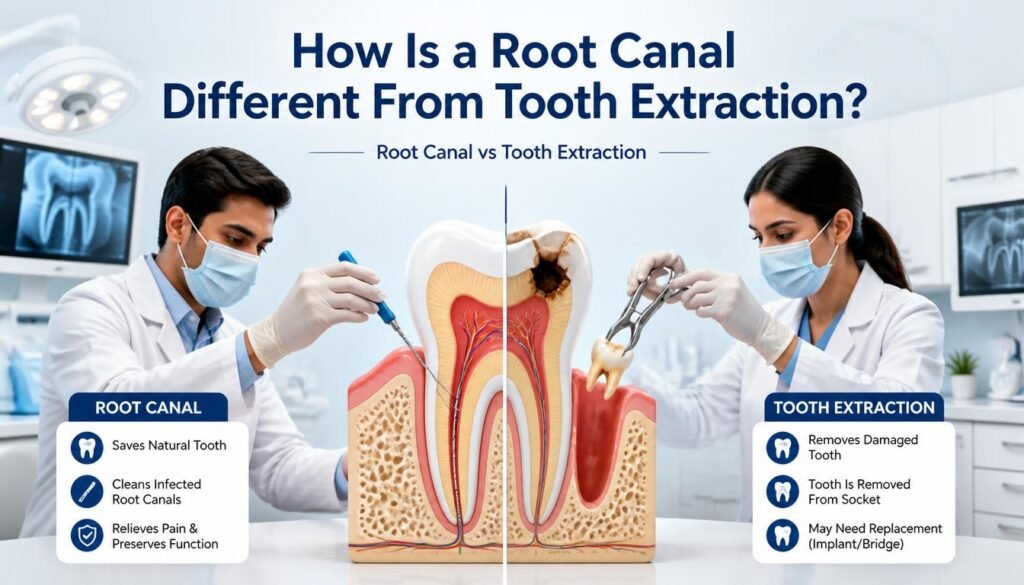
Root Canal Retreatment vs Tooth Extraction
When a previously treated tooth develops a problem, patients may wonder:
“Should I get the root canal done again or remove the tooth?”
The answer depends on the condition of the tooth.
Whenever a tooth is restorable and retreatment has a reasonable prognosis, saving the natural tooth may be considered.
Potential treatment options can include:
- Nonsurgical root canal retreatment
- Endodontic microsurgery
- Extraction
- Tooth replacement after extraction, such as a dental implant
The AAE explains that treatment planning depends on the cause of the problem and the feasibility of retreatment.
If extraction becomes necessary, replacing the missing tooth may involve an implant and dental crown. You can learn more about Dental Implants Near Noida Sector 78 on our website.
How Is Root Canal Retreatment Performed?
The exact procedure varies according to the tooth and the reason the original treatment failed.
Step 1: Dental Examination
The dentist first examines the treated tooth and discusses your symptoms and previous dental history.
Step 2: Dental Imaging
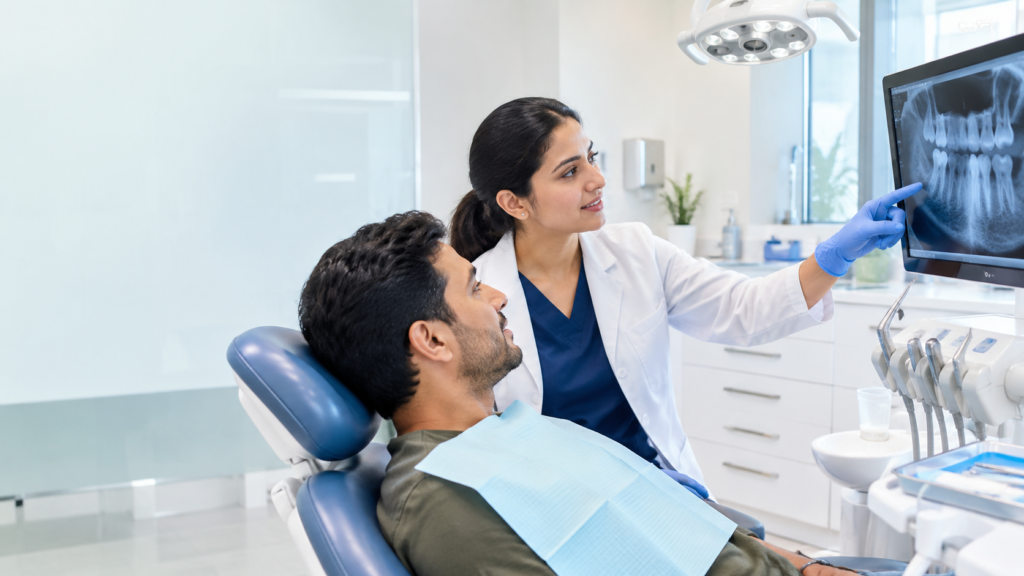
X-rays and, where clinically appropriate, advanced imaging may help the dentist evaluate the root, surrounding bone and previous treatment.
Step 3: Accessing the Tooth
The dentist creates access to the previously treated canal system.
If the tooth has a crown, post or other restoration, additional steps may be required.
Step 4: Removing Previous Filling Material
The previous root canal filling material may need to be removed so the dentist can access and inspect the canal system.
Step 5: Finding Missed or Problematic Canals
The dentist examines the internal anatomy for untreated canals, unusual anatomy or other causes of persistent infection.
Step 6: Cleaning and Disinfection
The canals are cleaned and disinfected to remove bacteria, infected material and debris.
Step 7: Refilling and Sealing
After appropriate cleaning and shaping, the canals are filled and sealed.
Step 8: Permanent Restoration
The tooth may require a permanent filling or dental crown depending on how much tooth structure remains and where the tooth is located.
The AAE describes a similar retreatment process, including removal of previous filling material, examination for additional canals, cleaning, refilling and subsequent restoration.
Is Root Canal Retreatment Painful?
Many patients are concerned about pain when they hear the term “retreatment.”
Modern root canal procedures are generally performed using local anaesthesia. The goal is to keep the patient comfortable during treatment.
Some soreness or tenderness can occur afterward as the tissues around the tooth recover.
If you are particularly anxious about dental treatment, discuss your concerns with your dentist before starting the procedure.
You can learn more about our approach on the Painless Root Canal Treatment in Noida page.
The NHS also explains that local anaesthetic is normally used during root canal treatment so the patient does not feel pain during the procedure.
How Much Does Root Canal Retreatment Cost Near Sector 78 Noida?
The root canal retreatment cost near Sector 78 Noida can vary significantly depending on the individual case.
There is no single price that applies to every patient.
Factors that can affect the cost include:
- Which tooth requires retreatment
- Number of canals
- Complexity of canal anatomy
- Previous root canal quality
- Presence of a crown
- Presence of a dental post
- Need for additional imaging
- Complexity of removing old filling material
- Need for a new dental crown
- Whether additional treatment is required
Retreatment can sometimes cost more than the initial root canal because it may involve removing existing restorative materials and locating complicated or previously untreated canal anatomy. The AAE also notes that retreatment is generally more complex than the initial procedure and may therefore cost more.
For an accurate estimate, a dentist should examine your tooth before providing a treatment plan.
How Long Does Root Canal Retreatment Take?
The treatment duration depends on the complexity of the tooth.
A straightforward case may require fewer appointments, while a previously treated molar with multiple canals, a post, complicated anatomy or persistent infection may require more time.
Your dentist may recommend multiple appointments when clinically appropriate.
The goal should not simply be to finish treatment as quickly as possible. The priority is proper diagnosis, cleaning, disinfection, sealing and restoration of the tooth.
Do You Need a Crown After Root Canal Retreatment?
A crown may be recommended after retreatment if the tooth has lost substantial structure and requires additional protection.
However, not every root canal-treated tooth automatically needs the same type of restoration.
The decision depends on:
- Tooth location
- Amount of remaining tooth structure
- Existing restoration
- Bite forces
- Risk of fracture
- Overall condition of the tooth
The NHS notes that a crown may be needed when a tooth has been badly infected, while the AAE recommends permanent restoration after retreatment to protect and restore the tooth.
For patients considering restoration, explore our Dental Crown Treatment options.
Root Canal Retreatment Near Sector 78 Noida: Why Choose a Nearby Dental Clinic?
For patients living in Sector 78, accessibility can be important when dental treatment requires examination and follow-up visits.
The Dental Crowns is located at:
Shop No. 16, 1st Floor, Civitech Stadia, Sector 79, Noida, Uttar Pradesh – 201301.
The clinic provides a range of dental treatments, including:
- Painless root canal treatment
- Dental crowns
- Dental implants
- Dental bridges
- Laser dentistry
- Tooth-coloured restorations
- Dentures
- Braces
- Veneers
- Teeth whitening
- Tooth extraction
You can explore the complete range of treatments on the Dental Services page.
The Sector 79 location can be convenient for patients travelling from Sector 78 and other nearby Noida sectors.
Why You Should Not Ignore Problems in a Root Canal-Treated Tooth
A common mistake is assuming that a tooth cannot become infected again because it has already undergone root canal treatment.
That is not necessarily true.
A previously treated tooth can develop a new problem due to:
- New decay
- Leakage
- A damaged restoration
- Missed anatomy
- Persistent bacteria
- A crack or fracture
- Incomplete previous treatment
Ignoring recurring symptoms can allow an underlying dental problem to continue.
If you notice persistent pain, swelling, tenderness, or other unusual changes, arrange an examination rather than relying on painkillers or waiting for symptoms to disappear.
How Can You Reduce the Risk of Root Canal Failure?
Although not every treatment problem can be prevented, good oral care and timely dental follow-up can help protect a treated tooth.
Maintain Good Oral Hygiene
Brush twice daily with fluoride toothpaste and clean between your teeth regularly.
Complete Your Recommended Restoration
If your dentist recommends a crown or permanent restoration after RCT, do not unnecessarily delay it.
Attend Dental Check-Ups
Regular examinations can help identify decay, restoration problems and other dental issues early.
Avoid Using Teeth as Tools
Do not use root canal-treated teeth to bite extremely hard objects or open packages.
Treat Dental Problems Early
If a crown becomes loose or you experience recurring pain, arrange a dental examination.
When Should You See a Dentist for Root Canal Retreatment?
Consider scheduling a dental examination if you have previously undergone root canal treatment and now experience:
- Persistent toothache
- Pain when biting
- Swelling
- Gum tenderness
- A recurring pimple on the gums
- New sensitivity
- Tooth discoloration
- A loose or broken crown
- Repeated infection around the tooth
You should seek prompt dental attention for significant swelling, severe pain, fever, or difficulty swallowing or breathing.
A dentist can determine whether the problem is related to the root canal or caused by another dental condition.
Frequently Asked Questions About Root Canal Retreatment Near Sector 78 Noida
What is root canal retreatment?
Root canal retreatment is a second endodontic procedure performed on a tooth that has already received root canal treatment but has not healed properly or has developed a new infection or other problem.
Can a root canal fail years later?
Yes. A previously treated tooth can develop problems months or even years after treatment. New decay, restoration leakage, missed canals, complicated anatomy or tooth damage can contribute to treatment failure.
How do I know if I need root canal retreatment?
Recurring pain, swelling, tenderness, discomfort while chewing, or signs of infection may indicate a problem. However, symptoms alone cannot confirm the need for retreatment. A dentist needs to evaluate the tooth.
Is root canal retreatment better than extraction?
It depends on the condition and restorability of the tooth. When the tooth can be predictably saved, retreatment may be considered. In other situations, surgery or extraction may be more appropriate.
Can a tooth be retreated if it has a crown?
Sometimes, yes. Depending on the situation, the existing crown may need to be accessed, removed or replaced. The dentist will determine the safest approach.
Is retreatment more difficult than the first root canal?
It can be. Existing filling material, crowns, posts, blocked canals and complicated anatomy may make retreatment more technically demanding.
Can I get root canal retreatment near Sector 78 Noida?
Yes. Patients in Sector 78 can consult dental clinics in nearby sectors. The Dental Crowns is located at Civitech Stadia, Sector 79, Noida, and offers root canal treatment and other dental services.
Does root canal retreatment hurt?
Local anaesthesia is generally used to make treatment comfortable. Some tenderness or soreness can occur after the procedure.
How much does root canal retreatment cost in Noida?
The cost depends on the tooth, complexity, previous treatment, restoration, imaging and additional procedures. A personalized estimate requires a dental examination.
Can retreatment save my natural tooth?
In suitable cases, retreatment can provide an opportunity to preserve the natural tooth. However, there are no guarantees, and the prognosis depends on the specific condition of the tooth.
Final Takeaway
If you have already undergone a root canal but the tooth has started hurting again, root canal retreatment near Sector 78 Noida may be one of the treatment options worth discussing with a dentist.
Retreatment may be considered when an infection persists, a canal was missed, the original treatment was incomplete, bacteria entered through a damaged restoration, or a new problem developed in the tooth.
However, retreatment should never be recommended solely because a tooth hurts. Proper examination, dental imaging and assessment of the tooth’s restorability are important before deciding between retreatment, endodontic surgery or extraction.
If you live in Sector 78 or nearby Noida sectors and are experiencing recurring tooth pain, swelling or discomfort after an earlier root canal, consider getting the tooth evaluated by a qualified dental professional.
The Dental Crowns, located in nearby Sector 79, Noida, provides root canal treatment along with dental crowns, dental implants, bridges, laser dentistry and other dental services.
Book a Dental Consultation to discuss your symptoms and treatment options.
Dental Resources
- American Association of Endodontists – Endodontic Retreatment — detailed patient information about why a previously treated tooth may require retreatment.
- American Association of Endodontists – Endodontic Retreatment Explained — explains the retreatment process and treatment options.
- NHS – Root Canal Treatment — general information about root canal treatment, symptoms and recovery.