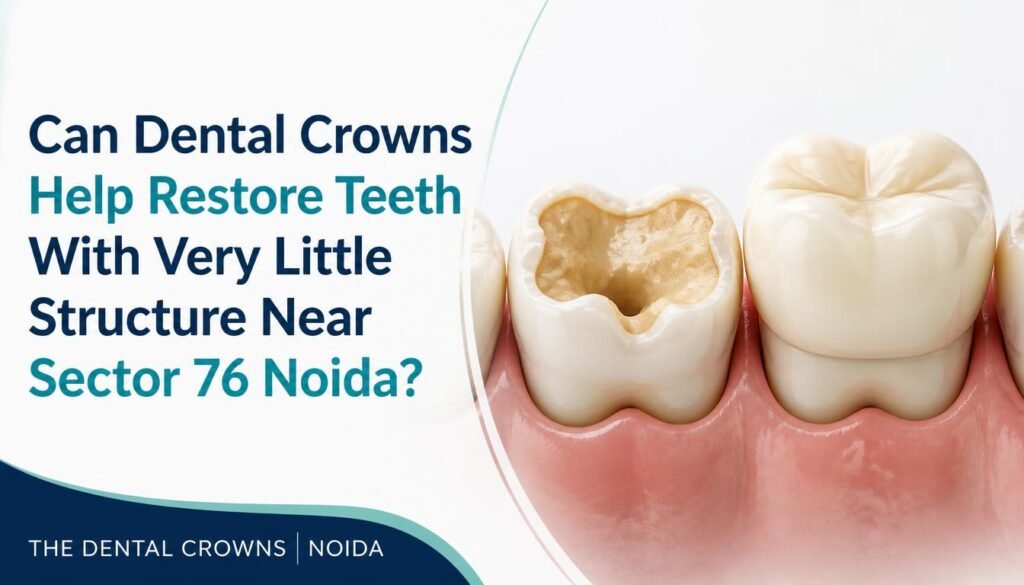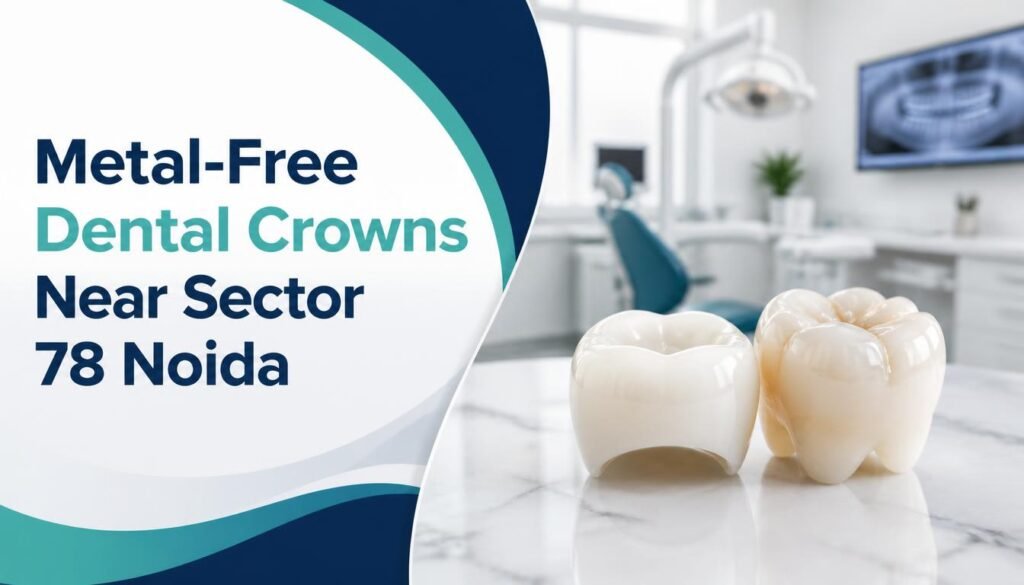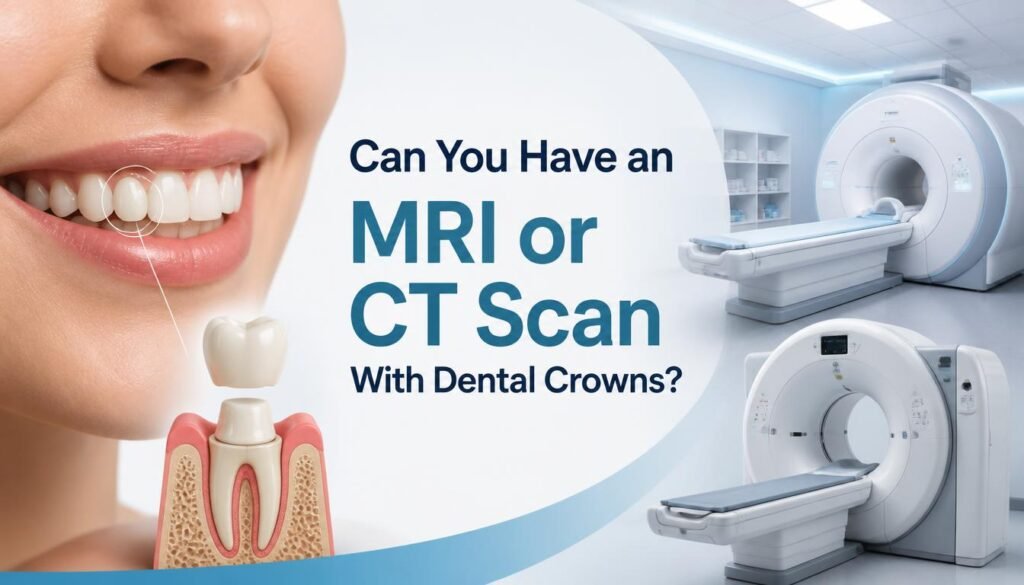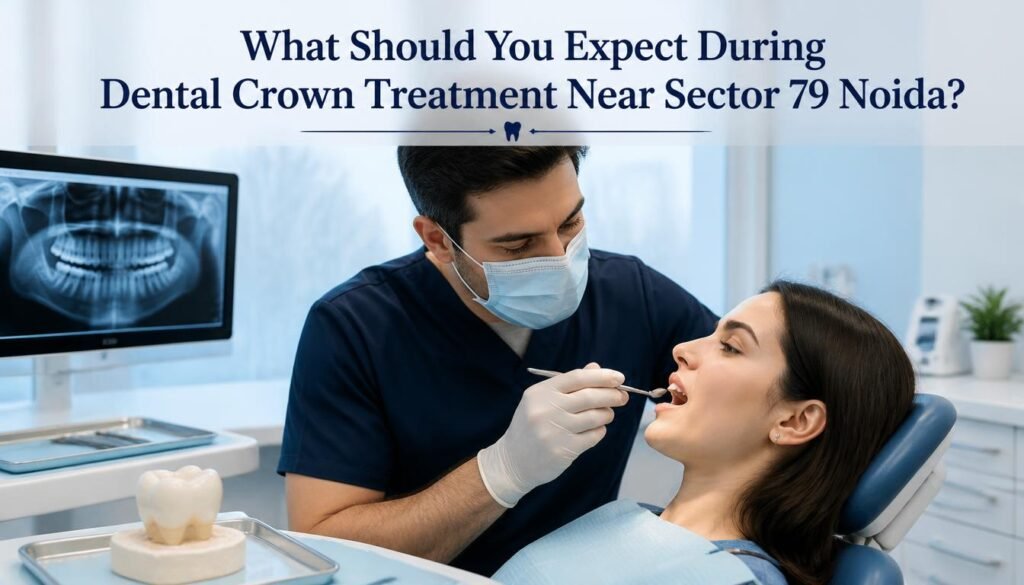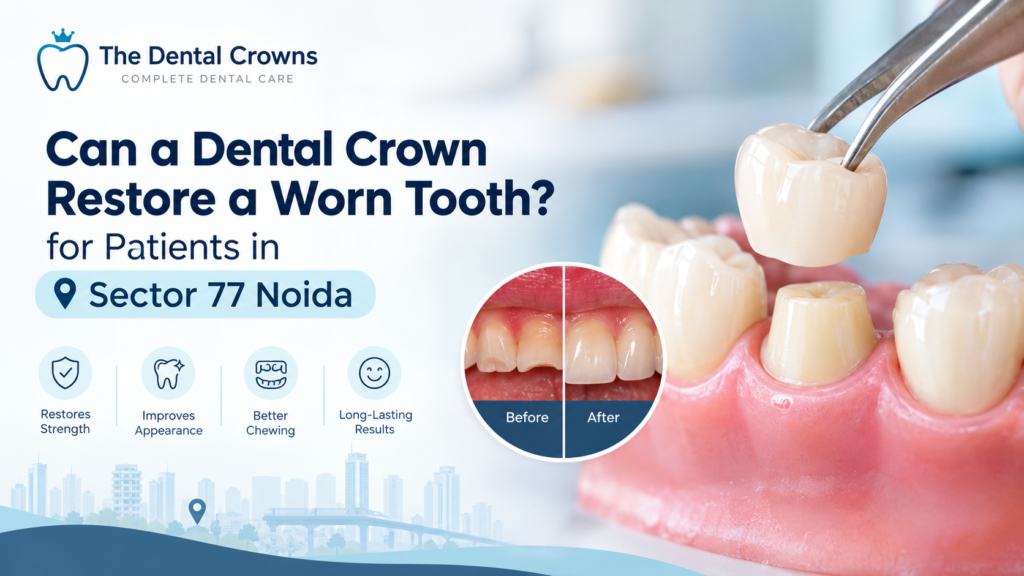

If you are searching for dental crown treatment near Noida Sector 78, you may be dealing with a broken, cracked, decayed, worn-out, or weakened tooth. A dental crown can help restore the tooth’s shape, strength, function, and appearance when a dentist determines that full-coverage restoration is appropriate.
A dental crown is more than just a cosmetic “cap.” Before recommending one, a dentist generally evaluates the remaining tooth structure, gums, bite, decay, cracks, and whether procedures such as root canal treatment are required.
In this guide, we explain the dental crown treatment procedure, types of dental crowns, dental crown cost in Noida Sector 78, treatment options, benefits, aftercare, and frequently asked questions.
What Is a Dental Crown?
A dental crown, sometimes called a dental cap, is a custom-made restoration that covers the visible portion of a damaged or weakened tooth.
Crowns may be recommended for teeth that are:
- Severely damaged by decay
- Cracked or fractured
- Weakened after a large filling
- Significantly worn down
- Previously treated with root canal treatment
- Discoloured or misshapen in selected cases
- Being restored over a dental implant
The NHS describes a crown as a type of cap that completely covers a natural tooth and notes that crowns may be used when a tooth has broken, decayed, or been damaged.
For more information about the treatments available at our clinic, visit the Dental Services page.
When Do You Need Dental Crown Treatment?
Not every damaged tooth needs a dental crown. A dentist may recommend a filling, inlay, onlay, veneer, or another restoration depending on how much healthy tooth structure remains.
A crown may be considered when a tooth has lost substantial structure and needs additional protection.
Common reasons for a dental crown include:
1. Severely Decayed Tooth
When tooth decay has destroyed a significant amount of tooth structure, a conventional filling may not provide sufficient support. In selected cases, a crown can provide full-coverage restoration.
2. Cracked or Broken Tooth
A cracked or fractured tooth can become weaker and more vulnerable to further damage. Depending on the location and severity of the crack, a crown may help protect the remaining tooth.
3. After Root Canal Treatment
A tooth that has undergone root canal treatment may require additional restoration when substantial tooth structure has been lost.
If you are experiencing tooth pain, sensitivity or swelling, read our guide on Root Canal Treatment Near Noida Sector 78.
4. Large Existing Filling
A tooth with a very large filling may have less remaining natural structure. In some cases, your dentist may recommend a crown to restore and protect the tooth.
5. Worn or Misshapen Teeth
Certain severely worn or misshapen teeth may be suitable for crown restoration, depending on the patient’s dental condition.
6. Dental Implant Restoration
A dental crown can also be used as the visible tooth restoration attached to a dental implant.
If you have a missing tooth, you can explore our Dental Implant Services.
Dental Crown Treatment Near Noida Sector 78: Types of Crowns
One of the most important decisions in crown treatment is selecting the appropriate material.
The American Dental Association explains that indirect restorative materials include metals, ceramics, resin-based composites, and metal-ceramic materials, with differences in strength, aesthetics, processing, and clinical indications.
The right crown depends on factors such as:
- Tooth location
- Remaining tooth structure
- Bite and chewing forces
- Aesthetic requirements
- Oral hygiene
- Existing dental restorations
- Budget
- Dentist’s clinical recommendation
1. Zirconia Dental Crowns
Zirconia crowns are popular because they combine tooth-coloured aesthetics with high strength.
They may be considered for both front and back teeth depending on the specific material and clinical situation.
Potential advantages include:
- Natural-looking appearance
- Metal-free restoration
- High strength
- Good durability
- Tooth-coloured appearance
The ADA’s current information on indirect restorative materials includes zirconia among CAD/CAM ceramic materials and discusses its strength and clinical applications.
However, zirconia is not automatically the best crown for every patient. Your dentist should choose the material according to the tooth, bite, aesthetic requirements, and clinical condition.
2. Porcelain Dental Crowns
Porcelain and ceramic crowns are commonly considered when a natural-looking appearance is particularly important.
They can be customized according to the colour, shape and size of neighbouring teeth.
If you are specifically looking for porcelain crowns, read our detailed guide to Porcelain Dental Crowns in Noida Sector 78.
3. Porcelain-Fused-to-Metal Crowns
Porcelain-fused-to-metal, or PFM, crowns combine a metal substructure with an outer porcelain layer.
They have traditionally been used because they can offer a balance between strength and aesthetics.
However, the suitability of PFM depends on the individual tooth and clinical requirements.
4. Metal Dental Crowns
Metal crowns are known for strength and durability and may be considered for selected back teeth.
Their biggest limitation for many patients is their metallic appearance. Therefore, tooth-coloured materials may be preferred where aesthetics are important.
5. Ceramic Dental Crowns
Modern dental ceramics include several material systems with different properties.
Some ceramic materials are highly aesthetic, while others are designed to provide greater strength. The ADA notes that ceramic materials offer aesthetic advantages, while material selection should consider clinical indication and mechanical properties.
Dental Crown Cost in Noida Sector 78
One of the most common questions patients ask is:
“What is the cost of dental crown treatment near Noida Sector 78?”
There is no single price that applies to every dental crown because the total treatment cost depends on several factors.
Published private-clinic pricing in India indicates that crown costs can vary substantially according to material, laboratory, tooth condition, and additional procedures. For example, publicly reported 2026 ranges in India extend from lower-cost metal crowns to significantly higher-cost premium ceramic and zirconia options.
Factors that can affect dental crown cost include:
- Type of crown material
- Brand or laboratory
- Front or back tooth
- Condition of the tooth
- Amount of remaining tooth structure
- Root canal requirement
- X-rays or diagnostic procedures
- Tooth preparation
- Temporary crown
- Laboratory charges
- Digital scanning or other technology
- Additional restorative procedures
- Dentist’s clinical expertise
Indicative Crown Cost Range
| Crown Type | General Cost Consideration |
|---|---|
| Metal Crown | Generally among the lower-cost options |
| PFM Crown | Mid-range option depending on laboratory and specifications |
| Ceramic Crown | Cost varies according to ceramic system |
| Zirconia Crown | Usually a higher-priced aesthetic option |
| Premium Ceramic / Lithium Disilicate | Often positioned toward the premium range |
Important: These are general categories rather than a fixed price list for The Dental Crowns. The final cost should be confirmed after a dental examination and treatment plan.
Instead of choosing a clinic solely on the lowest advertised crown price, ask whether the quotation includes consultation, X-rays, tooth preparation, temporary crown, laboratory charges and final crown placement.
Does Root Canal Treatment Increase Dental Crown Cost?
It can.
If decay or infection has reached the pulp of a tooth, the dentist may recommend root canal treatment before placing a final crown.
Root canal treatment addresses infection or inflammation inside the tooth. A crown may subsequently be recommended when the tooth has lost enough structure that additional protection is needed.
Cleveland Clinic notes that crowns may be used to cover root-canal-treated teeth, as well as damaged, broken or decayed teeth.
For patients searching for treatment nearby, you can also read:
- Root Canal Treatment Near Noida Sector 78
- Single-Sitting Root Canal Treatment in Noida Sector 78
- Dental Crown Treatment in Noida Sector 76
Dental Crown Treatment Procedure
The exact procedure varies depending on the tooth and type of crown, but traditional crown treatment commonly involves several stages.
Step 1: Dental Examination
The dentist first examines the affected tooth.
The evaluation may include:
- Tooth decay
- Cracks
- Existing fillings
- Remaining tooth structure
- Gum health
- Bite
- Root canal status
- X-rays where clinically necessary
This evaluation helps determine whether a crown is appropriate.
Step 2: Treatment Planning
Once the tooth has been evaluated, the dentist discusses the treatment options.
You can ask:
- Which crown material is suitable?
- What is the total treatment cost?
- Is root canal treatment required?
- Will I need a temporary crown?
- How many appointments are expected?
- What aftercare will be required?
Step 3: Tooth Preparation
The tooth is carefully prepared to create sufficient space for the crown.
The amount of preparation depends on the restoration and the clinical requirements of the tooth.
Step 4: Impression or Digital Scan
The dentist may take a traditional impression or use a digital intraoral scanner.
The resulting information is used to create a crown that matches the prepared tooth.
Step 5: Temporary Crown
If the permanent crown is being fabricated in a dental laboratory, a temporary crown may be placed to protect the prepared tooth.
The NHS also notes that patients may receive a temporary crown while the laboratory prepares the permanent restoration.
Step 6: Final Crown Placement
When the permanent crown is ready, the dentist checks:
- Fit
- Bite
- Shape
- Colour
- Margins
- Comfort
Once everything is satisfactory, the crown is permanently cemented or bonded according to the restoration and clinical requirements.
Cleveland Clinic similarly describes crown treatment as involving tooth preparation, impressions, temporary restoration and subsequent placement of the permanent crown.
How Long Does Dental Crown Treatment Take?
The treatment timeline depends on the tooth, crown material, laboratory turnaround time, technology available, and whether additional treatment is needed.
Traditional laboratory-made crowns may require more than one appointment.
If root canal treatment is needed first, the overall treatment timeline may be longer.
Some practices may offer digital workflows or same-day crowns for selected patients. However, same-day treatment is not suitable for every tooth or clinical situation.
If you want to understand the timeline in greater detail, read:
How Long Does It Take to Get a Dental Crown in Noida?
Benefits of Dental Crown Treatment
When appropriately planned and fitted, a dental crown can provide several benefits.
Restores Tooth Function
A crown can restore the shape of a damaged tooth and help improve chewing function.
Protects a Weak Tooth
A crown can provide coverage to a structurally compromised tooth when full-coverage restoration is clinically appropriate.
Improves Appearance
Tooth-coloured crowns can be designed to blend with neighbouring teeth.
Restores Broken or Severely Damaged Teeth
Crowns can restore teeth affected by extensive decay, fractures, large restorations or significant wear.
Supports Certain Dental Restorations
Crowns may also be used with dental bridges and dental implants.
Cleveland Clinic describes dental crowns as restorations used to strengthen weak teeth, protect cracked teeth, restore worn or broken teeth, and cover implants or root-canal-treated teeth.
Dental Crown vs Filling: Which Is Better?
A dental crown and filling serve different purposes.
A filling generally restores a tooth when enough healthy tooth structure remains.
A crown provides coverage over a larger portion of the tooth and may be recommended when the tooth has extensive structural damage.
For example:
| Filling | Dental Crown |
|---|---|
| Usually for smaller to moderate cavities | Often for extensively damaged teeth |
| Preserves more natural tooth structure | Requires preparation of the tooth |
| Restores a specific area | Covers the tooth more extensively |
| Often simpler treatment | More involved restoration |
Cleveland Clinic explains that smaller cavities can often be restored with fillings, while crowns may be used for larger cavities or broken teeth.
Therefore, the question is not simply “crown or filling?” The appropriate option depends on the condition of your tooth.
How to Choose the Right Dental Crown Near Noida Sector 78
If you are comparing dental crown treatment options in Noida, consider more than the advertised price.
1. Consider the Location of the Tooth
Front teeth usually have greater aesthetic requirements, while back teeth experience significant chewing forces.
2. Consider the Condition of the Tooth
The amount of remaining tooth structure, decay, cracks and previous treatment can influence the restoration.
3. Discuss Your Bite
Patients who clench or grind their teeth may require special consideration when selecting a restoration.
4. Ask About Crown Material
Ask your dentist why a particular material is being recommended for your tooth.
5. Compare the Complete Cost
Don’t compare only the crown price. Ask whether the quote includes:
- Consultation
- X-rays
- Tooth preparation
- Temporary crown
- Laboratory charges
- Final placement
- Follow-up adjustments
6. Consider Long-Term Maintenance
A dental crown still requires proper oral hygiene and routine dental examinations.
How to Care for Your Dental Crown
A dental crown does not mean that you can stop caring for the underlying tooth.
To maintain your crown:
- Brush twice daily with fluoride toothpaste.
- Clean between your teeth regularly.
- Attend routine dental check-ups.
- Avoid using your teeth to open packets or bottles.
- Be careful with extremely hard foods.
- Follow your dentist’s aftercare instructions.
- Contact your dentist if the crown becomes loose, chipped or painful.
Cleveland Clinic recommends regular brushing, daily flossing, dental check-ups and avoiding extremely hard or chewy foods to help maintain dental crowns.
Can a Dental Crown Last for Many Years?
Yes, a dental crown can provide long-term service, but its lifespan varies.
Factors that affect crown longevity include:
- Crown material
- Quality of fit
- Oral hygiene
- Bite forces
- Teeth grinding
- Condition of the supporting tooth
- Gum health
- Dietary and lifestyle habits
- Regular dental care
Cleveland Clinic reports that crowns can last approximately 5 to 15 years with proper care, although individual outcomes can vary.
A crown is durable but not indestructible. Regular dental examinations can help identify problems early.
Why Choose The Dental Crowns Near Noida Sector 78?
For patients living around Noida Sector 78, The Dental Crowns is located nearby at:
Shop No. 16, 1st Floor, Civitech Stadia, Sector 79, Noida, Uttar Pradesh 201301
The clinic provides a range of dental treatments, including:
- Dental crowns
- Painless root canal treatment
- Tooth-coloured restorations
- Dental bridges
- Dentures
- Porcelain crowns
- Dental implants
- Laser dentistry
- Teeth whitening
- Veneers
- Braces
- Tooth extraction
You can explore all available treatments on the Dental Services page.
The location can be convenient for patients from Sector 78 and neighbouring sectors who need consultation, crown treatment or follow-up appointments.
Frequently Asked Questions About Dental Crown Treatment Near Noida Sector 78
How much does a dental crown cost in Noida Sector 78?
Dental crown cost varies depending on the material, tooth condition, laboratory, preparation requirements and additional treatment. A personalized quotation should be provided after examination.
Which dental crown is best?
There is no single crown material that is best for every patient. Zirconia, porcelain, ceramic, PFM and metal crowns have different properties. Your dentist should recommend the option based on the tooth’s location, condition, bite, aesthetic requirements and budget.
Is dental crown treatment painful?
The tooth preparation procedure is generally performed with appropriate local anaesthesia when required. Mild sensitivity or discomfort may occur after treatment. Persistent or severe pain should be evaluated by your dentist.
Is a crown necessary after root canal treatment?
A crown may be recommended when a root-canal-treated tooth has lost significant structure and needs additional protection. However, the decision depends on the individual tooth.
How long does a dental crown take?
Traditional crown treatment may require multiple appointments because the permanent restoration may be fabricated in a laboratory. The exact timeline depends on the crown, laboratory and clinical situation.
Can I get a zirconia crown for a front tooth?
Zirconia may be suitable for selected front teeth, depending on the specific material and aesthetic requirements. Your dentist can determine whether it is appropriate.
Can a crown be placed on a dental implant?
Yes. A dental crown can serve as the visible restoration attached to a dental implant.
Can I eat normally after getting a dental crown?
Your dentist may provide specific instructions immediately after placement, particularly concerning eating while the cement or bonding process is setting. Follow the instructions provided by your dental professional.
What should I do if my dental crown becomes loose?
Contact your dentist as soon as possible. Avoid trying to permanently fix the crown yourself.
Book a Dental Crown Consultation Near Noida Sector 78
If you have a broken, cracked, severely decayed, worn or weakened tooth, a dental examination can help determine whether a crown is appropriate and which material may suit your needs.
Patients searching for dental crown treatment near Noida Sector 78 can visit The Dental Crowns at Civitech Stadia, Sector 79, Noida.
Clinic Address:
Shop No. 16, 1st Floor, Civitech Stadia, Sector 79, Noida, Uttar Pradesh 201301
Phone: +91 89202 71787
Related Services: Dental Services – The Dental Crowns
Medical References & Trusted Resources
For additional information about dental crowns and restorative materials, readers can consult:
- American Dental Association – Materials for Indirect Restorations — information on indirect dental restorative materials, including ceramics, metals and metal-ceramic restorations.
- NHS – Dental Treatments — patient information about crowns, fillings, bridges and root canal treatment.
- Cleveland Clinic – Dental Crowns — information about crown types, procedure, benefits, care and expected lifespan.
- Cleveland Clinic – Restorative Dentistry — information about crowns, fillings, inlays, onlays and other restorative treatments.
Medical Disclaimer
This article is intended for general educational purposes and should not replace an in-person dental examination or professional medical advice. Dental crown material, treatment procedure, cost, suitability and expected longevity can vary between patients. A qualified dental professional should evaluate your tooth and recommend the appropriate treatment.