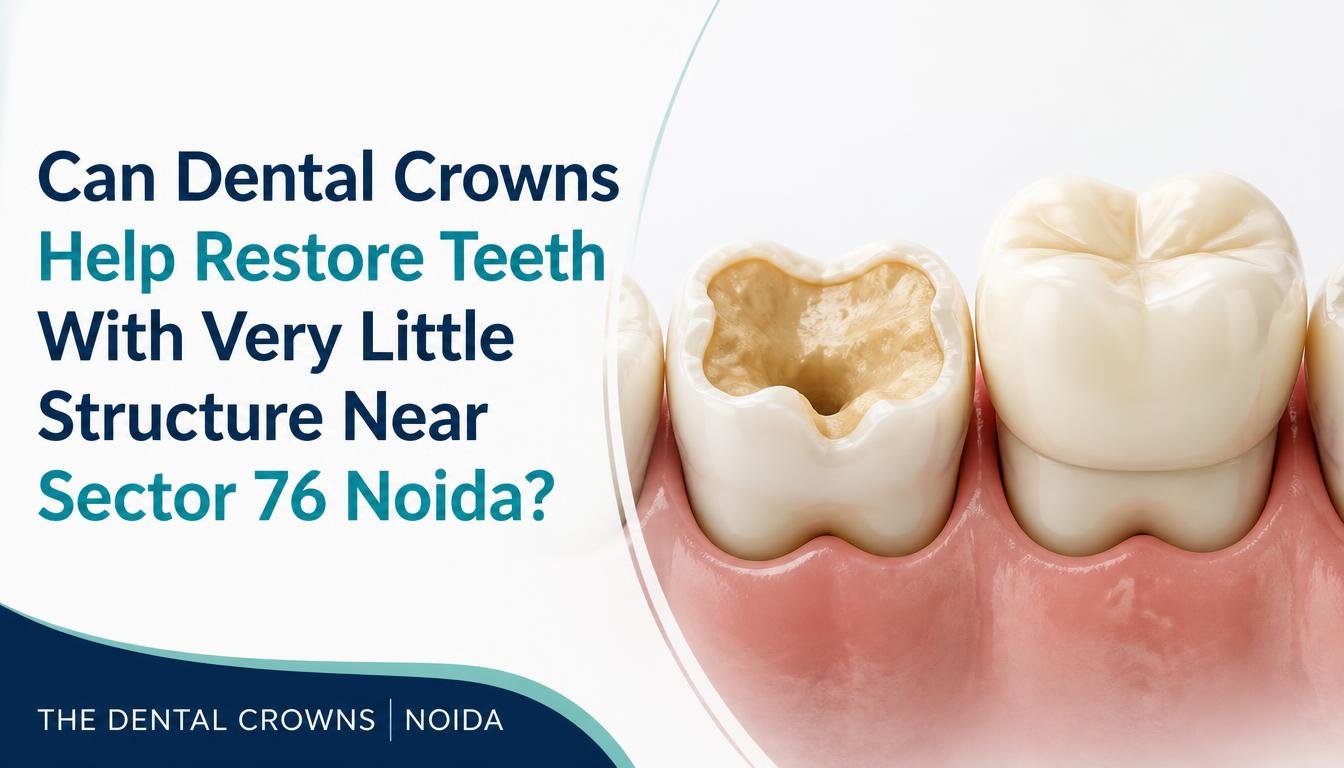
Have you lost a significant portion of a tooth because of deep decay, a fracture, an old filling, or previous dental treatment? You may wonder whether the tooth can still be saved or whether extraction is the only option.
The good news is that dental crowns can sometimes restore teeth with very little remaining structure, provided enough healthy tooth and supporting tissue remain to create a stable, functional restoration. In selected cases, a dentist may rebuild the damaged portion of the tooth before placing a crown.
For patients looking for dental crowns near Sector 76 Noida, understanding the available treatment options can help make a dental consultation more productive.
At The Dental Crowns in Sector 79, Noida, patients can discuss their dental concerns and learn which restorative treatment may be appropriate for their individual condition. The right approach depends on the extent of damage, the condition of the tooth roots, gum health, and the amount of healthy tooth structure that remains.
What Is a Dental Crown?
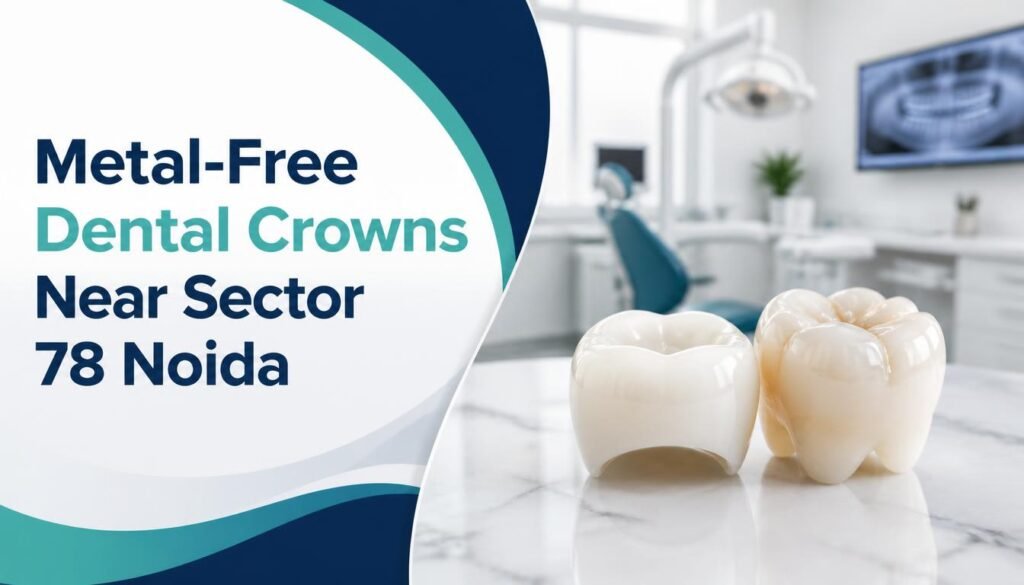
A dental crown is a custom-made covering that fits over a prepared tooth to restore its shape, strength, function, and appearance. It is commonly recommended for teeth that are severely decayed, broken, cracked, worn down, or weakened by large fillings.
According to the American Dental Association’s guide to dental crowns, crowns can help strengthen weak teeth and restore teeth that have lost substantial structure.
Unlike a conventional filling that repairs a particular area, a full dental crown covers much of the visible tooth. This coverage can help protect the remaining structure against chewing forces when the tooth is suitable for crown treatment.
Dentists may recommend a crown for:
- Teeth affected by extensive tooth decay.
- Broken or fractured teeth.
- Teeth with large or failing fillings.
- Certain teeth following root canal treatment.
- Teeth that need additional structural protection.
- Teeth requiring restoration after appropriate rebuilding procedures.
However, a crown is not automatically suitable for every severely damaged tooth. A professional examination is essential before choosing treatment.
Can a Dental Crown Restore a Tooth With Very Little Structure?
Yes, in selected cases. A dental crown may restore a tooth even when a substantial portion of its visible structure has been lost. However, the dentist must first determine whether the remaining tooth can reliably support the restoration.
The amount of healthy tooth structure left above the gumline is particularly important. The location of the damage, the condition of the root, the presence of cracks, and the health of the surrounding gums also influence the decision.
Depending on the clinical findings, treatment may involve one or more of the following approaches.
1. Core Build-Up Before Crown Placement
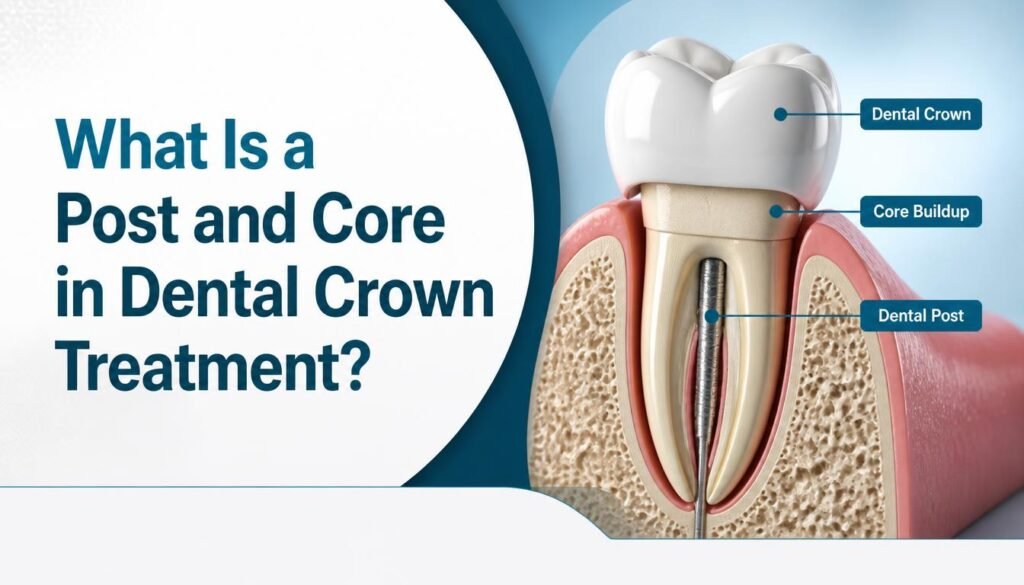
When too much of a tooth has been lost to support a crown directly, a dentist may rebuild part of it using a suitable restorative material. This procedure is known as a core build-up.
The rebuilt portion provides a more suitable foundation for the final crown. The dentist must assess whether enough healthy tooth structure remains to retain the build-up and crown.
A core build-up does not make every severely damaged tooth restorable. If the tooth has extensive damage below the gumline or an unfavourable fracture, a different treatment may be necessary.
2. Root Canal Treatment Followed by a Crown
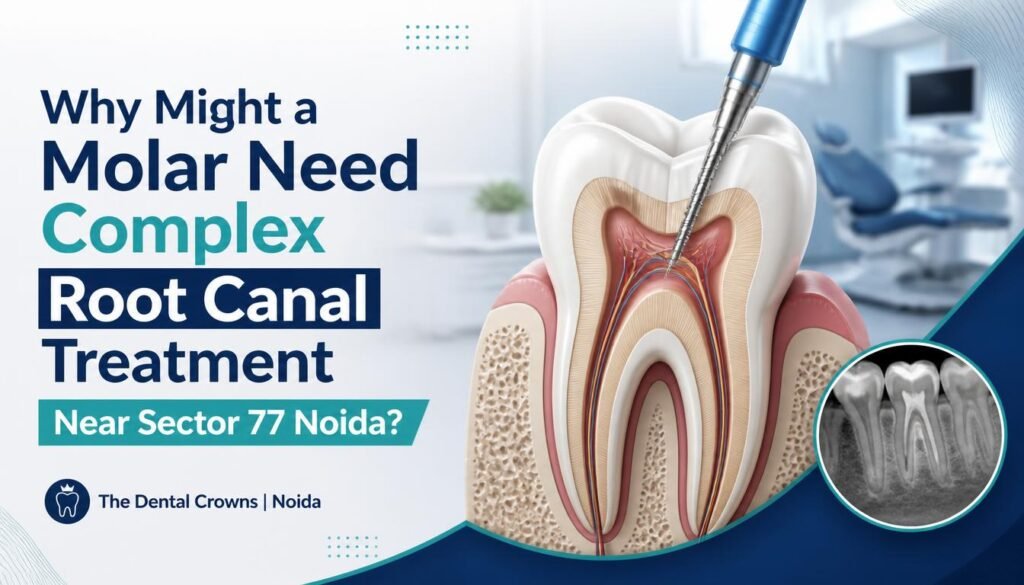
If deep decay or a crack has damaged the pulp inside a tooth, root canal treatment may be needed to address the infection or inflammation.
After treatment, the tooth may require a suitable permanent restoration. A crown is often considered for significantly weakened back teeth because these teeth experience substantial chewing forces.
Whether a crown is necessary depends on the tooth’s location, remaining structure, and clinical condition.
Learn more about painless root canal treatment in Noida and discuss the appropriate restoration with your dentist.
3. A Post and Core, When Indicated
In certain root-canal-treated teeth, a dentist may use a post inside the prepared root canal to help retain a core build-up.
A post does not replace missing tooth structure or automatically strengthen a weak root. It is generally considered when the remaining tooth cannot adequately retain the core on its own.
The decision depends on the individual tooth. A post is not necessary in every case and may be inappropriate when it would compromise the remaining root structure.
4. Alternative Restorative Treatments
Sometimes, a full crown is not the most conservative or predictable option. Depending on the damage, a dentist may recommend a bonded filling, an onlay, or another suitable restoration.
If the tooth cannot be restored predictably, extraction and tooth replacement may need to be discussed.
The objective is to preserve the natural tooth when reasonably possible without recommending a restoration that has a poor chance of success.
How Does a Dentist Decide Whether a Tooth Can Be Saved?
Before recommending dental crown treatment near Sector 76 Noida, a dentist should examine the tooth and its supporting structures.
The assessment may include the following factors.
Remaining Healthy Tooth Structure
The dentist evaluates how much sound tooth structure remains and whether the crown can achieve adequate retention and stability.
The location and height of the remaining tooth walls can affect the expected outcome.
Condition of the Tooth Root
A crown cannot compensate for every root problem. Root fractures, severe root damage, or other unfavourable findings may make a tooth unsuitable for restoration.
Dental X-rays or other appropriate diagnostic imaging can help assess the root and surrounding bone.
Gum Health and Supporting Bone
Healthy supporting tissues are important for long-term dental function. Gum disease, bone loss, and the position of the damage relative to the gumline can influence treatment planning.
Cracks and Fractures
A dentist must determine whether the damage is confined to the visible crown of the tooth or extends into the root.
Some cracked teeth can be restored, while certain fractures extending into the root may make the tooth unrestorable.
Bite and Chewing Pressure
Back teeth experience substantial chewing forces. The dentist considers the patient’s bite, possible teeth grinding, and the location of the affected tooth when planning the restoration.
These factors help determine whether a crown is appropriate and which material may be suitable.
Which Dental Crown Material Is Suitable for a Severely Damaged Tooth?
Several materials are available for dental crowns. The most suitable option depends on the tooth’s location, functional requirements, appearance, available tooth structure, and budget.
Zirconia Crowns
Zirconia is a ceramic material used for dental restorations. Depending on the specific type and design, it can offer high strength and a tooth-coloured appearance.
It may be considered for teeth exposed to substantial chewing forces, although the choice must be based on individual clinical requirements.
Porcelain and Other Ceramic Crowns
Ceramic crowns can provide natural-looking results and may be suitable for teeth where appearance is an important consideration.
Different ceramic materials have different strength and aesthetic properties, so they are not interchangeable in every situation.
Metal-Ceramic Crowns
Metal-ceramic crowns combine a metal substructure with a ceramic outer layer. They may be suitable for certain restorations where strength and appearance both matter.
Your dentist can explain the advantages, limitations, and expected maintenance of each option.
For a more detailed comparison, read Dental Crown Treatment Near Noida Sector 76: Zirconia vs Porcelain – Which Is Better?.
What Happens During Dental Crown Treatment?
Although the exact process varies, dental crown treatment generally involves several stages.
Step 1: Dental examination
The dentist assesses the damaged tooth, gums, bite, and remaining tooth structure. Imaging may be recommended when necessary.
Step 2: Treatment planning
The dentist explains whether the tooth can be restored and discusses suitable alternatives, including a core build-up or root canal treatment if indicated.
Step 3: Preparing the tooth
The tooth is prepared to accommodate the restoration. If required, the dentist first rebuilds the missing structure.
Step 4: Crown fabrication
The dentist records the prepared tooth so that a suitable crown can be fabricated. A temporary crown may be provided when appropriate.
Step 5: Crown placement
The dentist checks the fit, bite, and appearance before securing the final crown.
Step 6: Follow-up and maintenance
The dentist checks the restoration when necessary and advises you on cleaning, chewing, and follow-up care.
The number of appointments depends on the tooth, the laboratory or digital workflow, and any additional treatment required.
How Long Can a Dental Crown Last?
A dental crown can last for many years, but no crown lasts forever. Its lifespan depends on the material, quality of fit, chewing forces, oral hygiene, and condition of the underlying tooth.
To help maintain your crown:
- Brush twice daily with fluoride toothpaste.
- Clean between your teeth every day.
- Avoid chewing ice or other extremely hard objects.
- Discuss teeth grinding with your dentist if you clench your jaw.
- Attend recommended dental check-ups.
- Seek an examination if the crown becomes loose, cracks, or causes persistent discomfort.
A crown protects the tooth but does not make it immune to decay around its edges or problems affecting the supporting gums.
When Is a Dental Crown Not Enough?
A crown may not be a reliable solution if the tooth has a severe root fracture, extensive damage that prevents predictable retention, or inadequate supporting structures.
In such cases, the dentist may discuss extraction and possible replacement options.
Depending on your condition, alternatives can include a dental implant-supported crown or a dental bridge. These options have different requirements and are not suitable for every patient.
You can explore dental implant treatment in Noida to learn more about the clinic’s available dental services and discuss tooth replacement when needed.
The final decision should be based on a clinical examination, the likely prognosis of the tooth, and your treatment preferences.
Dental Crown Treatment Near Sector 76 Noida
If you live in Sector 76 Noida and have a severely damaged or broken tooth, consulting a dentist early may help you understand whether it can be preserved.
The Dental Crowns is located at:
Shop No. 16, 1st Floor, Civitech Stadia, Sector 79, Noida, Uttar Pradesh 201301.
The clinic provides dental services including dental crowns, root canal treatment, dental implants, and other restorative procedures.
Patients from Sector 76 and nearby Noida sectors can discuss their symptoms, remaining tooth structure, suitable crown materials, and possible alternatives during a consultation.
To explore available treatments, visit the Dental Services page.
For appointment enquiries, contact The Dental Crowns at +91 89202 71787.
Frequently Asked Questions
1. Can a dental crown be placed when very little tooth remains?
Sometimes. A dentist may rebuild the tooth using a core build-up before placing a crown. Success depends on the remaining healthy tooth structure, root condition, gum health, and ability to retain the restoration.
2. Can a badly broken tooth be saved with a dental crown?
Some badly broken teeth can be restored, while others cannot. An examination and appropriate imaging help determine whether the damage extends into the root or below the gumline.
3. Is a root canal always necessary before a dental crown?
No. A root canal is needed when the tooth’s pulp requires treatment, not simply because the tooth needs a crown. The dentist determines this from the diagnosis.
4. What is a core build-up in dental treatment?
A core build-up uses restorative material to rebuild missing tooth structure and provide a suitable foundation for a crown. It is recommended only when the remaining tooth can support the restoration.
5. Is a post always needed when very little tooth remains?
No. A post may be considered in selected root-canal-treated teeth when additional retention for the core is needed. It does not replace missing root structure, and unnecessary post placement can introduce risks.
6. Which crown is best for a severely damaged tooth?
There is no single best crown material for every patient. Zirconia, other ceramics, and metal-ceramic crowns have different properties. The appropriate choice depends on the tooth’s location, bite, remaining structure, and aesthetic needs.
7. Can a dental crown prevent further tooth damage?
A well-planned crown can help protect a weakened tooth from chewing forces. However, it cannot eliminate every risk of fracture, decay, or gum disease. Good oral hygiene and regular check-ups remain important.
8. Where can I get dental crown treatment near Sector 76 Noida?
The Dental Crowns is located in Sector 79, Noida, and offers dental crown treatment and other dental services. Patients can contact the clinic to arrange an examination and discuss their options.
Conclusion
Dental crowns can help restore some teeth that have lost most of their visible structure, but the remaining tooth must be suitable for restoration. A core build-up, root canal treatment, or another procedure may be required before the final crown is placed.
If you are looking for dental crowns near Sector 76 Noida, a professional examination can help you understand whether your natural tooth can be saved and which treatment is appropriate.
Contact The Dental Crowns in Sector 79, Noida, to discuss your dental concerns and explore suitable restorative options.
Disclaimer: This article is for general educational purposes and is not a substitute for a dental examination, diagnosis, or individual treatment advice.