Missing teeth in the upper jaw can affect your ability to chew comfortably, speak clearly and smile with confidence. If you are searching for upper jaw dental implants near Sector 75 Noida, understanding the treatment process, bone requirements and available options can help you make an informed decision.
Dental implants are a commonly used tooth-replacement option designed to support a natural-looking dental crown, bridge or denture. However, replacing teeth in the upper jaw can sometimes require additional planning because of the jawbone’s structure and its proximity to the maxillary sinuses.
At The Dental Crowns, located in Sector 79, Noida, patients from Sector 75 and neighbouring areas can explore dental implant treatment and discuss suitable tooth-replacement options with the dental team.
In this guide, we explain how upper jaw dental implants work, when bone grafting or a sinus lift may be considered, what recovery involves and which questions you should ask before beginning treatment.
What Are Upper Jaw Dental Implants?
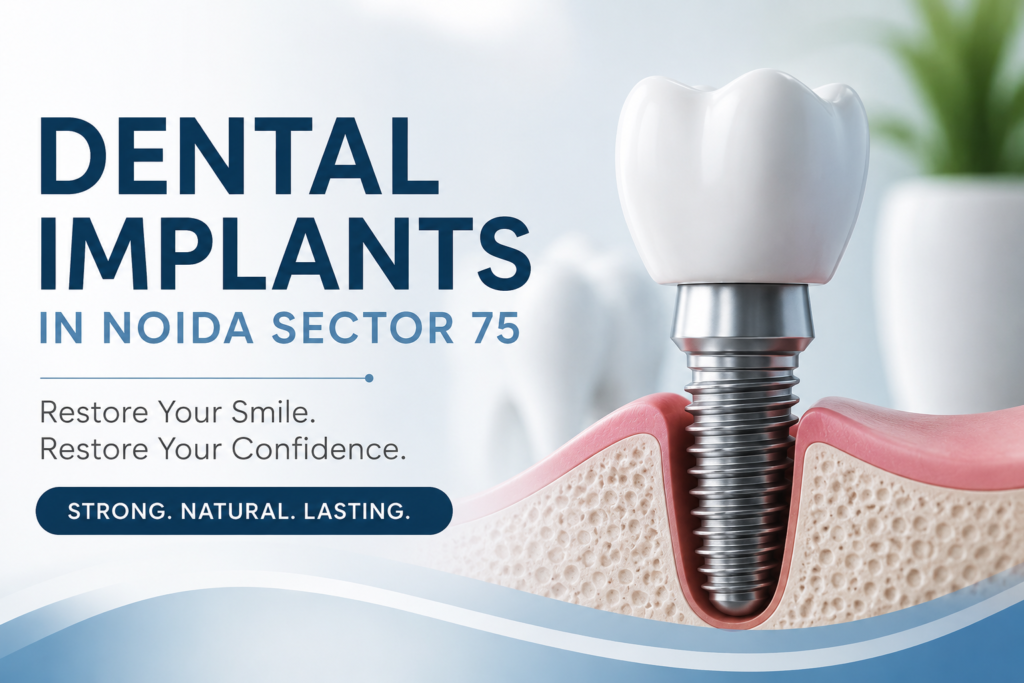
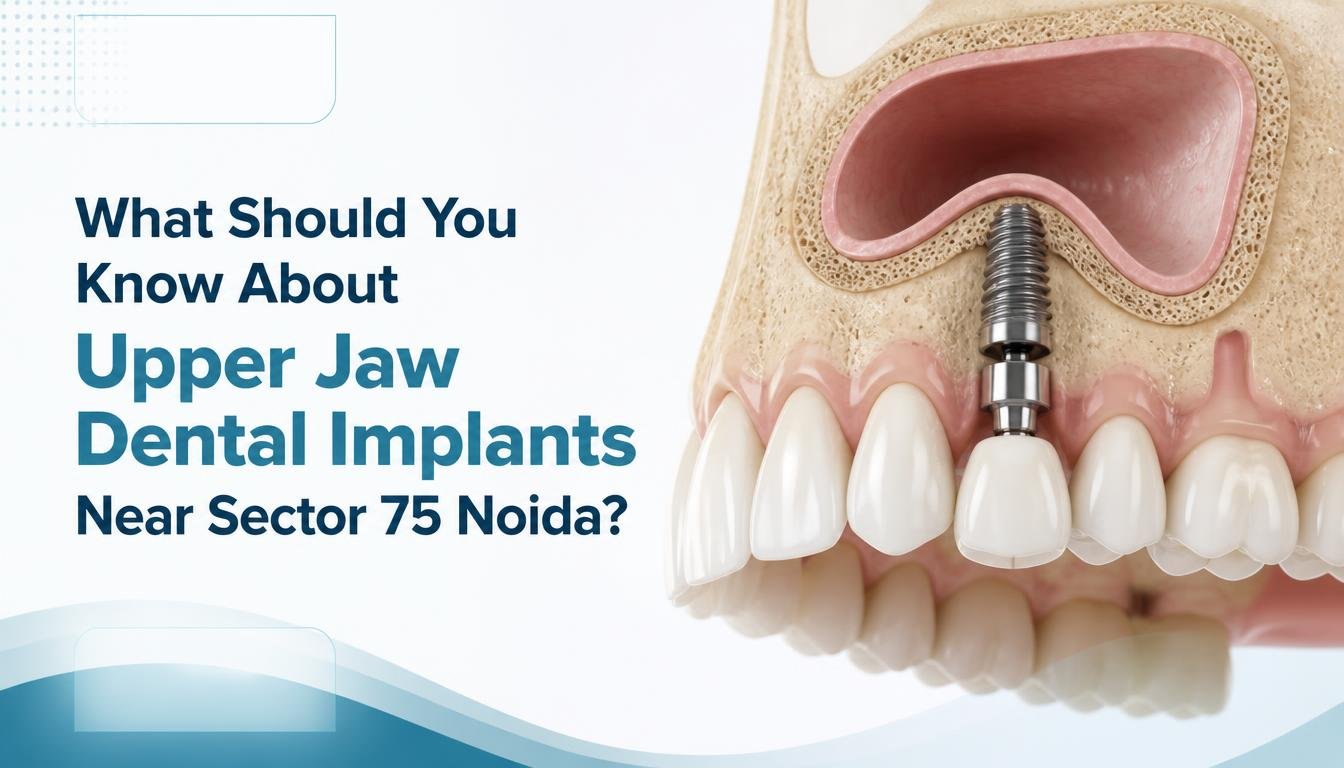
Upper jaw dental implants are artificial tooth roots placed in the upper jawbone to support replacement teeth. They are commonly made from biocompatible materials, such as titanium, that can integrate with the surrounding bone during healing.
A typical single-tooth implant restoration consists of three components:
- Dental implant: The component placed in the jawbone that acts as an artificial tooth root.
- Abutment: The connector between the implant and the replacement tooth.
- Dental crown: The visible replacement tooth designed to restore appearance and chewing function.
When several teeth are missing, implants may also support a dental bridge or an implant-supported denture, depending on the patient’s needs.
Unlike a conventional removable denture, an implant-supported restoration is anchored to dental implants. However, implants require surgery, healing and ongoing maintenance, and they are not suitable for every patient.
If you want to understand the treatment more broadly, read our guide to dental implants in Noida Sector 75.
Why Is the Upper Jaw Different From the Lower Jaw?
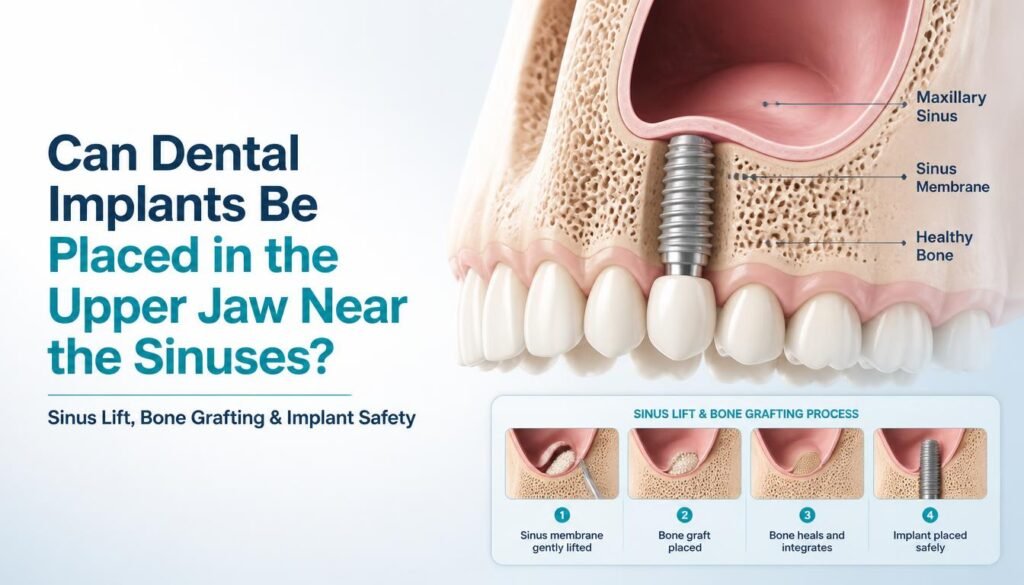
The upper jaw has anatomical features that can influence dental implant planning. One important consideration is the maxillary sinus, an air-filled space located above the upper back teeth.
When upper molars or premolars are lost, the surrounding bone may gradually reduce in volume. In some patients, the sinus may also extend into the area where an implant would otherwise be placed.
Consequently, the available bone may not be sufficient to support an implant of the required dimensions without additional treatment.
Before recommending upper jaw dental implants near Sector 75 Noida, a dentist may evaluate:
- The height and width of the available jawbone.
- Bone quality at the proposed implant site.
- The location of the maxillary sinus.
- The condition of the gums and neighbouring teeth.
- Any existing infection or periodontal disease.
- Medical history, medications and healing-related risk factors.
- The number of missing teeth and the type of final restoration required.
Dental X-rays and, when clinically indicated, three-dimensional imaging such as cone-beam computed tomography (CBCT) can help the dental team assess the anatomy and plan treatment.
The appropriate investigations depend on the individual case.
Do You Need a Sinus Lift for Upper Jaw Dental Implants?
A sinus lift, also called sinus augmentation, is a procedure that increases the available bone in certain areas of the upper back jaw.
It may be recommended when there is insufficient bone height beneath the maxillary sinus to place an implant safely and predictably.
During the procedure, the dental specialist creates space beneath the sinus membrane and places suitable bone-grafting material when indicated. The area is then allowed to heal so that additional bone can develop.
A sinus lift does not automatically form part of every upper jaw implant procedure.
Whether you need one depends on factors such as:
- The location of the missing tooth.
- The amount of bone currently available.
- The proposed implant dimensions.
- The condition of the sinus and surrounding tissues.
- Whether an implant can be placed at the same time as augmentation.
In selected cases, a sinus lift and implant placement may be performed together. In other cases, a separate healing period is necessary before implant placement.
Healing time varies according to the procedure and the patient’s condition. Your dentist should explain the anticipated timeline before treatment begins.
For additional patient information, consult the American Academy of Periodontology’s guide to sinus augmentation.
When Is Bone Grafting Required for Upper Jaw Implants?
Bone grafting may be considered when the existing jawbone does not provide adequate support for the planned implant.
Bone loss can occur after tooth extraction, prolonged tooth loss, gum disease or other conditions affecting the jawbone.
Depending on the clinical findings, bone grafting may help increase the available bone or improve the foundation for implant placement.
However, bone grafting is not necessary for every patient.
Your dentist will evaluate the available bone and explain whether an additional procedure is appropriate. The recommended approach may involve implant placement without grafting, bone augmentation before implant placement or a combined procedure in selected cases.
It is important to understand that bone grafting can add to the overall treatment duration, number of appointments and total cost.
Who Is a Suitable Candidate for Upper Jaw Dental Implants?
Many adults with missing teeth may be considered for dental implants, but suitability depends on an individual assessment.
You may be a potential candidate if you have one or more missing upper teeth and sufficient bone to support the proposed implant, or if additional procedures can create suitable support.
Your dentist will also consider your gum health, general health, oral hygiene habits and ability to attend follow-up appointments.
Certain factors may require additional care or affect healing, including:
- Untreated gum disease.
- Active dental or oral infection.
- Poorly controlled diabetes.
- Smoking or tobacco use.
- Certain medications or medical conditions.
- Inadequate bone volume.
- Difficulty maintaining daily oral hygiene.
These factors do not necessarily rule out implant treatment. They should be discussed with your dental professional so that potential risks can be assessed and managed.
What Is the Procedure for Upper Jaw Dental Implants Near Sector 75 Noida?
The treatment process varies depending on whether you need a single implant, multiple implants, bone grafting or a sinus lift.
Step 1: Dental Implant Consultation
The dentist reviews your dental history, examines the missing-tooth area and discusses your concerns and treatment goals.
You can also discuss whether an implant, dental bridge or denture may be suitable for your situation.
If you are preparing for your first appointment, read our guide to dental implant consultation near Sector 75 Noida.
Step 2: Imaging and Treatment Planning
Your dentist may recommend suitable dental imaging to assess the jawbone, sinus location and surrounding structures.
The findings help determine implant positioning and whether additional procedures are needed.
Step 3: Bone Grafting or Sinus Lift, If Required
If the available bone is insufficient, your dentist may discuss bone augmentation or a sinus lift.
Not every patient needs these procedures. The treatment plan should be based on the individual examination and imaging findings.
Step 4: Implant Placement
The implant is surgically placed into the prepared jawbone under appropriate anaesthesia.
The dentist will explain the procedure, expected discomfort, postoperative instructions and any risks relevant to your case.
Step 5: Healing and Bone Integration
The implant needs time to integrate with the surrounding bone. This biological process is called osseointegration.
The healing period varies. It may be longer if bone grafting or sinus augmentation has been performed.
Step 6: Placement of the Final Crown or Restoration
Once the implant is ready for restoration, an abutment and replacement tooth may be fitted.
The final restoration is designed to suit the implant position, bite and surrounding teeth.
Your dentist will provide instructions for cleaning the implant and attending follow-up appointments.
How Long Does Upper Jaw Dental Implant Treatment Take?
There is no single timeline that applies to every patient.
The overall duration depends on whether the implant can be placed immediately, whether bone grafting or a sinus lift is needed, how the patient heals and when the final restoration can be safely fitted.
A straightforward case may follow a different schedule from one involving substantial bone augmentation.
Your treatment plan should explain the expected stages, healing intervals and follow-up visits. Be cautious of claims that every upper jaw implant can be completed within a fixed number of days.
What Is the Cost of Upper Jaw Dental Implants Near Sector 75 Noida?
The cost of upper jaw dental implants in Noida depends on the patient’s clinical requirements and the type of restoration planned.
Factors that can affect the total treatment cost include:
- The number of implants required.
- The implant system and components used.
- The type and material of the final crown or bridge.
- Dental imaging and diagnostic investigations.
- Tooth extraction, if necessary.
- Bone grafting or sinus lift surgery.
- Temporary teeth or restorations, if required.
- The complexity of the procedure and follow-up care.
For this reason, a reliable estimate should be provided after a clinical assessment rather than assuming that every patient will pay the same amount.
When comparing treatment plans, ask for a clear breakdown of what is included, whether additional procedures may be required and what follow-up care will involve.
What Are the Benefits and Risks of Upper Jaw Dental Implants?
When appropriately planned and maintained, dental implants can offer several benefits.
Potential Benefits
Improved chewing function: Implant-supported teeth can help restore chewing ability when compared with having a missing tooth.
Natural-looking restoration: A well-designed crown can be made to complement the colour and shape of neighbouring teeth.
A fixed tooth-replacement option: Implant-supported restorations do not need to be removed for routine use in the same way as conventional removable dentures.
Support for the jawbone: Dental implants transfer functional forces to the surrounding bone, which may help limit some of the bone changes associated with tooth loss.
Flexible restoration options: Depending on the case, implants can support a single crown, a bridge or an implant-supported denture.
Potential Risks
Implant treatment involves surgery and is not risk-free. Possible complications include infection, delayed healing, failure of the implant to integrate with bone, nerve-related complications in relevant anatomical areas, sinus-related complications in upper-jaw cases and inflammation around the implant.
The likelihood and type of complications depend on the patient’s anatomy, health, oral hygiene and the procedure performed.
A detailed consultation can help you understand the expected benefits, limitations and risks before making a decision.
How Can You Care for Upper Jaw Dental Implants After Treatment?
Long-term maintenance is important for protecting the health of your implant and surrounding tissues.
Follow your dentist’s instructions, particularly during the early healing period.
Helpful practices include:
- Brush twice daily using a soft-bristled toothbrush.
- Clean between your teeth and around the implant as advised.
- Use any recommended interdental cleaning aids.
- Attend scheduled follow-up visits.
- Avoid smoking and discuss tobacco cessation support if needed.
- Follow dietary instructions during healing.
- Contact your dentist if you experience persistent pain, swelling, bleeding, a loose restoration or other unusual symptoms.
Dental implants cannot develop decay in the same way as natural teeth, but the surrounding gum and bone can still become inflamed or damaged. Regular professional maintenance remains essential.
Why Consider The Dental Crowns for Dental Implants Near Sector 75 Noida?
Patients living in Sector 75 and nearby areas may prefer a dental clinic within convenient travelling distance, particularly when treatment involves multiple appointments.
The Dental Crowns is located at Civitech Stadia in Sector 79, Noida, and lists dental implants among its surgical dentistry services.
The clinic also offers other dental services, including dental crowns, dental bridges, dentures and root canal treatment.
Before starting treatment, ask the dental team about the clinician’s implant experience, the diagnostic investigations required, the proposed restoration, the expected treatment stages and the costs involved.
A personalised consultation can help you understand whether upper jaw dental implants are appropriate for your oral health and what treatment options are available.
Clinic details
The Dental Crowns
Shop No. 16, 1st Floor, Civitech Stadia
Sector 79, Noida, Uttar Pradesh 201301
Phone: +91 89202 71787
Website: https://thedentalcrowns.in/
If you have a missing upper tooth and live near Sector 75 Noida, you can contact the clinic to discuss an implant consultation.
Frequently Asked Questions About Upper Jaw Dental Implants
1. Are upper jaw dental implants more complicated than lower jaw implants?
They can be more complex in certain cases because the upper back jaw is close to the maxillary sinus and may have limited bone volume. However, the complexity depends on the patient’s anatomy and the planned treatment.
2. Is a sinus lift always required for upper jaw implants?
No. A sinus lift is only considered when additional bone height is needed in the relevant area. Many patients can receive upper jaw implants without sinus augmentation.
3. Can I get upper jaw dental implants if I have bone loss?
Possibly. Your dentist will assess the remaining bone and determine whether an implant can be placed directly or whether bone grafting or another approach may be appropriate.
4. How painful is upper jaw implant surgery?
The procedure is generally performed with local anaesthesia, which helps control pain during surgery. Some discomfort, swelling or bruising may occur afterwards. Your dentist will explain suitable aftercare and pain management.
5. How long do upper jaw dental implants last?
Dental implants are designed as a long-term tooth-replacement option, but their lifespan varies. Oral hygiene, gum health, smoking, general health, bite forces and regular professional maintenance all influence long-term outcomes.
6. Can several missing upper teeth be replaced with implants?
Yes, depending on your dental condition. Multiple implants may support individual crowns, an implant-supported bridge or another suitable restoration. The number of implants required depends on the treatment plan.
7. What should I ask during an implant consultation near Sector 75 Noida?
Ask whether you are a suitable candidate, how much bone is available, whether a sinus lift or bone graft is necessary, which restoration is recommended, how long treatment may take, what the total cost includes and what follow-up care is required.
Conclusion
Upper jaw dental implants can be an effective option for replacing missing teeth, but successful treatment begins with careful assessment and personalised planning.
For patients searching for upper jaw dental implants near Sector 75 Noida, understanding bone availability, sinus anatomy, possible grafting procedures, healing time and long-term maintenance can make the decision-making process easier.
The Dental Crowns in Sector 79, Noida, provides dental implant services for patients who want to explore their tooth-replacement options. Arrange a consultation to discuss your dental condition, the investigations you may need and the treatment approach most appropriate for you.
Medical disclaimer: This article is for general educational purposes and is not a substitute for an individual dental examination, diagnosis or treatment recommendation.