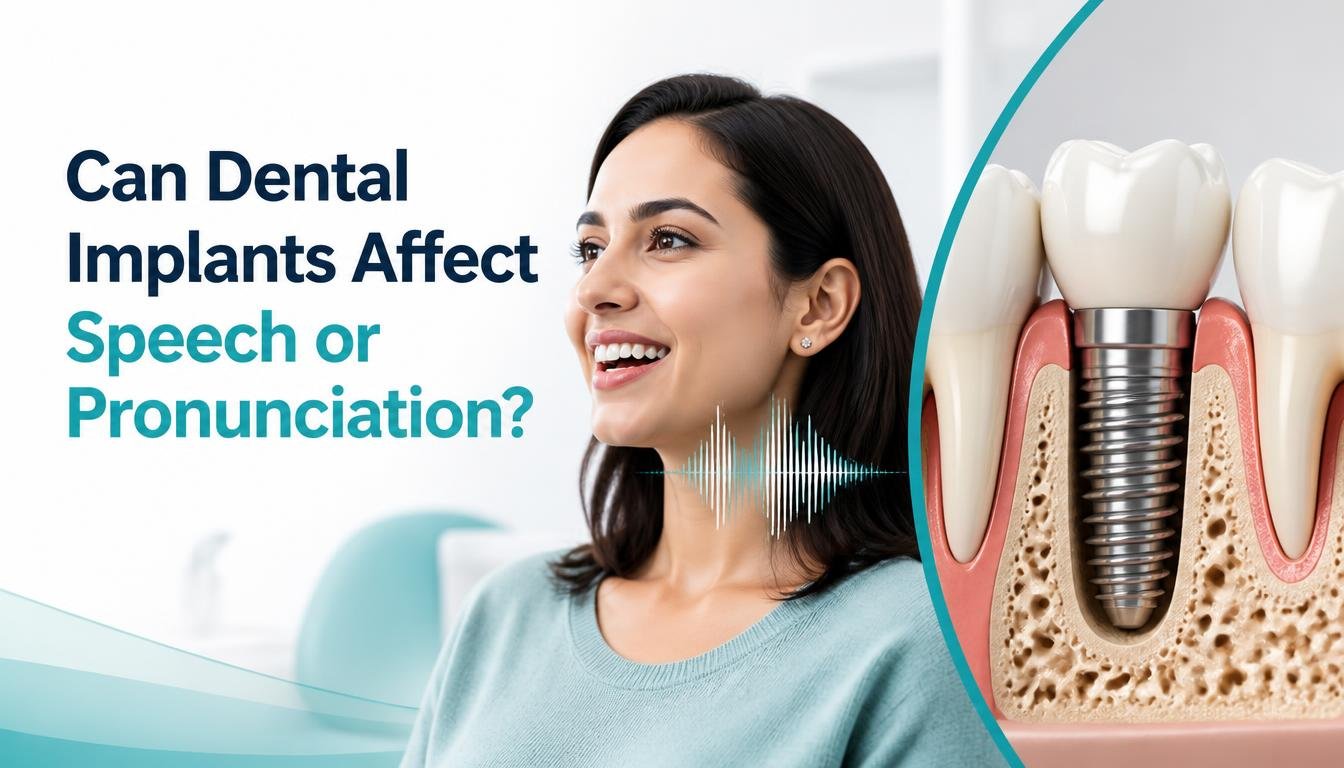
Dental implants are a popular solution for replacing missing teeth and restoring a natural-looking smile. However, before undergoing treatment, many patients have an important question: Can dental implants affect speech or pronunciation?
The answer is yes, dental implants can sometimes cause temporary changes in speech, particularly while the mouth adjusts to a new implant-supported crown, bridge, or denture. However, well-planned dental implant treatment can also help restore speech affected by missing teeth.
The impact depends on several factors, including the location of the missing tooth, the design and fit of the replacement teeth, the number of teeth being replaced, and how quickly the patient adapts.
In this guide, we explain how dental implants may affect pronunciation, which sounds can be affected, how long speech adjustment may take, and when you should consult your dentist.
Can Dental Implants Affect Speech or Pronunciation?
Yes, dental implants can temporarily affect speech or pronunciation in some patients. This usually happens when the new replacement teeth change the way the tongue, lips, and teeth interact during speaking.
Speech depends on the coordinated movement of the tongue, lips, jaw, and airflow through the mouth. When a dental implant is restored with a crown, bridge, or full-arch prosthesis, the shape and position of the replacement teeth can influence how certain sounds are produced.
Some patients notice a slight lisp, difficulty pronouncing certain words, or a feeling that their tongue needs to adjust to the new teeth. Others experience no noticeable speech changes.
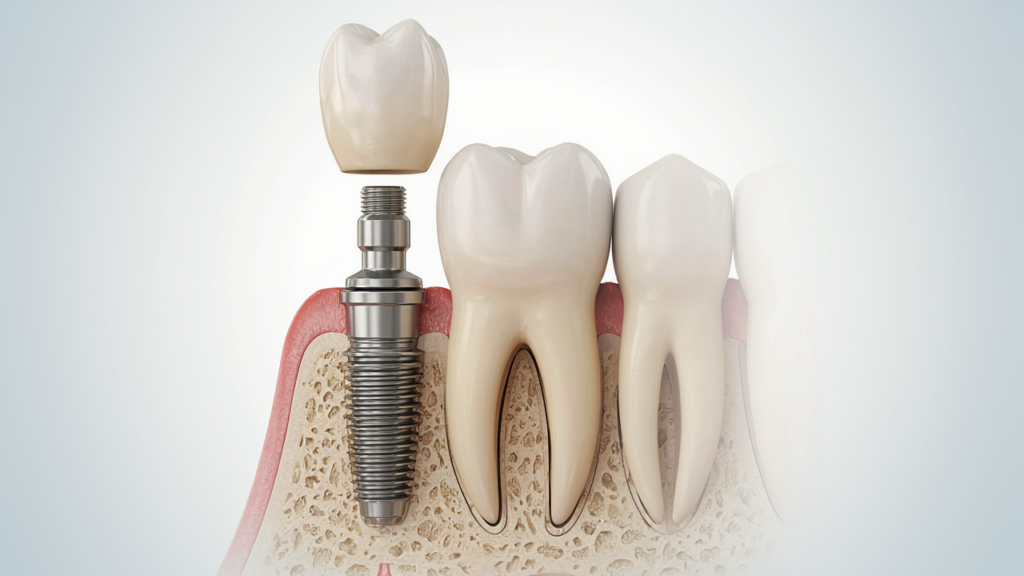
Importantly, the implant fixture placed inside the jawbone is not usually the main reason for a pronunciation change. The shape, position, and fit of the visible replacement teeth, together with post-operative swelling, are often more relevant.
According to the US Food and Drug Administration, missing teeth can contribute to speech difficulties, and dental implants can support artificial teeth that restore oral function.
Why Can Speech Change After Dental Implant Treatment?
Several factors may explain why your speech sounds different after dental implant treatment.
1. Your Tongue Needs Time to Adjust
Your tongue constantly touches or moves close to your teeth while producing different speech sounds. After receiving a new implant-supported crown or bridge, the tongue may encounter a slightly different surface or shape.
This change can temporarily affect pronunciation, especially if you have been missing teeth for a long time.
As you speak and practise normal oral movements, your tongue may gradually adapt to the new dental structure.
2. Changes in Tooth Position and Shape
The position and contour of replacement teeth can influence airflow and tongue placement during speech.
For example, sounds such as “s,” “z,” “t,” and “d” depend partly on the relationship between the tongue and the teeth. If the new restoration changes this relationship, some words may sound different initially.
A dentist can assess whether the restoration’s shape, position, and bite need adjustment.
3. Swelling After Implant Surgery
Mild swelling, tenderness, and discomfort can occur after dental implant surgery. Depending on the treatment performed, these symptoms may temporarily make speaking feel uncomfortable or less natural.
As the surgical area heals, speech-related discomfort generally improves. However, persistent or worsening symptoms should not be ignored.
4. Full-Arch Dental Implants or Implant-Supported Dentures
Patients receiving multiple implants or full-arch replacement teeth may notice a greater change because a larger portion of the mouth’s dental structure is being restored.
The design of the prosthesis can influence tongue space, airflow, and pronunciation. Your dentist should consider speech, comfort, appearance, and chewing function when planning the restoration.
5. The Replacement Teeth May Need Adjustment
If speech difficulties persist, the issue may involve the shape, thickness, position, or fit of the implant-supported restoration.
An implant crown that feels too bulky, a poorly fitting prosthesis, or an unsuitable tooth contour may affect normal tongue movement.
Do not attempt to reshape or adjust your dental restoration yourself. A dental professional can determine whether any changes are necessary.
Which Speech Sounds Can Be Affected by Dental Implants?
Certain sounds require precise coordination between the tongue, teeth, and airflow. Patients who experience pronunciation changes may notice differences in sounds such as:
- “S” and “Z”: These sounds depend on controlled airflow and precise tongue positioning. Some patients may notice a temporary lisp.
- “T” and “D”: The tongue interacts with the area behind the upper front teeth to produce these sounds.
- “F” and “V”: These sounds involve contact between the lower lip and upper front teeth. Changes in tooth position may influence how they feel to pronounce.
- Other words involving the front teeth: Replacement of missing front teeth can change the surfaces the tongue and lips use during speech.
Not everyone will experience these changes. The effect varies according to the type of restoration, the location of the missing teeth, and individual speech patterns.
How Long Does It Take to Speak Normally After Dental Implants?
There is no single recovery timeline that applies to every patient.
Some people speak comfortably soon after treatment, while others need several days or a few weeks to adjust to their new teeth. More extensive restorations may require a longer period of adaptation.
The timeline can depend on:
- Whether one tooth or several teeth have been replaced.
- Whether the restoration is a single crown, bridge, or full-arch prosthesis.
- The amount of swelling or discomfort after surgery.
- The fit and shape of the replacement teeth.
- Whether the patient previously had missing teeth or wore dentures.
- The individual’s ability to adapt to changes in the mouth.
If your pronunciation is not improving, or if speech becomes progressively more difficult, arrange a dental review rather than waiting indefinitely.
Can Dental Implants Improve Speech?
Yes, dental implants may help improve speech when missing teeth are contributing to pronunciation difficulties.
Missing front teeth, in particular, can change how the tongue directs airflow and how the lips and teeth interact during speech. Replacing these teeth with appropriately designed restorations can help restore the oral structures needed for clearer pronunciation.
Dental implants can also provide stable support for replacement teeth. However, the degree of improvement depends on the original cause of the speech problem.
Speech difficulties may also arise from neurological conditions, tongue movement problems, or other medical and dental issues. Dental implants will not necessarily correct these conditions, so an appropriate assessment is important.
How Can You Improve Speech After Dental Implant Treatment?
If your speech feels different after receiving dental implants, the following practical steps may help you adjust.
1. Practise Speaking Every Day
Read a short paragraph aloud, talk with family members, or practise everyday conversations. Regular speaking gives your tongue and lips opportunities to adapt to the new dental structure.
2. Read Aloud Slowly
Choose a book, article, or short passage and read it aloud at a comfortable pace. Focus on words containing “s,” “z,” “t,” and “d” if these sounds feel unfamiliar.
Avoid forcing your speech or repeatedly practising to the point of discomfort.
3. Follow Your Dentist’s Aftercare Instructions
Follow the specific instructions provided for your surgery and restoration. Avoid activities or foods your dentist has advised against during recovery.
Do not assume that every implant procedure has the same restrictions or healing schedule.
4. Attend Follow-Up Appointments
Follow-up visits allow your dentist to assess healing, the fit of your restoration, and your overall comfort.
If you notice a persistent lisp, unusual pressure, difficulty closing your teeth together, or a restoration that feels too bulky, explain these symptoms during your appointment.
5. Ask About a Speech or Prosthetic Assessment
If pronunciation difficulties continue despite appropriate dental adjustments, your dentist may recommend further assessment. Depending on the cause, a prosthodontist or speech-language professional may be helpful.
When Should You Contact Your Dentist?
Temporary changes in speech can occur during the adjustment period, but certain symptoms require prompt attention.
Contact your dentist if you experience:
- Speech difficulties that persist or worsen rather than improve.
- A crown, bridge, or denture that feels loose or unstable.
- A noticeable change in your bite.
- Persistent pain or swelling.
- Difficulty chewing or moving your tongue comfortably.
- New numbness or altered sensation around the mouth.
Seek urgent medical attention if you develop difficulty breathing or swallowing, rapidly increasing swelling, or another severe or rapidly worsening symptom.
The goal is not simply to restore the appearance of your teeth. Your replacement teeth should also be comfortable and function appropriately.
Are Dental Implants a Good Option for People Concerned About Speech?
Dental implants may be a suitable tooth-replacement option for many people who are concerned about chewing, appearance, or speech after tooth loss. However, suitability depends on an individual’s oral health, bone support, gum condition, medical history, and treatment requirements.
Before treatment, discuss your concerns about pronunciation with your dentist. If you speak professionally, sing, teach, or regularly give presentations, mention this during treatment planning.
Your dentist can evaluate the missing teeth, explain the available replacement options, and consider the shape and position of the planned restoration.
You can also learn more about dental implant treatment at The Dental Crowns.
Dental Implants in Noida: Why Individualised Treatment Planning Matters
If you are considering dental implants in Noida, a professional consultation is an important first step. A dental assessment can help determine whether implants are appropriate for you and how your replacement teeth may affect your bite, comfort, appearance, and speech.
At The Dental Crowns, patients can explore dental implant treatment as part of the clinic’s wider range of dental services. The clinic is located at Civitech Stadia, Sector 79, Noida, Uttar Pradesh.
Before beginning treatment, ask your dentist about the proposed restoration, expected adjustment period, follow-up visits, and what to do if your pronunciation changes.
Explore the clinic’s complete dental services to learn more about available treatment options.
Frequently Asked Questions
1. Can dental implants cause a lisp?
Dental implants can sometimes be associated with a temporary lisp, particularly when the replacement teeth change tongue position or airflow. If the lisp persists, your dentist should check the shape and fit of the restoration.
2. Will my speech return to normal after dental implants?
Many patients adapt to their replacement teeth over time. The adjustment period varies, and persistent speech changes should be evaluated by a dentist.
3. Do dental implants affect pronunciation permanently?
Permanent pronunciation problems are not inevitable. Persistent changes may indicate that the restoration requires assessment or that another factor is affecting speech.
4. Can replacing missing front teeth improve speech?
Yes, replacing missing front teeth may improve pronunciation when tooth loss is contributing to the problem. Results depend on the patient’s individual circumstances.
5. Are full-mouth dental implants more likely to affect speech?
Full-arch restorations can change more of the mouth’s dental structure, so some patients may need additional time to adapt. Proper planning and a well-fitting restoration are important.
6. Should I practise speaking after implant surgery?
Gentle speaking can help you become accustomed to your replacement teeth, provided you follow your dentist’s post-operative instructions. Do not force speech if you experience significant pain or discomfort.
7. Where can I get dental implants in Noida?
The Dental Crowns offers dental implant treatment at Civitech Stadia, Sector 79, Noida. Arrange a consultation to discuss your oral health, suitability for treatment, and concerns about speech or pronunciation.
Conclusion
So, can dental implants affect speech or pronunciation? Yes, temporary changes can occur while your tongue, lips, and mouth adapt to the new restoration. In other cases, replacing missing teeth may help improve speech that was affected by tooth loss.
The key factors are appropriate treatment planning, a well-fitting restoration, proper aftercare, and timely dental review if problems persist.
If you are considering dental implants in Noida, speak with a qualified dentist about your concerns before treatment. The Dental Crowns can help you explore your tooth-replacement options and understand the next steps for your individual dental needs.
Book a dental consultation with The Dental Crowns to discuss dental implants and the best approach for restoring your smile and oral function.