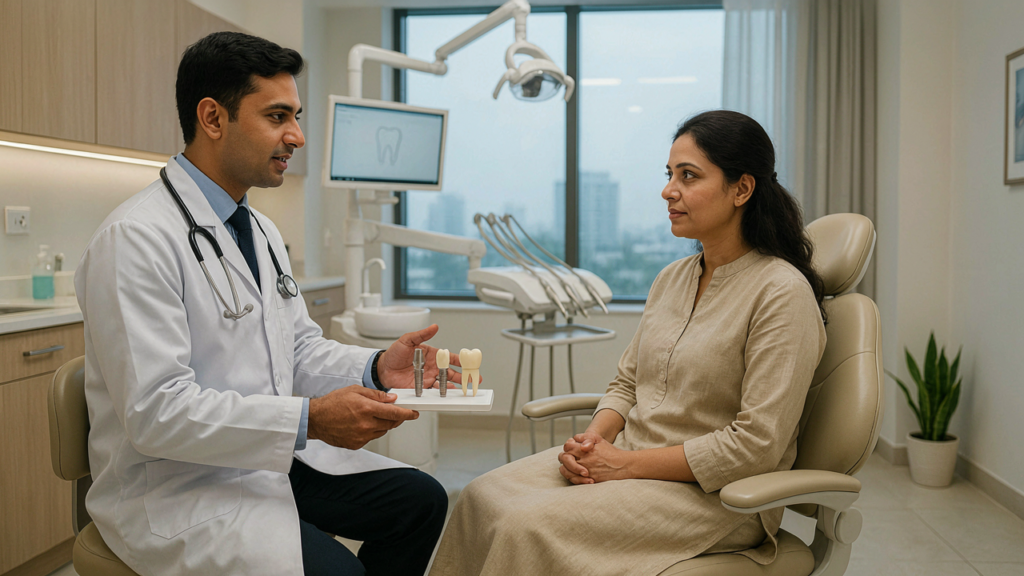
If you are considering dental implant treatment near Sector 77 Noida, understanding the healing process is just as important as understanding the implant procedure itself. Dental implants are designed to replace the root portion of a missing tooth and can support a restoration such as a dental crown.
One of the most important stages after implant placement is osseointegration. During this process, the jawbone gradually forms a connection with the implant. Because bone healing takes time, the complete dental implant treatment may take several months depending on the patient’s oral health, bone condition and treatment plan.
If you are looking for information about dental implant healing near Sector 77 Noida, this guide explains what recovery can involve, what you can do to support healing, what foods may be easier to eat and which symptoms should be discussed with your dentist.
What Is Dental Implant Healing?
Dental implant healing is the period during which the gum tissues and jawbone recover after implant placement.
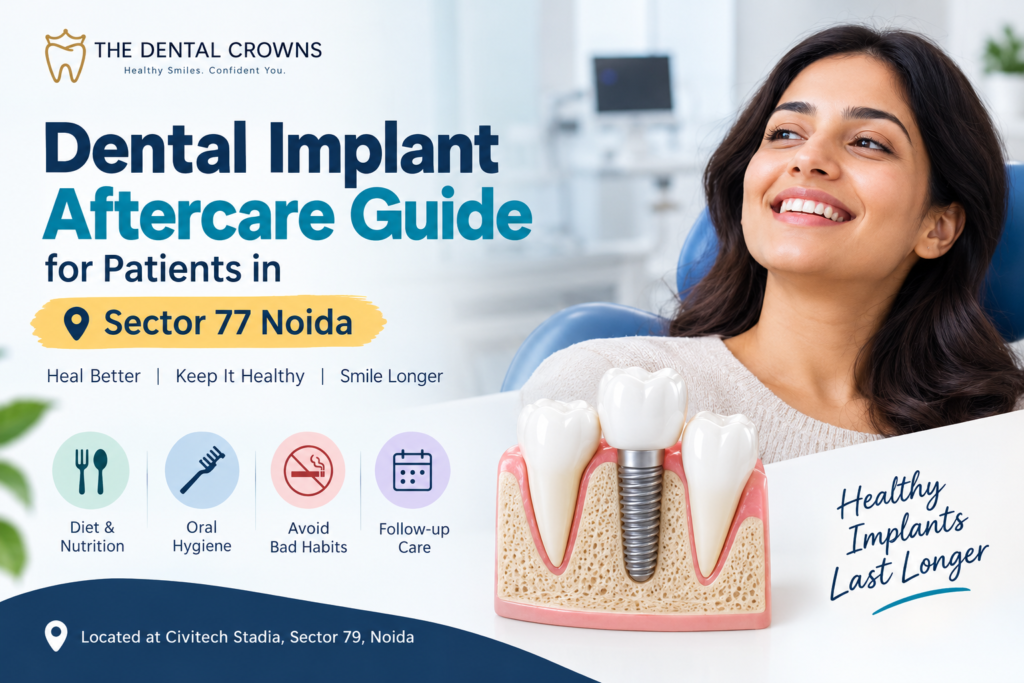
A dental implant generally consists of three components:
- The implant, which replaces the tooth root
- The abutment, which connects the implant to the restoration
- The dental crown or other restoration, which replaces the visible portion of the tooth
After the implant is placed into the jawbone, osseointegration begins. This means that bone gradually grows around and integrates with the implant surface, creating the foundation needed to support the final restoration.
According to Mayo Clinic, bone healing around a dental implant can take several months. The exact treatment timeline varies from patient to patient.
How Long Does Dental Implant Healing Take?
There is no single healing time that applies to every dental implant patient.
Some patients may complete different stages of treatment relatively quickly, while others may require additional healing time. Factors that can affect the treatment timeline include:
- The number of implants being placed
- The location of the implant
- Jawbone quality and quantity
- Gum health
- Whether bone grafting is required
- The patient’s general oral health
- Smoking or tobacco use
- The complexity of the procedure
- How the individual responds to healing
If bone grafting is required, additional healing may be necessary before or alongside implant treatment.
This is why patients searching for dental implant healing near Sector 77 Noida should avoid relying on a generic “implant healing time” and instead ask their dentist for an individualized treatment timeline.
What Happens During the First Few Days?
Some swelling, tenderness, discomfort or minor bleeding can occur after dental implant surgery.
Your dentist may provide specific instructions regarding pain management, oral hygiene, food choices and activity.
The first few days are primarily about allowing the surgical area to settle and protecting the treatment site.
Depending on your procedure, your dentist may recommend:
- Resting after surgery
- Following prescribed or recommended medication instructions
- Eating softer foods temporarily
- Keeping the surgical area clean according to professional instructions
- Avoiding unnecessary pressure on the implant area
- Attending scheduled follow-up appointments
Mayo Clinic notes that swelling, bruising, pain at the implant site and minor bleeding can occur after implant surgery. If symptoms become worse rather than gradually improving, patients should contact their dental professional.
Dental Implant Healing: Week-by-Week Overview
First 24–48 Hours
The immediate post-operative period is when you should be particularly careful with the surgical area.
Your dentist will provide instructions based on the type of implant procedure performed. Soft foods may be recommended, and you should avoid disturbing the surgical site.
Do not assume that feeling better means the implant has completely healed. The deeper bone-healing process is still taking place.
First Week
During the first week, the gum tissues begin recovering.
Some tenderness or swelling may remain, but the exact experience differs between patients.
Continue following the aftercare instructions given by your dentist and maintain oral hygiene without unnecessarily disturbing the surgical area.
Following Weeks
The visible gum tissues may continue to improve, but the implant may still be undergoing deeper biological healing.
This is particularly important because osseointegration occurs beneath the gum tissue.
A patient may feel comfortable while the bone is still integrating with the implant.
Following Months
For many patients, the implant continues undergoing osseointegration over a period of months.
Your dentist will determine when the implant is sufficiently healed and stable for the next stage of restoration.
Mayo Clinic explains that the bone-healing process can take several months before the implant provides the necessary foundation for the artificial tooth.
What Should I Eat During Dental Implant Healing?
Your dentist may recommend softer foods during the early healing period.
Depending on your individual instructions, suitable options may include:
- Soft-cooked vegetables
- Yogurt
- Eggs
- Soft rice
- Oatmeal
- Smooth foods
- Soft fruits
- Soups that are not excessively hot
The specific diet depends on the procedure and your dentist’s instructions.
Avoid putting unnecessary pressure on the implant site, particularly during the early healing period.
As healing progresses, your dentist can tell you when it is appropriate to return to your normal diet.
How Can You Support Dental Implant Healing?
Good aftercare is an important part of implant treatment.
1. Follow Your Dentist’s Instructions
Every implant procedure is different. Your dentist may give you specific instructions based on the location of the implant, surgical technique and your oral health.
Follow those instructions rather than relying solely on general information found online.
2. Maintain Good Oral Hygiene
Keeping your mouth clean is important for maintaining healthy teeth and gums around the implant.
Your dentist may recommend a particular brushing technique, interdental cleaning method or oral rinse during the healing period.
Once the implant has healed, maintaining the implant, restoration and surrounding gum tissues is also important for long-term oral health.
3. Avoid Smoking and Tobacco
Smoking can interfere with healing and is associated with implant complications.
If you smoke, discuss this openly with your dentist before undergoing implant treatment. Your dental professional can provide advice based on your circumstances.
4. Avoid Hard Foods When Advised
Hard or crunchy foods can put unnecessary pressure on a healing area.
Follow your dentist’s recommendations about when you can resume different foods.
5. Attend Follow-Up Appointments
Follow-up visits allow your dentist to assess healing and determine when it is appropriate to move to the next stage of treatment.
Do not skip follow-ups simply because the implant area feels comfortable.
What Are Signs That Dental Implant Healing May Not Be Going Normally?
Some discomfort after surgery can be expected, but symptoms that become worse or concerning should be discussed with a dental professional.
Contact your dentist if you experience symptoms such as:
- Increasing rather than improving pain
- Significant or worsening swelling
- Persistent bleeding
- Pus or unusual discharge
- Fever or feeling unwell
- Increasing gum redness or tenderness
- Persistent numbness or unusual sensation
- An implant that feels unusually loose or unstable
- Any other symptom that concerns you
Mayo Clinic advises contacting the surgeon if swelling, soreness or another problem becomes worse in the days following implant surgery.
Do not try to diagnose implant failure based only on symptoms. A dental examination and appropriate diagnostic assessment are needed to determine the cause.
Can You Eat Normally After a Dental Implant?
Eventually, many patients can return to their regular diet, but this should happen according to the dentist’s instructions.
Immediately after implant surgery, softer foods may be recommended to reduce irritation and pressure on the surgical area.
As the tissues heal and the implant integrates with the bone, your dentist will assess your progress and advise you about progressing your diet.
Remember that being able to chew normally does not necessarily mean that osseointegration is complete.
Does Dental Implant Healing Hurt?
Some discomfort, tenderness or swelling can occur after implant surgery.
The amount of discomfort varies depending on factors such as:
- The number of implants
- The surgical procedure
- Whether bone grafting was required
- Individual sensitivity
- The location of the implant
- The patient’s healing response
Your dentist can explain what level of discomfort is expected in your particular case and what you should do if symptoms become unusual or severe.
Is Dental Implant Healing Different After Bone Grafting?
It can be.
If the jawbone does not have sufficient thickness or density to support an implant, a dentist or oral surgeon may recommend bone grafting.
Bone grafting can introduce an additional healing stage. Mayo Clinic notes that when a bone graft is required, it may take several months for sufficient new bone to develop, depending on the situation.
For this reason, the overall timeline for dental implants near Sector 77 Noida can differ considerably between patients.
When Is the Dental Crown Placed on the Implant?
A dental implant does not usually mean that the visible tooth is immediately attached permanently.
A typical implant restoration involves:
- Implant placement
- Healing and osseointegration
- Abutment placement, where required
- Gum healing
- Crown fabrication
- Final crown placement
The timing depends on implant stability, bone healing, gum condition and the treatment approach selected by your dental professional.
Mayo Clinic explains that after osseointegration, an abutment may be placed, followed by additional gum healing before the artificial tooth is attached.
Why Choose a Dentist Near Sector 77 Noida for Implant Follow-Up?
If you live in or around Sector 77 Noida, convenient access to your dental clinic can be useful because implant treatment may involve multiple appointments.
The Dental Crowns is located at Civitech Stadia, Sector 79, Noida, and provides dental implant, dental crown, root canal and other dental treatments.
Patients from Sector 77 and surrounding Noida sectors can discuss their dental condition, implant requirements, expected healing period and restoration options during a professional consultation.
The clinic’s dental services page provides information about its available treatments.
What Should You Ask Before Getting a Dental Implant?
Before starting treatment, consider asking your dentist:
- How many appointments will I need?
- How long might my healing period be?
- Do I need a bone graft?
- What type of implant is appropriate for my case?
- What should I eat after surgery?
- How should I clean the implant area?
- When can I return to normal activities?
- When will my permanent crown be placed?
- What symptoms should make me contact the clinic?
- What follow-up appointments will I need?
Having these questions answered can help you understand the treatment process before the procedure begins.
Dental Implant Healing Near Sector 77 Noida: Final Takeaway
Dental implant healing is a gradual process rather than something that happens immediately after surgery.
The visible gum tissues may begin recovering relatively soon, while the deeper process of osseointegration between the implant and jawbone can take several months.
Following your dentist’s aftercare instructions, maintaining appropriate oral hygiene, avoiding tobacco and attending follow-up appointments can all be important parts of your implant care.
If you are considering dental implant healing near Sector 77 Noida, a personalized examination is the best way to understand whether an implant is appropriate for you and how long your individual treatment may take.
The Dental Crowns, located in Sector 79 Noida, provides dental implant and restorative dental services for patients from nearby Noida sectors.
Frequently Asked Questions
1. How long does dental implant healing take near Sector 77 Noida?
Dental implant healing varies between patients. Osseointegration can take several months, and the overall timeline depends on factors such as bone quality, gum health, implant location and whether bone grafting is required.
2. Is swelling normal after dental implant surgery?
Some swelling can occur after implant surgery. However, worsening or unusually severe swelling should be discussed with your dentist.
3. Can I eat normally after getting a dental implant?
Your dentist may recommend soft foods during the initial healing period. You can usually progress your diet according to your dentist’s instructions and healing progress.
4. Can smoking affect dental implant healing?
Smoking can interfere with healing and may increase the risk of implant complications. Discuss tobacco use with your dentist before and after implant treatment.
5. When can the permanent crown be placed?
The permanent crown is generally placed after the implant has achieved sufficient healing and stability. The exact timing depends on your individual treatment plan.
6. Do all dental implant patients need bone grafting?
No. Bone grafting is only recommended when additional bone support is needed for the planned implant treatment.
7. What should I do if my implant area becomes more painful?
If pain is increasing instead of improving, or if you develop significant swelling, bleeding, discharge, fever or other concerning symptoms, contact your dentist for an examination.
8. Where can I get dental implant treatment near Sector 77 Noida?
The Dental Crowns is located at Civitech Stadia, Sector 79, Noida, and provides dental implant and other dental treatments. A consultation can help determine the appropriate treatment based on your oral health and individual requirements.