
Getting a dental implant is an important step toward restoring a missing tooth, but dental implant aftercare is equally important for a smooth recovery and long-term oral health. If you have recently received a dental implant or are planning implant treatment near Sector 77 Noida, knowing what to do after surgery can help you protect the surgical area and support the healing process.
Dental implants are designed to replace the root portion of a missing tooth and can support a dental crown, bridge or implant-supported denture. The implant needs time to integrate with the surrounding jawbone through a process called osseointegration. This healing stage can take several months, depending on the individual case.
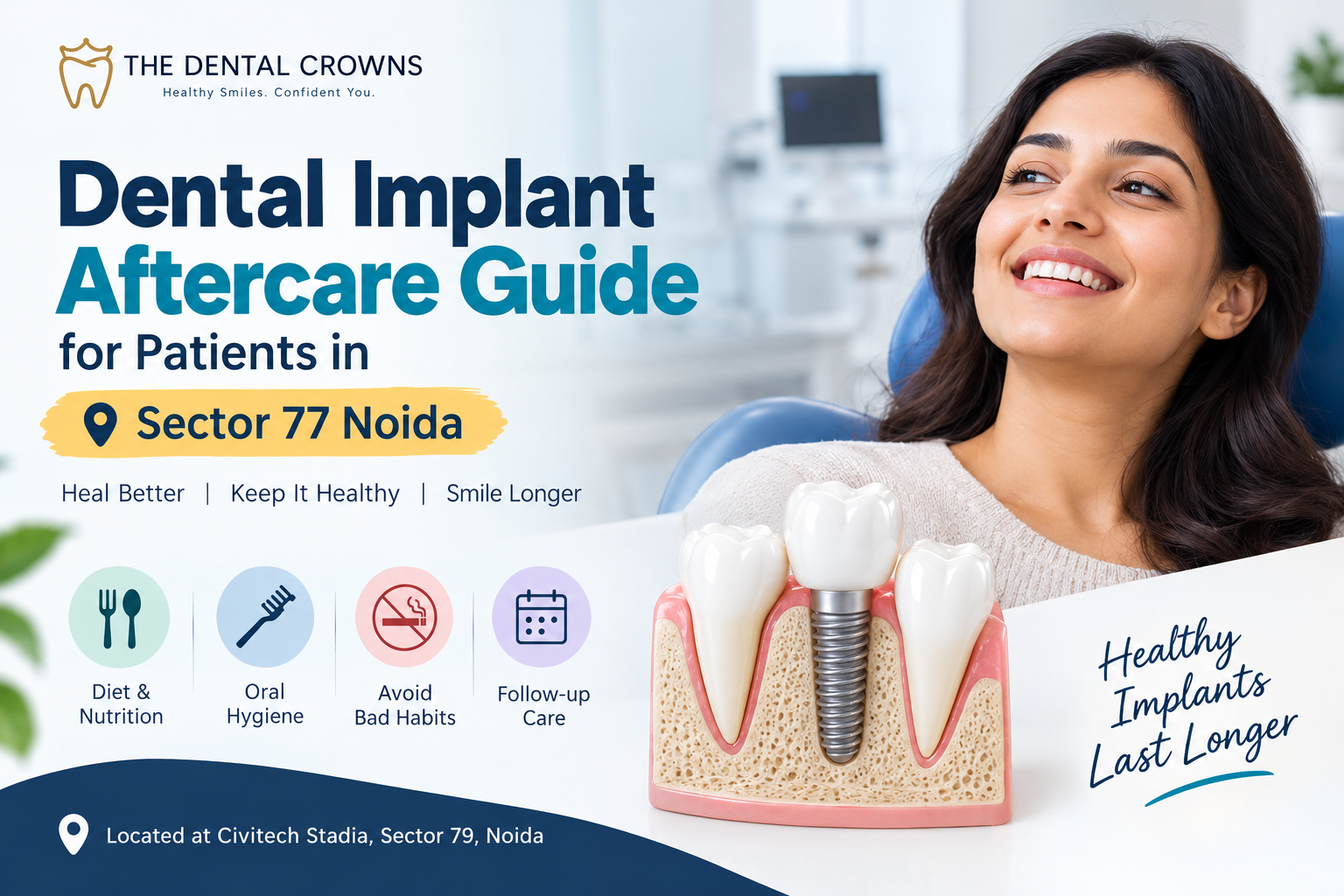
This Dental Implant Aftercare Guide for Patients in Sector 77 Noida explains the important steps you should follow after implant surgery, including what to eat, how to maintain oral hygiene, which habits to avoid and when you should contact your dentist.
Why Is Dental Implant Aftercare Important?
Dental implant surgery involves the placement of an implant into the jawbone. After the procedure, the surrounding gums and tissues need time to heal.
Good aftercare can help you:
- Protect the surgical area
- Maintain proper oral hygiene
- Reduce unnecessary irritation
- Support healthy gum healing
- Avoid excessive pressure on the implant
- Identify unusual symptoms early
- Protect your final implant restoration
- Maintain long-term oral health
According to Cleveland Clinic, the first stage of healing may take around a week, while complete integration of the implant with the jawbone can take several months.
For patients searching for dental implants near Sector 77 Noida, understanding this difference between initial recovery and complete implant healing is particularly important.
Dental Implant Aftercare: First 24 Hours
The first 24 hours after dental implant surgery are an important part of your recovery.
Your dentist will provide instructions based on your specific procedure. Follow those instructions rather than relying only on general information available online.
1. Rest After Implant Surgery
Give yourself time to recover after the procedure. Avoid unnecessary physical exertion immediately after surgery.
Depending on the complexity of your procedure, your dentist may recommend limiting strenuous activity for a few days.
2. Avoid Touching the Surgical Area
Do not repeatedly touch the implant site with your fingers or tongue.
Unnecessary pressure or irritation can interfere with the healing tissues.
3. Follow Your Medication Instructions
If your dentist prescribes medication, take it exactly as directed.
Do not change the dose or stop prescribed medication without discussing it with your dental professional.
4. Follow Your Dentist’s Instructions About Rinsing
Immediately after oral surgery, vigorous rinsing or spitting may disturb healing tissues. Your dentist will tell you when and how to rinse.
5. Use Cold Compresses If Recommended
Your dentist may recommend a cold compress to help manage swelling during the early recovery period.
Always follow the specific instructions provided for your procedure.
What Should You Eat After Dental Implant Surgery?
Your diet can play an important role in making the initial recovery more comfortable.
Your dentist may recommend soft foods during the early healing period. The American Dental Association’s MouthHealthy also notes that patients may be advised to choose soft or appropriately prepared foods during implant healing.
Foods You Can Consider
Depending on your dentist’s instructions, suitable soft foods may include:
- Khichdi
- Yogurt
- Soft rice
- Oatmeal
- Mashed vegetables
- Soft eggs
- Smooth soups
- Soft fruits
- Well-cooked vegetables
- Mashed potatoes
- Soft pasta
Try to chew away from the implant area when advised to do so.
Foods to Avoid During Early Healing
Avoid foods that can place unnecessary pressure on the surgical area, such as:
- Hard nuts
- Ice
- Hard candies
- Very crunchy snacks
- Sticky foods
- Tough meat
- Extremely hot foods or drinks
- Foods that require excessive chewing
The exact dietary restrictions depend on your surgery, implant location and dentist’s instructions.
How to Brush Your Teeth After a Dental Implant
One of the most common questions patients have after implant surgery is whether they should continue brushing.
The answer is generally yes, but you must follow your dentist’s instructions about the surgical area.
Good oral hygiene remains important because plaque and bacteria can affect the health of your gums and surrounding tissues.
Your dentist may recommend:
- Using a soft-bristled toothbrush
- Brushing your other teeth normally but gently
- Avoiding aggressive brushing over the surgical site
- Cleaning around the implant as instructed
- Using an interdental cleaning method recommended for your case
The American Academy of Implant Dentistry recommends keeping teeth, gums and dental work clean and maintaining regular dental visits after implant treatment.
Can You Floss After Dental Implant Surgery?
Flossing can remain an important part of oral hygiene, but the timing and technique matter.
Do not force floss into a newly operated area unless your dentist has instructed you to do so.
Once your dentist confirms that the area is ready for normal cleaning, maintaining the spaces around your implant can help keep the surrounding tissues clean.
Depending on your implant restoration, your dentist may recommend:
- Dental floss
- Implant-specific floss
- Interdental brushes
- Water flossers
- Other specialized cleaning methods
Ask your dentist which method is appropriate for your particular implant.
Avoid Smoking and Tobacco After Dental Implant Surgery
Smoking and tobacco use can interfere with healing and may negatively affect implant health.
If you smoke or use tobacco, discuss this honestly with your dentist before and after implant treatment.
Avoiding tobacco during the healing period is an important part of responsible dental implant aftercare.
Patients looking for dental implants in Sector 77 Noida should discuss smoking, tobacco use and other habits with their dental professional before treatment.
Avoid Putting Excessive Pressure on Your Dental Implant
A newly placed implant needs time to integrate with the jawbone.
That means you should not assume that the implant is ready for normal heavy chewing simply because you no longer feel discomfort.
Avoid:
- Biting hard objects
- Chewing ice
- Opening packages with your teeth
- Biting hard candies
- Excessive pressure on the implant
- Using the implant area to test hard foods during healing
American Academy of Implant Dentistry guidance also recommends avoiding activities that can damage dental work, such as chewing hard candy or ice and using teeth to open bottles.
What Is the Dental Implant Healing Timeline?
Every patient heals differently.
A general timeline may look like this:
First 24 Hours
The focus is on protecting the surgical area, controlling discomfort according to your dentist’s instructions and beginning the healing process.
First Few Days
Swelling, tenderness or mild discomfort may occur.
A soft-food diet may be recommended, depending on your procedure.
First Week
Many patients begin feeling significantly better during the first week, although the tissues are still healing.
Following Weeks
The gums and surrounding soft tissues continue to heal.
Your dental team may schedule follow-up appointments to monitor your progress.
Following Months
The implant continues integrating with the jawbone through osseointegration.
Cleveland Clinic notes that this process can take approximately three to nine months, depending on the individual healing process.
Your dentist will determine when the implant is ready for the next stage of treatment.
Why Are Follow-Up Appointments Important?
A dental implant is not a treatment that you can simply forget about after surgery.
Follow-up appointments allow your dentist to:
- Monitor healing
- Assess the implant site
- Check the gums
- Evaluate implant stability
- Identify potential problems
- Determine when the next treatment stage can begin
Regular professional maintenance is also important after the final restoration has been placed. The American Academy of Implant Dentistry emphasizes regular dental visits and communication with your dentist if you notice problems.
What Are the Warning Signs After Dental Implant Surgery?
Some discomfort and swelling can occur during normal recovery. However, you should contact your dentist if you experience symptoms that concern you or appear to be getting worse.
Contact your dental professional if you notice:
- Severe or worsening pain
- Persistent or excessive bleeding
- Significant swelling
- Pus or unusual discharge
- Fever
- A persistent bad taste or smell
- An implant or restoration that feels loose
- Difficulty opening your mouth
- Persistent numbness
- Any other unusual change around the implant
A loose implant or restoration should not be ignored. The cause can only be determined through a professional dental examination.
If you are concerned about your recovery, contact your dental clinic rather than attempting to diagnose the problem yourself.
What If Your Dental Implant Feels Loose?
A feeling of looseness should be evaluated by your dentist.
There can be different reasons why an implant restoration feels unstable. The problem may involve the restoration, an implant component or the tissues surrounding the implant.
Until you receive professional advice, avoid placing heavy chewing pressure on the area.
Do not attempt to tighten or adjust any implant component yourself.
How to Maintain Your Dental Implant After the Final Crown Is Placed
Dental implant aftercare does not stop once the final crown has been fitted.
Your long-term maintenance routine should include:
Brush Twice Daily
Use a soft-bristled toothbrush and follow your dentist’s recommendations.
Clean Between Teeth
Use floss or another interdental cleaning method recommended by your dentist.
Attend Dental Check-Ups
Regular examinations allow your dentist to monitor your implant and surrounding tissues.
Get Professional Cleaning When Recommended
Professional dental cleaning can help control plaque and maintain gum health.
Protect Your Implant From Excessive Forces
Avoid chewing ice, hard objects and other substances that can damage your restoration.
Address Teeth Grinding
If you grind or clench your teeth, discuss it with your dentist. A professionally recommended night guard may be appropriate for some patients.
Dental Implant Aftercare for Patients in Sector 77 Noida
If you live in Sector 77 Noida, convenient access to follow-up dental care can make implant maintenance easier.
The Dental Crowns is located at Civitech Stadia, Sector 79, Noida, making it accessible to patients from Sector 77 and nearby sectors. The clinic provides dental implants along with other general, cosmetic and surgical dental treatments.
If you are researching treatment options, you can explore:
Dental Implants at The Dental Crowns
You can also explore the clinic’s complete range of treatments through the Dental Services page.
For patients comparing implant treatment options in nearby areas, The Dental Crowns also has local educational resources covering dental implants in Sector 75, Sector 76, Sector 78 and Sector 79 Noida.
Dental Implant Aftercare vs. Dental Crown Care
A dental implant and the crown placed over it are related but different parts of treatment.
The implant is the component placed into the jawbone, while the crown is the visible replacement tooth.
Once the crown is placed, you still need to maintain excellent oral hygiene around the restoration.
If you are also interested in learning about crowns for damaged natural teeth, read our information about dental crown treatment and services.
10 Essential Dental Implant Aftercare Tips
Here is a quick checklist for patients:
- Follow your dentist’s postoperative instructions.
- Rest after the procedure.
- Eat soft foods when recommended.
- Avoid hard and crunchy foods during early healing.
- Do not disturb the surgical site.
- Maintain oral hygiene according to your dentist’s instructions.
- Avoid smoking and tobacco.
- Avoid putting unnecessary pressure on the implant.
- Attend every scheduled follow-up appointment.
- Contact your dentist if you notice unusual symptoms.
Frequently Asked Questions About Dental Implant Aftercare
1. How long should I rest after dental implant surgery?
The amount of rest required depends on the complexity of your procedure and your individual recovery. Many patients can gradually return to normal activities as they feel better, but strenuous activity may need to be limited initially.
2. What can I eat after getting a dental implant?
Soft foods such as yogurt, khichdi, oatmeal, soft rice, mashed vegetables and soft eggs may be suitable during the early recovery period. Follow your dentist’s specific dietary instructions.
3. Can I brush my teeth after dental implant surgery?
You should maintain oral hygiene, but avoid disturbing the surgical site. Follow your dentist’s instructions about when and how to brush around the implant.
4. Can I smoke after getting a dental implant?
Smoking and tobacco can negatively affect healing. It is important to discuss tobacco use with your dentist and follow their recommendations during recovery.
5. How long does a dental implant take to heal?
Initial recovery may take around a week, but complete osseointegration can take several months. Cleveland Clinic reports approximately three to nine months for the implant to fuse with the jawbone, although individual timelines vary.
6. When can I chew normally after a dental implant?
Do not return to heavy chewing on the implant until your dentist confirms that it is appropriate. The implant needs adequate time to integrate with the jawbone.
7. Can a dental implant get infected?
Problems can occur around dental implants, which is why good oral hygiene and professional follow-up are important. If you notice swelling, discharge, persistent discomfort or another unusual symptom, contact your dentist.
8. What should I do if my dental implant feels loose?
Contact your dentist promptly. Do not attempt to adjust the implant yourself and avoid heavy chewing on that side until you receive professional advice.
9. Do dental implants need regular dental check-ups?
Yes. Regular dental visits help your dentist monitor the implant, restoration, gums and surrounding tissues.
10. Where can I get dental implant treatment near Sector 77 Noida?
Patients searching for dental implants near Sector 77 Noida can consult The Dental Crowns at Civitech Stadia, Sector 79, Noida, for an evaluation and personalized treatment plan.
Final Takeaway
Successful dental implant treatment involves more than implant placement. Proper dental implant aftercare helps protect the surgical area during recovery and supports the long-term health of your implant and surrounding tissues.
If you have recently undergone implant surgery, follow your dentist’s personalized instructions, maintain appropriate oral hygiene, avoid unnecessary pressure on the implant and attend your scheduled follow-up appointments.
If you are considering dental implants in Sector 77 Noida, a professional dental examination is the best way to determine whether an implant is suitable for your specific oral condition.
The Dental Crowns
Civitech Stadia, Sector 79, Noida, Uttar Pradesh 201301
Phone: +91 89202 71787
Medical Disclaimer: This article is for general educational purposes and does not replace professional dental examination, diagnosis or individualized medical advice. Dental implant procedures, healing periods and aftercare requirements vary between patients. Always follow the instructions provided by your qualified dental professional.